





The global landscape of commercial project stone procurement is undergoing a profound transformation. As mega-projects—ranging from luxury five-star hospitality chains to expansive corporate headquarters—demand increasingly larger volumes of high-end surfacing materials, developers are bypassing secondary regional distributors. Instead, they are establishing direct supply chain pipelines with technologically advanced manufacturing hubs in China. This direct-sourcing strategy guarantees priority access to premium blocks, sub-millimeter fabrication precision, and significantly optimized project budgets.
However, navigating the international stone market requires deep technical knowledge. Buyers must be able to evaluate a facility’s machinery, understand the nuances of geological variations, and enforce strict export quality control. This definitive guide explores the operational protocols and material considerations necessary for successfully importing bulk architectural stone.

High Quality Marble
The Science of Stone: Natural Aesthetics and Structural Realities
To specify the correct material for a large-scale development, procurement teams must first understand the intrinsic physical properties of the stone and how they interact with specific architectural environments. The selection process extends far beyond basic color preferences.
Material Composition and Architectural Impact
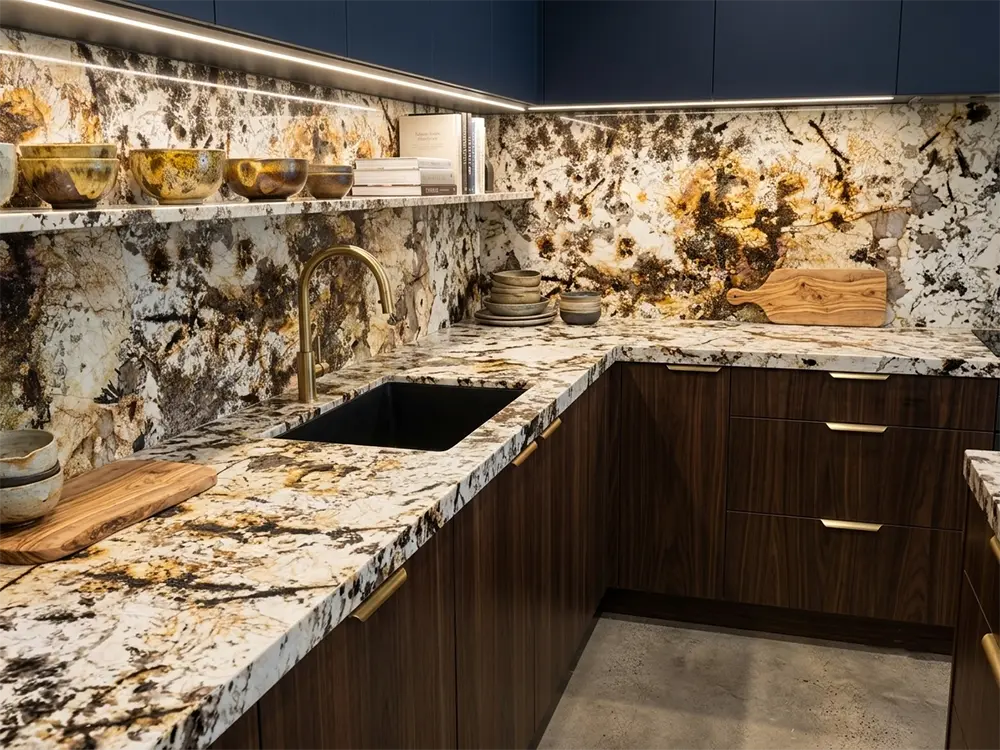
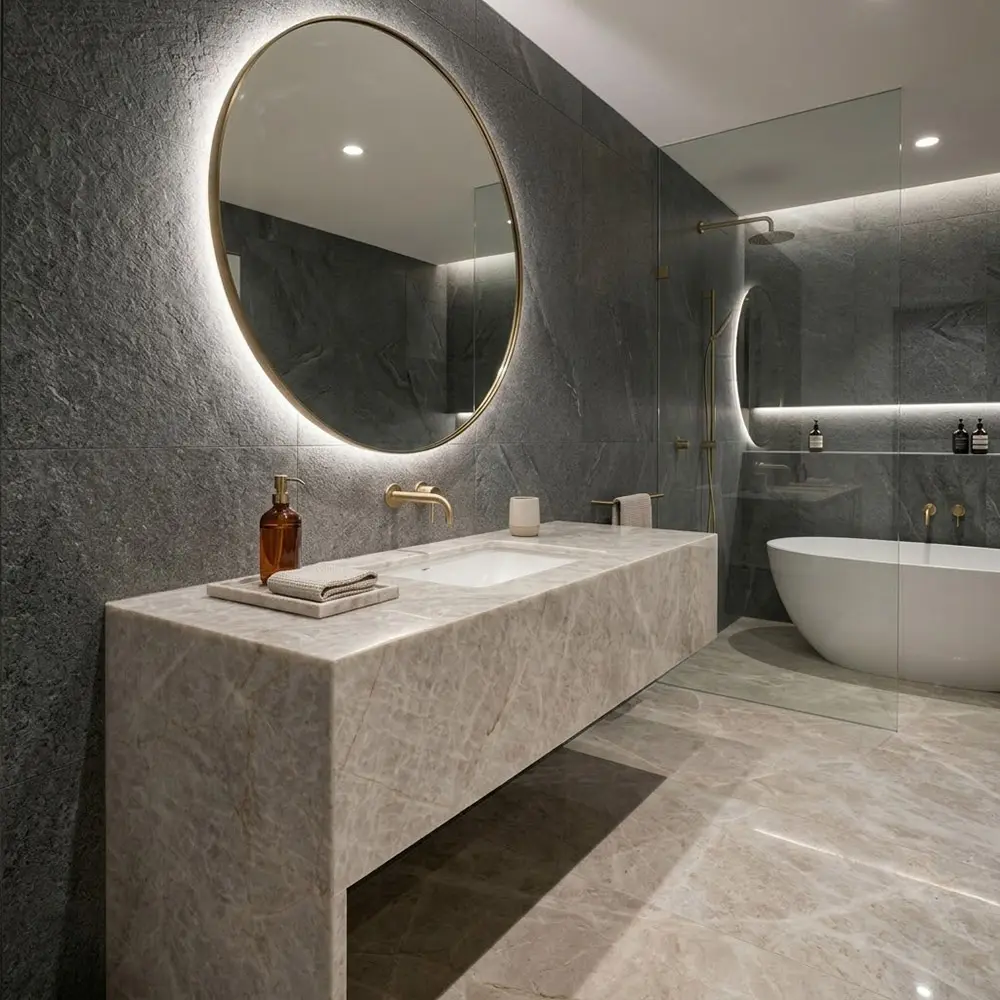
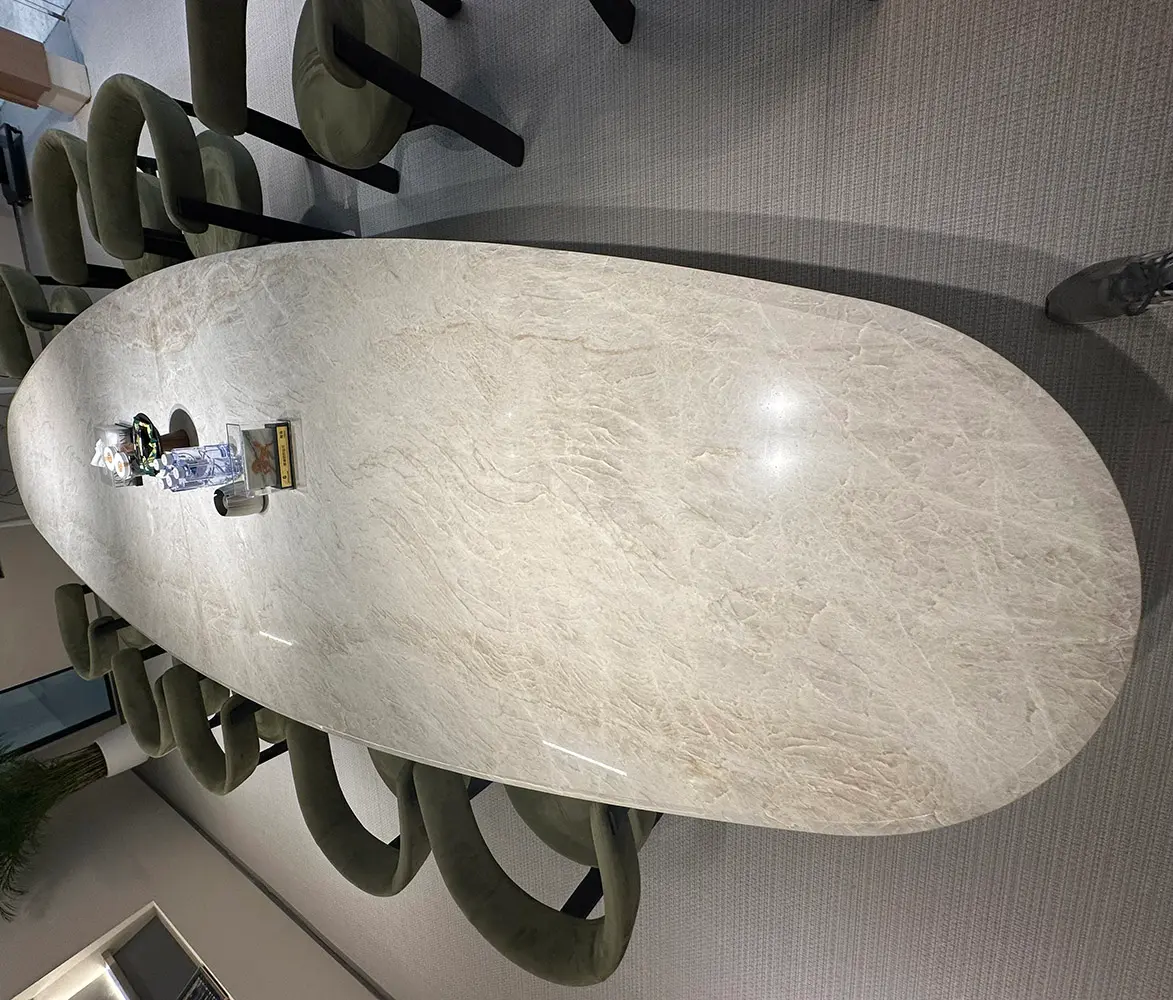
Natural stone is universally revered for its unique, unrepeatable geological heritage. The calcite composition provides a three-dimensional, translucent depth that engineered alternatives struggle to perfectly replicate. When designing executive lobbies or high-visibility corporate environments, architects frequently consult specialized design indices to review 10 gängige weiße Serienmurmeln für die Bürodekoration. Selecting these specific geological variants ensures a space projects timeless prestige and commanding professional elegance.
Format Selection: Dimensions and Applications
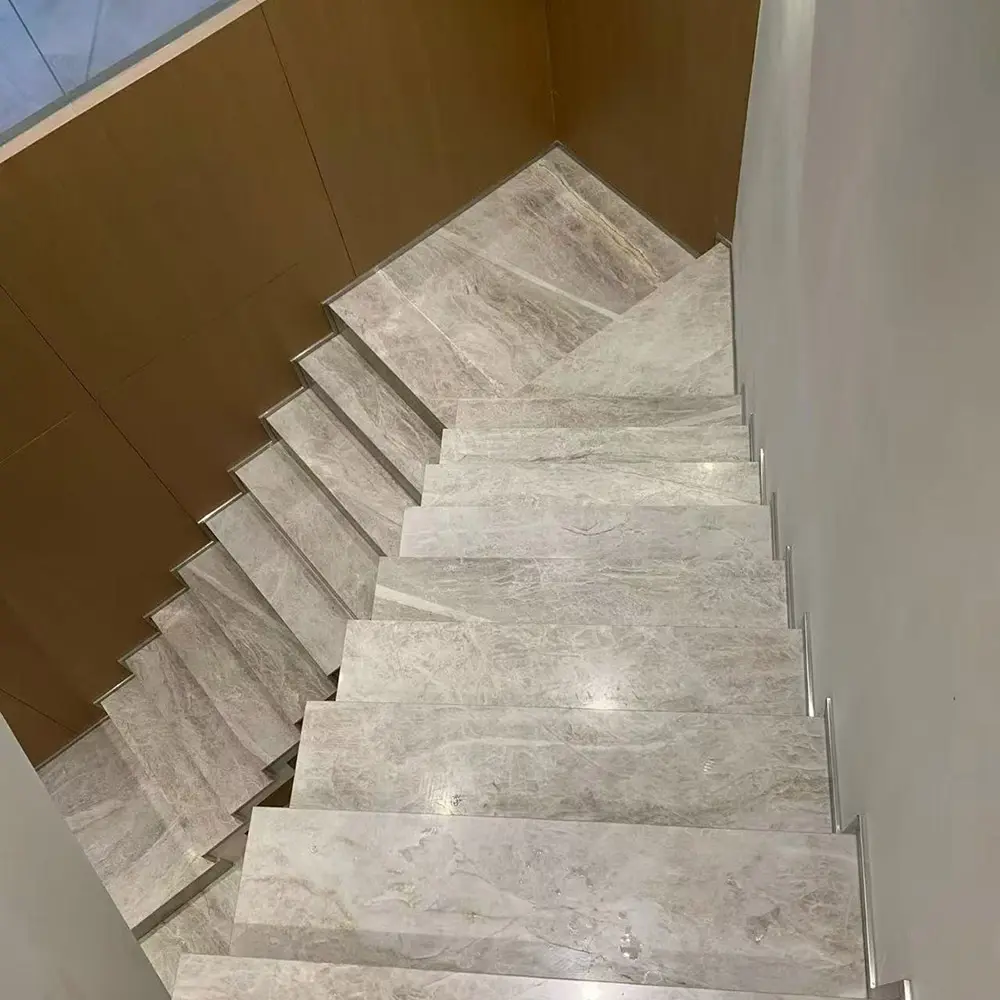
Once the specific geological material is selected, the next critical phase in bulk import engineered stone or natural stone sourcing is determining the optimal structural format. The fabrication requirements for a vertical wall cladding application differ vastly from those of a high-traffic lobby floor. Procurement officers must rigorously analyze the technical differences between marble slabs vs marble tiles to establish the most efficient installation methodology. Large-format slabs minimize visible grout lines and provide breathtaking uninterrupted veining, whereas calibrated tiles offer standardized, rapid installation for expansive commercial footprints.
Quantitative Material Data
To elevate the precision of your engineering specifications, review the following scientific parameters comparing high-grade natural calcite stone against standard commercial granite and engineered quartz surfaces:
Weiße Marmorfliesen
Evaluating a Factory’s Production Capacity
Securing the raw material is only the first step; the true value is unlocked during the fabrication process. A factory’s technological infrastructure dictates the final quality of the delivered architectural product.
Advanced Block Cutting and Calibration
Premium factories utilize massive multi-wire diamond gang saws to slice raw, 30-ton geological blocks into usable slabs. The tension and speed of these diamond wires must be perfectly calibrated to prevent micro-fracturing. For instance, when processing an exclusive, high-value block of Königlicher weißer Marmor, precision cutting is paramount to ensure absolute yield maximization and zero material waste. Following the cutting phase, advanced 16-head or 24-head automated polishing lines calibrate the surface to achieve a flawless, high-gloss finish that consistently reads above 90 on a standard gloss meter.
Innovation in Ultra-Thin Stone Technology
Modern architectural demands are pushing factories to innovate beyond traditional 2cm or 3cm thicknesses. Weight restrictions in luxury yachting, aviation, and high-rise elevator cab interiors require specialized, lightweight cladding solutions. Technologically advanced Chinese factories now extrude aerospace-grade aluminum honeycomb panels bonded with an ultra-thin natural marble stone veneer. This composite technology reduces the total weight of the stone by up to 80% while exponentially increasing its flexural strength and impact resistance, revolutionizing modern facade engineering.
Custom Fabrication and Exotic Sourcing
B2B procurement is rarely about purchasing off-the-shelf inventory. It involves highly customized OEM (Original Equipment Manufacturing) fabrication tailored to precise architectural blueprints.
Sourcing Rare and Exotic Geologies
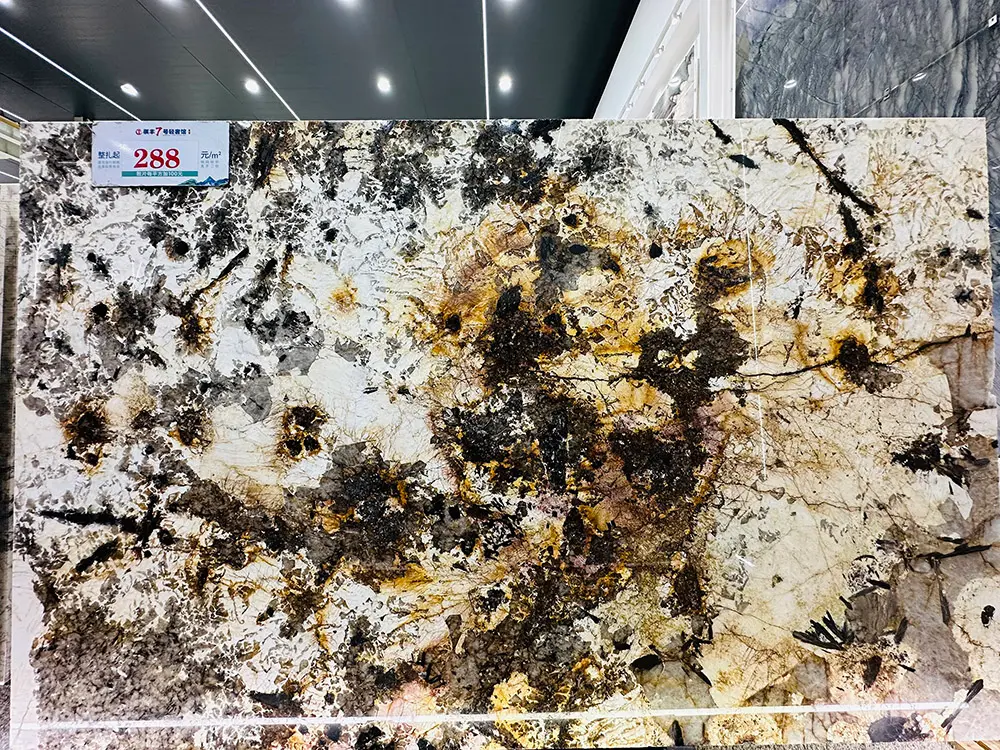
While standard commercial materials are abundant, securing steady, color-matched blocks of rare exotic stones requires deep, entrenched quarry relationships. For ultra-luxury boutique hotels and flagship retail stores, securing premium blocks of highly coveted Dover white marble demands a supplier with immense purchasing power and global logistics expertise. Factory-direct sourcing ensures that buyers gain priority access to consecutive slabs from the exact same block, an absolute necessity for achieving flawless, dramatic book-matched installations.
Precision Fabrication for Hospitality Vanities
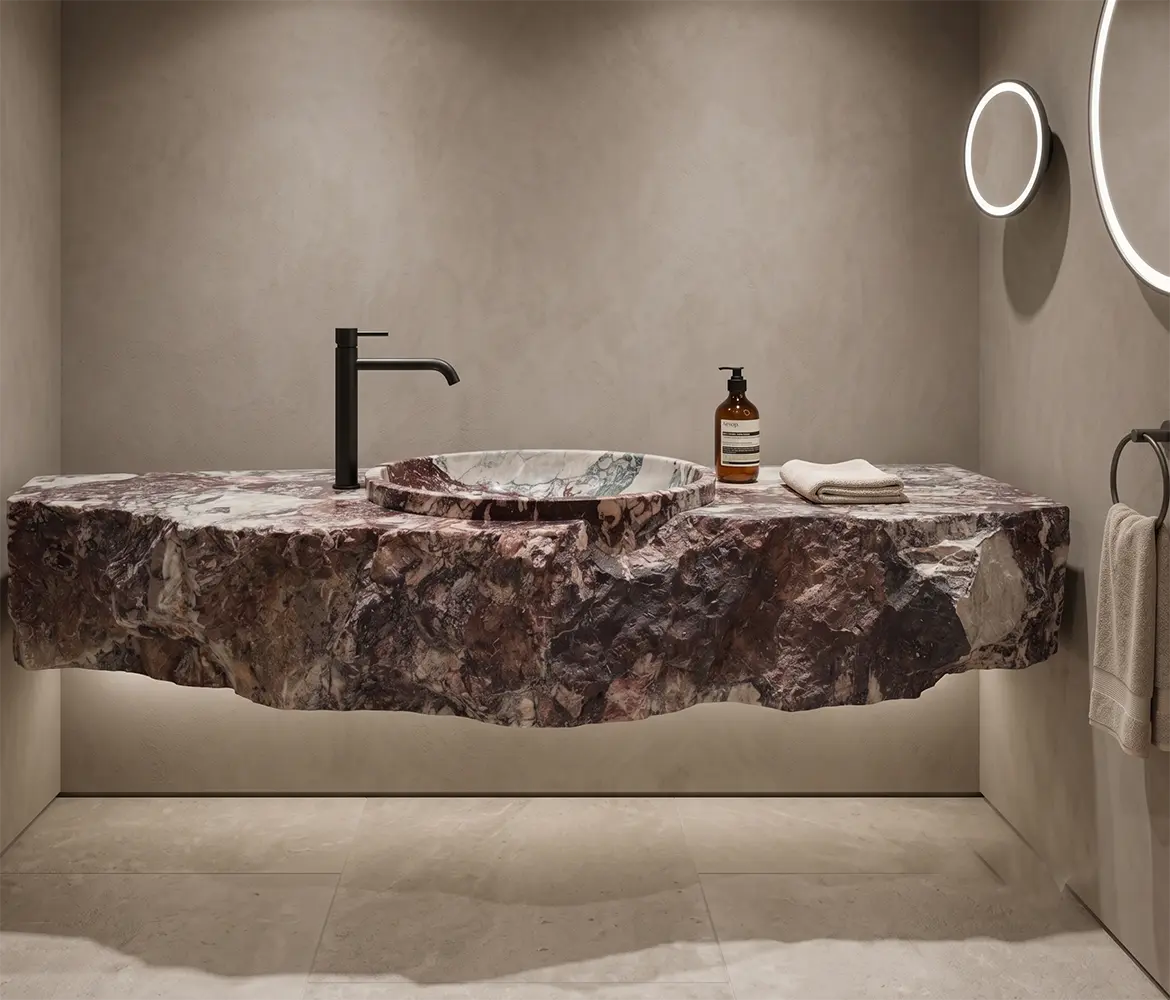
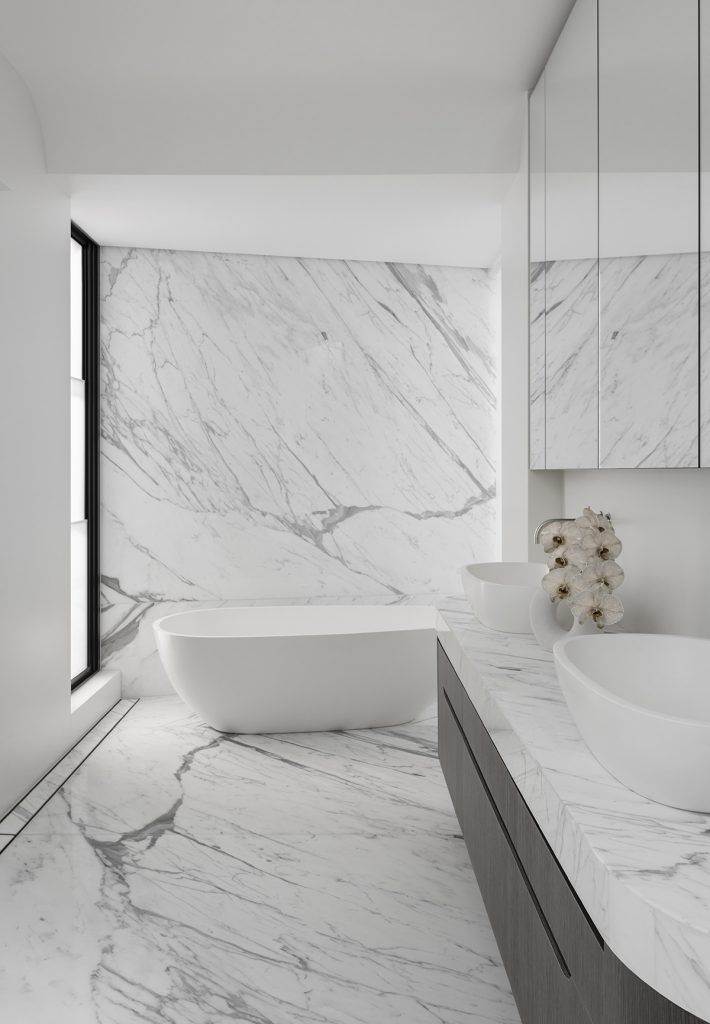
In the commercial hospitality sector, uniformity is a strict requirement. Supplying a new 500-room luxury hotel requires exact standardization across hundreds of individual units. Whether the design calls for a complex double-basin undermount sink or a standardized Carrara bathroom vanity top, the factory must utilize 5-axis CNC (Computer Numerical Control) bridge saws. This automated machinery guarantees that every edge profile—be it a customized Ogee, a sleek Shark Nose, or a heavy Mitered drop-edge—is milled with sub-millimeter perfection, completely eliminating the inconsistencies of manual hand-routing.
Carrara bathroom
Strict Quality Control and Export Logistics
The final hurdle in international large format engineered slabs and natural stone procurement is ensuring the fabricated product survives global maritime transit and arrives ready for immediate installation.
Export Packaging Standards
Improper packaging is the leading cause of catastrophic loss in international stone procurement. Standard operating procedures dictate the use of robust packaging systems. Depending on the format, factories will utilize heavy-duty, fumigated wooden bundles for raw slabs, or custom-built, shock-absorbing wooden crates for finished cut-to-size pieces. All timber utilized in export packaging must be heat-treated and stamped with ISPM-15 certification; failure to comply will result in immediate rejection by international customs authorities. To discuss your specific freight consolidation requirements and protective packaging protocols, procurement teams should kontaktieren Sie uns directly to interface with experienced export logisticians.
Verifying Supplier Credentials
Ultimately, risk mitigation in global supply chains relies on verifying your manufacturing partner. Professional B2B buyers must conduct rigorous due diligence before issuing commercial letters of credit. Ensure your partner operates as an authentic custom engineered stone factory and natural stone fabricator rather than a secondary trading company. You can review factory footprints, ISO 9001 quality management certifications, and decades of commercial export history by reading über uns to verify the operational integrity of the facility. Partnering with a fully vetted, technologically transparent factory is the ultimate strategy for guaranteeing the long-term success of your architectural investment.

Luxus-Küchenarbeitsplatten aus Marmor
FAQ
1. What is the difference between sourcing raw stone slabs and cut-to-size tiles?
Sourcing raw stone slabs allows architects and fabricators maximum flexibility to perform exact field measurements and create custom edge profiles or book-matched wall features on-site. Cut-to-size tiles, conversely, are pre-calibrated and cut at the factory to precise, uniform dimensions (such as 600x600mm). Tiles are generally more cost-effective to ship and significantly faster to install for expansive, high-traffic commercial flooring applications.
2. How do Chinese factories ensure color consistency for large commercial projects?
To guarantee color consistency across massive commercial orders, premium factories employ a strategy known as “dry-laying.” Before packing, the factory will lay out hundreds of square meters of the cut stone on the factory floor. Quality control inspectors visually verify the flow of the veins and the background color saturation, numbering each individual piece so the installation team on-site can recreate the exact aesthetic continuum seamlessly.
3. What is ultra-thin stone veneer and where is it used?
Ultra-thin stone veneer is a highly advanced composite material where a very thin layer of natural stone (typically 3mm to 5mm) is bonded to an aerospace-grade aluminum honeycomb or fiberglass backing. This reduces the weight of the stone by up to 80% while increasing its flexural strength. It is predominantly used in weight-restricted applications such as luxury yacht interiors, aviation cabins, elevator wall cladding, and high-rise exterior facades.
4. Why is ISPM-15 certification critical for importing stone?
ISPM-15 (International Standards for Phytosanitary Measures No. 15) is a global regulatory standard requiring all raw wood packaging materials used in international trade to be heat-treated or fumigated to prevent the spread of timber pests and diseases. Because stone is exceptionally heavy and requires robust wooden A-frames or crates for shipping, failing to use ISPM-15 stamped wood will result in customs authorities quarantining, rejecting, or destroying the entire shipment.
5. Can I order custom edge profiles for bulk bathroom vanities?
Yes, ordering custom edge profiles for bulk commercial orders is a standard B2B practice. Technologically advanced factories utilize automated 5-axis CNC (Computer Numerical Control) bridge saws to mill exact edge profiles—such as Ogee, Beveled, Bullnose, or seamless Mitered drop-edges—with sub-millimeter precision. This ensures that a 500-unit hotel vanity order is perfectly uniform across every single bathroom in the development.
Referenzen:
-
“Dimension Stone Design Manual, Version 8.0.” Natural Stone Institute (NSI).
-
“ISPM-15 Compliance in International Maritime Freight Packaging.” World Customs Organization Logistics Review.
-
“Structural Advancements in Aluminum Honeycomb Stone Composites.” Journal of Architectural Engineering.
-
“Automated CNC Fabrication Protocols in High-Volume Stone Milling.” European Federation of Stone Industries (EUROROC).
-
“Geological Variations and Calcite Behavior in Natural White Series Stones.” Journal of Geotechnical Properties.
-
“Quality Control Standards for Commercial Cut-to-Size Flooring.” ASTM International, Material Testing Standards.
-
“Global Sourcing Strategies for Mega-Project Architectural Surfaces.” Real Estate Development Quarterly.
-
“The Physics of Diamond Wire Gang Saws in Block Extraction.” Institute of Mechanical Engineering and Material Sciences.
Commercial project stone procurement has evolved from a simple material purchasing task into a technical, logistical, and financial decision-making process. For mega-projects such as luxury hotels, corporate headquarters, premium residential towers, and large mixed-use developments, buyers are no longer choosing suppliers based only on product appearance. They are choosing supply partners based on quarry access, fabrication technology, dimensional accuracy, export readiness, and the ability to deliver consistent quality across high-volume architectural programs.
Why factory-direct stone sourcing is becoming the dominant procurement model
The shift toward factory-direct sourcing is driven by control. When buyers work directly with a technologically advanced stone manufacturer rather than a secondary distributor, they gain clearer visibility into block selection, slab consistency, processing workflows, and quality control standards. This reduces supply-chain uncertainty and makes it easier to align the delivered material with the visual and technical expectations defined in the original architectural drawings. In large projects, that control is not a luxury. It is a cost-protection mechanism.
How material science influences architectural suitability
Stone selection should always begin with performance logic rather than color preference alone. Natural calcite-based materials offer visual depth, translucency, and prestige, but they also come with specific limitations in hardness, porosity, and chemical sensitivity. Granite and engineered quartz provide stronger mechanical performance in many demanding environments, while ultra-thin composite stone systems offer entirely different possibilities for weight-sensitive applications. The correct material is not simply the most beautiful one. It is the one whose physical behavior matches the architectural use case.
What buyers should compare when deciding between slabs, tiles, and veneer systems
Large-format slabs are ideal when the design requires visual continuity, reduced grout interruption, and stronger statement surfaces in lobbies, reception walls, counters, and premium bathrooms.
Tiles are often the better option when installation speed, cost predictability, and maintenance replacement efficiency are critical across broad commercial floor areas.
Ultra-thin natural marble stone veneer becomes the right option when the project faces weight restrictions, such as elevator interiors, yacht spaces, aviation cabins, or façade applications where dead load must be tightly controlled.
Why production technology now matters as much as quarry quality
High-grade raw material can still fail a project if the factory lacks precision fabrication capability. Multi-wire gang saws, automated polishing lines, 5-axis CNC bridge saws, and digitally controlled calibration systems all determine whether the final stone product meets real construction standards. Thickness tolerance, edge quality, polish consistency, cut-to-size labeling accuracy, and structural reinforcement are all factory-driven outcomes. In modern stone sourcing, the processing line is just as important as the quarry itself.
How custom fabrication adds value in hospitality and commercial development
For hospitality and commercial projects, custom fabrication is where supply-chain efficiency turns into installation efficiency. Instead of shipping generic slabs and relying on site-level improvisation, advanced suppliers convert shop drawings into finished architectural packages that are ready for direct installation.
This is especially valuable for bathroom vanity programs, reception desks, feature walls, elevator cladding, and standardized guest-room applications where uniformity across hundreds of units is essential. At that scale, precision is not just aesthetic. It directly affects labor cost, installation speed, and rework risk.
Important quality-control considerations before shipment
For large natural stone orders, dry-lay inspection remains one of the most important factory-level controls. It allows the team to verify vein flow, background tone consistency, and room-by-room layout sequencing before the material ever enters a crate. At the same time, dimensional checks, polish readings, edge inspections, and reinforcement verification should all be completed before loading. A project that ignores these controls at origin usually pays for it later in the form of breakage claims, installation mismatch, or costly project delays.
Why export packaging and compliance are not secondary issues
Stone is dense, brittle, and expensive to replace once in transit. That makes packaging engineering a central part of procurement strategy rather than a post-production detail. Slabs and cut-to-size pieces require different packaging logic, but both demand structural protection, moisture management, and customs compliance.
ISPM-15 certified wood packaging is essential for global trade, and a supplier that cannot demonstrate this standard introduces serious import risk. For international buyers, packaging quality is often the invisible factor that separates a successful shipment from a logistical disaster.
How mega-project buyers should evaluate a stone manufacturing partner
A serious manufacturing partner should offer more than a beautiful catalog. Buyers should verify factory size, export experience, ISO quality systems, machinery configuration, past commercial references, and the ability to provide transparent documentation. The strongest partners are vertically integrated enough to manage block sourcing, fabrication, inspection, and shipping under one coordinated system. That level of integration dramatically reduces the communication gaps and accountability problems common in fragmented stone supply chains.
What current market trends are telling procurement teams
The market is clearly moving toward bigger formats, lighter composite systems, more customized fabrication, and stronger factory-to-project integration. Developers increasingly want materials that look premium, install faster, and create fewer surprises across multiple phases of construction. This is why Chinese manufacturing hubs with advanced equipment and export expertise are becoming more central to the global supply chain. They are not just supplying stone. They are supplying processed architectural solutions.
Final market takeaway
The future of bulk architectural stone sourcing belongs to buyers who think beyond slabs and start thinking in systems. The most effective procurement strategy combines material science, format selection, CNC precision, dry-lay control, and export logistics into one integrated decision. For large-scale commercial developments, the right factory-direct partner does more than provide stone. It reduces risk, improves installation outcomes, and protects the long-term value of the entire project.