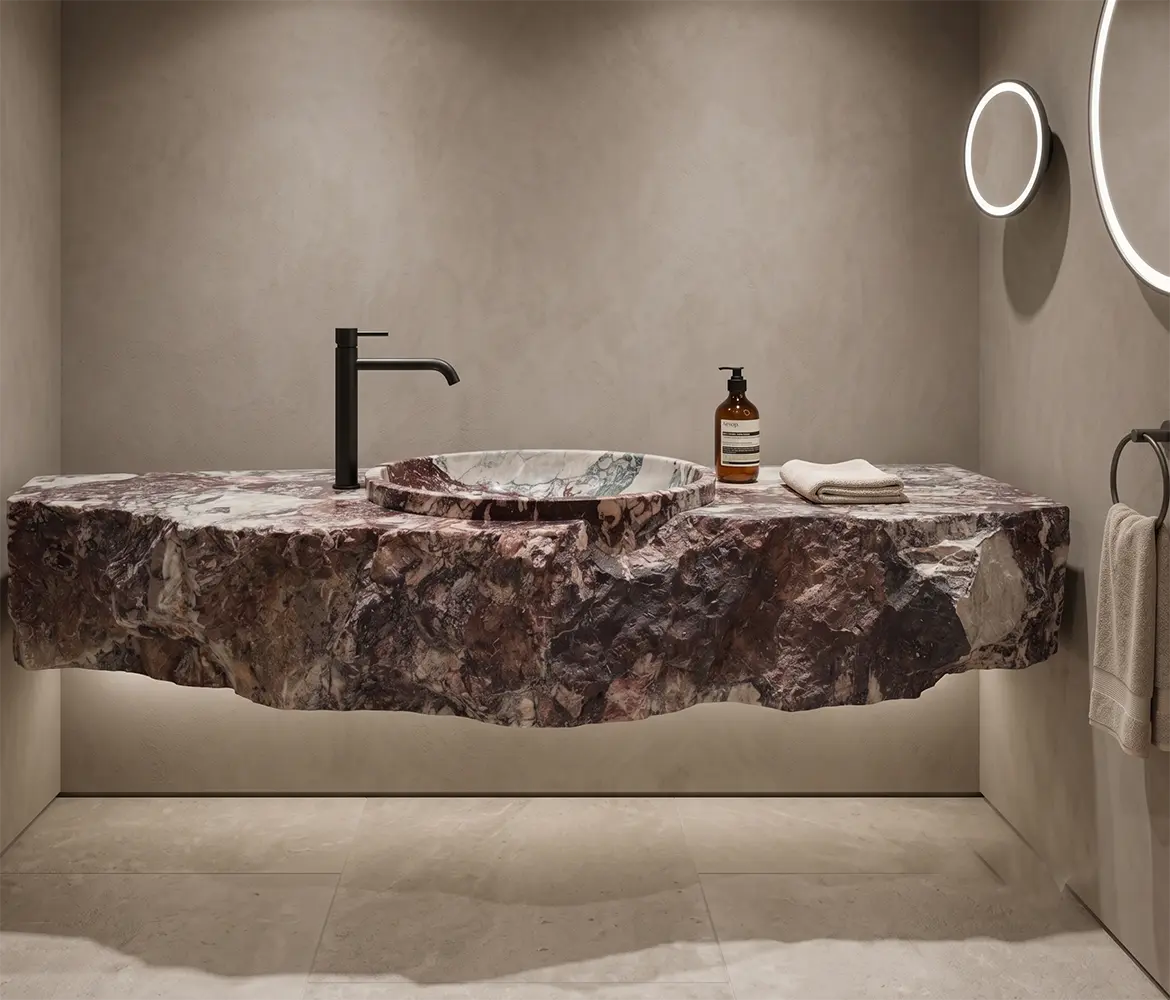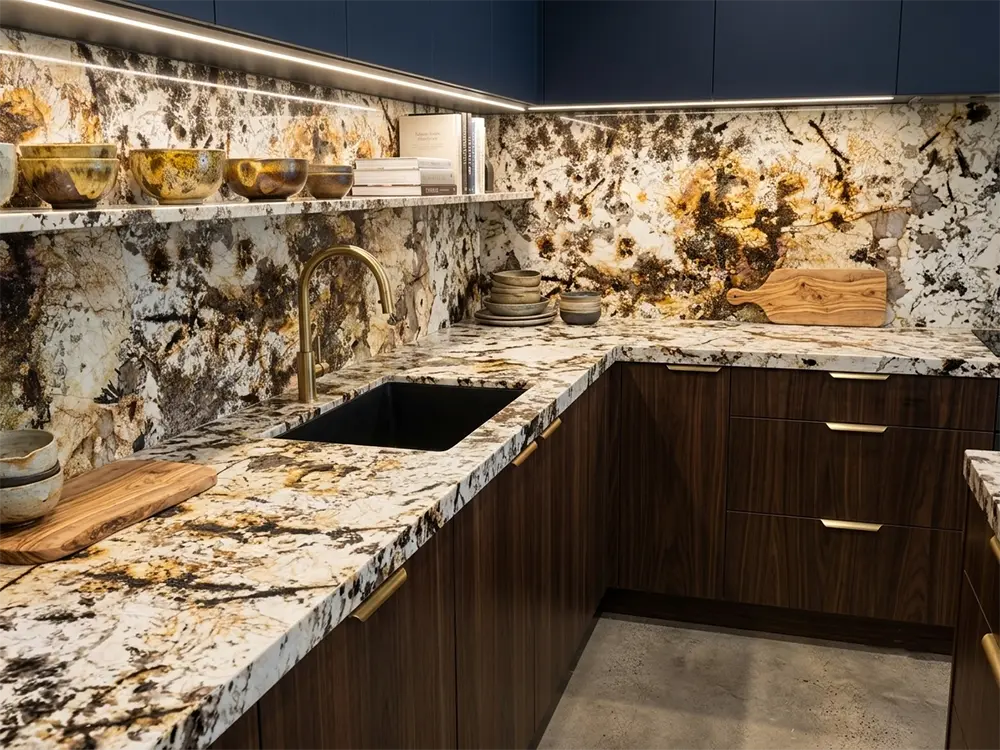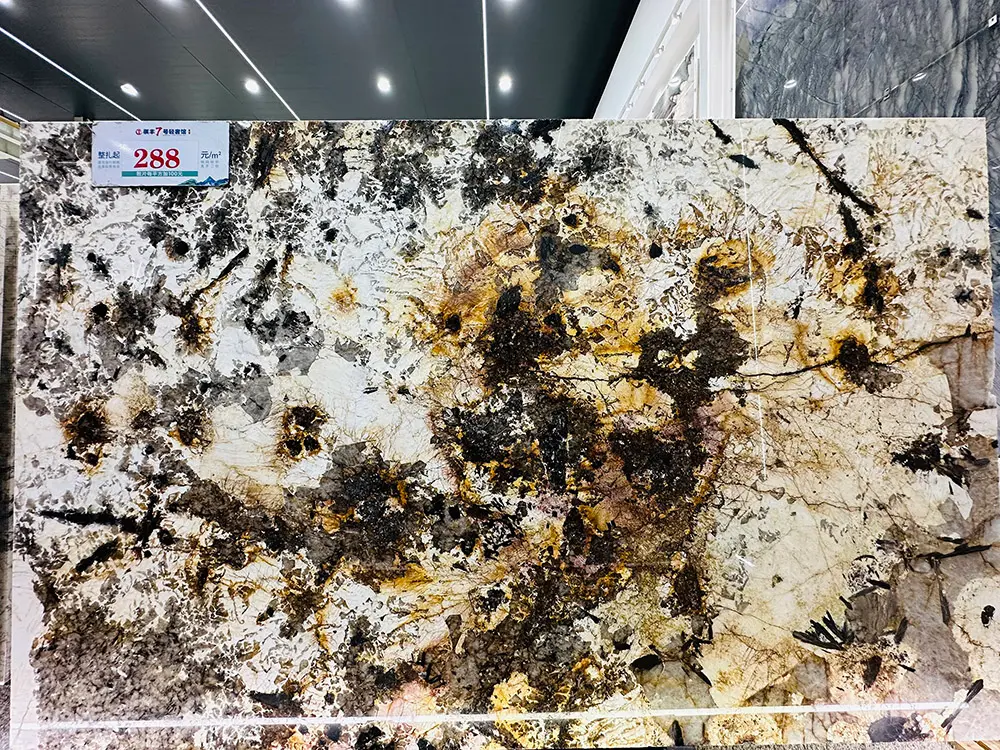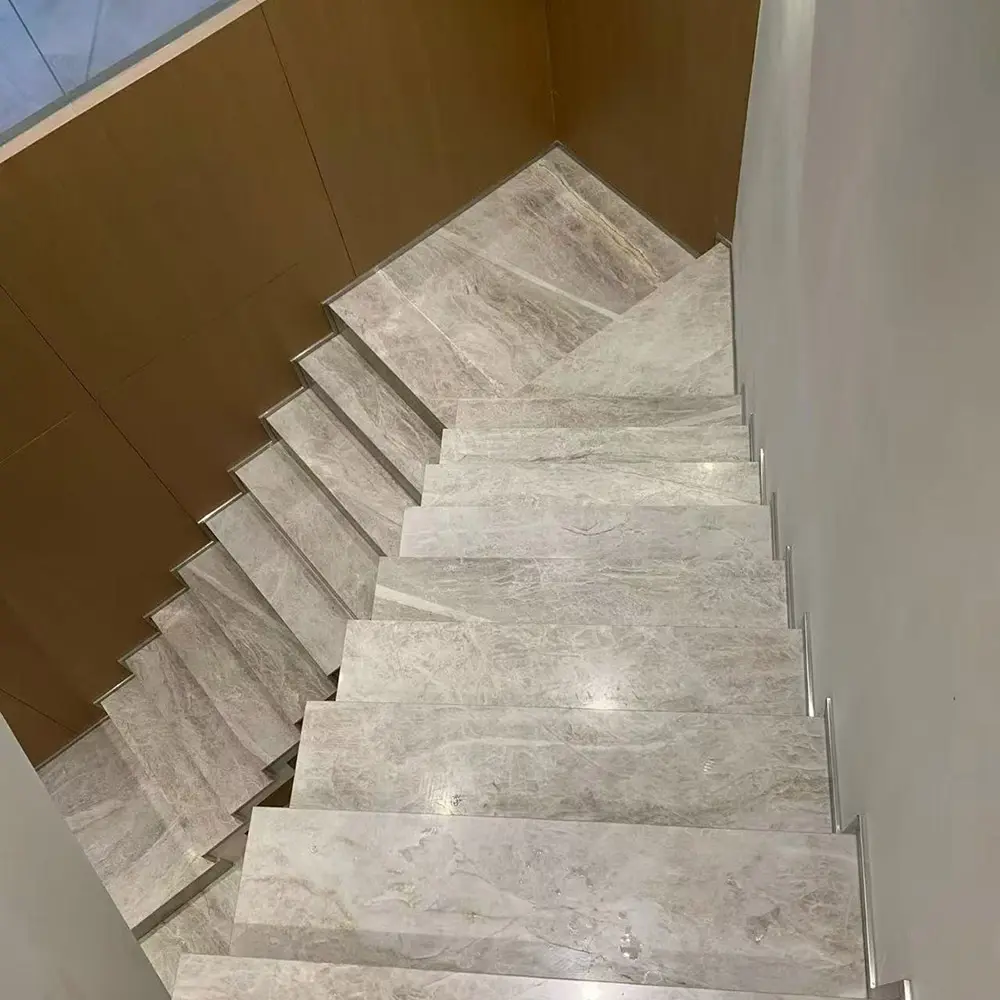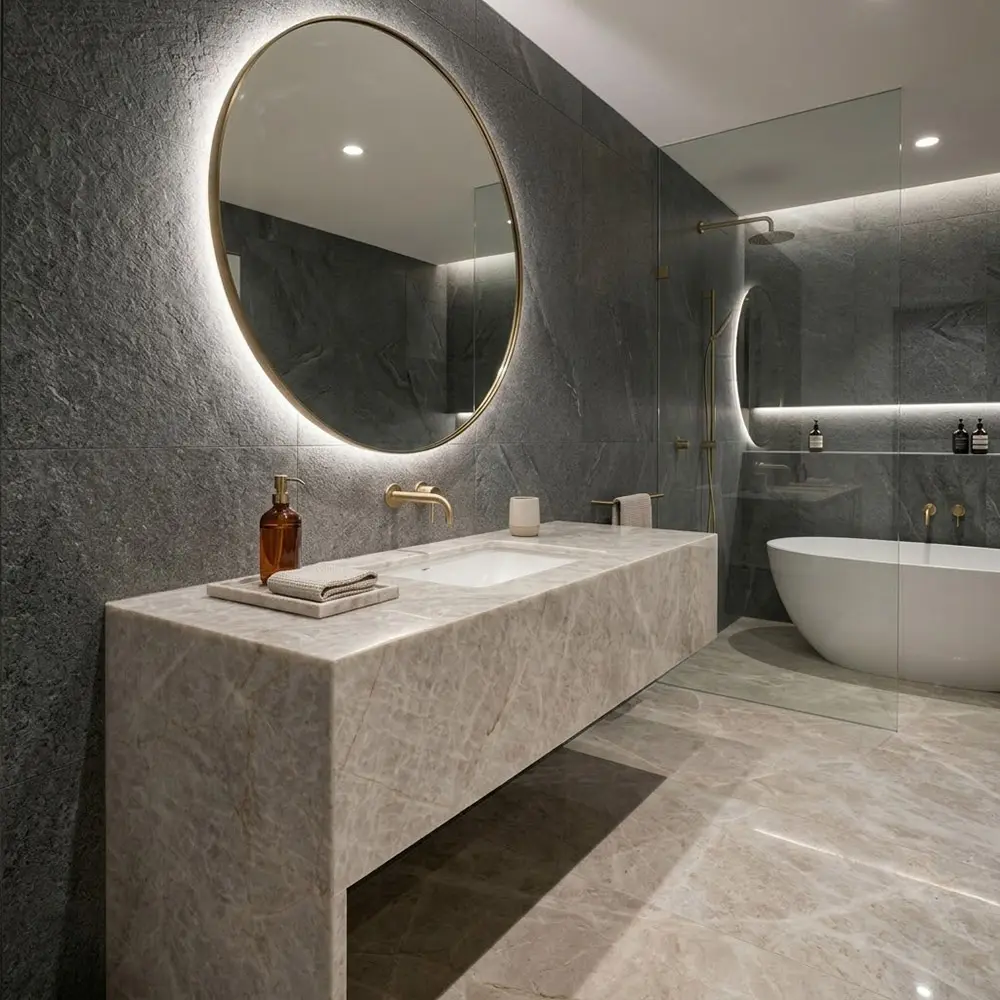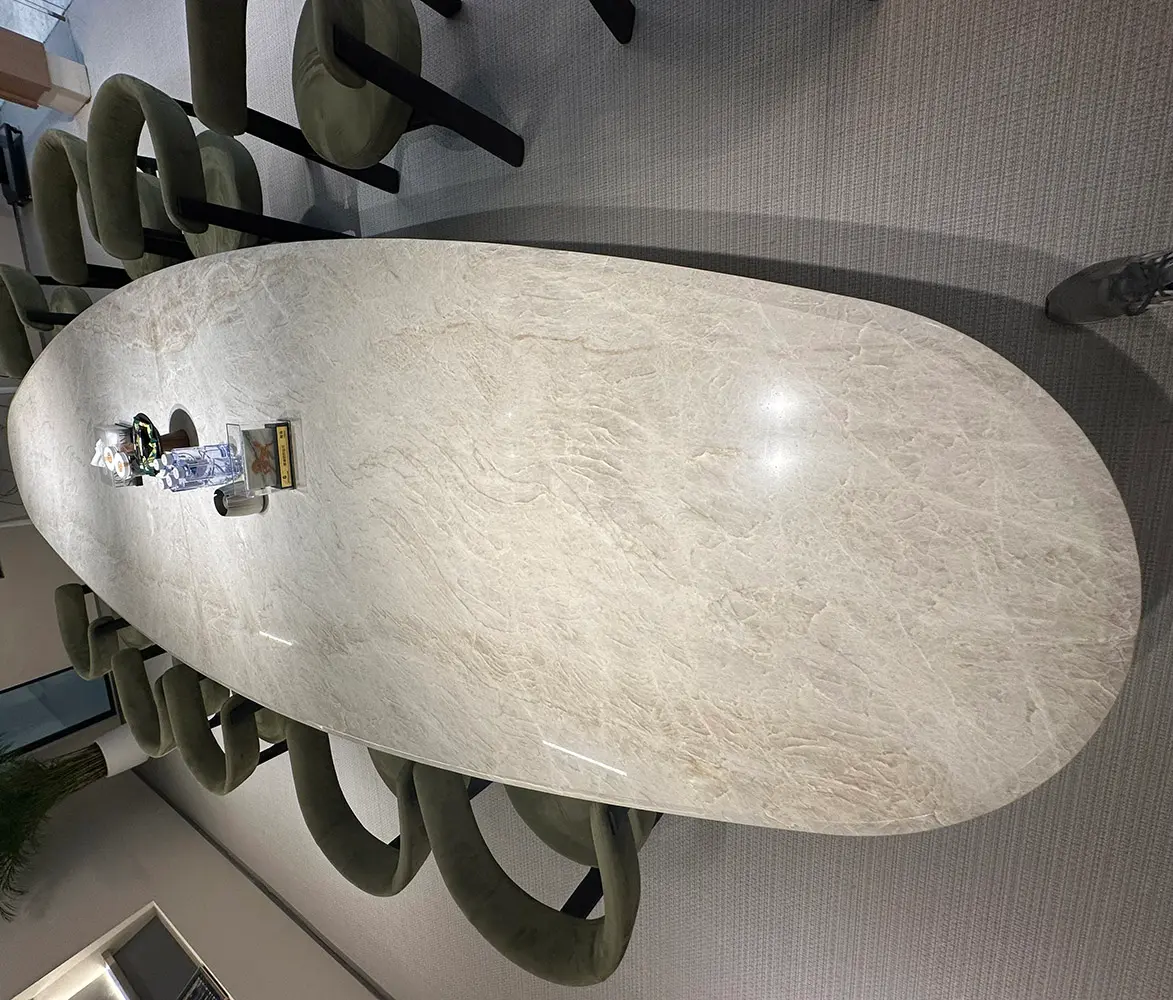






A luxury bathroom should feel calm, natural and safe underfoot. A villa owner, hotel developer or interior designer may choose white marble, beige marble, grey marble, green marble or black marble because the sample looks elegant under showroom lighting. But the real bathroom environment is different. Water, soap residue, shampoo, body oils, cleaning chemicals and poor drainage can change how the floor feels. A surface that looks premium when dry may feel risky when wet.
This is why selecting Marmorfliesen for a bathroom requires more than choosing a beautiful stone. Buyers need to evaluate slip resistance, finish texture, tile size, grout spacing, slope to drain, water absorption, sealing, cleaning protocol, thickness tolerance and replacement planning. The goal is not to remove marble’s natural luxury. The goal is to specify it intelligently so the bathroom feels elegant, practical and safe in daily use.
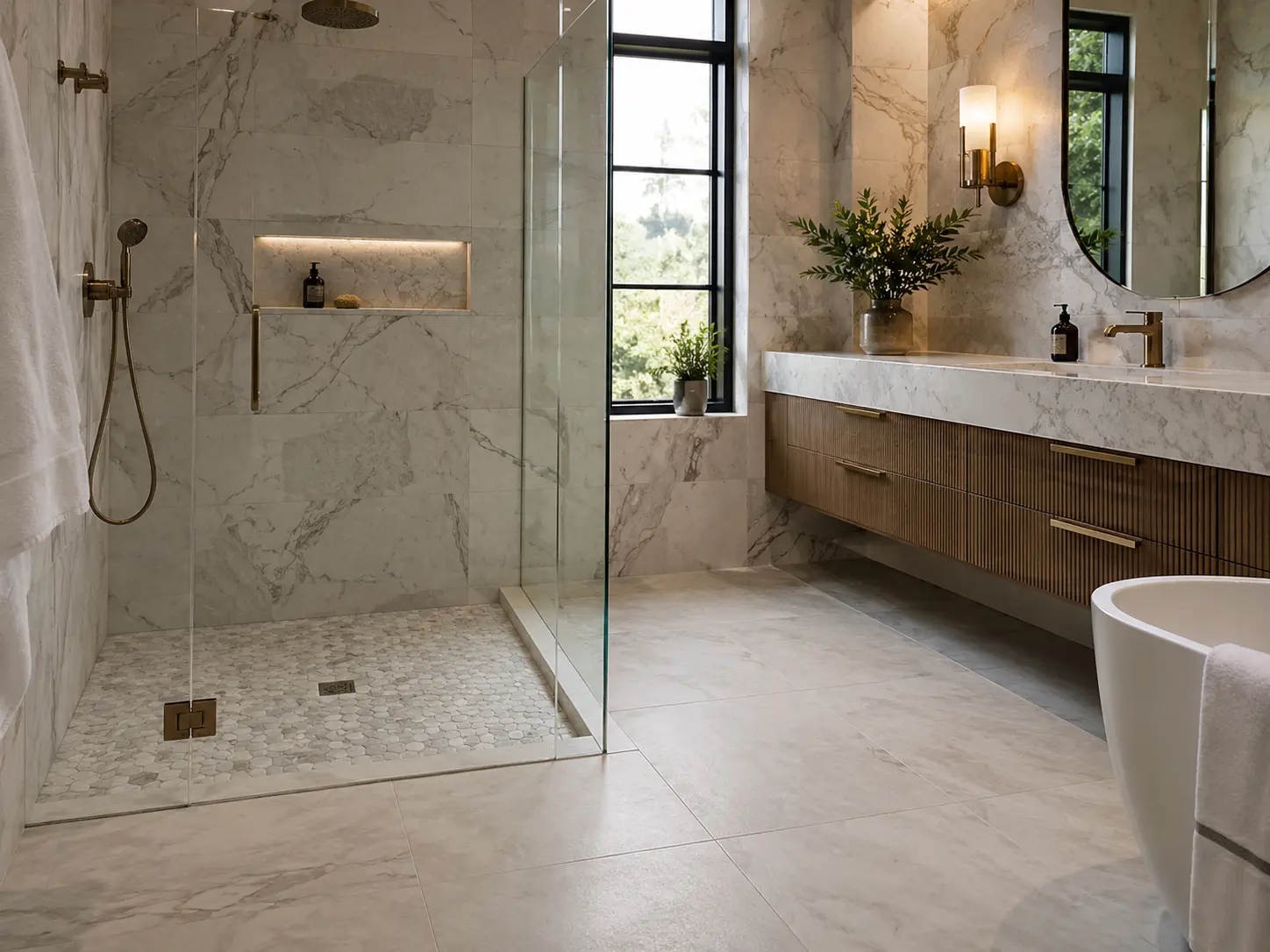
Marmorfliesen Anwendungen
Why Non Slip Marble Tiles Matter in Bathroom Design
Luxury Is Not Enough When the Floor Gets Wet
Bathrooms are high-risk spaces because people walk barefoot, water is present, lighting may be soft, and soap can reduce friction. A polished marble bathroom can look beautiful in photographs, but if the floor becomes slippery after a shower, the material choice will disappoint the user. This is especially important in hotel bathrooms, senior-friendly bathrooms, spa wet rooms, family homes, villas and commercial restroom projects.
Ein Fachmann marble tiles manufacturer should help buyers compare marble type, surface finish, tile size, application zone and packing quality rather than quoting only color and price. Natural marble can be used successfully in bathrooms, but the finish must match the wet exposure. Walls and vanity backsplashes can use more decorative finishes. Shower floors and wet walking zones need stronger traction planning.
Bathroom Zones Have Different Safety Requirements
Not every bathroom surface has the same risk. A marble wall behind a bathtub is mainly a visual feature. A vanity backsplash faces water splashes, toothpaste and cosmetics, but it is not walked on. A main bathroom floor may become wet after showering. A shower floor is continuously exposed to water, soap and bare feet. A hotel bathroom floor must also survive repeated cleaning and unknown guest behavior.
For this reason, designers should specify marble by zone. Polished marble may be acceptable for walls, powder rooms and decorative panels. Honed marble may work better for main bathroom floors. Tumbled or small-format mosaics are often more practical for shower floors because they provide more grout joints and better drainage control. Textured or brushed finishes can help wet-area traction, but cleaning must be reviewed.
| Bathroom Area | Recommended Marble Tile Direction | Safety Focus | Buyer Risk |
|---|---|---|---|
| Shower floor | Small honed, tumbled, brushed or textured tiles | Slip resistance and drainage | Polished tiles may be too slippery |
| Main bathroom floor | Honed or light-textured marble | Wet walking safety | Soap and water increase slip risk |
| Bathroom wall | Polished, honed, bookmatched or decorative tiles | Lower slip concern | Etching from cleaners |
| Vanity backsplash | Polished or honed marble | Stain and cosmetic resistance | Toothpaste and cosmetics may mark |
| Hotel bathroom floor | Honed marble with test review | Maintenance and guest safety | Cleaning chemical damage |
| Spa wet room | Textured stone with slope and drainage | Continuous wet exposure | Poor drainage creates hazard |
What Makes Marble Tiles Slippery in Bathrooms?
Water Soap and Smooth Finishes Reduce Friction
Slip risk increases when a surface becomes wet, soapy, oily or too smooth. Polished marble reflects light beautifully, but that same smooth surface can reduce traction on bathroom floors. Shampoo, conditioner, body wash, bath oil, toothpaste, cosmetics and cleaning residue can reduce grip even more. A dry showroom sample does not behave like a wet shower floor.
This is why buyers should not judge safety only by touching a tile sample with dry hands. The surface should be considered under real-use conditions. Is the floor walked on barefoot? Is water pooling? Is there a drain slope? Are users children, older adults, hotel guests or spa customers? Is the floor cleaned daily with stone-safe products? These questions matter as much as the marble color.
Surface Texture and Grout Joints Improve Foot Grip
Surface texture can improve traction because it gives feet more contact variation. Grout joints can also help because they interrupt the smooth surface. This is one reason small mosaics are commonly used on shower floors. More grout joints can help traction and make it easier to form slope toward a drain. Large-format stone creates a clean luxury look, but it gives fewer traction lines and can be harder to slope in small wet zones.
Buyers who want deeper education can review der endgültige Leitfaden für Marmorfliesen before comparing finishes, formats and installation methods. The safest specification is not one single product choice. It is the combination of suitable finish, proper tile size, correct installation and responsible maintenance.
| Slip Factor | Warum es wichtig ist | Buyer Control |
|---|---|---|
| Surface finish | Controls friction under wet conditions | Choose honed, brushed, tumbled or textured finish |
| Tile size | Affects number of grout joints | Use smaller tiles in shower floors |
| Grout joint | Adds traction lines | Avoid overly minimal joints in wet floors |
| Drainage slope | Reduces standing water | Confirm slope before installation |
| Soap residue | Reduces grip | Use correct cleaning protocol |
| Cleaning chemical | Can dull or damage marble | Avoid acidic cleaners |
Understanding Slip Resistance Standards and Test Data
Why Buyers Should Ask for DCOF or Slip Test Information
Slip resistance should not be judged only by appearance. For bathroom floors, hotel bathrooms, wet rooms, spa areas and commercial restrooms, buyers should ask whether relevant slip-resistance information is available. In North American tile specification, ANSI A326.3 is commonly referenced for dynamic coefficient of friction testing of hard surface flooring materials. The newer classification approach also reminds buyers that different use areas have different slip expectations.
However, a test value does not guarantee that no one will slip. Real safety depends on surface texture, contaminants, slope, drainage, cleaning, lighting, user behavior and maintenance. A slip-resistance report is a decision tool, not a magic shield. Buyers should combine test data with practical design decisions.
Natural Stone Testing Documents Buyers Should Request
For marble, buyers may also request stone test documents related to absorption, density, compressive strength, modulus of rupture, flexural strength, abrasion resistance, thickness tolerance, finish consistency and calibration. These documents help project teams evaluate whether the stone is appropriate for floors, walls, vanities, shower areas or hotel use.
| Document or Test | Warum es wichtig ist | Best Use |
|---|---|---|
| DCOF or slip test | Evaluates traction under test conditions | Bathroom floors and wet areas |
| Wasseraufnahme | Relates to staining and sealing need | Floors, shower areas, vanities |
| Abrasion resistance | Supports traffic evaluation | Main bathroom floors and hotels |
| Flexural strength | Supports handling and installation | Large tiles and stone panels |
| Thickness tolerance | Supports flat installation | Tile installation and lippage control |
| Finish sample | Confirms real texture | Wet-area approval |
| Sealer recommendation | Controls water and stain behavior | Maintenance planning |
Best Marble Tile Finishes for Bathroom Floors
Honed Marble Tiles
Honed marble has a matte or satin surface with less glare than polished marble. It is often a better direction for bathroom floors because it creates a softer luxury look and can offer more practical traction than a glossy polished surface. Honed finishes work well in main bathroom floors, hotel bathrooms, vanity floors, spa-style bathrooms and minimalist luxury interiors.
The main risk is maintenance. Honed marble may show oils, stains or darker marks if not sealed properly. Buyers should request finish samples, sealing guidance and cleaning instructions. In hotel projects, cleaning staff should be trained to use pH-neutral stone cleaners instead of acidic bathroom cleaners.
Brushed and Textured Marble Tiles
Brushed marble has a tactile surface that can improve grip and add natural character. Textured finishes can be useful for wet rooms, resort bathrooms, spa floors and commercial bathroom areas where safety is a higher priority. The tradeoff is cleaning. More texture can hold soap residue, minerals and dirt if the maintenance plan is weak.
Textured marble should be tested and sampled before bulk use. Buyers should check whether the finish feels comfortable under bare feet, whether it can be cleaned easily, and whether the visual style matches the bathroom design. A rough surface that nobody likes to stand on is not a luxury solution. It is a tiny stone punishment.
Tumbled Marble Tiles and Marble Mosaics
Tumbled marble has softened edges and a more aged surface. It is popular in shower floors, Mediterranean bathrooms, boutique hotel bathrooms and spa-inspired interiors. Small mosaics also create more grout joints, which can help traction and drainage. Buyers can explore mosaic marble tiles for bathrooms and kitchens when planning shower floors, feature niches, backsplashes and wet-area accents.
The buyer should remember that grout joints improve grip but require cleaning. Tumbled marble and mosaics should be sealed correctly, installed with suitable slope and maintained with stone-safe products. They are practical when the buyer wants natural stone beauty with better wet-area control.
Polished Marble Tiles
Polished marble delivers the strongest reflection, color depth and luxury impression. It is excellent for walls, vanity backsplashes, decorative panels, powder rooms and low-wet-risk areas. But for shower floors and frequently wet bathroom floors, polished marble needs careful review because it may become slippery when wet or soapy.
| Oberfläche | Bathroom Floor Suitability | Beste Anwendung | Key Risk |
|---|---|---|---|
| Poliert | Low to moderate depending on area | Walls, backsplash, powder rooms | Slippery when wet, etching visible |
| Honed | Good for many bathroom floors | Main floors, hotel bathrooms | Needs sealing and stain control |
| Brushed | Good for wet areas if maintained | Spa floors, wet rooms | Texture cleaning |
| Tumbled | Good for shower floors and mosaics | Shower floors, classic bathrooms | Porosity and sealing |
| Textured | Strong for wet-area safety | Wet rooms, commercial bathrooms | Cleaning complexity |
Choosing the Right Tile Size for Shower Floors and Bathroom Floors
Why Smaller Tiles Are Safer for Shower Floors
Smaller tiles are usually more practical for shower floors because they create more grout joints and can follow slope more easily. Common shower floor formats include 1×1 inch mosaics, 2×2 inch mosaics, hexagon mosaics, basketweave mosaics, small rectangular tiles and custom small modules. These options help the installer form a proper fall toward the drain while giving the foot more traction points.
Large polished marble tiles on shower floors can increase slip risk and make drainage slope harder, especially in compact bathrooms. Smaller honed or tumbled mosaics are usually a safer and more practical direction. The layout should coordinate with drain type, waterproofing system and grout joint width.
Larger Tiles for Main Bathroom Floors
Large-format marble tiles create visual continuity and a premium appearance. Common sizes include 12×12 inch, 12×24 inch, 18×18 inch, 24×24 inch, 300x600mm, 600x600mm and custom cut-to-size formats. Larger tiles can work well on main bathroom floors if the finish is appropriate, the substrate is flat and wet exposure is controlled.
Buyers considering marble tiles design for the floor should decide whether the project needs traction, visual continuity or both. Large tiles make a room feel calm and spacious. Small tiles make slopes and wet traction easier. A luxury bathroom may use large honed tiles on the main floor and smaller tumbled mosaics inside the shower.
Color Selection for Safe and Luxurious Bathrooms
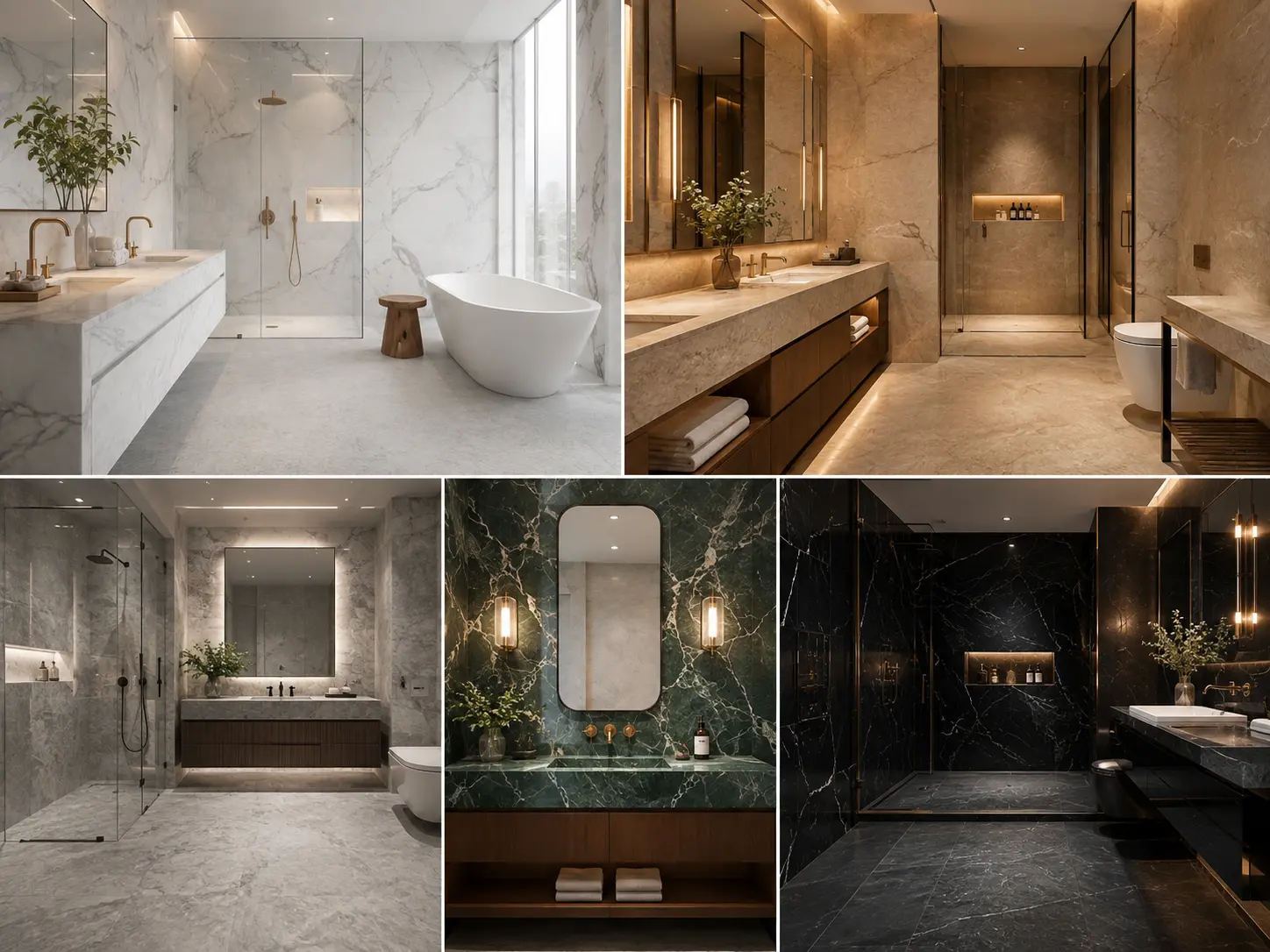
White Beige Grey Green and Black Marble Options
Color affects not only style but also practical use. White marble is bright, classic and spa-like, but it can show stains, etching and hairline marks more easily. Beige marble feels warm and hotel-friendly, and it may hide water spots better. Grey marble creates a modern mood and coordinates well with chrome, nickel and black fixtures. Green marble adds drama and luxury, especially as an accent wall or vanity feature. Black marble is bold, but it may show soap residue, water marks and dust.
Safety is not only about friction. Visibility matters. A very dark bathroom floor may hide standing water. A very light floor may reveal stains and etching. Medium tones can be practical for frequent-use bathrooms. Hotel bathrooms often need colors that balance luxury with cleaning reality.
Veining and Pattern Scale
Large veining creates natural drama, but it requires layout planning. A small bathroom may feel busy if every surface has strong pattern movement. A hotel bathroom needs batch consistency across multiple rooms. A shower wall can carry dramatic veining, while the floor may be calmer and more textured. Good design often separates visual feature areas from safety-critical walking areas.
Marble color selection
Installation Details That Improve Bathroom Safety
Slope and Drainage
Poor drainage creates standing water, and standing water increases slip risk. Proper shower slope, drain placement, waterproofing, tile thickness consistency, lippage control, expansion joints, grout selection and sealer compatibility all affect performance. Even the best non slip marble tiles can disappoint if water stays on the floor.
Linear drains can work well with certain larger formats, while point drains usually work better with smaller mosaics. The installer must coordinate tile size and slope before setting the stone. Natural marble should also be installed with suitable adhesives and setting methods recommended for stone.
Grout Joint Design
Grout joints add traction lines, but they also require cleaning. Narrow joints create a more seamless luxury look, while wider joints can improve foot grip in wet zones. Epoxy grout may reduce staining and water absorption, but it requires skilled installation and may cost more. Cement grout may be easier to work with, but it may require sealing depending on the project.
Thresholds Niches Benches and Transitions
Bathroom safety also depends on transitions, curbs, thresholds, shower benches, niche edges and step details. Sharp edges, uneven transitions and slippery thresholds can create risk even if the main floor tile is suitable. Designers should review all walking and stepping points, especially in hotel bathrooms and wet rooms.
Sealing Cleaning and Maintenance
Why Marble Needs Stone-Safe Cleaning
Marble can react to acidic cleaners. Vinegar, lemon-based cleaners, harsh descalers and many aggressive bathroom chemicals may etch or dull the surface. Recommended care usually includes pH-neutral stone cleaner, soft mops or cloths, quick spill wiping, ventilation, periodic sealing and stone-safe stain removal. Hotel cleaning teams should receive written cleaning instructions.
Sealing helps reduce water and stain absorption, but it does not make marble slip-proof. Some coatings can affect friction or appearance, so any sealer should be tested on the selected finish. A polished surface with sealer is still polished. A shower floor still needs the correct finish, size, grout and drainage.
Hotel and Commercial Bathroom Maintenance
Hotels need clear cleaning procedures. A practical maintenance plan should include approved cleaner list, mop method, cleaning frequency, spot cleaning, sealer schedule, inspection log, guest safety response and replacement tile stock. If a hotel uses marble in many bathrooms, the cleaning team should know the difference between marble, porcelain and ceramic care.
Marble Tiles vs Porcelain Tiles for Bathroom Floors
When Marble Tiles Are the Better Choice
Marble tiles offer natural beauty, unique veining, luxury value and premium design identity. They are strong for luxury homes, hotel suites, spa bathrooms, vanity walls, feature walls, powder rooms and boutique renovation projects. Marble has the emotional value of natural stone, and every tile carries variation.
When Porcelain May Be More Practical
Porcelain may offer easier maintenance, lower porosity, stronger slip-rated options and better resistance to acids. For heavy wet floors, public bathrooms or low-maintenance commercial projects, porcelain may be the more practical floor choice. Some projects use marble walls and vanity surfaces with porcelain shower floors. This mixed-material strategy keeps the luxury of marble while controlling wet-floor risk.
| Material | Stärke | Limitation | Best Bathroom Use |
|---|---|---|---|
| Marmorfliesen | Natural luxury and unique veining | Needs sealing and acid-safe cleaning | Walls, vanity floors, luxury bathrooms |
| Porcelain tiles | Low maintenance and many slip-rated surfaces | Weniger natürliche Einzigartigkeit | Shower floors, high-use bathrooms |
| Marble mosaics | Natural look with more grout traction | More grout cleaning | Shower floors and accents |
| Marmorplatten | Seamless luxury | Heavy and costly | Walls, vanities, feature areas |
Supplier Selection Guide for Non Slip Marble Tiles
What a Reliable Marble Tiles Supplier Should Provide
A reliable supplier should provide finish samples, slip test information where available, stone test reports, absorption data, thickness tolerance, calibration details, tile size options, custom cut-to-size support, sealer recommendations, packing photos, batch photos, tile lot photos, MOQ, lead time and replacement material support. Export packaging should protect corners, surfaces and calibrated edges during shipment.
Before placing a bulk order, buyers should contact a marble tiles supplier with the application area, wet exposure level, finish preference, tile size, thickness, quantity, destination, test requirement and maintenance expectation. A useful supplier response should discuss bathroom zone suitability, not only price per square meter.
Questions to Ask Before Bulk Purchase
Ask whether the finish is suitable for bathroom floors, whether honed, brushed, tumbled or textured finishes are available, whether slip test data can be provided, which tile size is recommended for shower floors, what absorption data is available, whether the marble is suitable for hotel bathrooms, which sealer is recommended, whether thickness is calibrated, how batch matching is controlled and how tiles are packed for export.
Common Buyer Mistakes
Mistake 1: Choosing Polished Marble for Wet Shower Floors
Polished marble may become slippery when wet or soapy. Use honed, tumbled, brushed, mosaic or textured options for shower floors and high-wet areas.
Mistake 2: Ignoring Drainage Slope
Even textured tile becomes risky if water pools. Coordinate slope, drain type, tile size and installer skill before installation.
Mistake 3: Thinking Sealer Makes Marble Non Slip
Sealer helps with water and stain resistance, but it does not replace slip-resistant finish selection. Choose the correct surface and test wet performance.
Mistake 4: Using Acidic Cleaners
Acidic cleaners can etch, dull or damage marble. Use pH-neutral stone cleaners and train cleaning staff.
Mistake 5: Buying by Small Sample Only
Color, vein, finish and calibration may differ in bulk. Approve tile lot photos, batch samples and finish samples before container orders.
Buyer RFQ Checklist for Bathroom Marble Tiles
| RFQ Item | Warum es wichtig ist | Buyer Requirement |
|---|---|---|
| Application area | Defines slip risk | Shower floor, main floor, wall, vanity or hotel bathroom |
| Oberfläche | Controls friction and appearance | Honed, brushed, tumbled, textured or polished |
| Tile size | Affects drainage and grout traction | Small mosaics for shower floors; larger formats for main floors |
| Slip data | Supports wet-area decision | Request DCOF or relevant slip information where available |
| Absorption data | Relates to sealing and staining | Request stone test report |
| Thickness tolerance | Reduces installation lippage | Confirm calibration and tolerance |
| Maintenance guide | Protects long-term appearance | Request sealer and cleaning recommendations |
Final Recommendation: Match Marble Beauty with Bathroom Safety
Marble tiles can be safe and luxurious in bathrooms when the material is specified as a complete system. For shower floors, prioritize honed, tumbled, brushed, mosaic or textured finishes, plus proper slope and grout joints. For main bathroom floors, consider honed or lightly textured finishes with good drainage and stone-safe cleaning. For walls, vanities and backsplashes, polished marble can create strong visual luxury with lower slip concern.
Before choosing marble tiles for a bathroom, prepare your application area, wet exposure level, finish preference, tile size, drainage design, thickness, test requirements, sealing plan, cleaning method, quantity and replacement needs. A professional custom cut-to-size marble tiles supplier can help match natural beauty with practical bathroom safety.
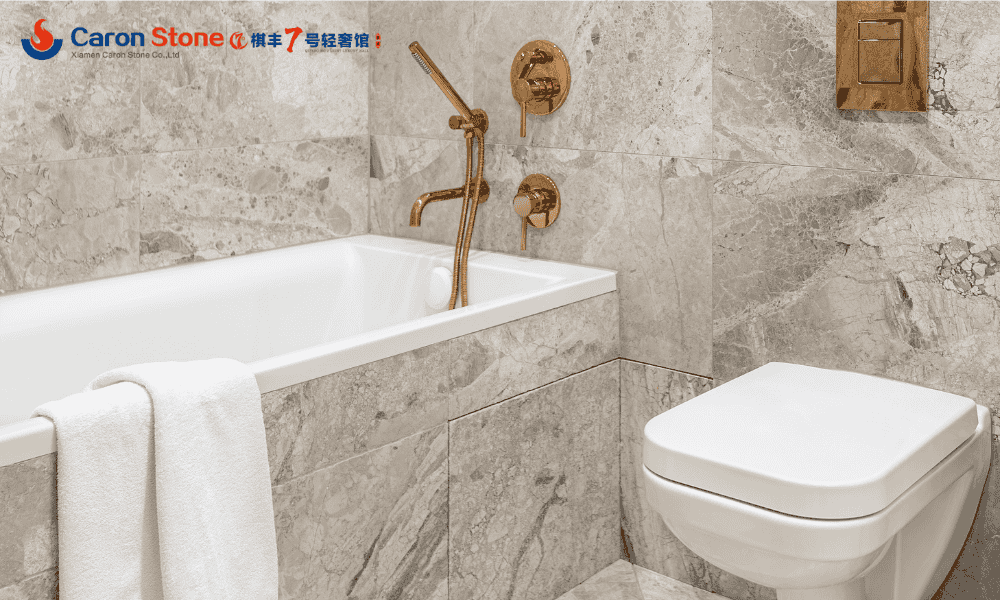
Anbieter von Marmorfliesen
Frequently Asked Questions About Non Slip Marble Tiles for Bathrooms
1. Are marble tiles safe for bathroom floors?
Marble tiles can be safe for bathroom floors when the correct finish, tile size, grout joints, drainage slope, sealing system and cleaning method are selected together. Polished marble may look luxurious, but it can become slippery when wet or soapy, so it needs careful review in bathroom floor applications. Honed, brushed, tumbled, mosaic and textured marble tiles are often more practical for wet walking zones. Buyers should also consider slip test information, maintenance requirements and installer quality before choosing marble for bathrooms.
2. Which marble finish is best for non slip bathroom floors?
Honed, brushed, tumbled and textured marble finishes are generally better choices than polished marble for non slip bathroom floors, especially in shower areas, wet rooms, hotel bathrooms and spa-style spaces. Honed marble provides a softer matte appearance, brushed marble adds tactile texture, and tumbled marble works well in mosaic formats with more grout joints. The best finish depends on the bathroom zone, wet exposure level, cleaning method, user group and available slip-resistance information.
3. Are polished marble tiles slippery in bathrooms?
Polished marble tiles can become slippery in bathrooms when the surface is wet, soapy or covered with shampoo, conditioner, bath oil or cleaning residue. Polished marble is usually better for walls, vanity backsplashes, decorative panels, powder rooms and low-wet-risk areas rather than shower floors. If polished marble is considered for a main bathroom floor, buyers should review slip-resistance information, drainage, cleaning protocol, user safety and whether a honed or textured finish would be more appropriate.
4. What tile size is best for a marble shower floor?
Small marble mosaics, such as 1×1 inch, 2×2 inch, hexagon, basketweave or small rectangular formats, are often practical for marble shower floors because they create more grout joints and can follow the slope toward the drain more easily. More grout joints can help foot traction, while small pieces help installers shape the floor around point drains or complex wet-room slopes. Large polished marble tiles are usually less practical for shower floors because they provide fewer traction lines and can make drainage more difficult.
5. How do I choose a marble tiles supplier?
Choose a marble tiles supplier that can provide finish samples, slip test information where available, water absorption data, stone test reports, thickness tolerance, calibration details, tile size options, custom cut-to-size support, sealer guidance, packing photos, batch control and replacement tile support. A strong supplier should ask whether the marble tiles will be used on a shower floor, main bathroom floor, wall, vanity, hotel bathroom or commercial wet area before recommending a finish. Avoid suppliers that quote only color and price without discussing safety and maintenance.
Referenzen
- ANSI A326.3 Dynamic Coefficient of Friction of Hard Surface Flooring Materials, Author: Tile Council of North America Technical Committee, Institution: ANSI and TCNA, Source: Flooring Slip Resistance Standard.
- Dynamic Coefficient of Friction Frequently Asked Questions, Author: TCNA Technical Team, Institution: Tile Council of North America, Source: Tile Safety Reference.
- ASTM C503/C503M Standard Specification for Marble Dimension Stone, Author: ASTM International, Institution: ASTM International, Source: Natural Stone Material Standard.
- ASTM C97 Standard Test Methods for Absorption and Bulk Specific Gravity of Dimension Stone, Author: ASTM International, Institution: ASTM International, Source: Stone Testing Standard.
- Dimension Stone Design Manual, Author: Natural Stone Institute Technical Committee, Institution: Natural Stone Institute, Source: Stone Design and Installation Reference.
- Natural Stone and Ceramic Tile Installation Guide, Author: Tile Industry Technical Contributors, Institution: TCNA and Installation Industry Publications, Source: Tile Installation Reference.
- Interior Design Materials and Specifications, Author: Lisa Godsey, Institution: Fairchild Books, Source: Interior Materials Specification Reference.
- Kitchen and Bath Products and Materials Planning Guide, Author: National Kitchen and Bath Association Contributors, Institution: NKBA, Source: Bathroom Planning Reference.
How Buyers Should Choose Non Slip Marble Tiles for Bathrooms
How should buyers choose marble tiles for bathroom floors?
Buyers should start with the bathroom zone. Shower floors need stronger slip control, smaller formats, more grout joints and proper drainage. Main floors can use larger honed or lightly textured tiles. Walls and backsplashes can focus more on visual effect because they are not walked on.
Why are polished marble tiles risky in wet areas?
Polished marble has a smooth reflective surface that can become slippery when wet or soapy. It is usually better for bathroom walls, powder rooms, vanity backsplashes and decorative areas than shower floors or continuously wet walking zones.
What option works best for shower floors?
Small honed, tumbled, brushed or textured marble mosaics are often practical for shower floors because they create more grout joints and can follow the slope to the drain. The finish should be reviewed with wet-area slip data where available.
What option works best for hotel bathrooms?
Hotel bathrooms should use finishes that balance luxury, slip resistance, cleaning durability and maintenance control. Honed marble floors, marble wall panels and carefully sealed vanity surfaces can work well when the cleaning team uses pH-neutral stone-safe products.
Consideration: What does sealer actually do?
Sealer helps reduce water and stain absorption, but it does not make a smooth floor automatically non slip. The surface finish, tile size, grout joint, slope, drainage and cleaning protocol still decide wet-floor performance.
Recommendation
Use polished marble where visual luxury matters and foot traffic is low. Use honed, tumbled, brushed or textured marble where wet walking safety matters. For shower floors, consider small mosaics and confirm drainage before installation.
Before ordering Badezimmer-Marmorfliesen, send your supplier the application zone, finish preference, tile size, wet exposure level, slip test request, thickness, quantity, packing requirement and maintenance expectation. A professional marble tiles supplier can recommend a safer specification before bulk production.