効率的に仕事をこなす







Learn why Mosaic Tiles are a smart kitchen backsplash investment, comparing stone vs porcelain, heat resistance, cleaning, timeless patterns, and ROI.
A kitchen backsplash is one of the smallest surfaces in a home renovation, but it has a surprisingly loud voice. Cabinets may define the storage. Countertops may define the work area. Yet the backsplash often decides whether the kitchen feels finished, premium, outdated, or rushed. That is why モザイクタイル remain one of the strongest return-on-investment choices for modern kitchens.
Imagine two similar kitchen renovations. One homeowner updates the countertop but keeps a plain painted wall behind the stove. After a few months, oil stains, steam marks, and sauce splashes start showing. Another homeowner adds Mosaic Tiles behind the cooktop and sink wall. The kitchen photographs better, cleans more easily, and feels intentionally designed. The cost difference may be controlled, but the visual difference is huge. Tiny tiles, big attitude.
Before choosing a backsplash, buyers should consider material, pattern, grout, heat exposure, cleaning habits, and resale value. If the project involves a premium home, rental refresh, residential development, or interior design package, it is worth asking a Mosaic Tiles supplier about material options, sheet size, installation method, sealing needs, and long-term maintenance before ordering.
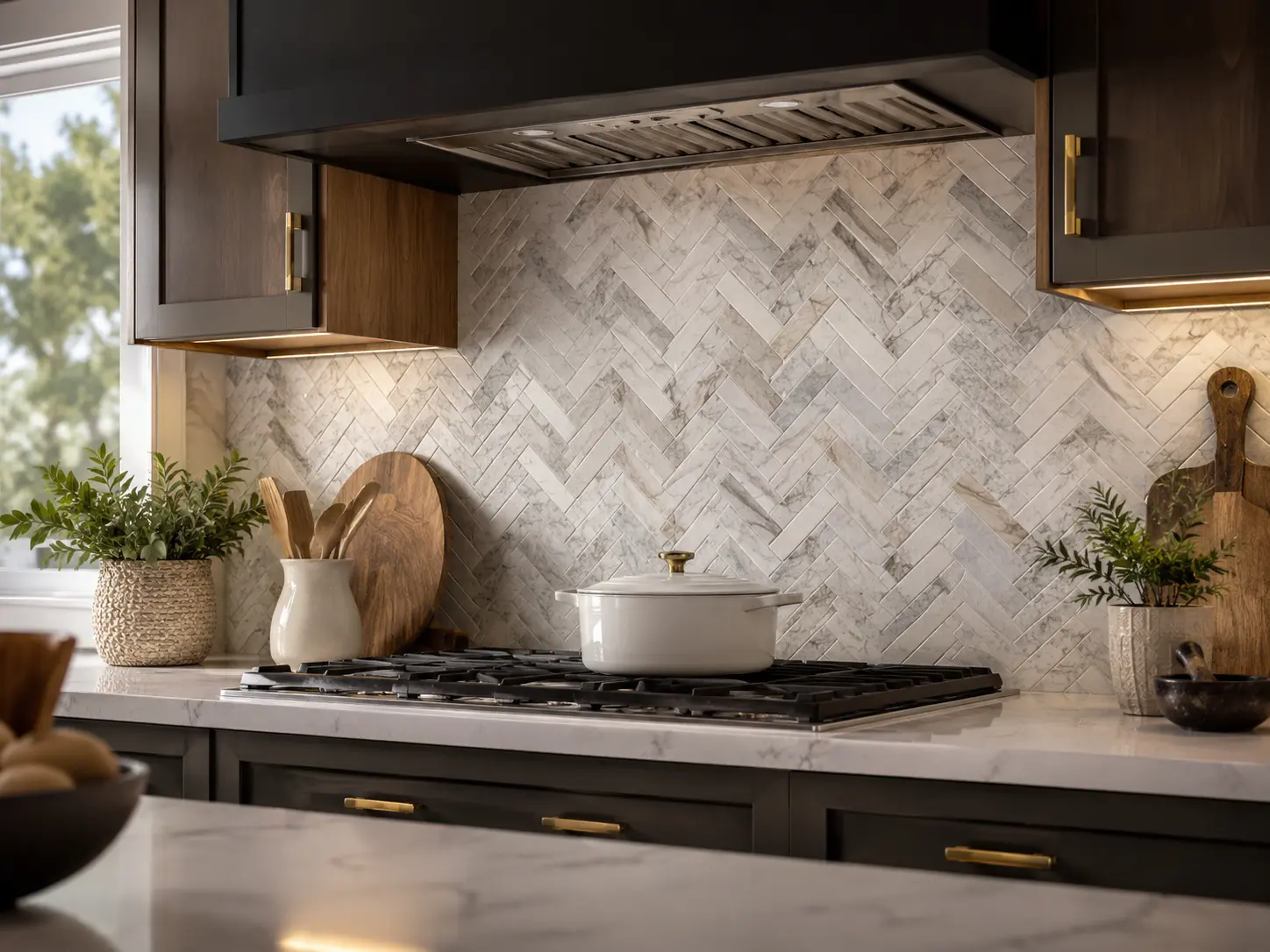
Mosaic Tiles for キッチン・バックスプラッシュ
内容
- 1 Quick ROI Summary: When Mosaic Tiles Are Worth It
- 2 What Makes Mosaic Tiles a Smart Kitchen Backsplash Investment?
- 3 Heat Resistance and Ease of Cleaning: Stone vs. Porcelain
- 4 Scaling Patterns: Using Large-Format vs. Tiny Mosaic Tiles
- 5 Timeless Shapes: Herringbone, Chevron, and Arabesque
- 6 Other Mosaic Tile Materials Buyers Should Compare
- 7 Kitchen Backsplash ROI: Where the Value Comes From
- 8 Material Parameters Buyers Should Check
- 9 Installation Factors That Protect ROI
- 10 Common Buyer Mistakes When Choosing Mosaic Tiles
- 11 Buyer RFQ Checklist for Mosaic Tile Backsplashes
- 12 Final Recommendation: Choose Mosaic Tiles by ROI, Not Just Romance
- 13 Frequently Asked Questions About Mosaic Tiles for Kitchen Backsplashes
- 14 How Buyers Should Evaluate Mosaic Tiles for Kitchen Backsplash ROI
Quick ROI Summary: When Mosaic Tiles Are Worth It
Mosaic Tiles are most valuable when the kitchen needs a visible design upgrade without a full renovation. Because the backsplash area is smaller than flooring or countertop surfaces, homeowners can often use better materials without destroying the budget. This is why marble mosaics, porcelain mosaics, glass mosaics, travertine mosaics, and mixed-material mosaics remain popular in modern homes.
A reliable Mosaic Tiles manufacturer should help buyers match the tile material to the kitchen use case, not just the showroom look. A delicate stone mosaic may be beautiful, but it needs the right sealer and cleaner. A porcelain mosaic may be more practical behind a stove. A sculptural mosaic may look amazing on a feature wall but become annoying if grease collects in every tiny groove. Design is fun; maintenance sends the invoice.
| Kitchen Scenario | Are Mosaic Tiles Worth It? | Recommended Type | Buyer Risk to Check |
|---|---|---|---|
| Modern kitchen renovation | はい | Porcelain, marble, glass, or mixed mosaic | Pattern must match countertop and cabinet style |
| Luxury kitchen upgrade | はい | Natural stone or premium porcelain mosaic | Sealing and grout maintenance |
| Rental property refresh | Often yes | Porcelain mosaic | Installation cost and easy cleaning |
| Behind stove backsplash | はい | Porcelain or sealed stone mosaic | Grease, heat, steam, and cleaning chemicals |
| Small kitchen | はい | Light-color small or medium mosaic | Busy patterns may visually shrink the space |
| Large open kitchen | はい | Large-format mosaic or bold pattern zone | Pattern scale and visual balance |
What Makes Mosaic Tiles a Smart キッチン・バックスプラッシュ Investment?
High Visual Impact in a Small Surface Area
The backsplash sits between the countertop and wall cabinets, directly in the viewer’s line of sight. That makes it one of the most efficient places to add design value. A premium backsplash can make existing cabinets look newer, connect countertop colors with wall finishes, and create a stronger focal point behind the range hood or sink.
Compared with replacing flooring, cabinets, or stone countertops, the backsplash usually requires a smaller material quantity. This gives homeowners and designers more room to choose premium materials. Buyers can review 石モザイクタイル when they want natural variation, texture, and high-end surface character for a kitchen backsplash or decorative wall zone.
The ROI is not only financial. It is visual, functional, and emotional. A well-installed mosaic backsplash makes the kitchen feel finished. In real estate photos, it can make the space look more upgraded. In daily use, it protects the wall from cooking splashes. In design terms, it gives the room a center of gravity.
Wall Protection and Daily Function
A kitchen backsplash must handle water, steam, oil mist, tomato sauce, coffee, soap, spice splashes, and frequent wiping. Painted drywall behind a stove may look acceptable at first, but it rarely performs well under real cooking conditions. Mosaic Tiles create a cleaner, harder, more protective surface.
The tile itself is only part of the system. Grout, adhesive, sealing, and installation quality matter. A durable tile with poor grout can still become a maintenance headache. A beautiful stone mosaic with the wrong cleaner can lose its finish. The villain is often not the tile. It is the tiny grout line quietly plotting in the background.
Design Flexibility for Modern Homes
Mosaic Tiles work across many kitchen styles: modern, transitional, farmhouse, Mediterranean, minimalist, luxury, coastal, café-inspired, and classic. They can be made from marble, travertine, limestone, porcelain, glass, metal-inlay materials, or mixed stone. They also come in many shapes: herringbone, chevron, arabesque, hexagon, penny round, basketweave, subway mosaic, picket, and 3D sculptural forms.
For homeowners who want a safe resale look, neutral herringbone or marble-look porcelain mosaics are strong choices. For designers who want a statement, arabesque, chevron, or dimensional tiles can create a stronger focal wall. For rental properties, porcelain mosaics usually provide better maintenance control.
Heat Resistance and Ease of Cleaning: Stone vs. Porcelain
Why Heat and Cleaning Matter Behind the Stove
The stove area is the hardest-working backsplash zone. It faces heat, steam, oil, sauce, smoke residue, and frequent wiping. A backsplash behind a decorative coffee bar has a much easier life than one behind a serious cooktop. Buyers should choose materials based on cooking habits, not just mood board photos.
For design inspiration, material combinations, and application trends, this 2026 Mosaic Tiles design guide is useful because modern backsplashes are no longer chosen by color alone. They are selected by material performance, pattern scale, texture, cleaning behavior, and how the tile fits the whole kitchen story.
If the homeowner cooks heavily, choose a smoother surface and practical grout. If the backsplash is mostly decorative, more textured materials may be acceptable. If the backsplash is natural stone, sealing and pH-neutral cleaning should be part of the decision from day one.
Porcelain Mosaic Tiles for Kitchen Backsplashes
Porcelain mosaic tiles are often selected for kitchens because they offer low water absorption, stable color, wide design range, and easier cleaning. ANSI A137.1 covers ceramic tile types, sizes, physical properties, and grading procedures, and porcelain classification is commonly associated with water absorption of 0.5% or less when tested by ASTM C373.
For busy kitchens, porcelain is often the safest practical choice. It can imitate marble, stone, cement, zellige, or handmade textures while offering lower maintenance than many natural stones. It works especially well behind stoves, sinks, rental kitchens, family kitchens, and homes where easy cleaning matters more than natural stone authenticity.
Stone Mosaic Tiles for Kitchen Backsplashes
Stone mosaic tiles offer natural variation, depth, and a premium look. Marble herringbone, travertine mosaic, limestone basketweave, and mixed stone mosaics can make a kitchen feel more custom and expensive. For high-end homes, stone often creates stronger perceived craftsmanship than basic flat tile.
The tradeoff is maintenance. Many natural stones are more sensitive to acidic foods, harsh cleaners, grease, and staining. Natural Stone Institute recommends neutral cleaners, stone soap, or mild liquid detergent with warm water for stone care. Buyers should avoid assuming stone mosaics are maintenance-free. They are gorgeous, not invincible.
| Factor | 石モザイクタイル | Porcelain Mosaic Tiles | Buyer Decision Logic |
|---|---|---|---|
| Heat exposure | Generally suitable, depending on stone and finish | Strong practical choice for backsplash use | Behind stove → porcelain is safer for low maintenance |
| クリーニング | Often needs pH-neutral care | Usually easier with approved tile cleaners | Heavy cooking → choose porcelain or sealed stone |
| Stain risk | Medium to high depending on stone | Lower | Family kitchen → porcelain often wins |
| Visual depth | Natural and premium | Can imitate stone depending on quality | Luxury authenticity → stone has stronger character |
| メンテナンス | Sealing may be required | Lower maintenance | Rental property → porcelain is usually better |
Scaling Patterns: Using Large-Format vs. Tiny Mosaic Tiles
Why Mosaic Scale Changes the Kitchen Feeling
Pattern scale affects how a kitchen feels. Tiny mosaics add detail, texture, and charm, but too many small pieces can create visual noise. Larger mosaic formats feel cleaner and more modern, especially in open kitchens where the backsplash is seen from a distance.
Small kitchens often benefit from light colors, moderate contrast, and controlled patterns. Large kitchens can handle more movement, larger shapes, and full-height backsplash applications. Open-plan kitchens need a pattern that looks good both close-up and from across the room.
Tiny Mosaic Tiles: Detail, Texture, and Traditional Charm
Tiny Mosaic Tiles include penny rounds, mini hexagons, micro herringbone, basketweave, and small brick mosaics. They work well in coffee bars, small backsplash zones, vintage kitchens, niche walls, and decorative borders. Their strength is detail. Their weakness is grout volume.
More grout means more maintenance. A tiny textured mosaic behind a heavy-use stove may collect grease faster than a smoother tile. If the homeowner wants an old-world or handcrafted look, tiny mosaics can be beautiful. If the homeowner hates cleaning, choose carefully. The tile may be cute, but the sponge will know the truth.
Larger Mosaic Formats: Cleaner Luxury and Faster Visual Read
Larger mosaic formats include elongated herringbone, large hexagon mosaics, long picket tiles, extended subway mosaics, chevron planks, and modular geometric patterns. These are especially useful in open-plan kitchens, full-height backsplash walls, and luxury homes where the backsplash needs to feel architectural rather than decorative.
Large-format mosaic patterns often create fewer grout lines and a cleaner look. However, they require careful layout around outlets, cabinet edges, window frames, and range hoods. If the pattern is not centered properly, the mistake becomes very visible.
| Mosaic Scale | Best Use | Visual Effect | Risk |
|---|---|---|---|
| Tiny mosaic | Accent zones, vintage kitchens, small feature walls | Detailed and textured | More grout and possible visual busyness |
| Medium mosaic | Most kitchen backsplashes | Balanced and flexible | Needs layout control |
| Large-format mosaic | Open kitchens and full-height walls | Clean and modern | Pattern repeat and outlet cuts |
| Mixed-scale mosaic | Luxury custom kitchens | Bespoke and layered | Higher installation complexity |
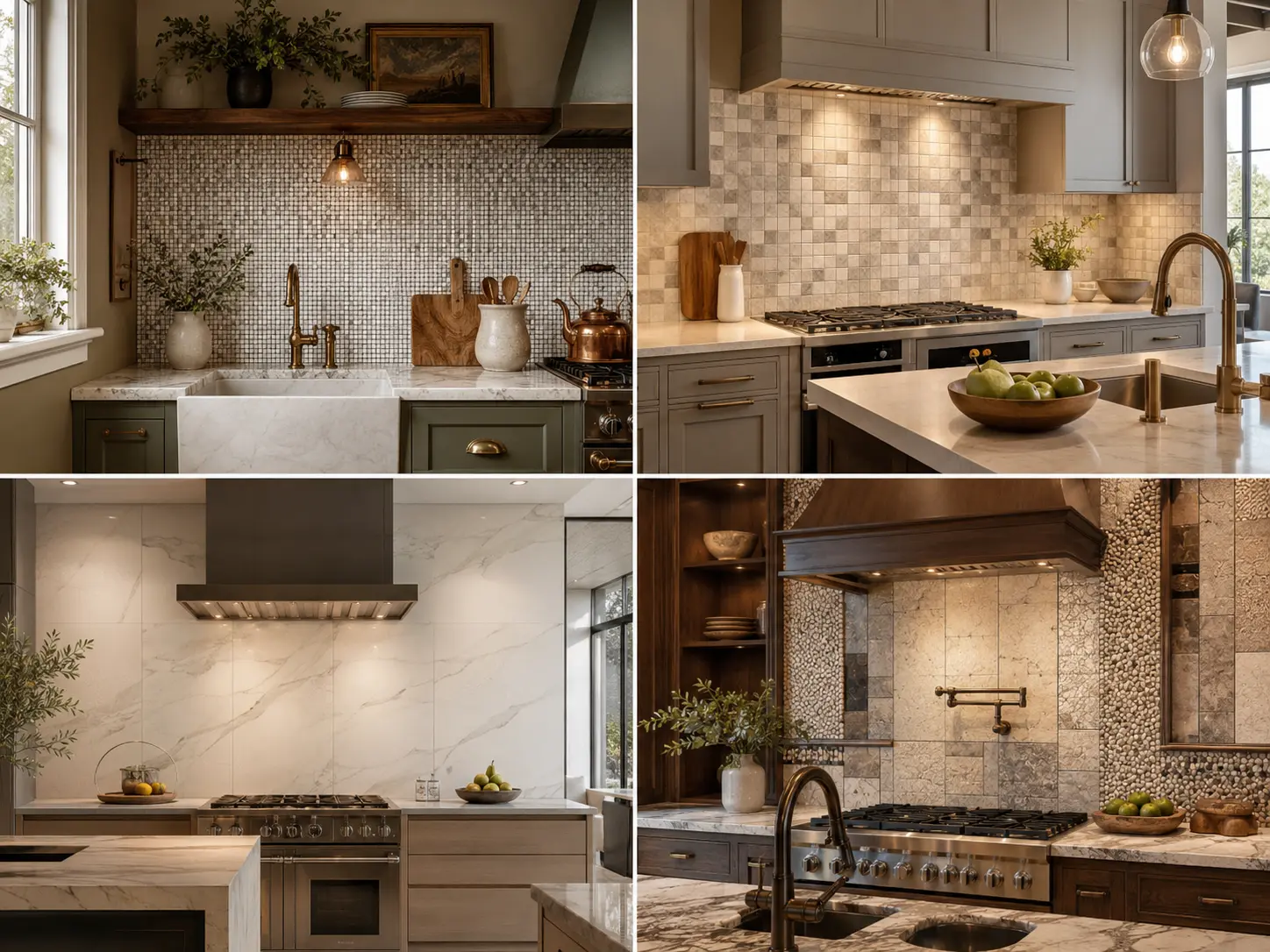
Mosaic Tiles Application
Timeless Shapes: Herringbone, Chevron, and Arabesque
Herringbone Mosaic Tiles
Herringbone mosaic tiles are among the safest long-term choices because they add movement without feeling too trendy. The angled layout works well with marble, porcelain, travertine, and glass mosaics. It can suit modern, transitional, farmhouse, and classic kitchens.
If the kitchen has a dramatic stone countertop, use a softer herringbone mosaic with matching grout. If the cabinets and countertop are plain, herringbone can add just enough movement to keep the space interesting. For resale value, neutral herringbone remains one of the most reliable choices.
Chevron Mosaic Tiles
Chevron is sharper and more directional than herringbone. It creates a continuous V pattern that feels modern, crisp, and energetic. It works beautifully behind range hoods, open shelves, and full-height backsplash walls.
The risk is intensity. High-contrast chevron can feel busy, especially in small kitchens. Installation also needs precision because misaligned chevron points are immediately noticeable. If the buyer wants bold but controlled design, chevron is strong. If the buyer wants gentle movement, herringbone is safer.
Arabesque Mosaic Tiles
Arabesque mosaic tiles bring curved elegance and decorative identity. They work well in classic kitchens, Mediterranean homes, boutique-style interiors, and soft luxury projects. Arabesque is especially effective behind a cooktop or in a framed backsplash panel.
However, arabesque can become too ornate for minimalist homes. If resale neutrality is important, use it in controlled zones instead of covering every wall. It is a beautiful shape, but it likes attention. Give it a stage, not the entire theater.
For buyers watching 2026 interior direction, earth-toned Mosaic Tiles are especially relevant because warm neutrals, soft beige, taupe, cream, and stone-inspired palettes are replacing cold, overly sterile kitchens. These colors help classic shapes feel updated rather than old-fashioned.
| 形状 | Design Mood | Best Kitchen Style | Buyer Risk |
|---|---|---|---|
| Herringbone | Timeless movement | Modern, transitional, classic | Poor alignment reduces quality |
| Chevron | Bold and directional | Contemporary and luxury kitchens | Can feel busy in high contrast |
| Arabesque | Decorative and elegant | Classic, Mediterranean, boutique | May be too ornate for minimalist homes |
| Hexagon | Modern geometric | Urban, Scandinavian, casual luxury | Trend-sensitive color choices |
| Penny round | Vintage and playful | Retro, cottage, café-style | More grout maintenance |
Other Mosaic Tile Materials Buyers Should Compare
Glass Mosaic Tiles
Glass mosaics reflect light and can make dark kitchens feel brighter. They work well in small kitchens, contemporary spaces, and backsplashes where light reflection is useful. The limitation is that lower-quality glass mosaics may feel less premium in luxury homes, and fingerprints or streaks can be more visible on glossy surfaces.
Marble Mosaic Tiles
Marble mosaics deliver natural elegance and are especially strong in herringbone, basketweave, and arabesque layouts. They pair well with white cabinets, warm wood, brass hardware, and stone countertops. The risk is acid sensitivity and sealing needs. For heavy cooking areas, buyers should confirm maintenance expectations before choosing marble.
Travertine and Limestone Mosaic Tiles
Travertine and limestone mosaics bring warmth, texture, and a Mediterranean feeling. They are beautiful in earthy kitchens and warm minimal interiors. The risk is porosity and cleaning sensitivity. They need careful sealing and should be cleaned with appropriate products.
3D and Sculptural Mosaic Tiles
Textured mosaics are becoming popular because they add shadow, depth, and handcrafted character. They are excellent for feature walls, pantry bars, coffee stations, and lower-splash decorative zones. For stove backsplashes, buyers should be careful because deep texture can trap grease.
This trend is explained well in the rise of 3D texture and sculptural Mosaic Tiles, where the backsplash becomes more than a flat surface. It becomes a tactile design element. The key is placement: sculptural texture belongs where it can shine without becoming a cleaning punishment.
Kitchen Backsplash ROI: Where the Value Comes From
Better Listing Photos and Visual Appeal
Kitchens sell emotion quickly. In property listings, a good backsplash can make the kitchen feel finished, updated, and worth attention. Mosaic Tiles help create a stronger photo moment without requiring a full kitchen remodel.
Lower Wall Maintenance Compared With Painted Drywall
Tile protects the wall from splashes, steam, and food stains better than paint. This is especially important behind stoves and sinks. A properly installed mosaic backsplash can reduce repainting and wall repair needs.
Higher Perceived Craftsmanship
Well-installed Mosaic Tiles show detail and intentional design. Even a simple white herringbone backsplash can communicate craftsmanship when lines are aligned, grout is clean, and transitions are planned well.
Targeted Investment
The backsplash is a targeted investment. Buyers do not need to replace an entire room to change the kitchen mood. This is why Mosaic Tiles can deliver strong ROI: controlled surface area, high visibility, and practical wall protection.
Material Parameters Buyers Should Check
| パラメータ | なぜ重要なのか | Buyer Checkpoint | Risk If Ignored |
|---|---|---|---|
| 吸水 | Affects moisture and stain behavior | Porcelain is usually low absorption; stone varies | Staining, dark spots, moisture marks |
| Heat exposure | Important behind cooktops | Confirm suitability behind stove | Discoloration, adhesive issues, difficult cleaning |
| Grout type | Controls stain resistance and maintenance | Cementitious or epoxy grout | Dirty grout lines and poor appearance |
| Tile thickness | Affects trims, outlets, and transitions | Check compatibility with cabinets and countertop | Awkward edges and outlet problems |
| Mesh backing quality | Controls sheet stability and alignment | Inspect sheet flatness and spacing | Crooked pattern and installation waste |
| Sealing requirement | Important for stone and grout | Ask for sealer guidance | Stains, etching, and maintenance complaints |
Installation Factors That Protect ROI
Layout Planning
Good layout makes Mosaic Tiles look expensive. Poor layout makes even premium material look careless. Buyers and installers should confirm centerlines, range hood alignment, outlet locations, cabinet edge transitions, pattern direction, border design, and cut visibility before installation begins.
Grout Color Selection
Grout changes the entire look of the backsplash. Matching grout creates a softer and more seamless appearance. Contrasting grout highlights the pattern. Dark grout can hide some staining but may make the design feel busier. Light grout looks clean but needs more care.
If resale neutrality matters, choose matching or soft-contrast grout. If bold design matters, use contrast carefully. The grout color is not a tiny decision. It is basically the tile’s eyeliner.
Installer Skill
Mosaic Tiles expose installation shortcuts quickly. Chevron points, herringbone angles, arabesque curves, and tiny grout lines all require careful alignment. Buyers should not choose the cheapest installer for complex mosaics if the goal is premium ROI.
Common Buyer Mistakes When Choosing Mosaic Tiles
Mistake 1: Choosing Pattern Before Considering Cleaning
Tiny textured mosaics may look beautiful, but they can trap grease behind a heavy-use stove. If the homeowner cooks frequently, cleaning should be part of the pattern decision.
推奨事項: use smoother porcelain or sealed stone in high-splash cooking zones.
Mistake 2: Ignoring Grout Maintenance
Many backsplash complaints come from grout, not tile. Grout can stain, crack, discolor, or collect grease if the wrong type is used.
推奨事項: choose grout based on cooking habits, cleaning expectations, and tile material.
Mistake 3: Using Too Many Competing Patterns
A dramatic countertop plus a dramatic backsplash plus strong cabinet grain can make the kitchen feel visually crowded.
推奨事項: if the countertop has strong veining, choose subtle Mosaic Tiles. If the countertop is simple, the backsplash can carry more pattern.
Mistake 4: Choosing Trendy Colors for Resale Homes
Bold colors may be fun, but they can reduce broad resale appeal. Not every buyer wants a turquoise fish-scale backsplash. Shocking, but true.
推奨事項: for resale-focused kitchens, choose timeless neutrals and classic shapes.
Mistake 5: Not Ordering Extra Tiles
Mosaic Tiles require cuts around outlets, corners, cabinets, and range hoods. Future repairs also need matching stock.
推奨事項: order a waste allowance and keep extra sheets for future replacement.
Buyer RFQ Checklist for Mosaic Tile Backsplashなど、
| RFQ Item | What Buyers Should Confirm | なぜ重要なのか |
|---|---|---|
| Kitchen style | Modern, classic, farmhouse, luxury, rental, resale | Guides material and pattern choice |
| Backsplash area | Square footage and wall dimensions | Determines quantity and pattern layout |
| Material type | Stone, porcelain, glass, metal-inlay, mixed | Controls cleaning and maintenance |
| Tile shape | Herringbone, chevron, arabesque, hexagon, penny, subway | Affects style and installation complexity |
| Grout plan | Color, type, sealing requirement | Protects long-term appearance |
| Heat zone | Behind range, cooktop, sink, or coffee station | Helps select cleaner and more durable surfaces |
| Waste allowance | Extra sheets for cuts and repairs | Avoids shortage and future mismatch |
Final Recommendation: Choose Mosaic Tiles by ROI, Not Just Romance
Mosaic Tiles are a smart kitchen backsplash investment when they improve the most visible wall area, protect against splashes, match the countertop and cabinets, and remain practical to clean. For low-maintenance kitchens, porcelain mosaics are usually the safest option. For luxury homes where natural variation matters, marble or stone mosaics can create stronger visual value if sealing and cleaning are handled properly.
If the kitchen is small, choose light colors and controlled pattern scale. If the kitchen is large and open, consider larger mosaics or a full-height feature backsplash. If resale matters, herringbone and neutral stone-look mosaics are safer. If personality matters, chevron, arabesque, or sculptural mosaics can create a stronger design statement.
Before ordering Mosaic Tiles, prepare your cabinet color, countertop material, cooking habits, backsplash area, pattern preference, grout color, grout type, cleaning expectations, and installation budget. A professional Mosaic Tiles supplier can help match the right material, shape, and finish to your home design and ROI goal.
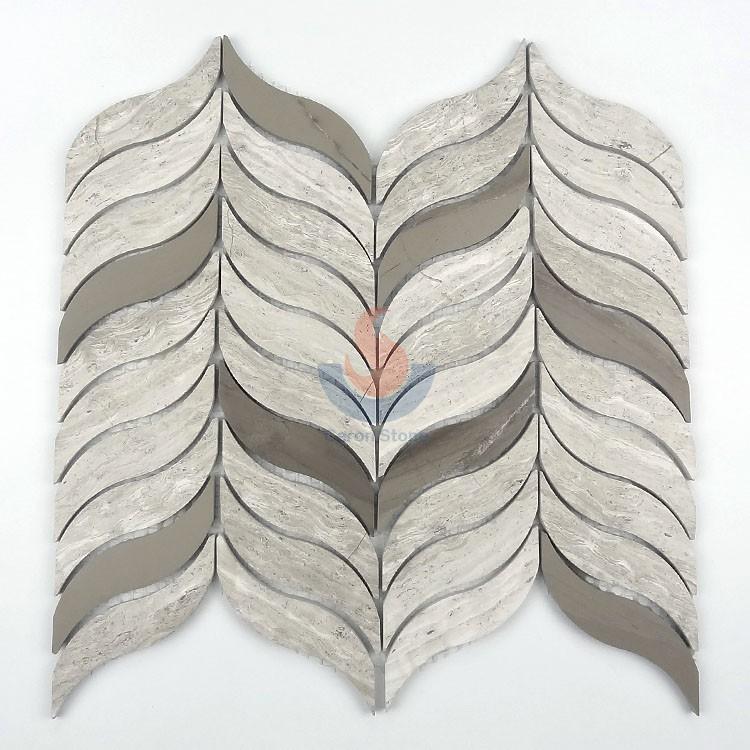 木製の穀物の葉の形の大理石のモザイク タイル |
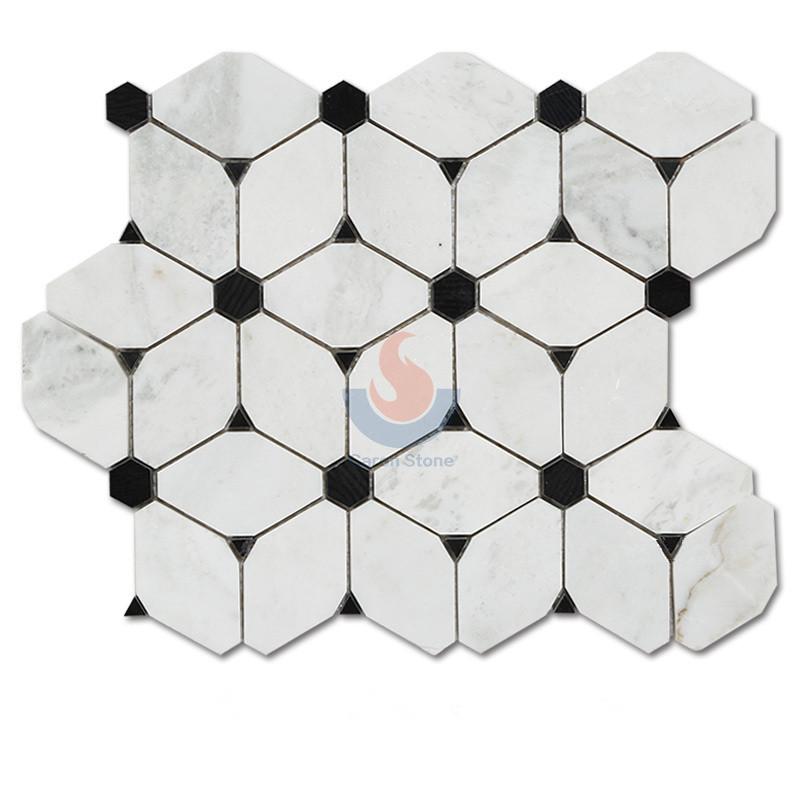 天然オリエンタルホワイト大理石ロング八角形フラワーモザイクタイル |
Frequently Asked Questions About Mosaic Tiles for Kitchen Backsplashes
1. Are Mosaic Tiles good for kitchen backsplashes?
Mosaic Tiles are good for kitchen backsplashes because they protect walls from water, steam, grease, sauce, and daily cooking splashes while adding strong design value. They work well in modern, classic, farmhouse, luxury, and transitional kitchens. The key is choosing the right material and grout system for the cooking habits of the home. Porcelain mosaics are often easier to maintain, while stone mosaics provide natural beauty but may need sealing and gentler cleaning. A well-installed mosaic backsplash can improve kitchen appearance without requiring a full renovation.
2. What is better for a kitchen backsplash: stone or porcelain mosaic?
Porcelain mosaic is usually better for homeowners who want low maintenance, lower water absorption, consistent color, and easier cleaning behind stoves and sinks. Stone mosaic is better for buyers who want natural variation, premium texture, and a more luxurious look. Marble, travertine, and limestone mosaics can look beautiful, but they may require sealing and pH-neutral cleaning. For rental properties, busy family kitchens, and heavy cooking areas, porcelain is often the safer choice. For high-end kitchens where the owner accepts maintenance, stone can deliver stronger design character.
3. Are Mosaic Tiles hard to clean behind a stove?
Mosaic Tiles are not necessarily hard to clean behind a stove, but the difficulty depends on surface texture, grout type, tile material, and cooking habits. Smooth porcelain mosaics with suitable grout are usually easier to clean because they resist moisture and staining better than many porous materials. Tiny textured mosaics, rough stone surfaces, and unsealed grout can collect grease and require more maintenance. Buyers who cook frequently should avoid overly deep textures behind the stove and choose materials that can be wiped easily with approved cleaners.
4. Which mosaic tile pattern is most timeless?
Herringbone is usually one of the most timeless mosaic tile patterns because it adds movement without feeling too trendy. It works well in modern, transitional, classic, and farmhouse kitchens. Chevron is more directional and contemporary, making it better for bold feature walls or luxury kitchens. Arabesque is elegant and decorative, but it may be too ornate for minimalist homes or resale-focused projects if used over a large area. For broad resale appeal, neutral herringbone, subtle hexagon, or stone-look porcelain mosaics are often safer long-term choices.
5. Do Mosaic Tiles increase home value?
Mosaic Tiles can increase perceived home value when they are well chosen, properly installed, and matched with the cabinets, countertops, and overall kitchen style. They improve photo appeal, protect the wall, and make the kitchen feel more finished. The strongest ROI usually comes from timeless patterns, neutral colors, practical materials, and clean installation. Mosaic Tiles may not directly guarantee a higher sale price, but they can improve buyer perception and help a kitchen look upgraded without the cost of replacing cabinets, floors, or countertops.
参考文献
- ANSI A137.1: American National Standard Specifications for Ceramic Tile, American National Standards Institute and Tile Council of North America, Ceramic Tile Standards.
- ASTM C373: Standard Test Methods for Determination of Water Absorption and Associated Properties by Vacuum Method, ASTM International, Ceramic Tile Testing Standards.
- Natural Stone Care and Maintenance Guide, Natural Stone Institute, Consumer Stone Care Resources.
- Dimension Stone Design Manual, Natural Stone Institute, Technical Design Manual.
- TCNA Handbook for Ceramic, Glass, and Stone Tile Installation, Tile Council of North America, Installation Standards and Methods.
- ANSI A108/A118/A136: American National Specifications for the Installation of Ceramic Tile, American National Standards Institute and Tile Council of North America.
- Kitchen Trends Study, National Kitchen and Bath Association, Residential Kitchen Design Research.
- The Interior Design Reference and Specification Book, Chris Grimley and Mimi Love, Rockport Publishers.
How Buyers Should Evaluate Mosaic Tiles for Kitchen Backsplash ROI
How do Mosaic Tiles improve kitchen backsplash ROI?
Mosaic Tiles improve kitchen backsplash ROI by upgrading a highly visible surface without requiring a full kitchen renovation. They protect the wall from splashes, add texture and pattern, improve listing photos, and create a more finished kitchen appearance. Because the backsplash area is relatively small, buyers can often use premium materials while keeping the total project cost controlled.
Why does material choice matter for backsplash performance?
Material choice affects cleaning, stain resistance, heat exposure, maintenance, and long-term appearance. Porcelain mosaic tiles are often better for low-maintenance kitchens and rental properties. Stone mosaic tiles provide natural beauty and luxury depth, but they may need sealing and gentler cleaners, especially behind stoves and sinks.
What option works best for modern homes?
For modern homes, medium-scale porcelain mosaics, marble-look mosaics, herringbone patterns, soft neutrals, and warm earth-toned designs often provide the best balance of style and practicality. They feel updated without becoming too trendy, which supports both daily use and resale appeal.
What option works best for luxury kitchens?
For luxury kitchens, marble mosaics, stone mosaics, metal-inlay mosaics, arabesque patterns, and refined chevron layouts can create stronger design identity. These options work best when paired with careful grout selection, skilled installation, and a maintenance plan that matches the material.
Consideration: What risks should buyers check before ordering?
Buyers should check water absorption, heat exposure, grout type, tile thickness, mesh backing quality, pattern scale, sealing requirement, cleaning method, outlet layout, range hood alignment, and waste allowance. These details decide whether the backsplash looks premium after installation and stays practical in daily kitchen use.
Recommendation
If the kitchen is used heavily, choose smooth porcelain mosaics or sealed stone with practical grout. If the kitchen is designed for resale, choose neutral herringbone or soft geometric mosaics. If the kitchen needs a focal point, use chevron, arabesque, or sculptural mosaics in controlled zones. Always confirm maintenance before choosing texture.
Before choosing Mosaic Tiles for a kitchen backsplash, prepare your cabinet color, countertop style, backsplash dimensions, cooking habits, preferred pattern, grout color, and cleaning expectations. A professional mosaic tile backsplash supplier can help match the right product to your design and ROI target.

強い
こんにちは、私はこの記事の著者です。石材工学と石材家具のOEMとODMサービスが必要でしたら、お気軽にご相談ください。