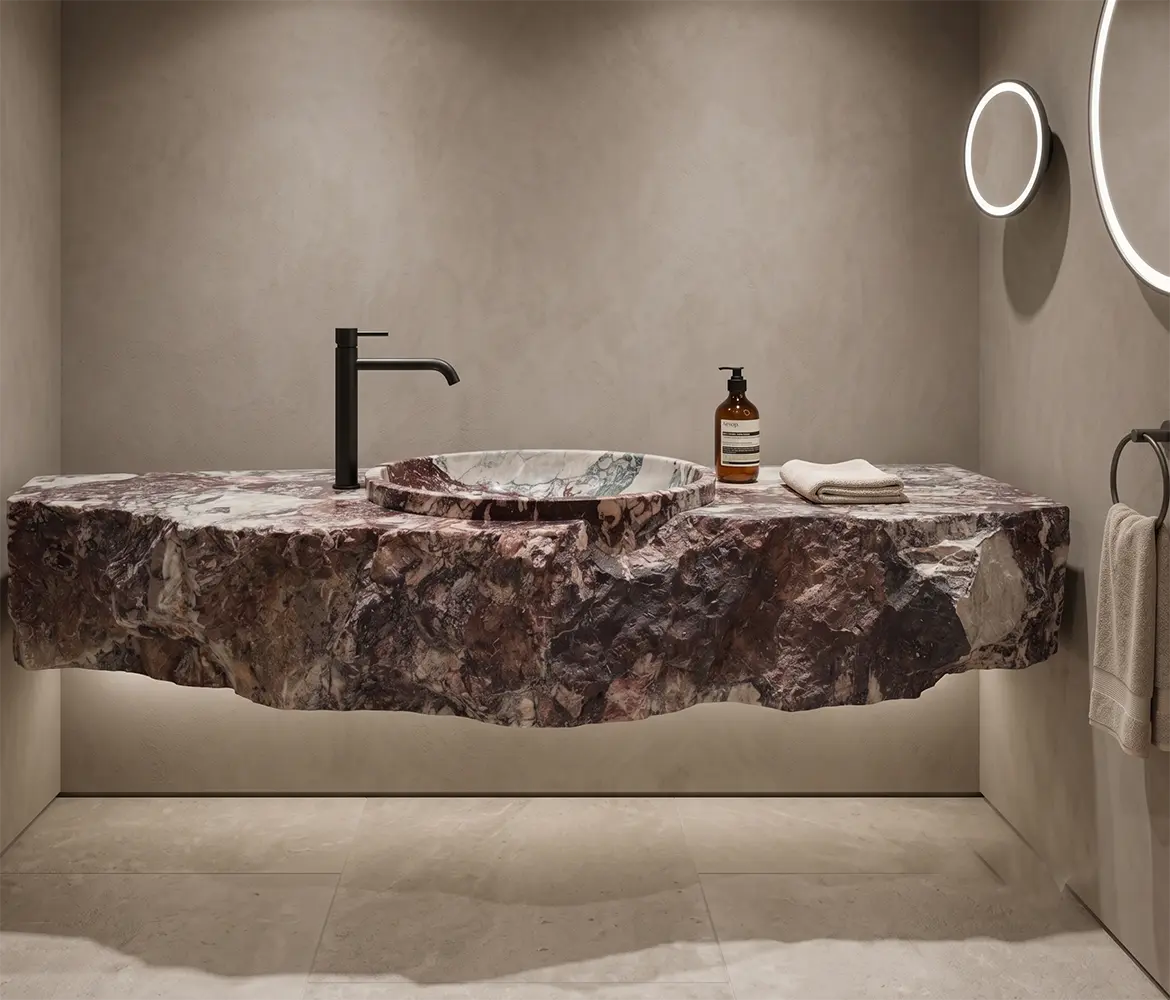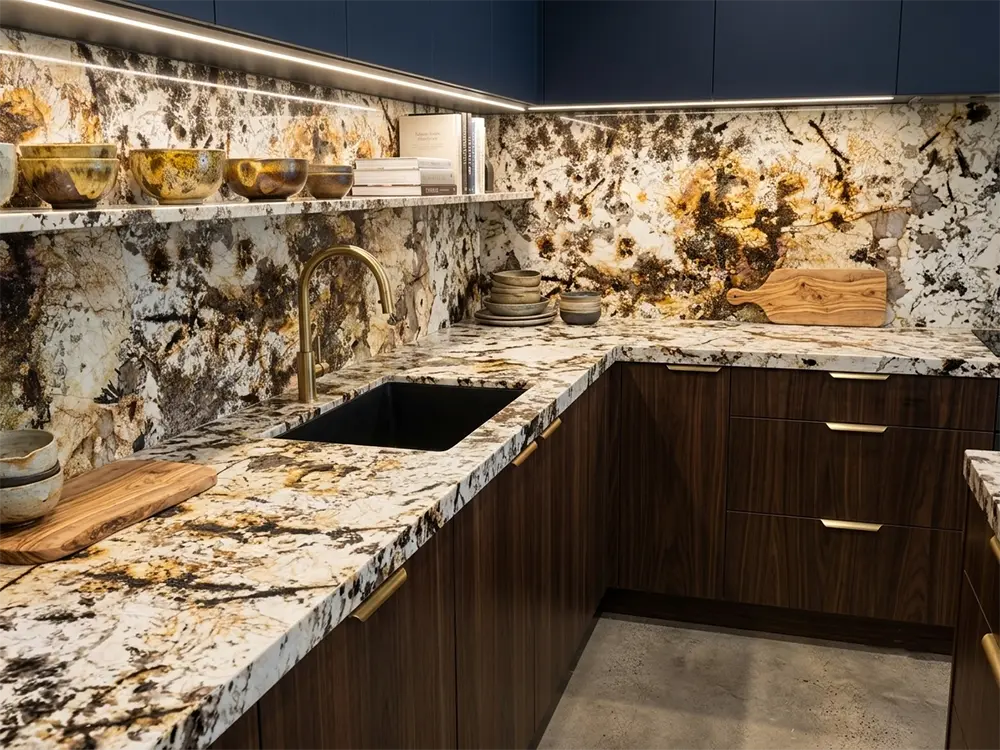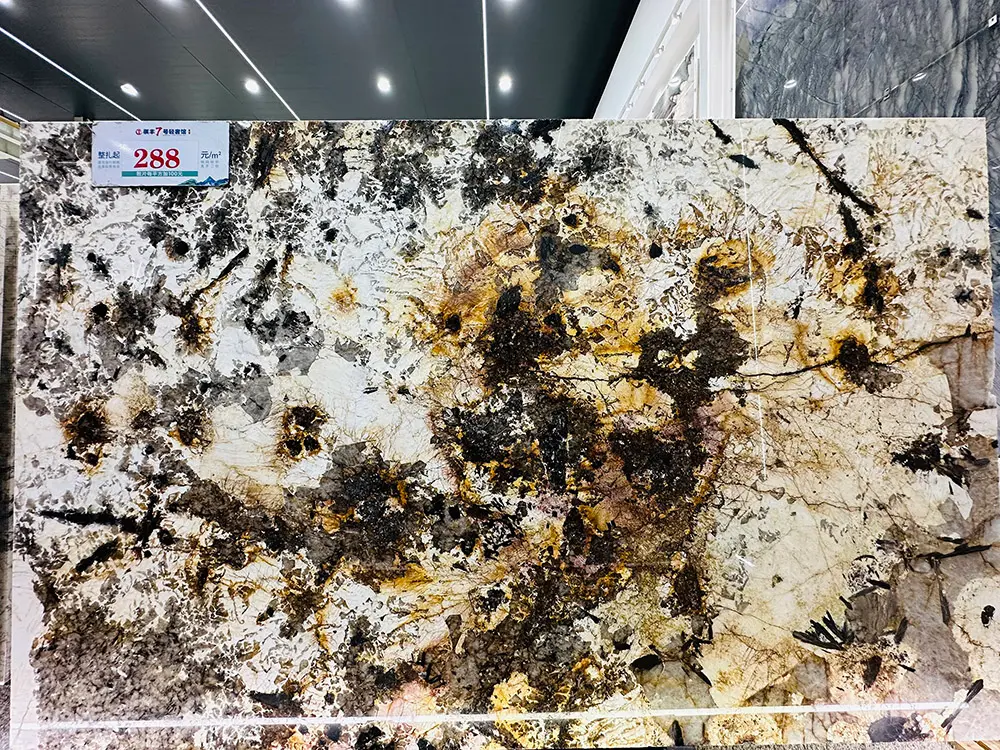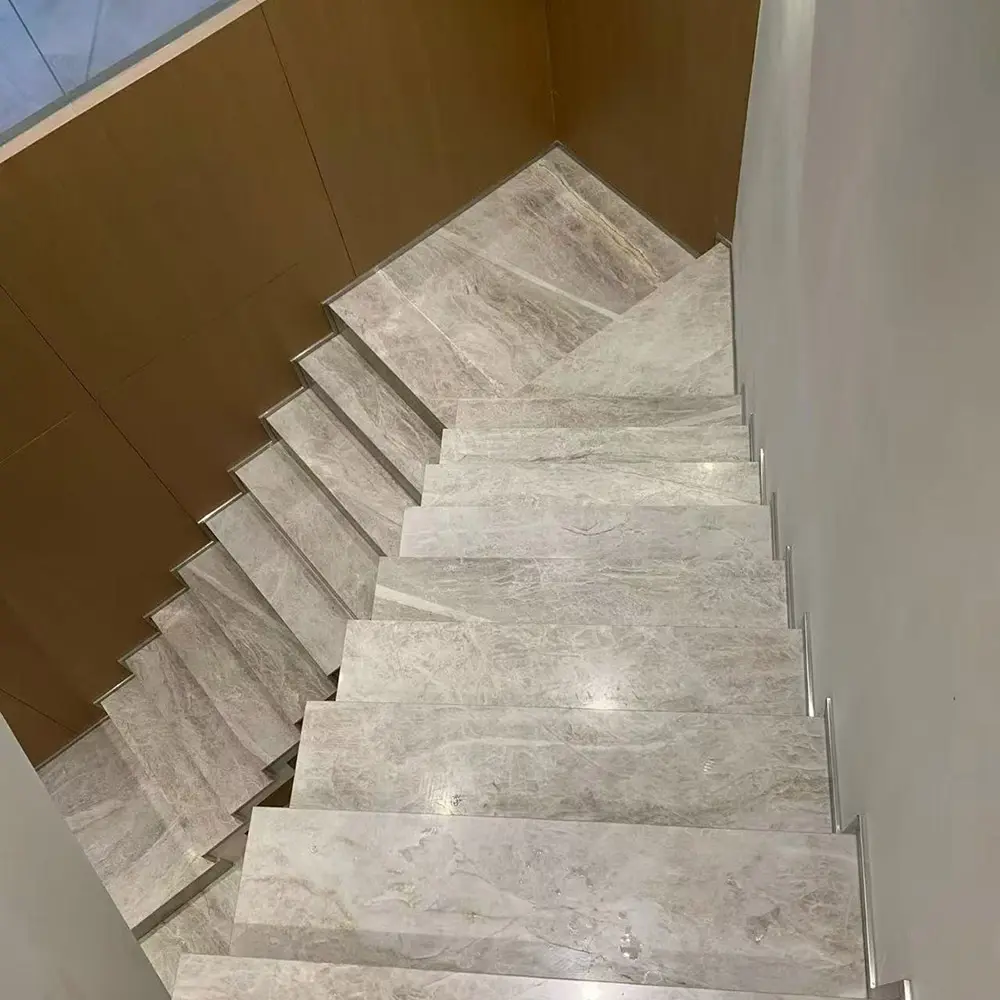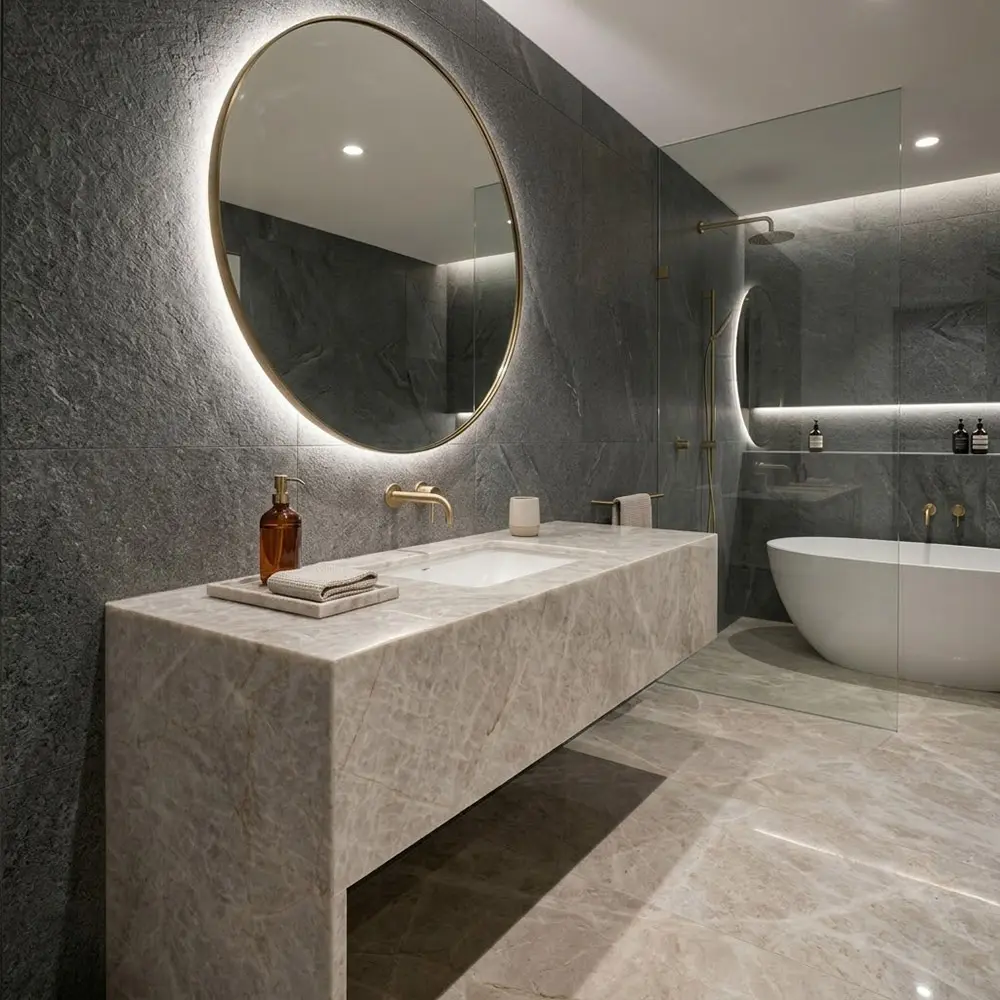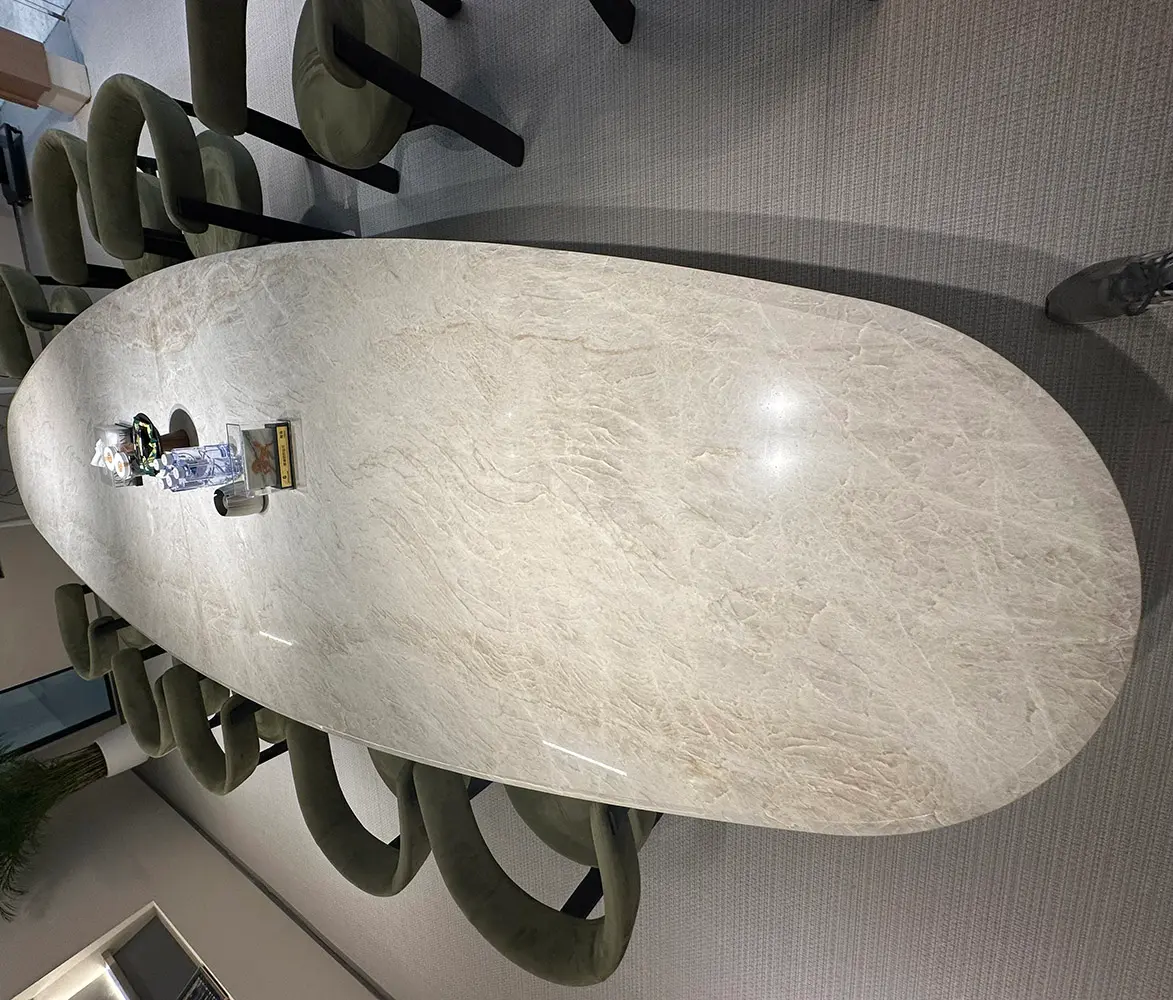






Marble tiles can transform a bathroom, hotel lobby, villa floor, fireplace wall or retail interior, but the same characteristics that make natural marble attractive also make it different from factory-controlled ceramic or porcelain products. Veining changes. Background tone changes. Mineral inclusions appear in different positions. A polished tile can look much darker and richer than the same stone in a honed finish. Even tiles cut from one block may need sorting before installation.
That means the best purchasing decision is rarely “Which marble looks nicest in this photograph?” The more useful questions are: How much visual variation can the project accept? Will the surface be wet? How much traffic will it receive? Does the installer need calibrated thickness? Will the room use one lot or several shipments? Can future replacement material be matched?
For a project quotation, buyers should prepare the application, finished dimensions, quantity, thickness, finish, destination, preferred color range and project schedule before asking a supplier for price. A detailed brief sent through a marble tile project inquiry gives the supplier enough information to discuss usable material, production format, sorting and packing instead of quoting an undefined “marble tile.”

Supplier Capability Matters Before Tile Selection Begins
A tile project can fail even when the selected stone is beautiful. Problems may come from inconsistent calibration, poor edge cutting, mixed production lots, incorrect packing, weak crate construction or simply a misunderstanding of the approved color range.
For that reason, sourcing should start with the production and QC system behind the product. Ask whether tiles are cut and calibrated from slabs or directly from block material, how finishes are controlled, how color sorting is performed, whether dry-lay inspection is available and how export crates are prepared. For larger projects, ask how repeat batches are recorded so later shipments do not drift too far from the first approved delivery.
Reviewing the Caron Stone company background can provide useful context before commercial discussion, but buyers should still evaluate the capabilities relevant to their own project: the exact marble, finish, dimensions, tolerance, inspection method and delivery sequence required. A company profile tells you who the supplier is; project documentation tells you whether the order is under control.
What Are 대리석 타일?
Marble is a metamorphic dimension stone commonly composed mainly of calcite or dolomite. When quarried blocks are sawn into slabs and then cut, calibrated and finished into repeatable modules, the result can be used as marble floor tile, wall tile, stair components, skirting, borders, mosaics and other architectural pieces.
Tiles differ from large slabs mainly in format and project workflow. A slab gives the fabricator freedom to position large veins around countertops or feature walls. Tiles provide modular sizes that can be repeated across floors and walls with predictable joint lines. Neither is automatically better; the correct form depends on the visual goal and installation method.
Buyers comparing a broader Marble Tiles & Slabs collection should decide whether their project requires modular repetition, dramatic slab-scale movement, or a combination of both. A hotel may use 600 × 600 mm tiles across corridors while reserving large sequential slabs for reception walls. One material family can therefore support several architectural functions when the stone is planned correctly.
Where Marble Tiles Work Best
Natural marble tiles are used in bathrooms, living rooms, entryways, hotel suites, reception areas, fireplaces, feature walls, staircases, kitchen backsplashes and selected commercial interiors. Their suitability changes with traffic, moisture, finish and cleaning regime.
Wall applications place relatively little abrasion demand on the surface, so visual selection can dominate the decision. Floors introduce wear, grit, impact and slip considerations. Bathrooms add repeated moisture and cleaning products. Kitchen backsplashes can encounter oils and acidic food splashes. A product that performs beautifully on a dry wall may therefore need different finishing, sealing and maintenance when installed on a floor or near a sink.
A practical overview of marble tile interior applications is useful when comparing room types because the right decision is usually driven by the interaction between material and use. The question is not only “Can marble be installed here?” but “Which marble, finish, size and maintenance plan make sense here?”
Why Marble Still Works in High-End Interiors
Marble remains difficult to reproduce perfectly because its visual structure comes from geology rather than a repeating printed file. Carrara can show soft grey movement. Calacatta can carry larger and more dramatic veins. Emperador introduces dark brown depth. Nero Marquina creates black-and-white contrast. Wood-grain marbles bring directional linear movement.
This variation makes every installation less predictable than mass-produced ceramic tile, but that unpredictability is also part of the value. The material can create depth and natural irregularity that designers often want in hospitality, residential and premium retail projects.
The strongest examples of luxury marble tiles are not necessarily the most expensive stones. They are projects where the stone scale, vein direction, furniture palette, lighting and finish work together. A dramatic tile used everywhere can overwhelm a room; a restrained marble placed carefully can feel far more luxurious. Selection should therefore start with the interior composition, not the price list.
What Should Buyers Check Before Ordering?
Before discussing quantity, define what “acceptable material” means. Natural marble should not be purchased under the same visual expectations as a solid-color engineered product. Agree on the color family, degree of veining, permitted natural variation, finish, tile dimensions, thickness tolerance, edge treatment and whether visible repairs or resin-filled areas are acceptable.
For a large floor, ask whether tiles will be dry-laid or grouped by tone before packing. For a feature wall, confirm vein direction. For a bathroom, clarify wet-area finish and maintenance. For repeated hotel rooms, ask whether tiles can be supplied from one production lot or coordinated bundles.
A more detailed Marble Tiles buying guide can help wholesalers and project buyers structure these decisions, but the most important rule remains simple: specify the final application before specifying the stone. A technically good tile can still be the wrong product for the room if maintenance, traffic or visual variation was ignored.
Popular Types of Marble Tiles
카라라 대리석
Carrara marble is known for a white to pale grey background with generally restrained grey veining. It works well where the designer wants natural character without extremely dominant pattern movement. Bathrooms, floors, fireplace surrounds and backsplashes are common applications.
Its apparently quiet appearance should not be confused with perfect uniformity. Different blocks can range from very pale to noticeably grey, and vein density can vary. Large projects should still sort material by tone before installation.
칼라카타 대리석
Calacatta marble is typically selected for stronger visual contrast. Broad grey, beige or gold movement across a bright background can create a statement floor or wall, but high-variation material needs more careful layout planning.
Small tiles can fragment dramatic veining. Larger tiles or slabs may better preserve the scale of the pattern where the stone itself is meant to dominate the design.
Statuario Marble
Statuario is another premium white marble direction associated with distinct grey veining and high-contrast interiors. It is particularly effective where the project calls for a crisp white background with identifiable mineral movement.
Emperador Marble
Emperador introduces brown backgrounds with lighter veins and mineral features. Dark Emperador can create a warmer, heavier interior than white marbles and is frequently combined with beige, cream, brass, bronze or dark timber finishes.
Crema Marfil
Crema Marfil is valued for warm cream and beige tones that are easier to integrate into broad residential and hospitality palettes. Compared with highly dramatic white marble, it can create a more continuous visual background over large floor areas.
Nero Marquina
Nero Marquina creates strong contrast through a black background and white veining. It can be particularly effective in checkerboard designs, feature walls, borders and monochrome interiors.
Wood-Grain Marble
Wood-grain marble uses directional linear movement rather than irregular cloud-like veining. Because the pattern has a clear orientation, cutting and installation direction should be marked before packing. Rotating one tile 90 degrees can interrupt the intended visual rhythm.
How to Evaluate Marble Tile Quality
Color and Vein Range
Do not inspect only one tile. Open enough pieces to understand the real range of background tone and veining. A project may look more natural when variation is blended deliberately rather than installed crate by crate.
Natural Fissures vs Structural Cracks
A fissure is a natural geological feature and may be stable. An open or unstable crack is different. Buyers should inspect whether the feature passes through the tile, whether resin has been used, and whether the area is strong enough for handling and installation.
Edge Quality
Edges should be checked for chips, saw marks, inconsistent squareness and damaged corners. Tight-joint installations make edge defects more visible.
Surface Flatness
A bowed tile can create lippage even when the installer works carefully. Larger formats generally require greater attention to substrate and tile flatness.
Thickness Calibration
Tiles with inconsistent thickness require additional mortar adjustment and can slow installation. Calibrated thickness is particularly important on large floors, stairs and areas with tight transitions to other materials.
Resin and Repair Quality
Resin filling is common in some natural stones and is not automatically evidence of poor quality. Buyers should instead evaluate whether repairs are stable, properly finished and visually acceptable for the proposed application.
Marble Tile Sizes and Thicknesses
Tile formats vary by stone availability, market and project. Common modular sizes may include 300 × 300 mm, 305 × 305 mm, 400 × 400 mm, 457 × 457 mm, 600 × 600 mm and rectangular cut-to-size formats. Large-format tiles can extend well beyond these dimensions.
Thickness may range from relatively thin wall material to substantially thicker floor, stair or architectural pieces. It should be specified according to tile size, stone structure, substrate, installation system and applicable project requirements rather than chosen from one generic chart.
| Format Direction | Typical Visual Effect | Buyer Consideration |
|---|---|---|
| Small-format marble tile | More joints, more pattern rhythm | Good for mosaics, small bathrooms and detailed layouts |
| 300–400 mm modular tile | Balanced traditional scale | Easy to plan in residential floors and walls |
| 600 mm-class tile | Fewer joints and cleaner floor plane | Flatness and calibration become more important |
| Large-format marble tile | More continuous natural movement | Handling, lippage and substrate preparation become critical |
| Custom cut-to-size | Designed around architecture | Requires shop drawings, tolerance control and piece numbering |
Polished vs Honed vs Brushed vs Tumbled Marble
광택 대리석 타일
Polishing increases reflectivity and typically intensifies color and veining. It is particularly effective on walls, fireplace surrounds, decorative floors and interiors where maximum visual depth is desired.
The trade-off is that etching, scratches and wear may become easier to see on a highly reflective surface. Wet-floor suitability should be assessed separately rather than assumed from appearance.
연마된 대리석 타일
Honed marble has a matte or satin finish. It tends to look softer, with less reflection and slightly muted color compared with a polished finish.
Honed surfaces are often selected for floors and contemporary interiors because everyday wear can appear less obvious. They are still natural marble and remain sensitive to unsuitable cleaning chemistry.
Brushed Marble Tiles
Brushing creates a more textured, aged or tactile surface. It can work well in rustic, transitional or selected exterior-style interiors where the project does not require a highly formal finish.
텀블 대리석 타일
Tumbled pieces have softened edges and an aged appearance. They are commonly used in smaller-format tiles, mosaics and traditional interiors. Dimensional variation and wider grout joints may be intentional parts of the visual style.
Which Finish Should You Choose?
| If the Application Is… | Finish Direction to Consider | Main Reason |
|---|---|---|
| Luxury feature wall | 광택 | Maximizes color depth and vein contrast |
| Residential living-room floor | Polished or honed | Depends on design, wear and maintenance expectation |
| Bathroom floor | Project-approved honed/textured direction | Wet-area slip performance must be evaluated |
| Shower wall | Polished or honed | Vertical use reduces abrasion concerns |
| Traditional interior | Tumbled / brushed | Creates aged visual character |
| Commercial high-use floor | Project-specific honed/textured finish | Wear and slip requirements matter more than maximum gloss |
Marble Tiles for Bathrooms
Bathrooms are one of marble’s most familiar applications, but the room contains several very different surfaces. A vanity backsplash, shower wall and wet floor should not automatically use the same finish.
욕실 벽
Walls experience less abrasion than floors, so polished marble can work effectively where the designer wants strong color and reflection. Large tiles reduce grout joints and can make a small bathroom feel visually calmer.
Shower Walls
Natural marble can be used in showers when the substrate, waterproofing, adhesive, grout, sealant and maintenance program are designed correctly. The stone should not be treated as the waterproofing layer itself.
Bathroom Floors
Wet floors need a project-specific slip-resistance decision. Polished marble should not automatically be specified simply because the same finish works on a wall.

Marble Tiles for Floors
Flooring introduces abrasive dirt, rolling loads, foot traffic, furniture movement and repeated cleaning. The entrance to a hotel experiences very different conditions from a private bedroom.
A large floor should therefore be evaluated by traffic class, surface finish, stone performance, joint pattern, substrate, replacement strategy and maintenance budget.
Use Entry Mats
Sand and grit behave like abrasive particles under shoes. Effective entrance matting can reduce scratching and surface wear.
Plan Replacement Material
For commercial floors, keeping several matched spare tiles can be more valuable than trying to locate the same production tone several years later.
Marble Tiles for Walls and Feature Areas
Walls allow more freedom because they do not experience foot traffic. Dramatic marble types that may be visually overwhelming on a whole floor can work beautifully as a reception wall, fireplace surround or vertical bathroom feature.
Directional stones should be marked before installation so vein orientation remains intentional. Where multiple tiles form one visual composition, dry-lay photography can help confirm the sequence before pieces leave the factory.
Marble Tiles for Kitchen Backsplashes
Backsplashes provide strong visual impact with relatively little material, making premium marble commercially practical even when the stone is expensive per square meter.
However, marble is generally calcareous and can react with acidic substances. Cooking oils, tomato sauce, lemon juice and cleaning products may contact the wall. Appropriate sealing can improve resistance to staining, but it does not make marble chemically immune to acids.
Marble Tiles for Hotels and Commercial Projects
Commercial projects require more than aesthetic approval. The procurement team should also plan repeat quantities, room-to-room consistency, future repairs, crate sequencing and installation speed.
A hotel using one marble across 200 bathrooms may prefer a controlled visual range over an extremely dramatic stone. A boutique reception area can tolerate far more variation because each tile can be placed as part of a unique composition.
The right material therefore depends on whether the project is selling individuality or repeatability.
Popular Marble Tile Installation Patterns
Straight / Stacked Pattern
Tiles align in a regular grid. This is one of the cleanest options for large-format marble because joints remain predictable and natural veining provides most of the visual movement.
Running Bond
Rows are offset from one another. This works particularly well with rectangular tiles and traditional wall applications. With larger formats, the installer should consider tile flatness before choosing a deep offset.
Herringbone
Rectangular pieces create a zigzag layout that adds movement even when the stone itself has subtle veining. It works well for backsplashes, fireplace surrounds, entryways and selected floors.
Versailles / French Pattern
Several tile sizes interlock into a repeating modular layout. This suits traditional and Mediterranean-style interiors and is particularly effective with cream, beige and softly aged stones.
Marble Tiles vs Porcelain Tiles
| Decision Area | Natural Marble Tile | Porcelain Tile |
|---|---|---|
| 패턴 | Naturally unique | Manufactured / printed repeat system |
| Color consistency | Natural variation expected | More controlled production |
| Acid sensitivity | Many marbles are sensitive | Generally more resistant |
| 유지 관리 | Requires stone-appropriate care | Usually simpler |
| Luxury natural identity | 높음 | Imitation depends on product quality |
| Replacement matching | Can be difficult years later | Production batches still vary, but generally more repeatable |
If the buyer wants natural variation and accepts the maintenance profile, marble is compelling. If maximum chemical resistance and low maintenance are more important than natural authenticity, porcelain may be the better choice.
Marble Tiles vs Granite Tiles
Granite is generally a siliceous igneous stone and behaves differently from calcareous marble. Many granite types have greater resistance to common acidic kitchen exposure, although actual performance varies by mineral composition.
Marble is often selected for softness of color, veining and classical architectural identity. Granite is frequently chosen where hardness, durability and lower acid sensitivity are higher priorities.
Do not choose between them using one material name alone. Compare the exact stone and the intended application.
How Much Extra Marble Tile Should You Order?
There is no single waste percentage appropriate for every project. A simple square room using straight-laid modular tiles may require relatively little cutting. A herringbone floor, diagonal installation or highly selective veining program may require considerably more.
Consider an illustrative example. A project has 100 m² of net floor area. If the designer and installer decide that 12% additional material is appropriate for perimeter cuts, pattern selection, breakage and future replacement, the purchase quantity becomes 112 m².
That 12% is an example, not an industry rule. The correct allowance should be calculated from the actual layout.
| Factor | Effect on Additional Quantity |
|---|---|
| Straight modular layout | Usually more efficient |
| Diagonal layout | More perimeter cutting |
| Herringbone | More directional cutting and offcuts |
| Strong vein selection | Can reduce usable yield |
| Multiple rooms | More perimeter and transition cuts |
| Future spare stock | Increases purchase quantity intentionally |
Technical Data Buyers Should Check
Marble is not one uniform engineering material. Different stones can have substantially different absorption, density and strength. Project buyers should therefore request current data for the exact material being proposed rather than copying values from another marble.
| Technical Property | Relevant Reference | Why It Matters |
|---|---|---|
| Water absorption | ASTM C97/C97M | Helps compare moisture uptake between dimension stones |
| Bulk specific gravity | ASTM C97/C97M | Useful for material and loading comparison |
| Compressive strength | ASTM C170/C170M | Provides crushing-strength comparison |
| Flexural strength | ASTM C880/C880M | Relevant to bending behavior of stone specimens |
| Modulus of rupture | ASTM C99/C99M | Another reference for bending behavior |
| Abrasion resistance | Applicable ASTM / project standard | Important when selecting floor stone |
| Slip performance | Project- and jurisdiction-specific method | Critical in wet and pedestrian areas |
How to Inspect Marble Tiles Before Shipment
Check Quantity and Dimensions
Confirm tile count, finished size and thickness against the purchase order.
Inspect Color Range
Open multiple crates or perform a dry layout when visual consistency is important. One top tile does not represent the full shipment.
Check Finish Consistency
Polish, honing or brushing should look intentional across the lot. Uneven finishing can become obvious after installation.
Inspect Edges and Corners
Check chips, cracks, broken corners and squareness.
Review Flatness
Large-format pieces deserve particular attention because small warpage becomes more visible over long edges.
Number Special Layouts
Vein-matched or directional installations should be photographed, numbered and packed in installation sequence.
Packaging and Shipping for Export Projects
Stone tiles are dense, brittle and vulnerable to concentrated impact at corners. Export packing must therefore control movement inside the crate and distribute loads safely.
Typical project packing may include lined wooden crates, foam or paper separators, edge protection and reinforced internal framing. Heavy crates should be designed for forklift handling without allowing the stone to shift.
For international trade, wooden packaging may also need to comply with applicable phytosanitary rules such as ISPM 15, depending on the destination and packaging material.
Marble Tile Installation: The Decisions Made Before Adhesive Is Mixed
Check the Substrate
Natural stone tile should be installed on a properly prepared, stable and sufficiently flat substrate. Large tiles make substrate irregularities more difficult to hide.
Dry-Lay Before Installation
Open material from several boxes and blend natural color variation deliberately. Installing one crate completely before opening the next can create visible bands of color across the floor.
Choose Compatible Setting Materials
Light-colored and moisture-sensitive stones may require carefully selected installation products. The installer should review stone type, adhesive chemistry, substrate and manufacturer recommendations rather than assuming one mortar suits every marble.
Plan Movement Joints
Stone does not eliminate building movement. Joint layout, perimeter conditions and substrate movement need to be addressed by the installation design.
Control Lippage
Flatness, tile calibration, mortar coverage and installation technique all influence the difference in height between adjacent tile edges.
Should Marble Tiles Be Sealed?
Many marble installations benefit from an impregnating sealer, particularly where staining agents are likely. However, “sealed” does not mean “stain-proof,” and it definitely does not mean “acid-proof.”
An impregnating product works primarily by reducing the rate at which liquids penetrate the stone. Whether sealing is necessary, which product should be used and how frequently it should be renewed depends on the marble, finish and environment.
Food-contact areas require an appropriate product selected for that application.
How to Clean Marble Tiles
Marble is generally calcareous and therefore sensitive to acidic solutions. Lemon-based cleaners, vinegar and other acidic products can dull or etch the surface.
매일 청소
Use a neutral stone cleaner, stone soap or other marble-compatible product according to manufacturer instructions.
Remove Grit
Dust mop floors regularly. Sand and hard particles can create abrasion under foot traffic.
Blot Spills
Do not spread a spill over a larger area by aggressive wiping. Blot it, then clean using an appropriate product.
Do Not Assume Etching Is a Stain
An acid can chemically change the finish without depositing a stain. Cleaning alone cannot restore a surface that has been etched; refinishing may be necessary.
Common Marble Tile Buying Mistakes
Mistake 1: Selecting From One Perfect Sample
A small sample cannot communicate the full natural variation of a production lot.
Mistake 2: Expecting Porcelain-Level Uniformity
Variation is part of natural stone. Define acceptable range instead of expecting every tile to be identical.
Mistake 3: Choosing Finish Only by Appearance
Wet floors, commercial entrances and walls have different performance requirements.
Mistake 4: Ignoring Thickness Calibration
Uneven thickness slows installation and increases lippage risk.
Mistake 5: Ordering Exact Net Area
Cutting, sorting, breakage and future replacement require a project-specific allowance.
Mistake 6: Installing Crate by Crate
Natural tone groups can create visible bands if material is not blended across the floor.
Mistake 7: Assuming Sealer Prevents Etching
Sealers improve stain resistance; they do not change marble’s basic calcium-carbonate chemistry.
Mistake 8: Selecting a Supplier Only by Unit Price
Low tile price can be offset by poor calibration, excessive color rejection, breakage or expensive installation correction.
If X → Choose Y: Marble Tile Decision Guide
| If Your Project Needs… | Consider… | 왜 |
|---|---|---|
| Bright luxury bathroom | Carrara / Calacatta direction | Light background and visible natural veining |
| Warm large residential floor | Crema Marfil / beige marble | Calmer tone across broad areas |
| Dramatic monochrome feature | Nero Marquina | Strong black-and-white contrast |
| Traditional luxury interior | Emperador | Warm brown depth and classical character |
| Directional contemporary wall | Wood-grain marble | Linear movement creates architectural rhythm |
| Wet-area floor | Project-approved honed/textured finish | Slip and maintenance performance need review |
| High visual consistency | Pre-sorted production lot | Reduces unexpected color jumps |
| Complex custom project | Cut-to-size + dry layout + piece numbering | Reduces site cutting and layout mistakes |
How to Choose a Marble Tile Supplier
Ask for Current Material Photos
Do not make a large purchase from an old website image if natural variation matters. Request current slab or tile-lot photographs.
Confirm QC Standards
Ask what is checked before packing: size, thickness, finish, color range, flatness, edges, corners and quantity.
Ask About Sorting
A good supplier should be able to explain how strong variation is grouped and whether project-specific color selection is available.
Confirm Custom Cutting Capability
Hotels and architectural projects may require skirting, stair pieces, borders, large panels or special tile dimensions beyond standard stock.
Review Packing Before Shipment
Photos of actual packed crates can identify problems before the container is closed.
Plan Reorders
If the project will be delivered in stages, tell the supplier early. Natural marble purchased months apart may not match perfectly, so reserve strategy can matter.
Marble Tile Decision Insight: From Sample Selection to Long-Term Performance
What Makes a Good Marble Tile?
A good Marble Tile is not simply the whitest, most expensive or most uniform piece. Quality means the stone is appropriate for the application, dimensions are controlled, edges and finish are acceptable, natural variation is understood, technical properties suit the project and the material can be installed and maintained realistically.
Why Should Buyers Approve a Range Instead of One Tile?
Natural marble is geological material. A single tile may represent only a small section of one slab. Reviewing several tiles—or full slabs for major projects—reveals the real variation in background tone, vein density, mineral markings and repairs. Approving a visual range before production reduces disputes after delivery.
Material Fit by Product Direction
The matrix below is an application-fit indicator only. It is not statistical data, probability, a laboratory performance rating or a guarantee of suitability. Actual selection depends on the exact quarry material, finish, traffic level, substrate, moisture exposure, maintenance, current technical data and applicable project standards.
●●● = Primary
●●○ = Strong Option
●○○ = Depends on Workflow
— = Usually Not First Choice
| Existing Product Direction | 바닥재 | Bathroom Wall | Feature Wall | Backsplash | Commercial Project | Typical Selection Logic |
|---|---|---|---|---|---|---|
| Carrara Marble Tiles Product page entry: Marble Tiles & Slabs Category | ●●● | ●●● | ●●○ | ●●● | ●●○ | Versatile pale-grey marble direction suitable for broad residential and hospitality use. |
| Calacatta Marble Tiles Product page entry: Marble Tiles & Slabs Category | ●●○ | ●●● | ●●● | ●●● | ●○○ | Bold veining makes it stronger for statement applications than highly repetitive large floor programs. |
| Crema Marfil Marble Tiles Product page entry: Marble Tiles & Slabs Category | ●●● | ●●● | ●●○ | ●●○ | ●●● | Warm beige tones can be easier to repeat visually across large floors and hospitality interiors. |
| Emperador Marble Tiles Product page entry: Marble Tiles & Slabs Category | ●●● | ●●○ | ●●● | ●●○ | ●●○ | Dark brown character works well where the interior needs warmth, contrast and classical visual weight. |
| Nero Marquina Marble Tiles Product page entry: Marble Tiles & Slabs Category | ●●○ | ●●○ | ●●● | ●●● | ●○○ | Strong black-and-white contrast makes it powerful in accents, borders and feature zones. |
| Wood Grey Marble Tiles Product page entry: Marble Tiles & Slabs Category | ●●● | ●●○ | ●●● | ●○○ | ●●○ | Directional veining works best when tile orientation is controlled before installation. |
Options: Which Tile Format Makes Sense?
If you want fewer grout joints →Choose a larger tile format, provided the substrate, tile flatness, handling and installation method can support it.
If the room is small or highly detailed →Use smaller tiles or mosaics where cuts, corners and drainage geometry would make large pieces inefficient.
If natural veining is the design feature →Use larger tiles or cut-to-size pieces and approve the dry layout before installation.
If repeat installation speed matters →Prioritize calibrated modular tiles with controlled dimensions and organized crate sequencing.
Consideration: Is Polished Marble Always More Luxurious?
No. Polish creates deeper color and reflection, but luxury is a design outcome rather than a gloss level. A honed Carrara floor can look more sophisticated than a highly polished surface if the architecture calls for quiet materiality. The correct finish should balance appearance, traffic, wet use and maintenance.
How Should Buyers Think About Maintenance?
Marble should be specified with its real chemistry in mind. Calcium-carbonate-rich material can etch when exposed to acids. Neutral cleaning products, quick spill response and appropriate sealing where needed reduce avoidable problems. A project that cannot tolerate any visible patina or maintenance may be better suited to another material.
What Is the Best Project Buying Sequence?
A reliable sequence is:
Application → material shortlist → finish → tile size → technical-data review → sample/range approval → quantity and waste calculation → production → dry layout/QC → export packing → installation → maintenance plan.
Each stage removes a different uncertainty. Skipping one usually pushes the same problem downstream, where correction becomes more expensive.
Where Is Marble Tile Design Moving?
Current projects increasingly combine traditional stone with larger tile formats, cleaner joints, mixed finishes, waterjet details, directional vein layouts and pre-fabricated project pieces. At the same time, buyers are asking more technical questions about slip, absorption, maintenance, packing and project-level consistency. Marble is becoming less about choosing a color from a catalog and more about engineering the natural variation into the finished interior.
Buy Marble Tiles as a System, Not as a Color
The most successful Marble Tile projects begin with the finished room rather than the warehouse. If you need a bathroom wall, select around visual composition and wet-area detailing. If you need a hotel floor, prioritize wear, calibration, replacement stock and maintenance. If you need a backsplash, understand acid exposure. If you want dramatic veining, approve the layout before installation.
A marble tile is not just a square piece of stone. It is one part of a system that includes substrate, adhesive, grout, joints, finish, traffic, cleaning products and long-term maintenance.
When those pieces are planned together, natural variation becomes a design advantage instead of a sourcing problem.

marble tile applications
Planning a Marble Tile Project?
Prepare your application, tile dimensions, quantity, finish, preferred color range, traffic conditions, drawings, destination and delivery schedule before requesting a quotation. A complete brief makes it easier to recommend suitable marble, estimate project quantity, organize color sorting, plan QC and select export packing that fits the real installation.
Frequently Asked Questions About Marble Tiles
1. Are marble tiles suitable for bathroom floors and shower areas?
Marble tiles can be used in bathrooms and many wet-area applications, but the finish and installation system must suit the location. Shower walls and decorative bathroom walls can use polished or honed marble, while wet floors require careful evaluation of slip resistance, drainage, grout joints, substrate and waterproofing. The stone itself is not the waterproofing layer. Buyers should also remember that marble is generally sensitive to acidic cleaners, so bathroom maintenance should use marble-compatible, non-acidic products. A polished wall finish does not automatically mean the same finish is appropriate for the floor.
2. Is polished or honed marble tile better?
Neither finish is universally better. Polished marble creates stronger reflection, deeper color and more visible veining, making it popular for feature walls, fireplaces and formal interiors. Honed marble has a softer matte or satin appearance and often makes minor wear less visually obvious, which can make it attractive for floors and contemporary spaces. Wet-area and commercial floor decisions should also consider project-specific slip and wear requirements. The best finish depends on the stone, location, traffic level, cleaning regime and intended design rather than appearance alone.
3. How much extra marble tile should I order for a project?
There is no single waste percentage that fits every marble tile project. The required allowance depends on room geometry, tile size, installation pattern, vein selection, diagonal cuts, breakage risk and whether spare tiles are needed for future repair. A simple square room using a straight modular layout may generate less waste than a herringbone or diagonal installation. Strong natural veining can also reduce usable yield when the designer rejects pieces that do not fit the desired layout. The safest approach is to calculate finished area from drawings, then add a project-specific cutting and spare allowance with the installer or fabricator.
4. Do marble tiles need to be sealed?
Many marble installations benefit from an appropriate penetrating or impregnating sealer, particularly where staining agents may contact the stone. However, not every stone or application requires the same sealing schedule. A sealer increases resistance to liquid penetration and staining; it does not make marble completely stain-proof and does not prevent acid etching. Buyers should select a product compatible with the exact marble, finish and intended use. In food-preparation areas, the chosen treatment should also be suitable for that environment. Maintenance frequency should follow the sealer manufacturer and stone supplier recommendations.
5. What should I check before buying marble tiles in bulk?
Bulk buyers should confirm the exact marble variety, production lot, tile dimensions, thickness tolerance, finish, edge quality, flatness, natural color range, veining, fissures, repairs, quantity and export packing. For floor projects, request relevant technical data such as absorption, density, strength and abrasion information where required by the specification. Large projects should also consider dry-lay inspection, tile numbering, future replacement stock and whether all material can be supplied from compatible blocks or production lots. Approving a small sample alone is not enough when natural variation will strongly affect the finished installation.
참조
- ASTM C503/C503M — Standard Specification for Marble Dimension Stone — ASTM Committee C18 — ASTM International — Dimension Stone Specification.
- ASTM C97/C97M — Standard Test Methods for Absorption and Bulk Specific Gravity of Dimension Stone — ASTM Committee C18 — ASTM International — Dimension Stone Testing Standard.
- ASTM C170/C170M — Standard Test Method for Compressive Strength of Dimension Stone — ASTM Committee C18 — ASTM International — Dimension Stone Testing Standard.
- ASTM C880/C880M — Standard Test Method for Flexural Strength of Dimension Stone — ASTM Committee C18 — ASTM International — Dimension Stone Testing Standard.
- Dimension Stone Design Manual — Natural Stone Institute Technical Committee — Natural Stone Institute — Stone Design and Installation Reference.
- Care & Cleaning of Natural Stone — Natural Stone Institute — Natural Stone Institute — Stone Maintenance Guidance.
- Stone Care: What You Should Know — Natural Stone Institute Education Committee — Natural Stone Institute — Architect and Designer Continuing Education Reference.
- ISPM 15 — Regulation of Wood Packaging Material in International Trade — International Plant Protection Convention Secretariat — Food and Agriculture Organization of the United Nations — International Phytosanitary Standard.