





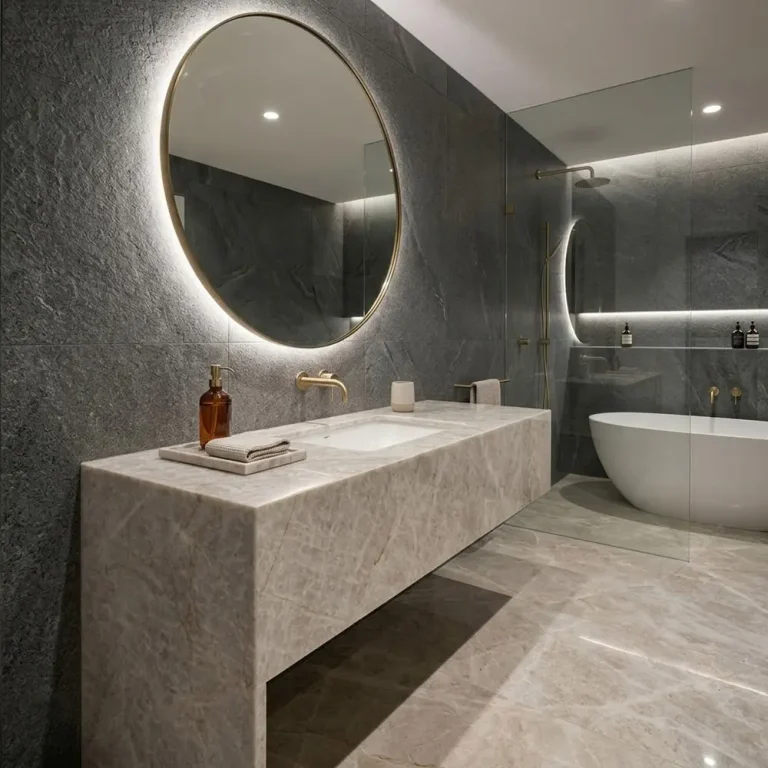
Labradorite Blue Granite Kitchen Countertop:
The Jewel of Modern Kitchens
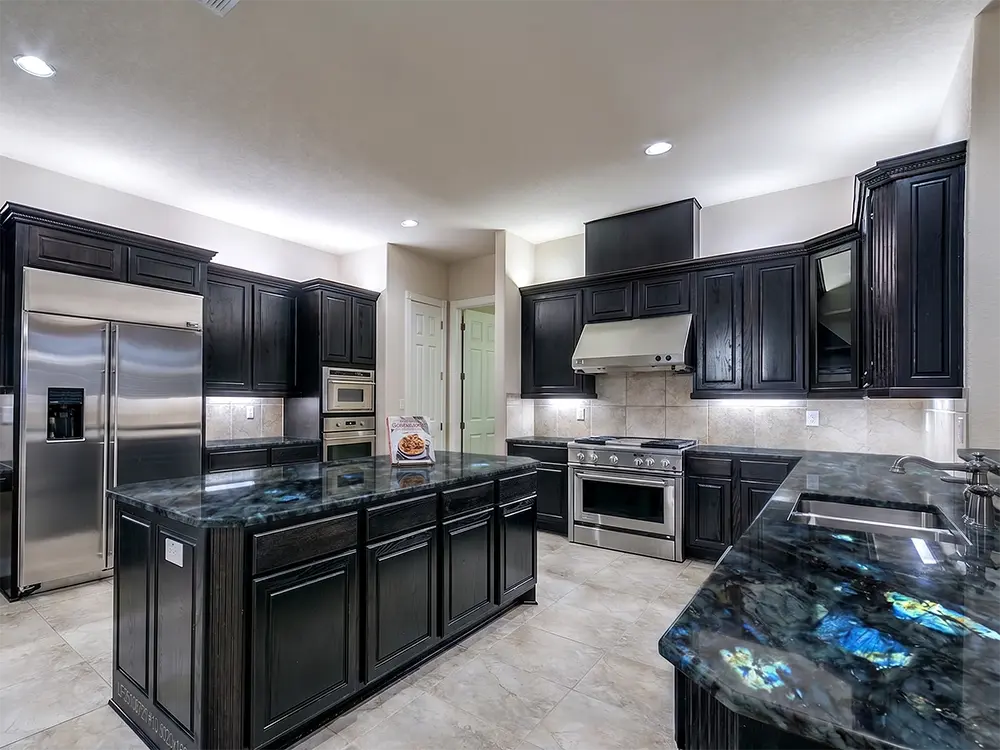
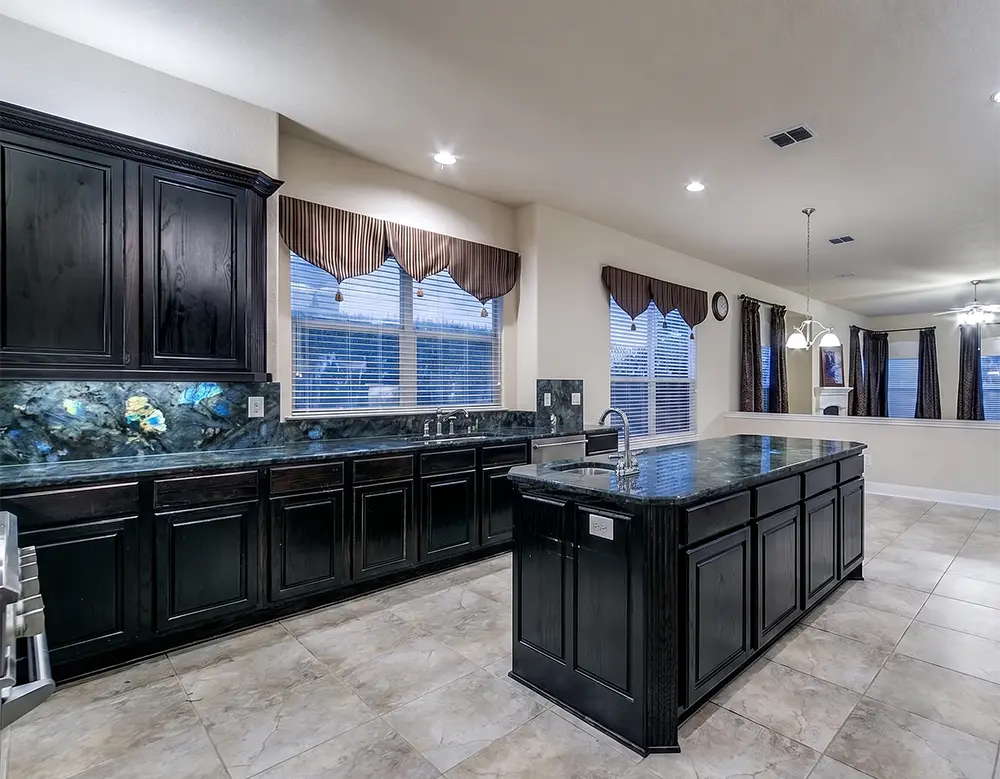
Transform your kitchen into a masterclass of contemporary design with Labradorite Blue Granite. In modern luxury interiors, designers are moving towards moody, highly textured palettes. This extraordinary stone anchors the room with its profound dark grey to charcoal background, providing a sleek, masculine foundation that pairs flawlessly with matte black cabinetry and minimalist hardware. Yet, when light strikes the surface, the dark grey matrix erupts into vibrant, holographic flashes of iridescent blue and emerald green, creating an unparalleled visual experience.
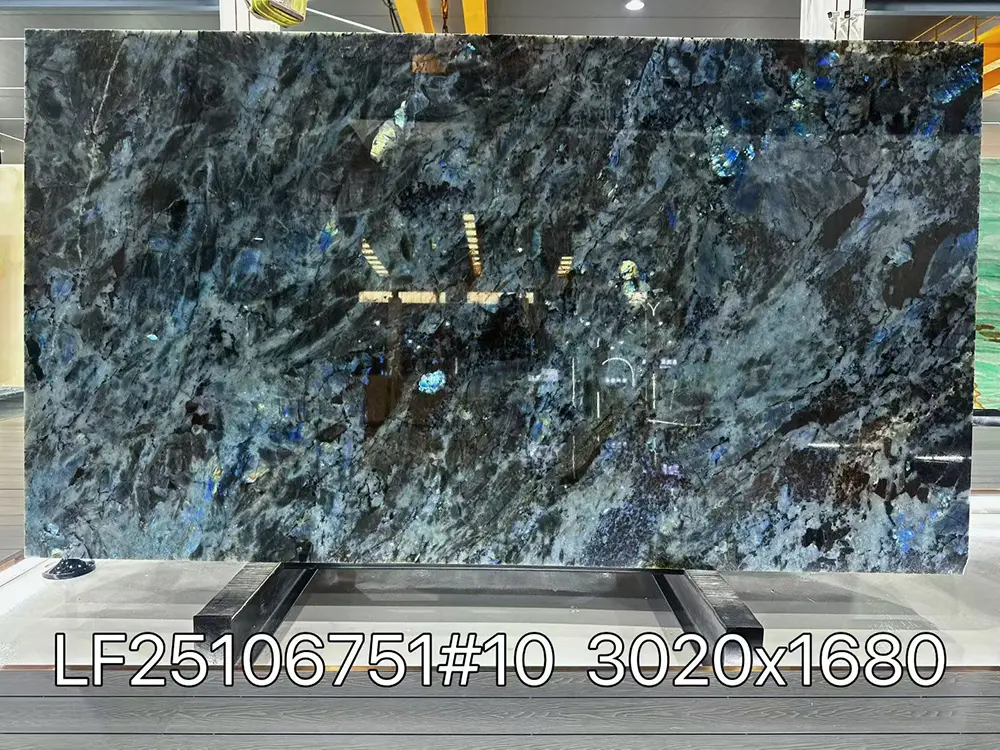
Stone Characteristics & Geological Profile
Geologically, Labradorite is a feldspar mineral, and the commercial “granite” slabs are typically Anorthosite. The defining characteristic of this material is an optical phenomenon known as Labradorescence. The stone’s internal crystalline structure refracts light, bouncing it back as intense, luminous flashes. The true elegance of this material lies in its deep, dark grey base color. Without this dark grey canvas, the brilliant blue “eyes” of the stone would not pop with such dramatic intensity. Furthermore, it boasts exceptional density and hardness, making it highly resistant to scratches, heat, and daily kitchen wear.
Technical and Specifications
| Specification | Details |
|---|---|
| Material | 100% Natural Labradorite Blue Granite (Anorthosite) |
| Color Profile | Dark Grey Background with Intense Blue/Green Iridescence |
| Durability | Extremely High (Mohs 6-6.5 – Scratch & Heat Resistant) |
| Design Application | Kitchen Countertops, Waterfall Islands, Full Backsplashes |
| Edge Profile | Precision Mitered Edges (Seamless Waterfall Design) |
Aesthetic Harmony & Lighting Design
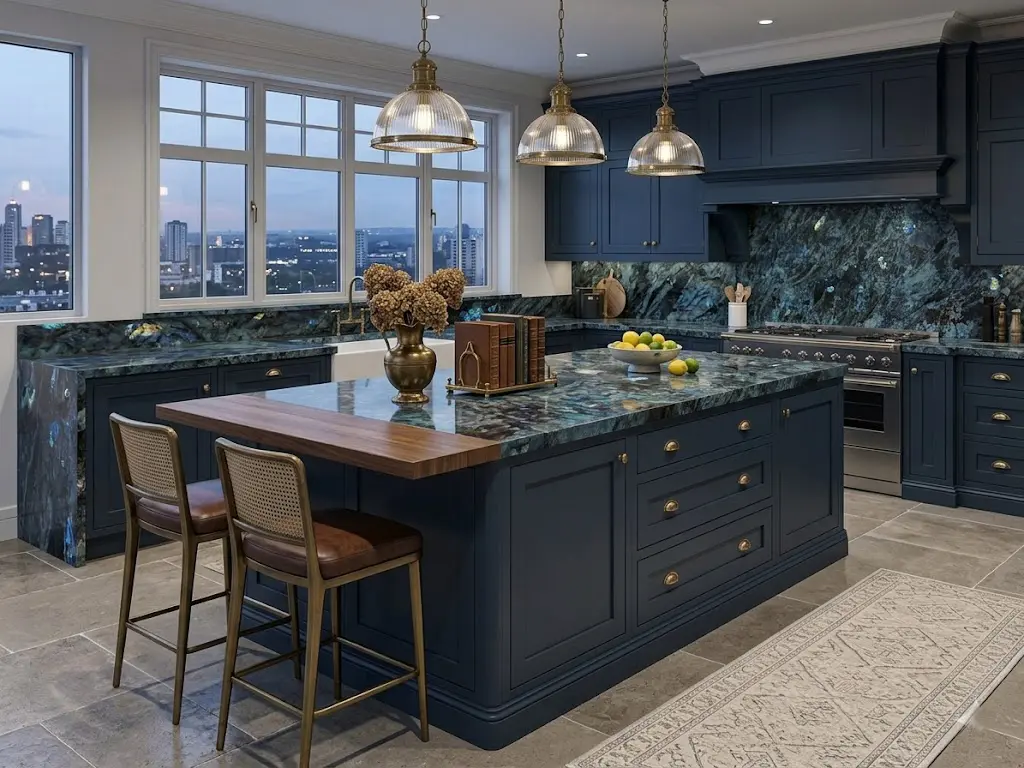
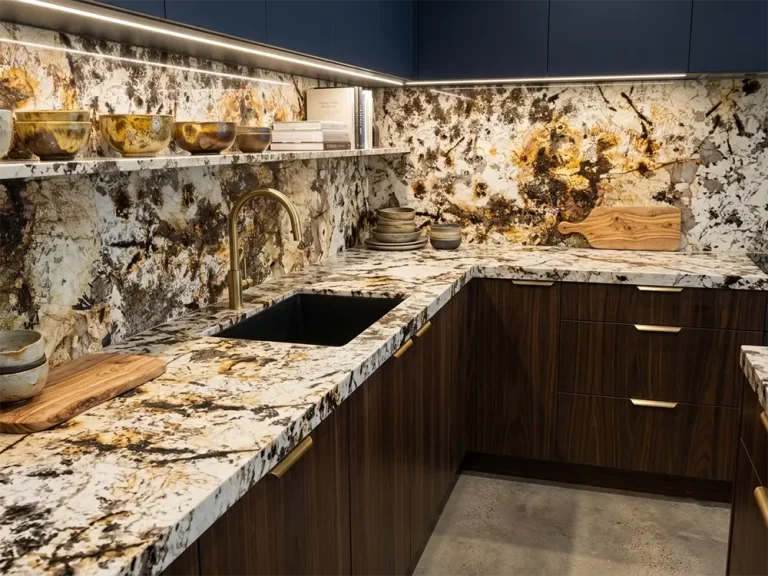
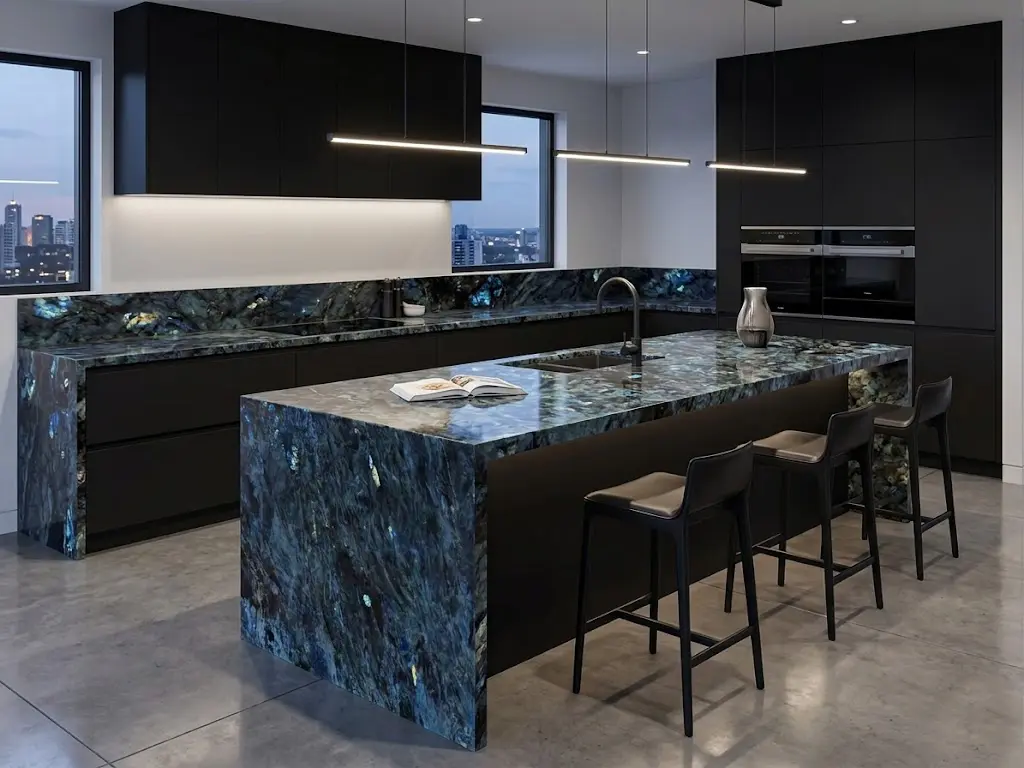
The dark grey base of Labradorite Blue makes it the ultimate companion for modern, moody kitchen designs. As seen in high-end architectural applications, pairing this stone with matte black, dark charcoal, or dark walnut cabinetry creates a sophisticated, monolithic look. However, the secret to unlocking the stone’s beauty is directional lighting. Installing sleek LED pendant lights directly above the island ensures that as you walk around the kitchen, the dark grey surface comes alive, shifting and flashing with vibrant peacock blues.
Engineer-to-Engineer (E2E): Fabrication Insights
Critical Considerations for Labradorite Installations
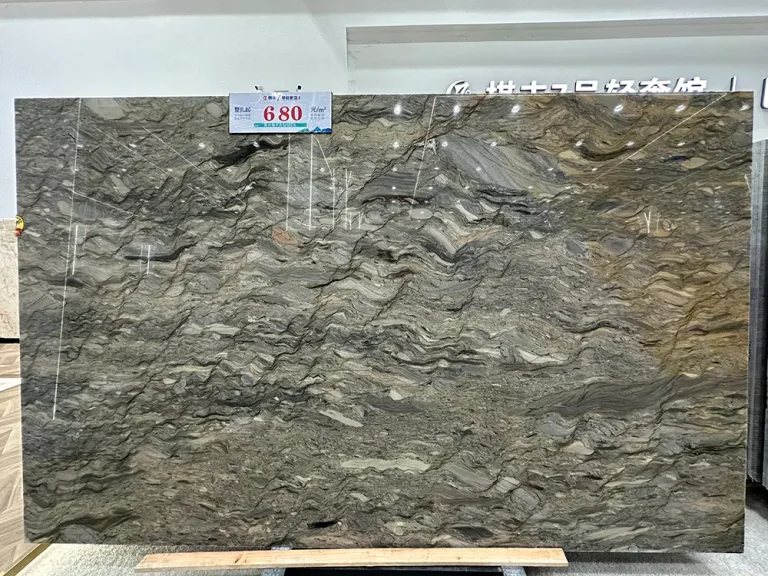
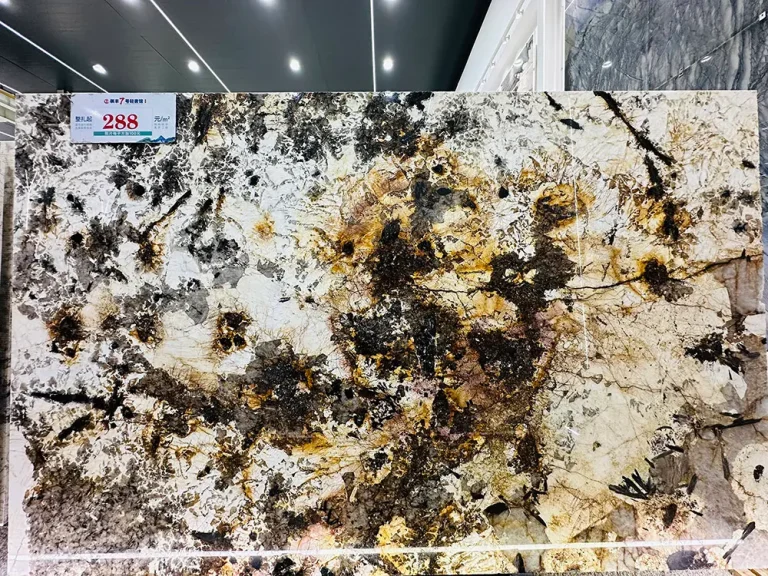
Slab Selection & Dry-Lay: The density of blue flashes varies from slab to slab. Caron Stone provides high-resolution photos of our dark grey slab inventory so you can select the exact intensity of iridescence you desire. We perform a digital “Dry-Lay” to map out where the brightest blue clusters will sit on your kitchen island.
Seam Placement: Because the dark grey background and iridescent flashes are so distinct, poorly placed seams are highly visible. Our engineering team plans countertop layouts to minimize seams, placing them at sink cutouts or cooktops whenever possible.
Maintenance: Unlike porous marbles, Labradorite Granite is incredibly dense and highly resistant to kitchen acids (like lemon or wine). It requires minimal maintenance—simply clean with a pH-neutral stone soap to keep the polished dark grey surface and blue flashes looking pristine.
Technical & Geological References
For architects specifying semi-precious exotic stones for heavy-use culinary environments, we recommend consulting these authoritative resources:
- Learn more about the optical phenomenon of labradorescence and the dark matrix of Labradorite on Wikipedia.
- Review global standards for granite kitchen countertop fabrication, structural support, and edge profiling at the Natural Stone Institute (NSI).
FAQ
The base color is a sophisticated, solid dark grey to charcoal. This dark background is what makes the iridescent blue and green flashes stand out so brilliantly.2. Is Labradorite durable enough for a busy kitchen?
Absolutely. It is technically an anorthosite, which performs identically to high-grade granite. It is highly resistant to scratching, heat, and etching from kitchen acids.3. Do the blue flashes glow in the dark?
No, they are highly reflective crystal structures, not luminescent. They require ambient or directional lighting (like pendant lights or under-cabinet LEDs) to activate the flashes.
4. Can you fabricate a waterfall edge island?
Yes, this is our specialty. We use precision CNC machinery to cut 45-degree mitered joints, allowing the dark grey and blue pattern to flow seamlessly down the sides of the island.
5. Does it require regular sealing like marble?
It is much denser than marble, but we still apply a premium impregnating sealer at the factory. Re-sealing every 1-2 years is recommended to ensure maximum stain resistance.
6. Can I use it for a full-height backsplash?
Yes! Extending the Labradorite from the countertop up the wall as a full-height backsplash creates a highly immersive, luxurious design.
7. Will the seams be visible?
We use color-matched epoxy tailored to the dark grey background and advanced seaming tools to make joints as inconspicuous as possible.
8. How thick are the countertops?
Standard slabs are 20mm or 30mm thick. For a thicker, block-like appearance, we fabricate mitered drop-edge aprons to any specified thickness.
9. How do you ship complete island pieces globally?
Large, custom-fabricated countertop pieces are packed in heavy-duty, customized wooden A-frames and fumigated crates with dense shock-absorbing foam to guarantee safe sea freight.
10. What cabinet colors work best with this stone?
Because of the dark grey base, it pairs exceptionally well with matte black, dark grey, espresso wood, or for a high-contrast modern look, crisp white cabinetry.