






Michelangelo Quartzite
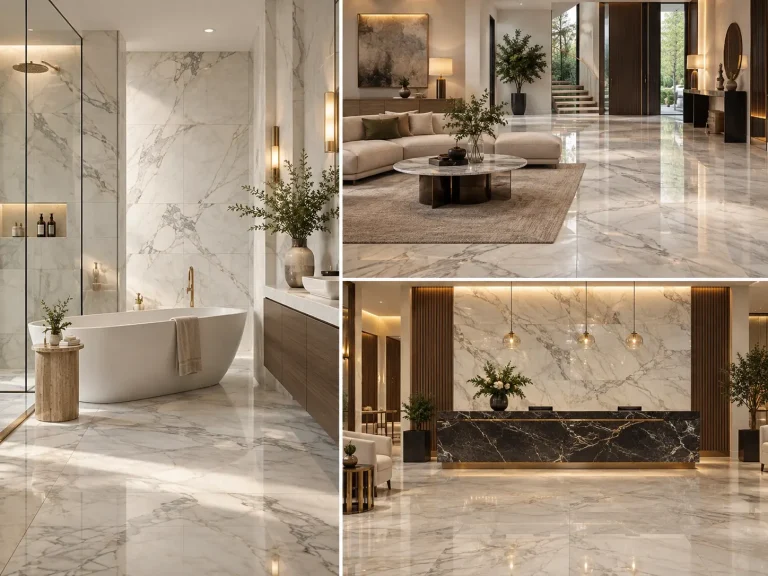
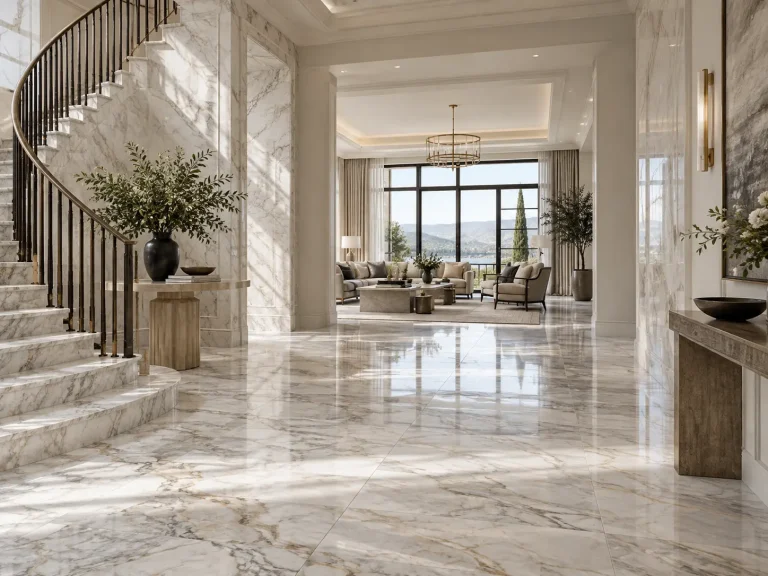
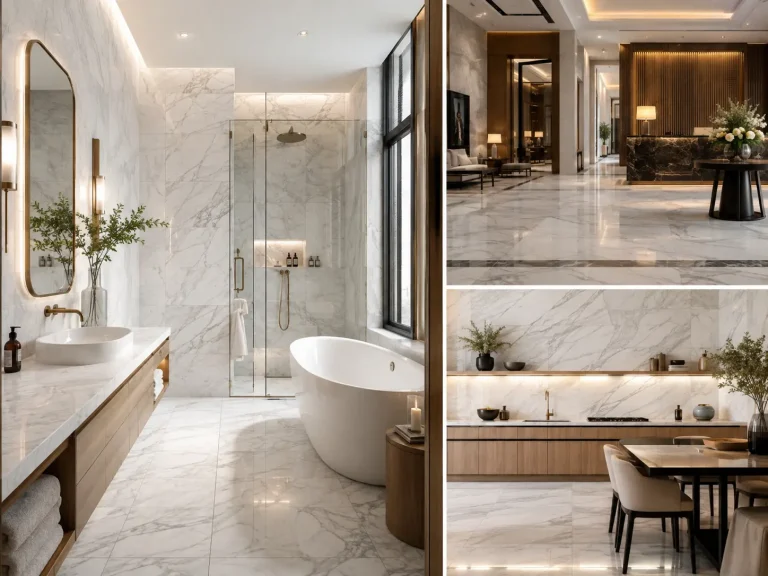
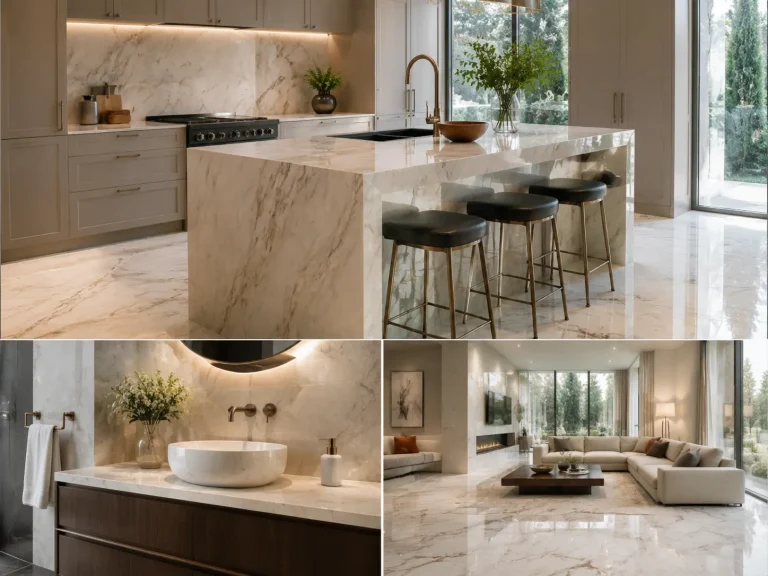
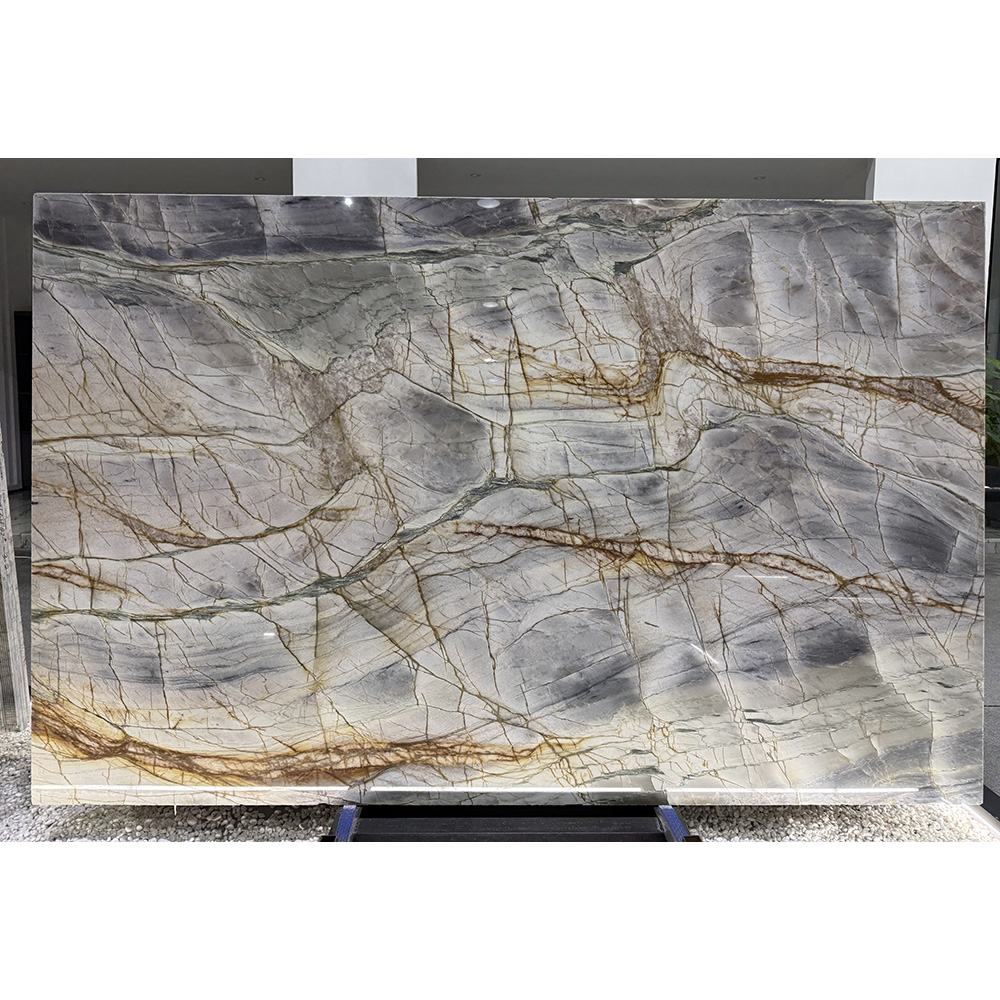
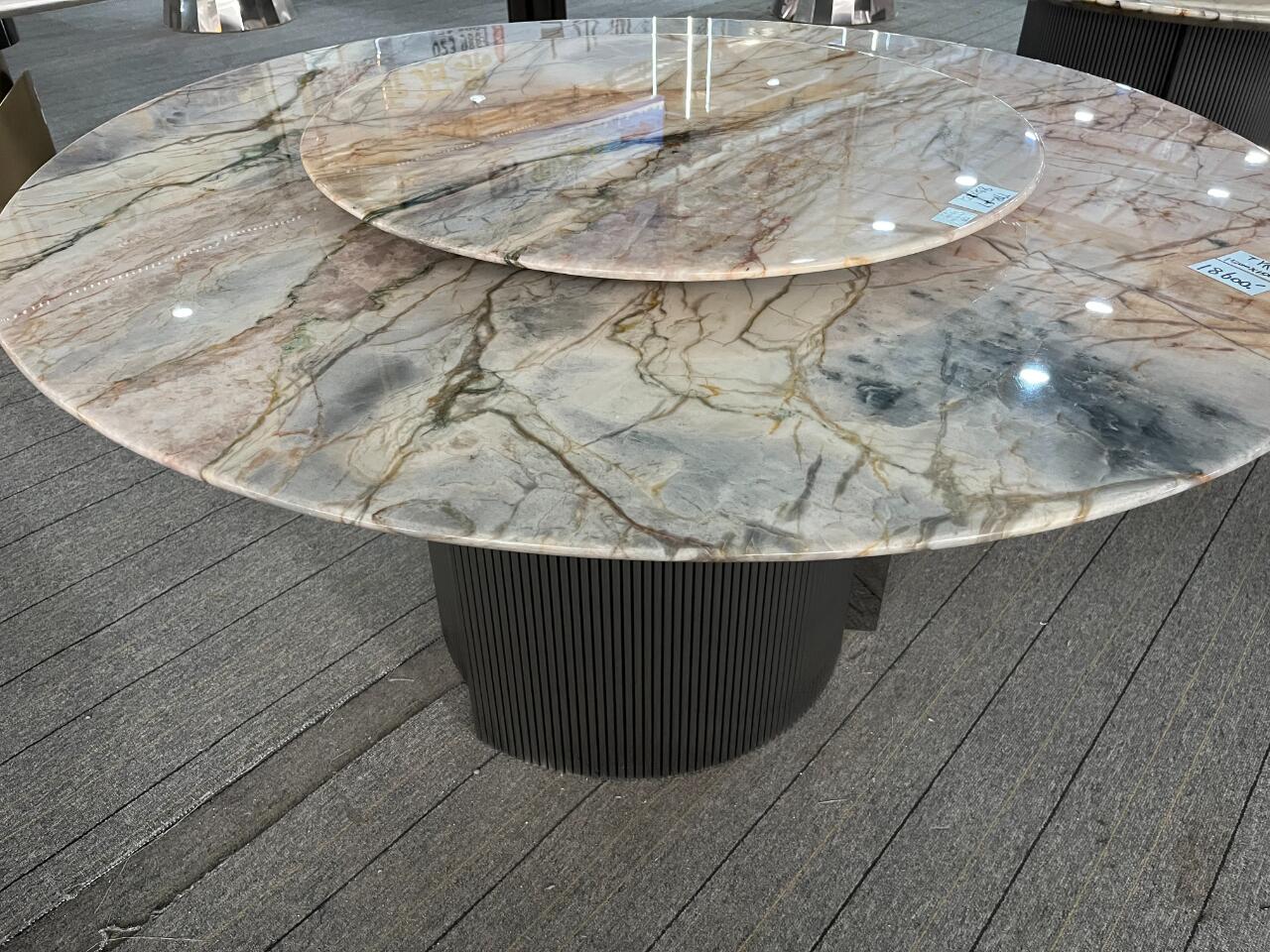
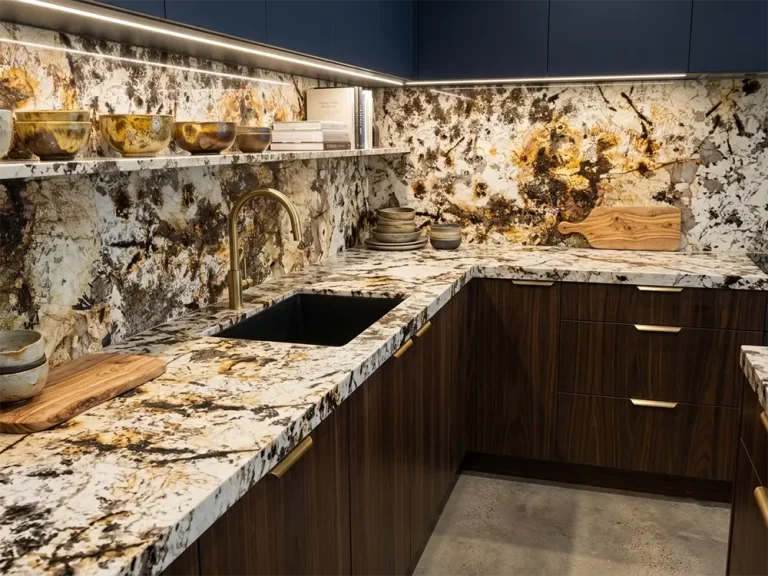
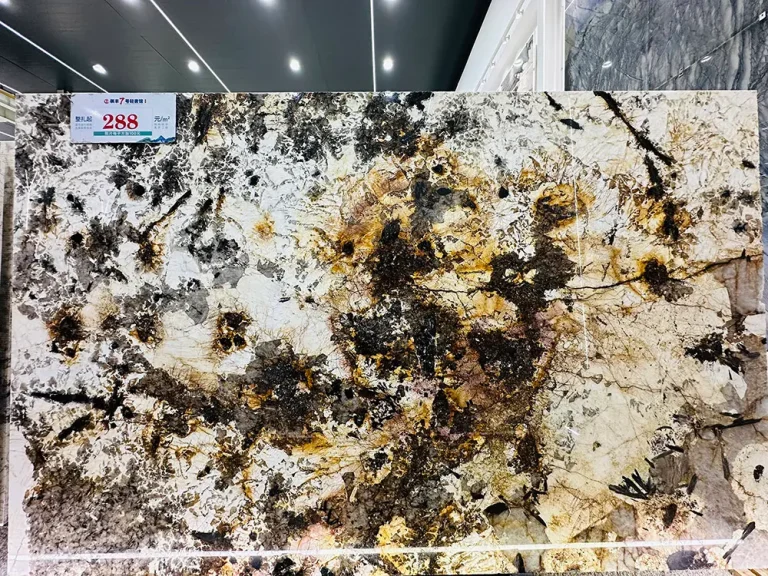
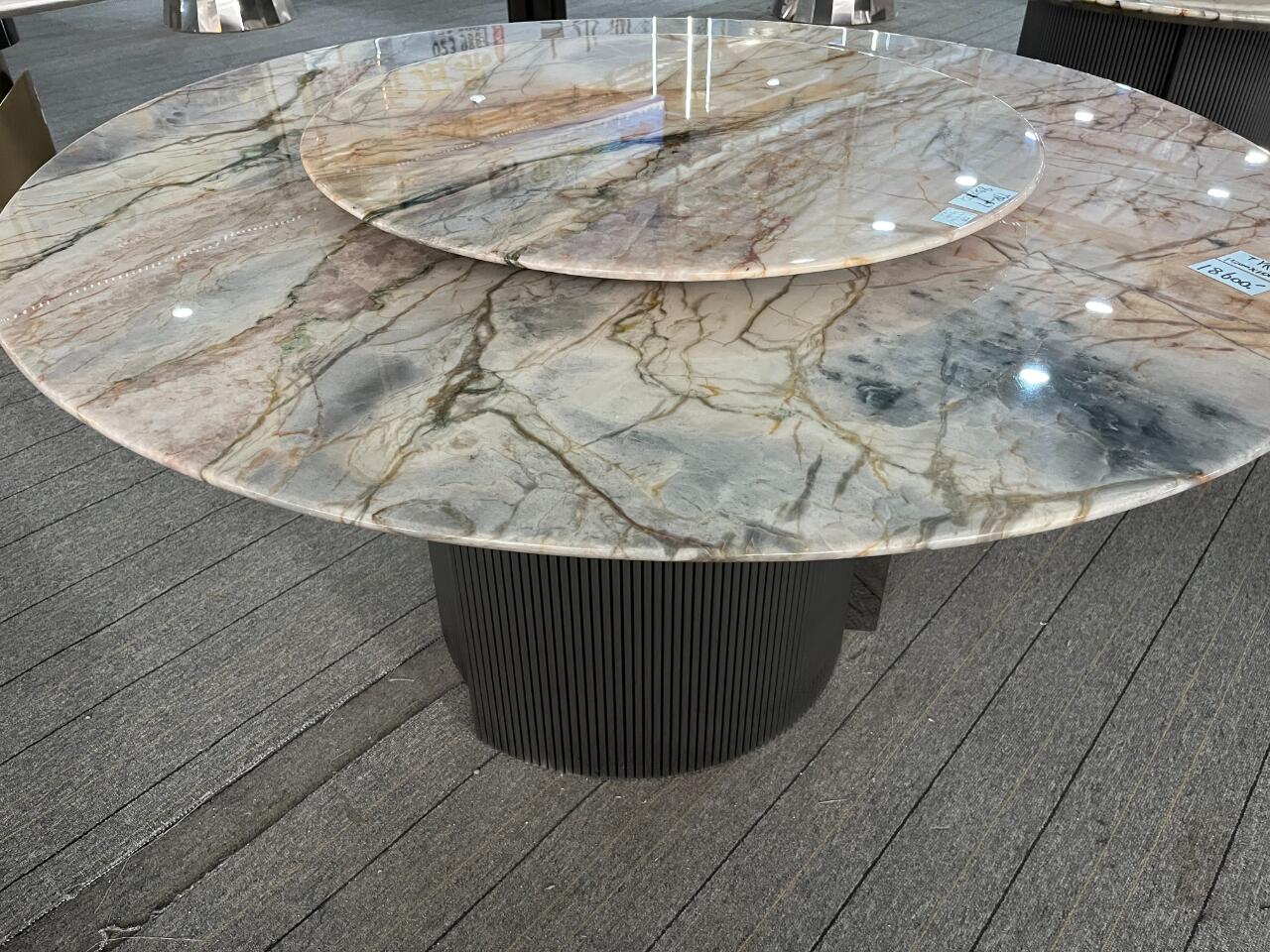
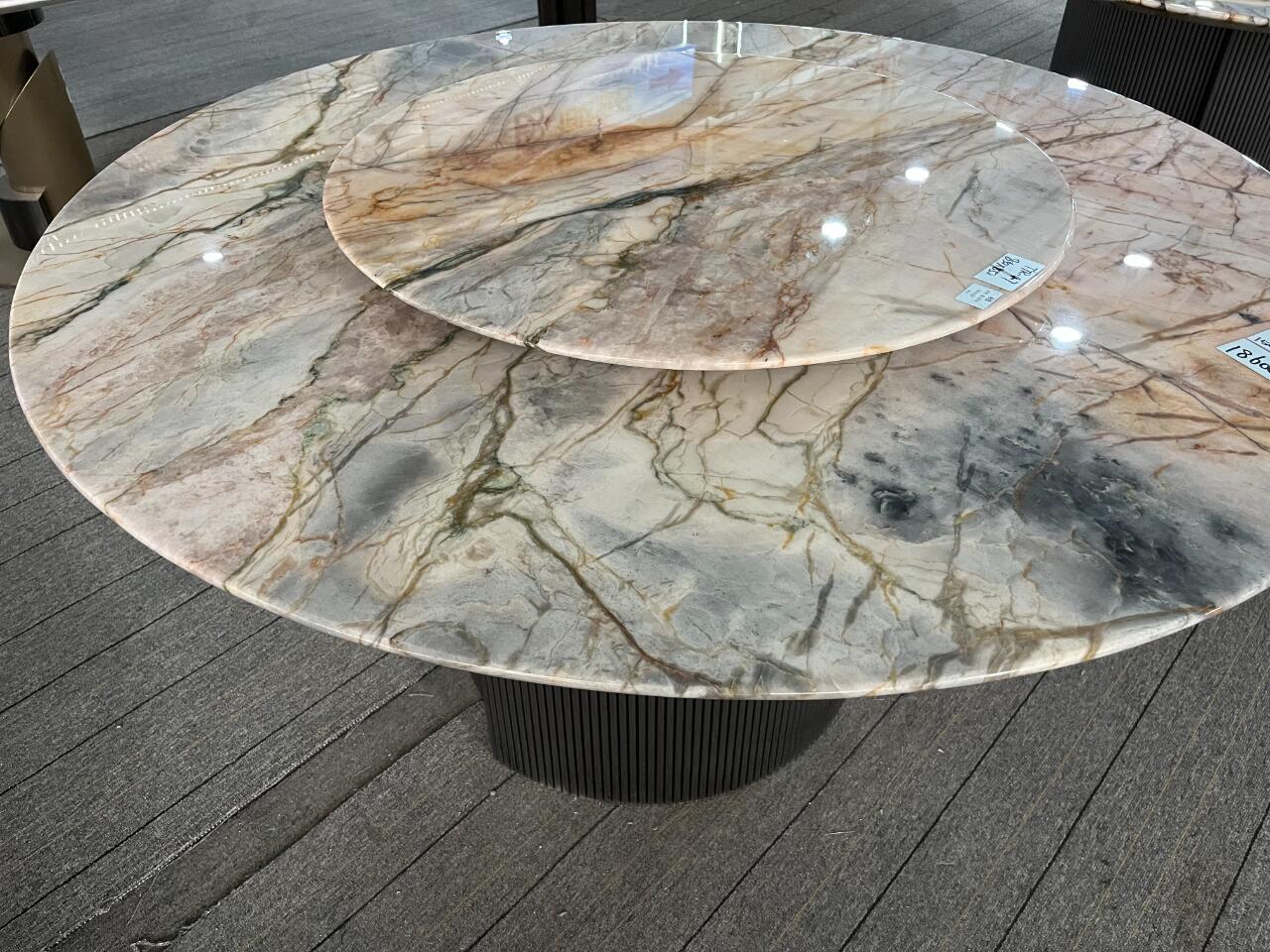
1. Product Overview Michelangelo Quartzite is one of the most visually arresting stones in the exotic collection. Sourced from Brazil, it is named after the legendary artist because every slab resembles a unique abstract painting. The stone combines cool background tones with warm, fiery veining, creating a dynamic contrast that instantly becomes the focal point of any room.
Geologically, Michelangelo is a true quartzite. This means that despite its delicate, art-like appearance, it is incredibly dense and resistant to wear, making it a practical choice for functional surfaces like kitchen countertops, not just decorative walls.
2. Stone Characteristics
- Stone Type: Exotic Natural Quartzite
- Origin: Brazil
- Texture: Artistic, Painterly, Veined
- Translucency: Opaque (Solid)
- Hardness: Very High (7 on Mohs Scale)
3. Technical Specifications (Data based on standard ASTM/EN testing)
| Property | Value | Unit |
|---|---|---|
| Density | 2.68 – 2.75 | g/cm³ |
| Water Absorption | 0.12 – 0.20 | % |
| Compressive Strength | 185 – 205 | MPa |
| Flexural Strength | 18 – 25 | MPa |
| Porosity | Very Low | – |
| Hardness (Mohs) | 7 | Scale |
| Acid Resistance | High | – |
4. Color & Pattern Description Michelangelo Quartzite offers a sophisticated and bold color palette:
- Canvas: A background of sweeping blue-grey, slate, and occasional creamy white tones.
- Veining: The defining feature is the network of “lightning” veins in shades of iron rust, copper, gold, and deep burgundy.
- Movement: The pattern is chaotic yet organic, often looking like a topographical map or a stormy sky.
- Variation: High. No two blocks are the same, ensuring a truly bespoke installation.
5. Key Advantages
- Living Art: It provides the aesthetic value of a mural or art piece.
- Extreme Hardness: Resistant to scratching from knives and pots.
- Acid Resistance: Unlike marble, the colorful veins in Michelangelo Quartzite will not etch or dull when exposed to lemon or vinegar.
- Heat Resistance: Ideal for fireplace cladding and kitchen environments.
- Versatility: The mix of cool (grey/blue) and warm (rust/gold) tones allows it to match almost any cabinet color.
6. Recommended Applications Residential
- Kitchen Islands (Waterfall edges are highly recommended)
- Full-height Backsplashes
- Living Room Feature Walls (Book-matched)
- Fireplace Surrounds
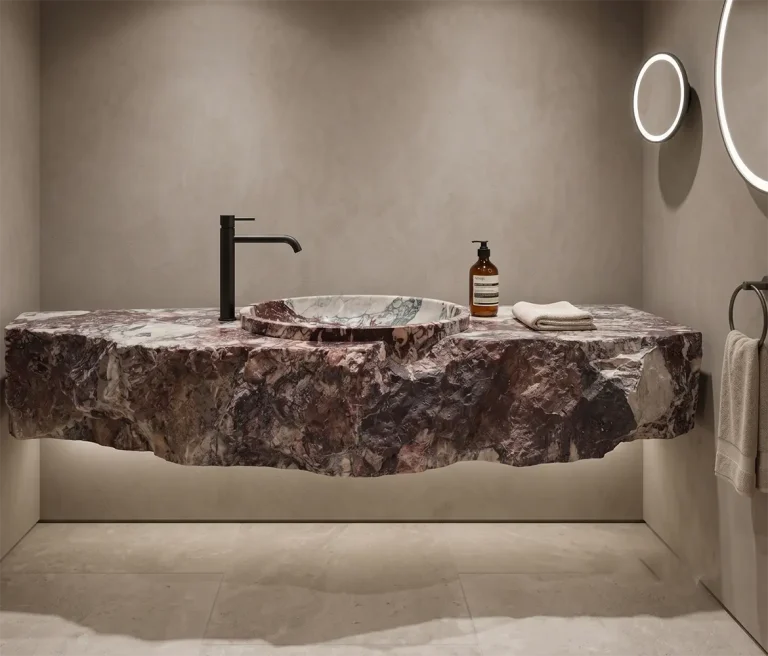
- Powder Room Vanities
Commercial
- Hotel Lobby Feature Walls
- Executive Desks
- Upscale Bar Counters
- Reception Areas
7. Available Finishes
- Polished: The most popular choice to make the rust and blue colors pop with vibrancy.
- Leathered: Enhances the texture of the veins, giving the stone a raw, natural feel that hides fingerprints.
- Honed: Creates a softer, matte appearance, though it may mute the colors slightly.
8. Standard Sizes & Customization
- Slabs: Jumbo slabs (approx. 3000 x 1850 mm) are prioritized to maintain pattern continuity.
- Thickness: 18 mm and 20 mm (Standard Stock). 30 mm available upon custom request.
- Cut-to-size: Precision waterjet cutting for complex designs.
9. Processing & Fabrication Options
- Book-Matching: This is the essential way to use Michelangelo Quartzite. When mirrored, the rust veins create stunning symmetrical shapes (diamonds, hearts, or butterflies).
- Mitered Edges: Used to create the appearance of a thick, solid block for islands.
- Vein-Matching: Critical for seams to ensure the “painting” isn’t interrupted.
10. Installation Notes
- Dry-Lay: A physical or digital dry-lay is mandatory before cutting to approve the vein flow.
- Cutting: Requires high-quality diamond blades due to the stone’s hardness.
- Sealing: Recommended upon installation to protect the micro-fissures common in exotic stones.
- Adhesive: Use color-matched epoxy (often dark grey or clear) for seams.
11. Maintenance Guide
- Clean with warm water and a mild detergent or stone soap.
- Avoid abrasive scrubbing pads steel wool.
- Wipe up spills promptly, although the stone is resistant to staining.
- Re-seal annually to maintain the surface integrity.
12. Frequently Asked Questions (FAQ)
Q1: Is Michelangelo Quartzite fragile? Despite its intricate look, it is a solid, hard quartzite. However, like many exotic stones with heavy veining, it may have natural micro-fissures which are reinforced with resin during processing. Once installed, it is extremely structurally sound.
Q2: Will the rust veins bleed or change color? No. The “rust” color comes from stable iron oxide minerals locked inside the stone. They will not bleed or spread in interior applications.
Q3: Is it safe for kitchen use? Yes. It is one of the best choices for kitchens because it resists the three main kitchen hazards: scratching, etching (acid), and heat.
Q4: What cabinet colors fit best?
- Dark Wood/Walnut: Picks up the rust/copper tones.
- Navy/Charcoal: Blends with the background for a moody luxury look.
- White: Creates a high-contrast gallery effect.
Q5: Why is it expensive? Michelangelo is a premium exotic stone. Its price reflects the rarity of the quarry, the difficulty of extraction, and the high demand for its unique artistic pattern.
Q6: Can I use it for flooring? Technically yes, due to its hardness. However, it is rarely used for general flooring because the bold pattern can be overwhelming. It is best used as a border or in a specific foyer area.
Q7: Is book-matching available? Yes. We specifically curate book-matched bundles for this material because it is primarily used for feature walls where symmetry is key.
Q8: What is the lead time? We stock 18mm and 20mm slabs. Immediate shipment is available. Custom cuts or 30mm thickness typically require 3-4 weeks.
Q9: Does it look different in person than in photos? Yes. The depth of the crystals and the metallic shimmer of the copper veins are best seen in person or via high-definition video, which we can provide.
Q10: How do you ship slabs? We use heavy-duty fumigated wooden bundles. Slabs are packed face-to-face with plastic protection to ensure the polished surface arrives perfectly.
Q11: Can it be used outdoors? Yes, it is UV resistant. It makes for a stunning outdoor kitchen or patio wall.
Q12: Is it the same as Michelangelo Marble? No. There is a marble called “Michelangelo” (usually black and gold), but this product is a Quartzite. It is much harder and more durable than the marble variety.
13. Why Choose Caron Stone Caron Stone works directly with Brazilian quarries to select the most dramatically veined Michelangelo blocks. We offer full slab photos, digital dry-lay services, and expert fabrication to ensure your project is a true work of art.