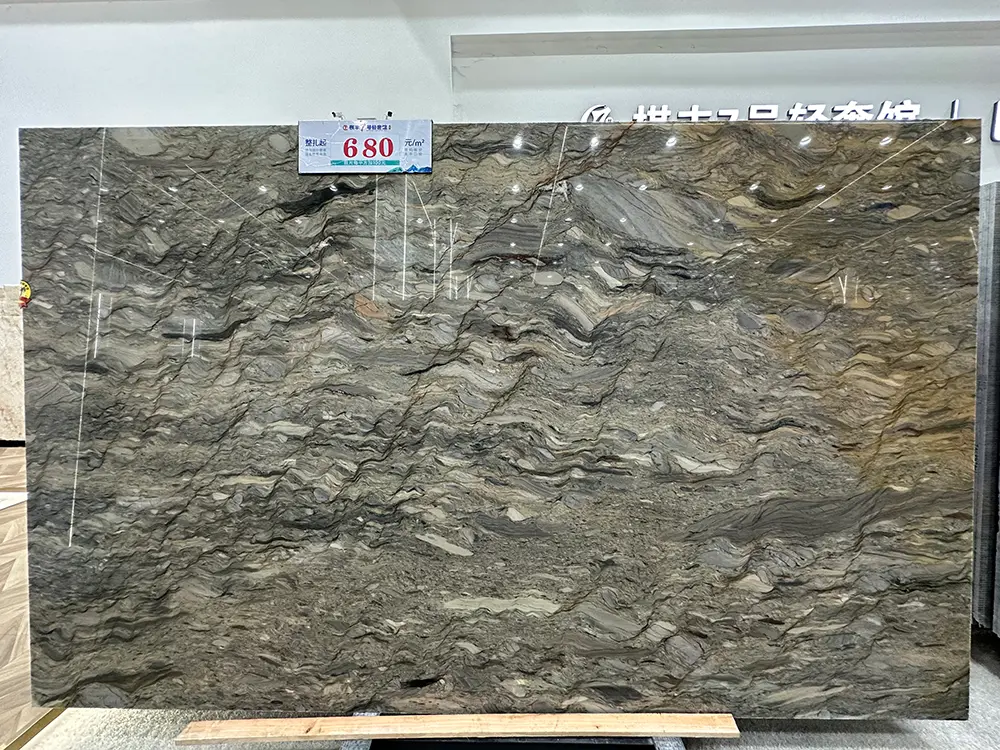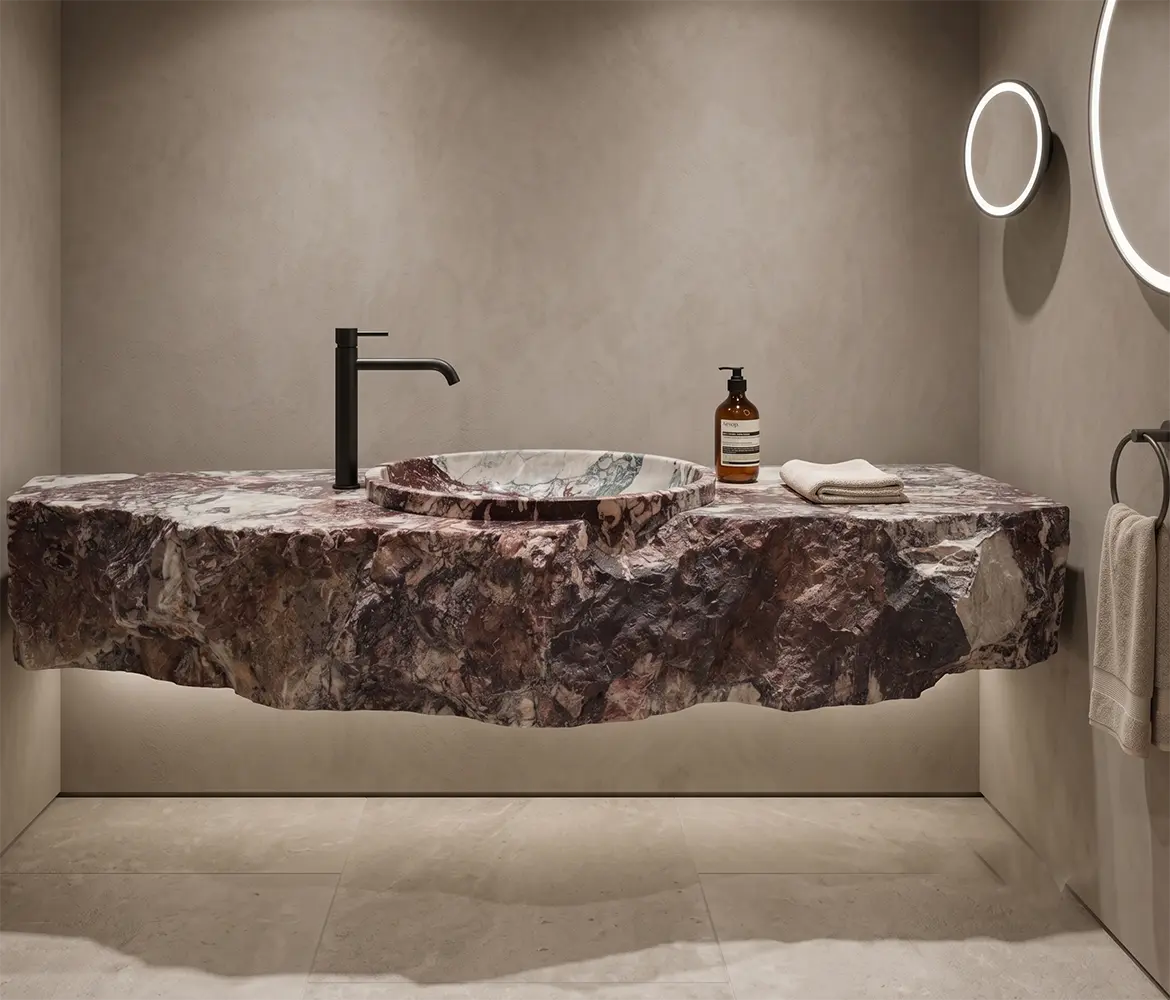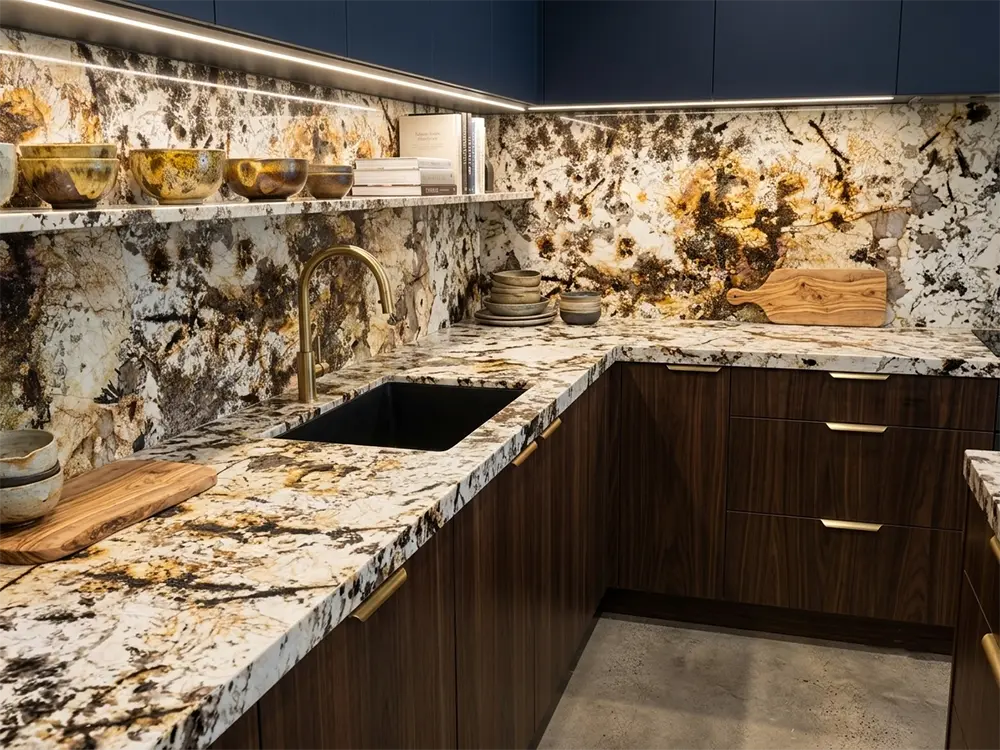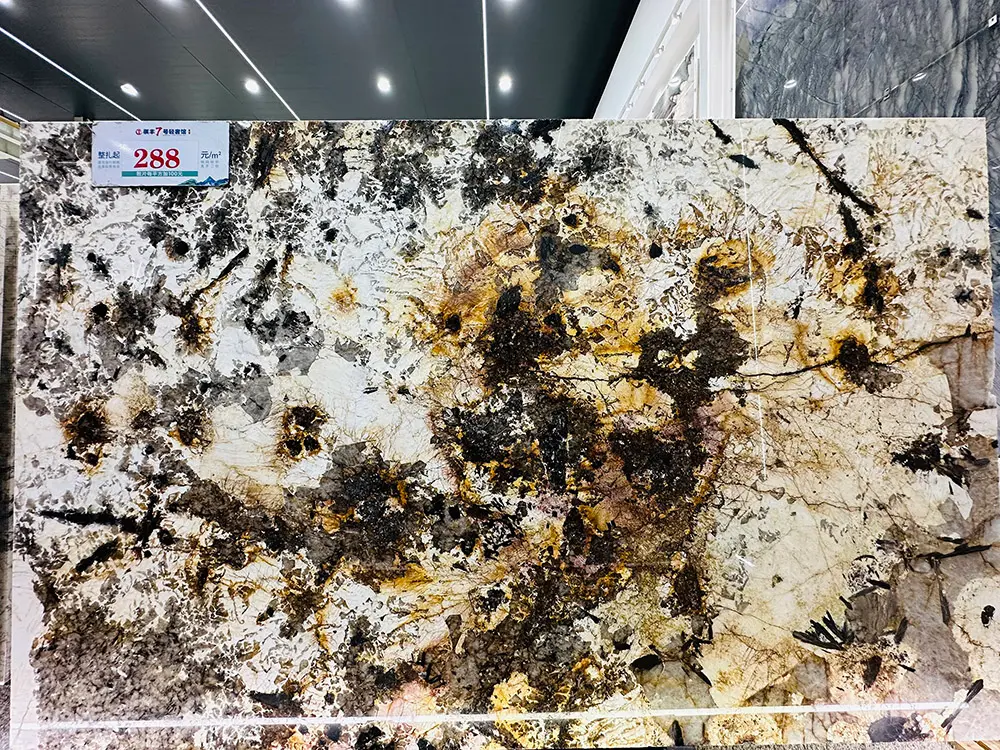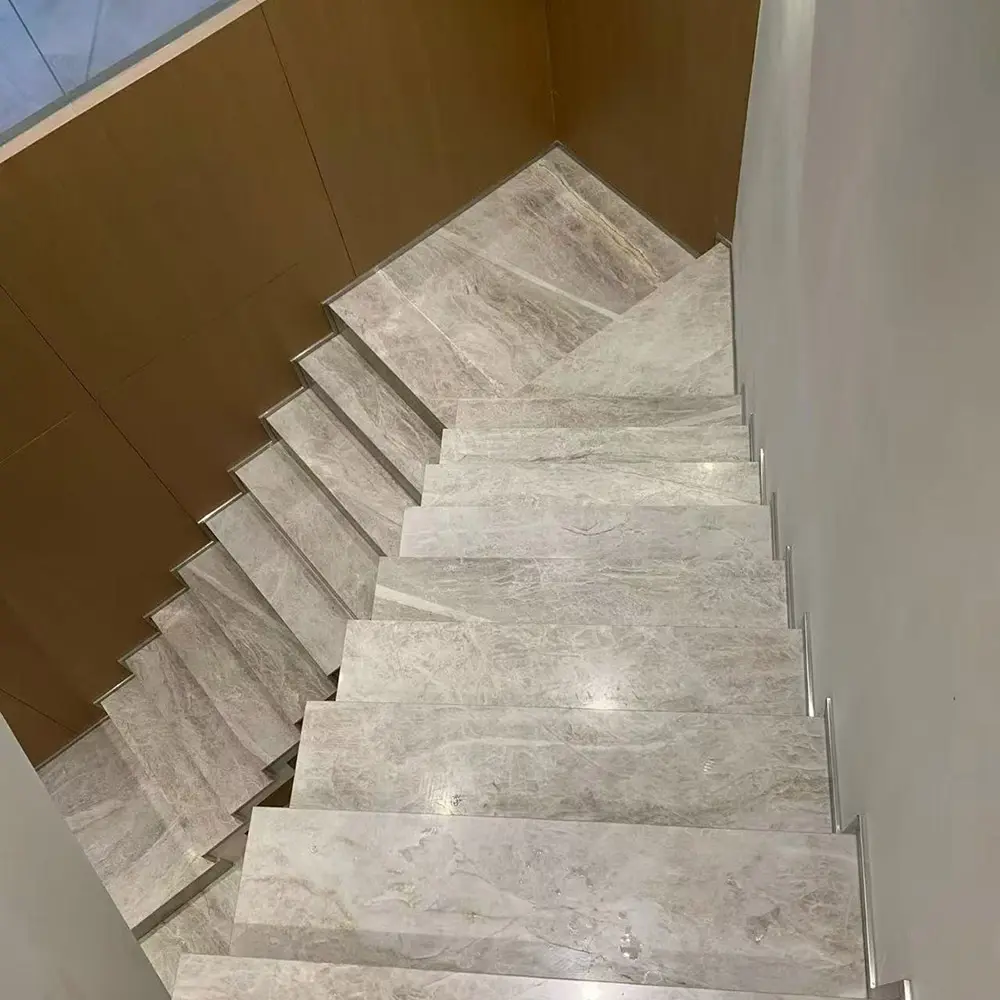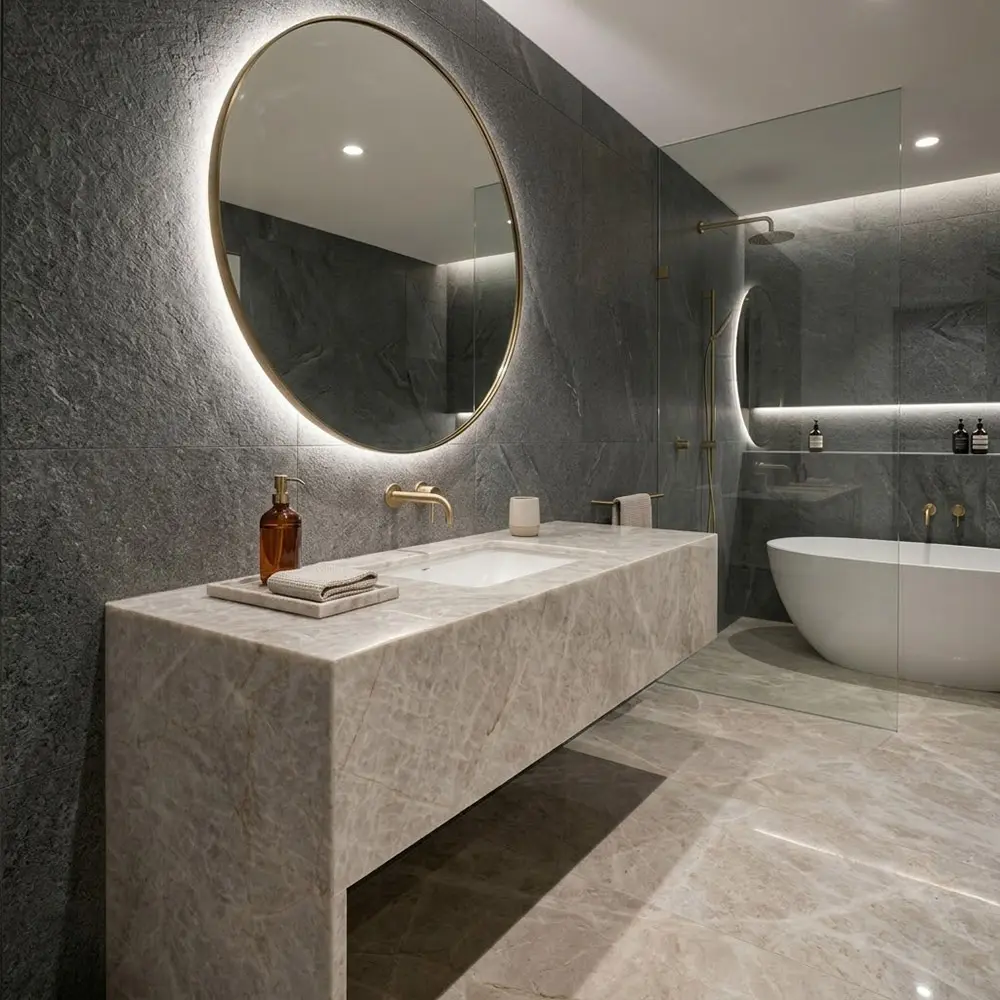






Large-format surfaces are increasingly used when designers want the visual effect of continuous marble with fewer grout joints. The buying decision, however, should not begin with a catalog image. A 600 × 1200 mm tile, a 900 × 1800 mm panel and a porcelain slab larger than one square meter behave differently during handling, cutting, adhesive application and installation. The correct choice depends on finished area, substrate flatness, tile thickness, edge condition, slip requirements, traffic and the installer’s ability to handle large units. For project teams that already know the application, quantity and target dimensions, a structured project material inquiry can help define whether the brief should remain with natural stone, porcelain-look surfaces or another architectural material before procurement starts.
The supplier’s background also matters because large-format work introduces more risk than small modular tile. A minor dimensional problem on a small tile may be absorbed across multiple joints, while a large panel magnifies substrate irregularity and lippage. Fabrication, packing and transportation also become more important as panel dimensions increase. Buyers should therefore evaluate sourcing, QC, material knowledge and project coordination rather than comparing price per square meter alone. Reviewing the company’s stone sourcing and project supply background helps establish what type of material support is available. This is especially relevant when a project is deciding between natural marble and marble-look porcelain, because the two materials can create similar visual directions but have different fabrication, installation and maintenance behavior.
Material selection should also consider whether the design truly needs porcelain or whether natural stone is still the stronger fit. Porcelain offers controlled pattern reproduction, low absorption and repeatable batch production. Natural marble offers geological variation, genuine mineral depth and slab-by-slab uniqueness. A hotel corridor that needs hundreds of square meters with controlled visual consistency may benefit from porcelain, while a signature lobby wall may justify hand-selected natural slabs. Buyers comparing both directions can review the site’snatural stone product collection as a reference point before deciding whether the project values repeatability or natural individuality more highly. The best material is the one that matches the design intent and the maintenance model—not the one that looks most impressive in one sample image.
Format is the next major decision. Natural marble tiles and slabs can be fabricated to many project-specific dimensions, while large porcelain products normally follow manufacturer-controlled production sizes and thicknesses. This distinction affects yield, replacement, edge treatment and installation. A natural slab can often be cut around a unique vein feature, while porcelain is designed around a repeated digital graphic and standardized panel geometry. Project buyers considering both material families should compare available formats, finish, edge condition and application through the related marble tiles and slabscategory before finalizing a specification. Doing this early prevents a common mistake: selecting a design first, then discovering that the required panel size, thickness or installation method does not suit the project.
Installation must be considered before purchase, not after delivery. Large panels require more disciplined substrate preparation, adhesive coverage, handling and lippage control than conventional smaller-format tiles. Natural marble adds additional variables such as absorption, resin treatment and possible sensitivity to setting materials, while porcelain has its own flatness, edge and bond requirements. Buyers who need a broader natural-stone comparison can review the existingMarble Tiles selection, installation and maintenance guide. For porcelain, however, the specification should follow ceramic-tile and gauged-panel standards rather than borrowing natural-marble assumptions directly. That distinction is essential for technical credibility and long-term installation performance.
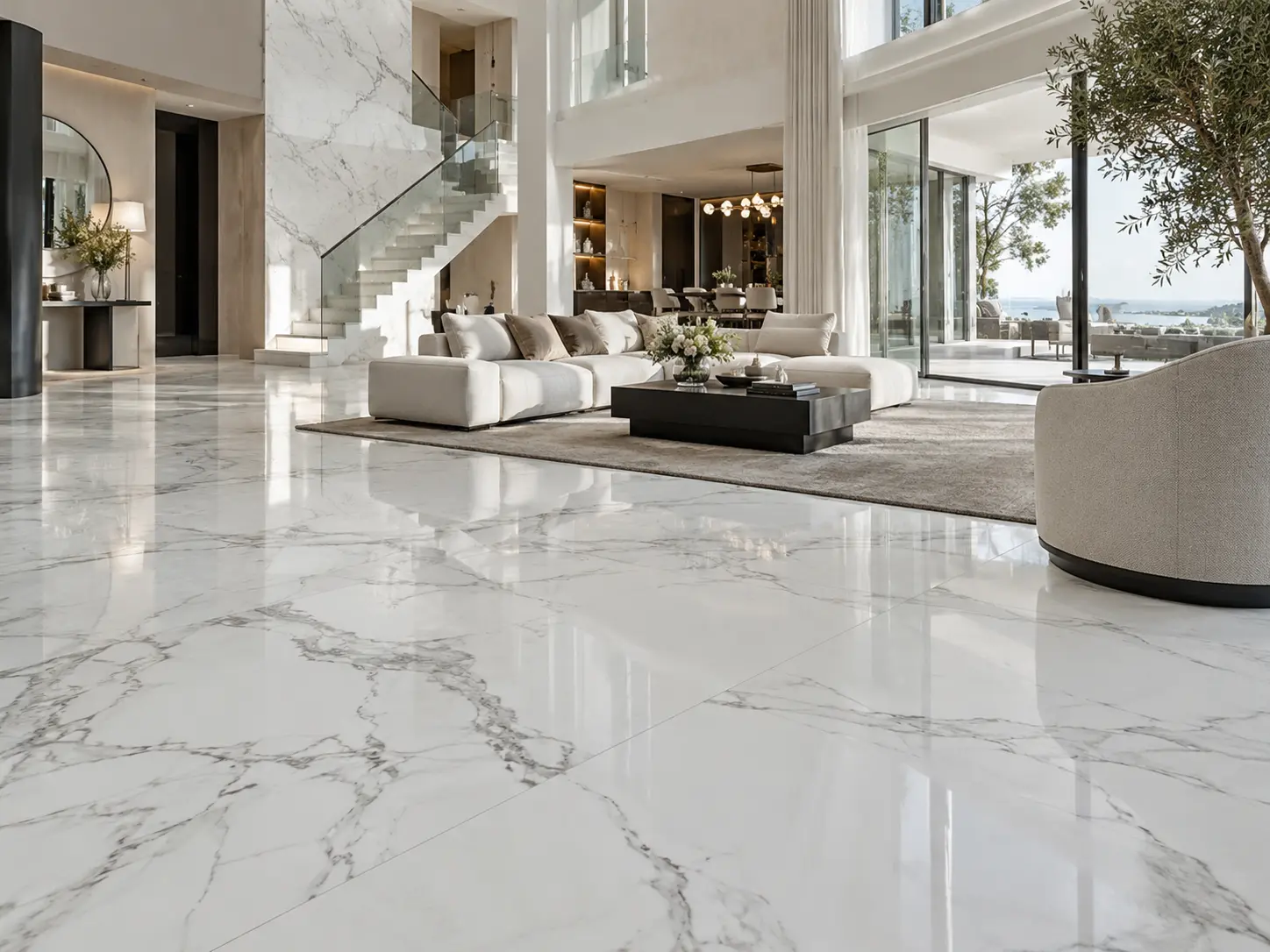
Large Format Marble Look Porcelain Tiles for Luxury Interiors
What Are Large Format Marble Look Porcelain Tiles?
Large format marble look porcelain tiles are ceramic surfaces engineered to reproduce marble-inspired colors and veining while using a dense porcelain body. The pattern is typically created through digital printing, surface decoration, glazing, polishing or combinations of these processes.
They are chosen when a project wants:
- fewer grout joints;
- more continuous visual movement;
- consistent repeat production;
- lower water absorption than many natural stones;
- simplified maintenance;
- marble-inspired design without depending on quarry variation.
What Counts as Large Format?
There is no single worldwide consumer definition of “large format.” In North American gauged-porcelain standards, panels or slabs are products at least one square meter in facial area. In normal project language, even 600 × 1200 mm or 750 × 1500 mm tiles may be described as large format compared with traditional smaller tiles.
Large Format Porcelain vs. Natural Marble
| Factor | Marble Look Porcelain | Natural Marble |
|---|---|---|
| Visual Variation | Digitally controlled | Geologically unique |
| Pattern Repeatability | Repeatable by design face | No true repetition |
| Water Absorption | Very low for qualifying porcelain products | Stone dependent |
| Acid Sensitivity | Generally lower concern for porcelain surface | Calcitic marble can etch |
| Maintenance | Generally easier | Depends on finish and stone |
| Bookmatching | Digitally designed effect possible | Natural consecutive slabs |
| Replacement | Batch / shade control required | Later quarry lots may differ strongly |
| Fabrication | Requires porcelain-specific tooling | Stone fabrication methods |
Which Sizes Should Project Buyers Consider?
Common project directions can include:
- 600 × 600 mm;
- 600 × 1200 mm;
- 750 × 1500 mm;
- 900 × 1800 mm;
- 1200 × 2400 mm;
- larger panel or slab formats where the manufacturer offers them.
These are market examples, not guaranteed product sizes. Buyers should confirm the exact manufacturer range.
600 × 1200 mm
This format provides a strong marble effect while remaining comparatively manageable for transport and installation. It can work well for residential floors, bathrooms and medium commercial areas.
900 × 1800 mm
Larger panels reduce joint frequency further and can create stronger visual continuity on walls and floors. Handling equipment, installer skill and substrate quality become more important.
1200 × 2400 mm and Larger
These formats approach slab-like architectural use. They are effective for large feature walls, hotel interiors and selected commercial projects but require more careful lifting, cutting and setting.
Does Bigger Always Mean Better?
No.
Larger units reduce grout lines but increase:
- handling difficulty;
- breakage exposure;
- substrate-flatness sensitivity;
- adhesive-coverage requirements;
- installer labor skill;
- transport and storage complexity.
If the design needs a continuous luxury surface → larger panels may justify the additional installation control.
How Thickness Changes Project Suitability
Porcelain thickness varies significantly by product family.
Traditional floor tiles may use thicker bodies, while gauged panels can be manufactured much thinner. ANSI A137.3 specifically addresses gauged porcelain products and their minimum physical-property requirements.
Thickness affects:
- weight;
- handling;
- cutting;
- edge fabrication;
- substrate requirement;
- floor vs. wall suitability;
- countertop application.
Do Not Compare Thickness Alone
A thinner engineered panel is not automatically weaker in its approved application, and a thicker tile is not automatically suitable for every floor. Compare thickness together with tested breaking strength, intended use and installation standard.
Why Surface Flatness Matters More on Large Tiles
ISO 10545-2 provides methods for checking ceramic-tile dimensions and surface quality, including length, width, thickness, straightness, rectangularity and surface flatness.
Large-format units make these properties highly visible because fewer joints are available to absorb variation.
What Can Poor Flatness Cause?
- lippage;
- uneven joint lines;
- hollow areas;
- installation difficulty;
- visual shadow lines under directional lighting.
Polished vs. Matte Marble Look Porcelain
Polished Finish
Polished porcelain increases reflectivity and can make digital marble veining look deeper and more dramatic.
Strong applications include:
- luxury living rooms;
- hotel reception walls;
- feature areas;
- dry interior commercial spaces.
Matte Finish
Matte surfaces create lower glare and can be easier to coordinate with contemporary interiors.
Strong applications include:
- bathrooms;
- commercial floors;
- modern residential areas;
- retail spaces.
Textured Finish
Textured porcelain can be considered where additional surface grip or an architectural tactile effect is required.
However, texture alone does not prove slip suitability. Use actual test classification for the intended environment.
 china-dreaming-green-marble-slab-polished |  Matte marble for modern residential areas |
How Should Slip Resistance Be Specified?
For hard-surface flooring, ANSI A326.3 provides a method for measuring dynamic coefficient of friction and includes product-use classifications.
Do not specify a bathroom or commercial entrance simply as “matte = safe.”
Consider:
- dry or wet condition;
- footwear;
- contamination;
- slope;
- cleaning method;
- traffic;
- applicable local requirements.
How Water Absorption Affects Porcelain Classification
Porcelain classification is closely related to low water absorption. ISO 13006 provides the international classification framework for ceramic tiles, while ISO 10545 test methods are used to determine specific properties.
This low absorption is one reason porcelain is frequently selected for bathrooms, kitchens and commercial interiors.
Breaking Strength and Modulus of Rupture
ISO 10545-4 specifies methods for determining modulus of rupture and breaking strength of ceramic tiles.
These properties help project teams assess whether the proposed tile family meets the applicable specification.
Large panels also need careful handling because installation breakage can occur from bending or point loading even when the product meets its laboratory performance requirements.
How Pattern Repetition Affects Marble Realism
Natural marble never repeats exactly. Digital porcelain does.
The design quality therefore depends partly on the number and composition of print faces.
What Is a Tile Face?
A face is one graphic variation within a tile series.
If a collection uses too few faces across a large floor, repeated veins can become visually obvious.
Does More Faces Always Mean Better?
No.
A badly composed 20-face collection can look less natural than a well-designed 8-face collection. Buyers should assess:
- pattern scale;
- vein direction;
- face count;
- rotation strategy;
- repeat distance;
- room size.
Shade Variation and Batch Control
Even digitally printed porcelain can vary between production batches because firing, glaze, ink and raw-material conditions change.
For large projects, confirm:
- shade code;
- production batch;
- caliber / size grouping where used;
- surface finish;
- quantity from one production lot;
- spare material from the same batch.
Rectified vs. Non-Rectified Porcelain
Rectified Tile
Rectified tiles are mechanically finished after firing to improve dimensional precision at the edges.
This supports more controlled joint alignment and a cleaner large-format appearance.
Non-Rectified Tile
Non-rectified products may require wider joints to accommodate dimensional variation.
Neither type should be installed with zero grout joint unless the relevant manufacturer and installation standard specifically permits the system.
Why Substrate Flatness Is Critical
Large-format tile needs a flatter substrate because a long rigid panel bridges over irregularities more visibly than a small tile.
The 2026 TCNA Handbook includes guidance on substrate preparation, flatness, grout joint sizing and workmanship, while gauged porcelain panels have dedicated installation guidance.
What Happens When the Substrate Is Not Flat?
The installer may try to compensate with excessive mortar thickness, which can create:
- poor coverage;
- uneven curing;
- lippage;
- voids;
- panel stress.
Adhesive Coverage Is a System Requirement
Large tiles require controlled mortar coverage and proper embedding.
Installation teams may use:
- manufacturer-approved mortars;
- directional troweling;
- back buttering or back coating where required;
- panel vibration or embedding systems;
- lippage-control tools.
Specific methods should follow the applicable ANSI / TCNA installation standard and mortar manufacturer instructions.
Handling and Cutting Large Porcelain Panels
Large units require specialized handling.
Depending on format, installers may need:
- rigid lifting frames;
- suction cups;
- multiple operators;
- dedicated cutting tables;
- porcelain blades;
- drilling tools;
- edge-finishing equipment.
Internal Corners Need Special Care
Sink, tap and outlet openings concentrate stress. Sharp internal corners can become crack-starting points.
Fabrication should follow the product manufacturer’s requirements for drilling, radii and edge treatment.
Large Format Marble Look Porcelain for Bathrooms
Bathrooms benefit from fewer grout joints and easy-to-clean surfaces, but different zones require different specifications.
Shower Walls
Large panels create a strong continuous-stone effect and reduce joint frequency.
Bathroom Floors
Prioritize slip classification, drainage, waterproofing and cleaning over gloss alone.
Vanity and Feature Walls
Polished or highly decorative Calacatta-style patterns can create a stronger luxury focal point.

Large Format Marble for Bathrooms
Large Format Tiles for Hotel Projects
Hotels often combine visual impact with large repetitive areas.
Buyers should prioritize:
- batch consistency;
- spare-stock strategy;
- traffic classification;
- installation sequence;
- carton and pallet labeling;
- room-by-room allocation.
Lobby Floors
Use a surface suitable for expected traffic and wet contamination.
Guest Bathrooms
Consistency, cleaning and replacement become especially important across hundreds of rooms.
Feature Walls
Large panels can create digitally controlled bookmatch-style effects without relying on natural slab availability.
Large Format Porcelain for Villas
Luxury villas often use large-format marble look porcelain in living rooms, kitchens, bathrooms and double-height walls.
The strongest advantage is visual continuity combined with controlled repeatability.
If the client wants marble appearance with lower maintenance and more repeatable batches → porcelain may be the stronger direction.
Commercial and Retail Applications
Commercial interiors require more than visual approval.
Check:
- traffic category;
- surface abrasion resistance;
- slip requirements;
- cleaning chemicals;
- replacement-stock availability;
- floor loading;
- movement joints;
- substrate design.
How to Inspect Large Format Porcelain Quality
| QC Item | What to Check | Risk if Ignored |
|---|---|---|
| Nominal / Actual Size | Dimensions and calibration | Joint inconsistency |
| Thickness | Multiple points | Installation mismatch |
| Flatness | Center / edge curvature | Lippage and installation difficulty |
| Rectangularity | Corner geometry | Poor joint alignment |
| Edge Quality | Chips and rectification | Visible defects |
| Print Quality | Banding, blur, color accuracy | Artificial-looking marble effect |
| Shade | Batch consistency | Patchy floor |
| Surface Defects | Pinholes, scratches, glaze marks | Visible rejection |
| Pattern Faces | Repeat frequency | Obvious graphic repetition |
| Packing | Edge protection and pallet stability | Transport breakage |
Common Buying Mistakes
Mistake 1: Choosing From One Catalog Image
Consequence: The full floor shows pattern repetition that was invisible in the marketing image.
Mistake 2: Assuming Larger Is Always Better
Consequence: Handling, waste and installation cost increase unnecessarily.
Mistake 3: Ignoring Surface Flatness
Consequence: Lippage becomes visible under natural or directional light.
Mistake 4: Choosing Polished Tile for Every Area
Consequence: Wet-use or traffic requirements may not match the selected surface.
Mistake 5: Ignoring Batch and Shade Codes
Consequence: Later pallets may create visible color differences.
Mistake 6: Specifying Zero Grout Joints
Consequence: Installation cannot accommodate product and building movement correctly.
Mistake 7: Using a Standard Tile Installer for Very Large Panels
Consequence: Handling, cutting and coverage problems increase.
Mistake 8: Ordering Exact Net Area
Consequence: Cutting damage or future replacement may require a later batch that no longer matches.
How Much Extra Material Should You Order?
There is no universal percentage that fits every layout.
Allowance depends on:
- room geometry;
- tile size;
- diagonal or straight layout;
- wall vs. floor application;
- bookmatch-style composition;
- cutting complexity;
- breakage risk;
- replacement stock.
Large panels may produce a higher waste percentage in rooms with many corners because offcuts are more difficult to reuse.
How to Compare Supplier Quotations
Do not compare only price per square meter.
| Quotation Item | What to Confirm |
|---|---|
| Design | Exact marble-look series / face range |
| Size | Nominal and actual caliber |
| Thickness | Declared product thickness |
| Finish | Polished / matte / textured |
| Edge | Rectified / non-rectified |
| Test Data | Applicable ISO / ANSI performance |
| Batch | Shade and caliber strategy |
| Packing | Carton, pallet, crate, protection |
| Spare Stock | Same-lot contingency material |
| Delivery | Port / site / installation schedule |
What Should Be Included in an RFQ?
- project type;
- application area;
- desired marble-look direction;
- tile size;
- thickness;
- finish;
- required quantity;
- floor or wall use;
- slip requirement;
- test standard;
- packing;
- destination;
- required delivery date.
Recommendation: Choose Format by Project Workflow, Not Visual Impact Alone
Large format marble look porcelain can create an impressive continuous surface, but the largest panel is not automatically the best choice.
Use this decision sequence:
Application → Exact Size → Thickness → Finish → Flatness → Slip Requirement → Pattern Faces → Batch Control → Substrate → Installation Method → QC → Packing → Spare Stock.
For hotel and commercial projects, repeatability and installation control often matter more than maximum panel size. For feature walls and luxury villas, larger formats may justify the additional handling complexity because visual continuity carries more design value.
Preparing a large-format tile or marble-surface project? Send the application, preferred size, finish, quantity, project drawings, traffic condition, installation area and destination. A complete brief makes it easier to compare porcelain and natural-stone directions and identify the most practical material route before final specification.
Large Format Marble Project Decision Intelligence
This section summarizes large-format marble-look porcelain selection as a complete project decision rather than a decorative choice. The correct surface must connect design, technical performance, installation, QC and long-term maintenance.
Material Fit by Product Direction
●●● = Primary
●●○ = Strong Option
●○○ = Depends on Workflow
— = Usually Not First Choice
This matrix is an application-fit guide only. It is not statistical data, a probability estimate, a performance guarantee or a statement of current catalog availability. Final suitability depends on the actual product specification, tested properties, substrate, installation method and project requirements.
| Product Direction | Luxury Villa | Hotel Lobby | Bathroom Wall | Bathroom Floor | Retail / Commercial | Main Selection Logic |
|---|---|---|---|---|---|---|
| Carrara-Look Porcelain | ●●● | ●●○ | ●●● | ●●○ | ●●○ | Soft grey veining suited to broad, calm interior surfaces |
| Calacatta-Look Porcelain | ●●● | ●●● | ●●● | ●●○ | ●●● | Bold vein direction for statement surfaces and luxury interiors |
| Volakas-Look Porcelain | ●●● | ●●○ | ●●● | ●●● | ●●○ | Cloudy white-grey character for softer hospitality and residential schemes |
| Polished Large Format | ●●● | ●●● | ●●● | ●○○ | ●●○ | Best where reflectivity and vein clarity are prioritized |
| Matte Large Format | ●●● | ●●● | ●●● | ●●● | ●●● | Versatile low-glare direction with strong floor and wall potential |
| Gauged Porcelain Slab | ●●● | ●●● | ●●● | ●●○ | ●●● | Strongest where minimal joints and slab-like visual continuity justify specialist installation |
Current Related Product Entry
For projects still deciding between porcelain and genuine natural stone, the related Natural Stone and Marble Tiles/Slabs entries linked earlier in this article provide a useful material comparison. Because actual large-format porcelain availability must be confirmed separately, specification should be based on current stock and test data rather than assumed from natural-stone categories.
How Should Hotels Choose Large Format Marble Look Tiles?
Hotels should prioritize batch consistency, spare stock, surface performance and installation repeatability. Extremely large panels can be excellent for lobby walls, while more manageable formats may reduce installation risk across hundreds of guest rooms.
How Should Villas Choose?
Villas can prioritize visual composition more aggressively. Large Calacatta-style panels can work well on double-height walls and open-plan floors where vein continuity creates design value.
Option: When Is Polished Porcelain the Better Choice?
Use polished surfaces when high reflectivity and strong marble graphics are central to the design and the application does not require a different slip-performance direction.
Option: When Is Matte Porcelain the Better Choice?
Use matte surfaces when lower glare, easier visual maintenance or floor use is more important. Confirm tested slip classification rather than assuming matte automatically means safe.
Consideration: How Important Is Pattern Face Count?
Very important on large open floors. More visual diversity helps reduce obvious repetition, but composition quality matters more than face count alone.
Consideration: Should Buyers Always Choose the Largest Size?
No. The optimal size is the one that achieves the intended visual effect with manageable handling, cutting, waste and installation risk.
The Complete Selection Sequence
Design Direction → Size → Thickness → Finish → Technical Classification → Flatness → Slip Performance → Pattern Faces → Shade / Batch → Substrate → Mortar / Installation → QC → Packing → Spare Stock.
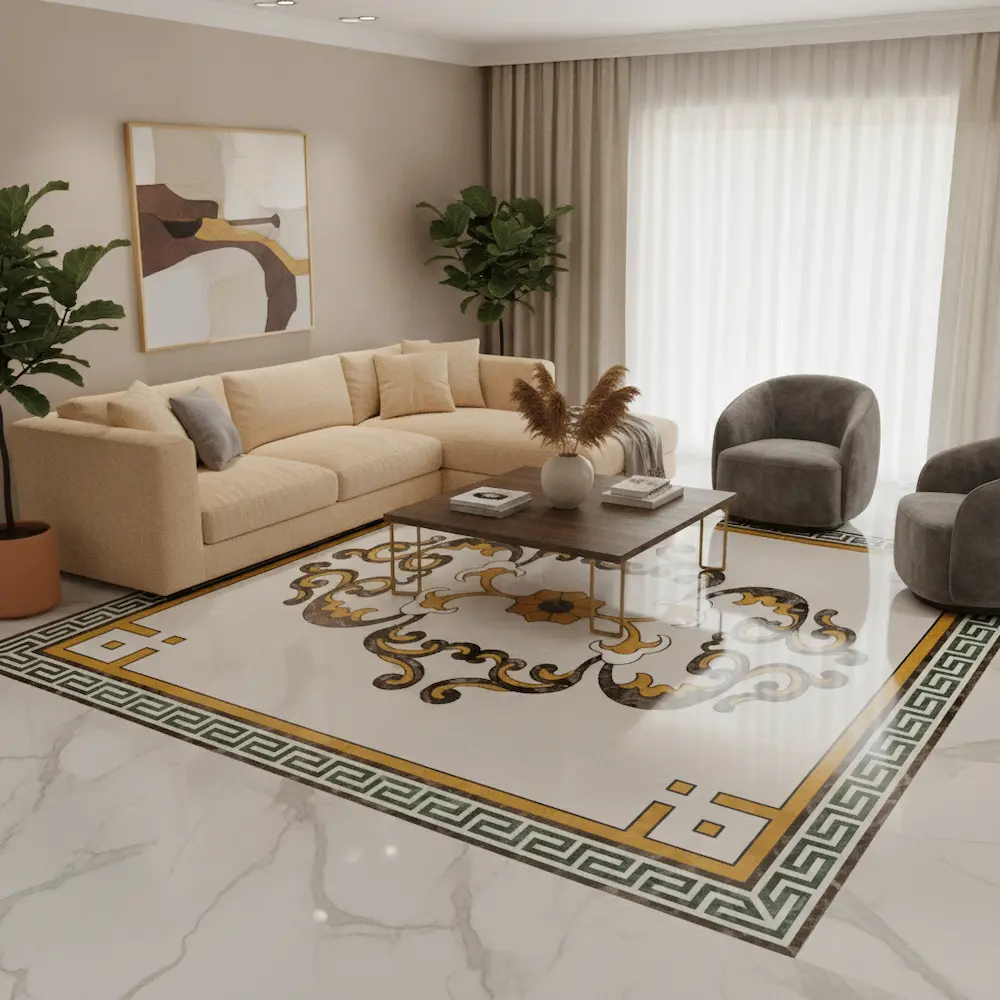
Frequently Asked Questions About Large Format Marble Look Porcelain Tiles
1. Are large format marble look porcelain tiles better than natural marble?
Neither material is universally better. Large format marble look porcelain tiles provide more controlled pattern repetition, low water absorption, easier maintenance and better batch repeatability than many natural stones. Natural marble offers genuine geological variation, mineral depth and completely unique slabs. Porcelain is often a strong choice for hotels, bathrooms and large commercial interiors where consistency and maintenance are priorities, while natural marble can be preferable for signature feature walls, luxury slabs and projects that value unique stone character. Buyers should compare application, maintenance, installation, replacement strategy and design intent before choosing.
2. What size is best for large format marble look porcelain tiles?
The best size depends on the room, installation team and desired visual effect. Formats around 600 × 1200 mm provide a large-tile appearance while remaining relatively manageable. Larger formats such as 900 × 1800 mm or 1200 × 2400 mm reduce grout joints and create a stronger slab-like look but require flatter substrates, more handling equipment and greater installation skill. Very large gauged panels can be ideal for feature walls and high-end commercial interiors, but they should only be specified when logistics, cutting and installation methods have been confirmed.
3. Do large format porcelain tiles require special installation?
Large format and gauged porcelain products require more controlled installation than traditional small tiles. Substrate flatness becomes more important, mortar coverage must be carefully managed, and large panels may require suction frames, multiple installers, directional troweling, back coating and lippage-control systems. Gauged porcelain panels and slabs are covered by dedicated ANSI installation standards because their size and thickness create unique workmanship requirements. The installer should follow the tile manufacturer, mortar manufacturer and applicable ANSI or TCNA method instead of treating a large slab like an ordinary small ceramic tile.
4. Are polished marble look porcelain tiles suitable for bathrooms?
Polished marble look porcelain can be highly effective on bathroom walls, vanity areas and decorative surfaces, but floor suitability should be determined by the actual tested surface classification and intended wet-use condition. A polished appearance alone does not prove adequate slip performance. Bathroom floors should be evaluated for DCOF or the applicable local slip classification, drainage, footwear, cleaning products and contaminants such as soap. Where higher traction is required, a matte or textured surface may be the stronger direction, but testing should still guide the specification.
5. How should buyers inspect large format porcelain tiles before bulk ordering?
Buyers should confirm nominal and actual dimensions, thickness, rectangularity, surface flatness, edge quality, print clarity, shade, finish and pattern-face variation. Large projects should be supplied from controlled production batches where practical, with matching shade and caliber identification. Buyers should also review test data for water absorption, breaking strength, surface performance and slip resistance where applicable. Packaging is especially important for large panels because edge damage and breakage during transport can create expensive losses. Keep spare material from the same batch for future replacement whenever visual matching is important.
References
- ISO 13006:2018 — Ceramic Tiles: Definitions, Classification, Characteristics and Marking. Author: ISO Technical Committee 189. Institution: International Organization for Standardization. Source: ISO Ceramic Tile Standards.
- ISO 10545-2 — Ceramic Tiles: Determination of Dimensions and Surface Quality. Author: ISO Technical Committee 189. Institution: International Organization for Standardization. Source: ISO Ceramic Tile Test Methods.
- ISO 10545-3 — Ceramic Tiles: Determination of Water Absorption, Apparent Porosity, Apparent Relative Density and Bulk Density. Author: ISO Technical Committee 189. Institution: International Organization for Standardization. Source: ISO Ceramic Tile Test Methods.
- ISO 10545-4 — Ceramic Tiles: Determination of Modulus of Rupture and Breaking Strength. Author: ISO Technical Committee 189. Institution: International Organization for Standardization. Source: ISO Ceramic Tile Test Methods.
- ANSI A137.3 / A108.19 / A108.20-2025 — Gauged Porcelain Tile and Gauged Porcelain Tile Panels/Slabs Material and Installation Standards. Author: ANSI Accredited Standards Committee. Institution: Tile Council of North America. Source: American National Standards for Tile.
- ANSI A326.3-2021 — Dynamic Coefficient of Friction of Hard Surface Flooring Materials. Author: ANSI Accredited Standards Committee. Institution: Tile Council of North America. Source: American National Standards for Hard Surface Flooring.
- 2025–2026 TCNA Handbook for Gauged Porcelain Tiles and Gauged Porcelain Tile Panels/Slabs Installation. Author: TCNA Handbook Committee. Institution: Tile Council of North America. Source: TCNA Installation Publications.
- 2026 TCNA Handbook for Ceramic, Glass, and Stone Tile Installation. Author: TCNA Handbook Committee. Institution: Tile Council of North America. Source: TCNA Installation Publications.