





Quick Insights: Navigating the 2026 Mosaic Tile Market
The architectural world is witnessing a “Mosaic Renaissance” in 2026. No longer relegated to simple bathroom splashbacks, Mosaic Tiles have reclaimed their status as primary narrative elements in luxury hospitality and high-end residential interiors. This shift is driven by a desire for “Natural Maximalism”—the blending of intricate geometric precision with the raw, unpredictable beauty of natural stone and metal. For architects and B2B procurement officers, understanding the technical nuances of these materials is no longer optional; it is the foundation of a successful project ROI.
The Evolution of Mosaic Tiles in Modern Architecture
The journey of mosaics began in Mesopotamia, but the 2026 iteration is defined by the marriage of hand-finishing and CNC-waterjet technology. Today’s Mosaic Tiles are modular art forms that can be scaled to cover entire executive lobby floors or boutique hotel swimming pools. The evolution has seen a move away from standard squares toward fluid, biophilic shapes that mimic the organic patterns found in nature. To understand the depth of expertise required to bridge this gap between history and modern technology, you can learn more about us and our commitment to artisan-quality stone engineering.
Modern manufacturing allows for “seamless transitions” where the grout line becomes a design feature rather than a necessary evil. In commercial applications, this precision is vital. A mismatch of just 0.5mm across a 500-square-meter installation can lead to catastrophic structural alignment issues. Therefore, the 2026 standard emphasizes calibrated thickness and pre-mounted mesh backings that facilitate rapid, accurate installation for high-volume commercial contracts.
Mosaic Tiles
The Advantages of Marble Mosaic Tiles
Marble remains the undisputed king of mosaic materials, particularly for luxury applications. Unlike ceramic or glass, natural marble offers a unique “chromatic depth” that reacts to interior lighting in real-time. The advantages are not purely aesthetic; marble mosaics are inherently sustainable, offering a life cycle of 50+ years when maintained correctly. For procurement managers looking to source high-volume material for residential or hospitality tenders, we invite you to contact us for direct factory-level specifications and trade pricing.
One of the most significant benefits of using marble in a mosaic format is its “structural forgiveness.” While large-format slabs are prone to cracking under slight sub-floor movement, the multiple grout joints in a mosaic grid allow for micro-adjustments and flexibility. This makes marble mosaics the superior choice for older building renovations or zones with high vibration, such as high-rise elevator vestibules or subway-adjacent retail spaces.
Key Performance Metrics: Durability, Heat Resistance, and Absorption
For B2B projects, aesthetic appeal must be backed by quantitative data. High-traffic environments require Mosaic Tiles that meet specific ASTM and ANSI standards to ensure long-term safety and durability.
Comparative Performance Analysis of Mosaic Materials
| Performance Metric | Natural Marble | Porcelain | Glass (Recycled) | Metal Inlay Stone |
| Water Absorption (ASTM C373) | < 0.5% – 1.0% | < 0.5% | 0.0% | < 0.5% |
| Mohs Hardness | 3 – 5 | 7 – 8 | 5 – 6 | 4 – 6 |
| DCOF (Dynamic Coefficient of Friction) | ≥ 0.42 | ≥ 0.55 | Variable | ≥ 0.42 |
| Heat Resistance | High (Excellent) | High | Medium | High |
| Stain Resistance | Requires Sealing | Excellent | Excellent | Moderate |
Understanding these metrics allows architects to specify the right product for the right zone. For example, while a polished finish might be suitable for walls, a honed finish with high DCOF is mandatory for wet areas. To explore the broader possibilities of natural stone beyond small-scale grids, many designers integrate mosaics with larger marble tiles and slabs to create a cohesive, multi-format textural experience throughout a property.
Diversity of Materials: Texture and Tone in 2026
The diversity of materials available today is staggering. While porcelain and glass have their place in budget-conscious projects, the premium market is leaning toward mixed-media mosaics. These combine various stones, such as limestone, travertine, and marble, to create a “tactile landscape.” The 2026 trend is moving away from cold, clinical surfaces toward warmer, “earth-toned” textures. Designers often start their search by browsing a specialized collection of stone mosaic tiles to find the perfect balance of tonal harmony and structural integrity.
Texture is the new color. “Split-face” and “tumbled” finishes are being used to create feature walls that demand to be touched. In residential spa bathrooms and rustic-modern kitchens, the use of rustic tumbled limestone mosaic tiles provides a grounding, ancient aesthetic that contrasts beautifully with modern chrome or matte black fixtures. These limestone variants are particularly valued for their thermal mass, keeping rooms cool in summer and retaining warmth in winter.
White grey and black marble mosaic inlay gold metal
Design Trends for 2026: The Rise of Metal Inlays
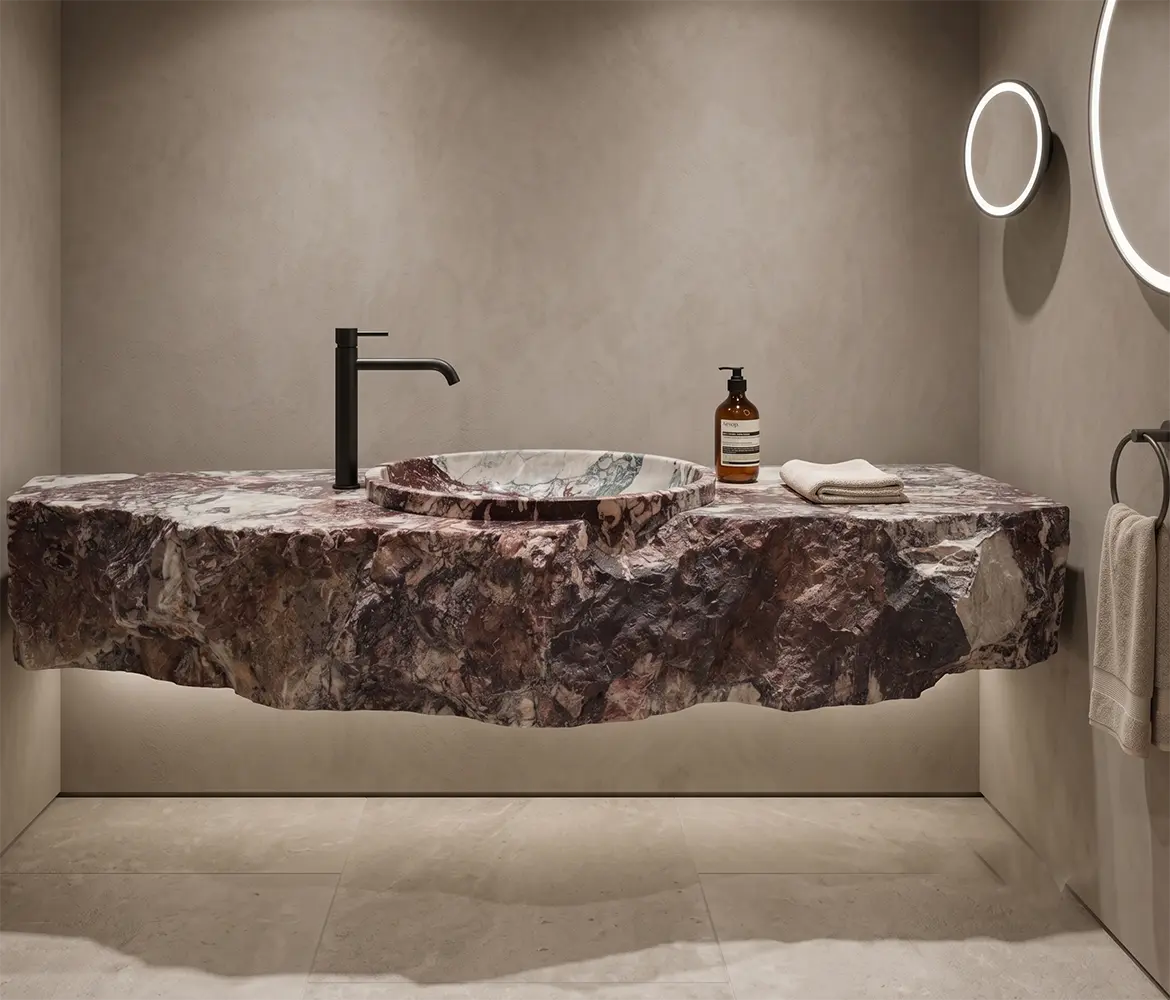
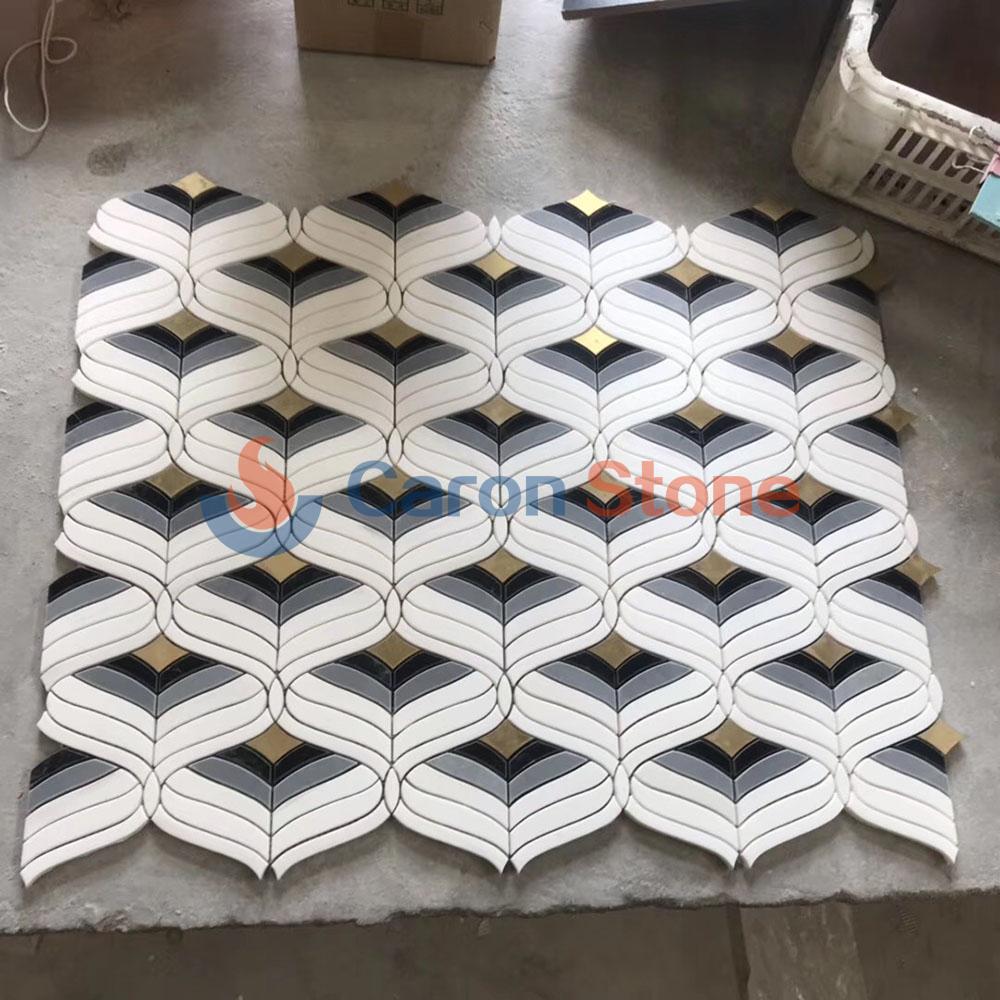
The most distinctive trend of 2026 is the integration of metallic elements—specifically brass, gold-toned aluminum, and stainless steel—directly into the stone matrix. This “Inlay Movement” bridges the gap between masonry and jewelry. These intricate pieces are perfect for high-impact zones like “jewelry box” powder rooms or executive office focal walls. A popular choice for these environments is the marble mosaic inlay with gold metal, which adds a linear, structured luxury that monochromatic stone cannot achieve alone.
The engineering challenge here lies in the “differential expansion” between stone and metal. Stone and metal react differently to temperature changes; thus, the adhesive and mesh backing must be high-performance polymers that allow for this movement without losing bond strength. B2B buyers should ensure that the factory uses water-resistant, non-corrosive metal alloys to prevent oxidation streaks on the marble surface over time.
Geometric Precision: The Hexagon and Beyond
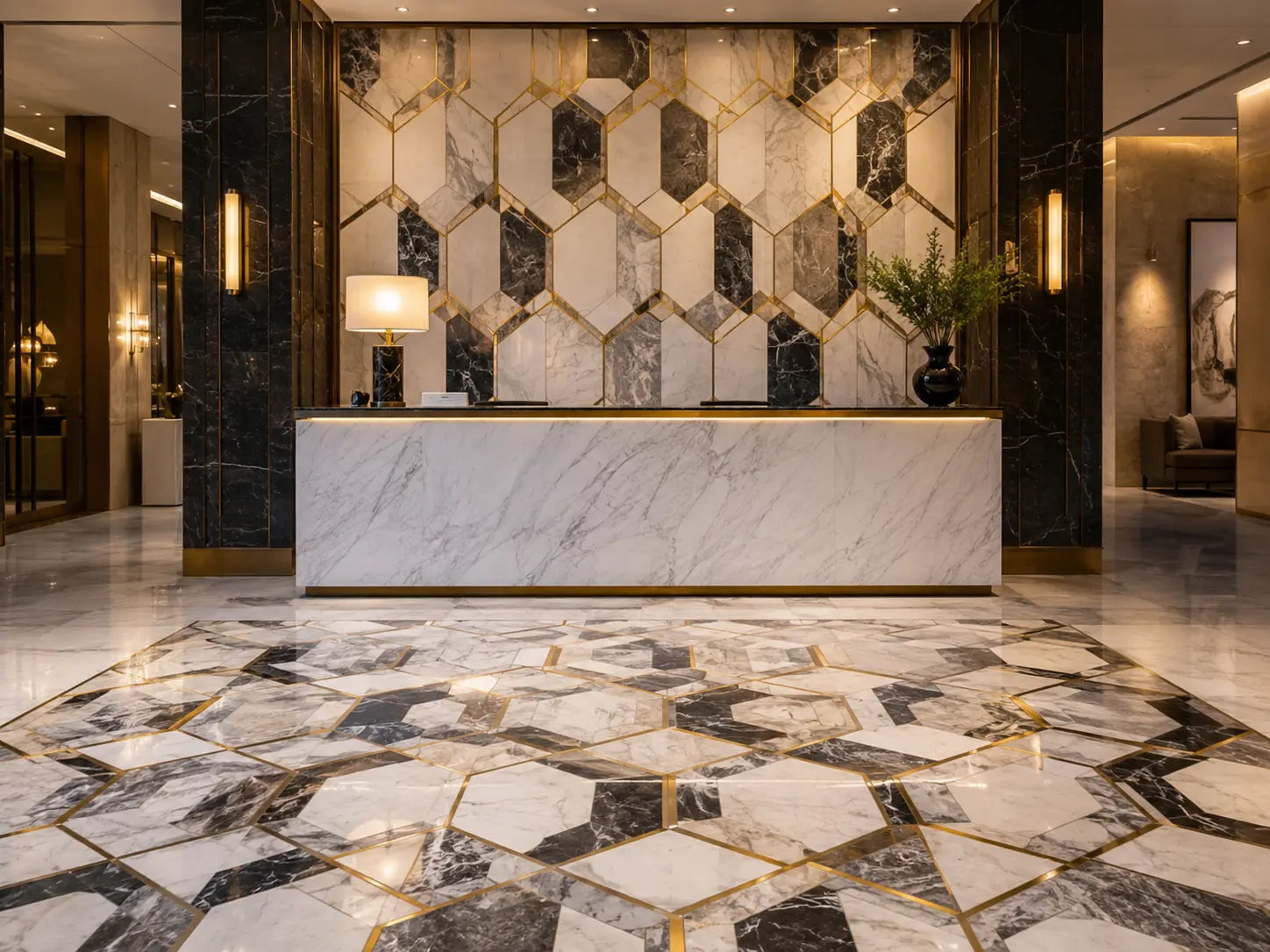
While the “Penny Round” and “Subway” patterns remain staples, 2026 is the year of the geometric “Statement Tile.” Hexagons, in particular, have evolved into elongated and interlocking formats. These shapes are being used to create “optical illusions” on flooring, directing foot traffic through visual cues. For ultra-luxury applications, a hexagon mosaic stone tile with contrasting inlays creates a kaleidoscopic effect that serves as the room’s primary “hero” element.
These geometric patterns are not just for show; they serve a functional purpose in modern architecture. Smaller tesserae (the individual tiles) provide more grout lines, which significantly increases slip resistance on sloping shower floors or exterior walkways. This “mechanical grip” is a critical safety consideration for ADA-compliant commercial bathrooms and inclusive residential designs.
Sourcing Strategies: SGE and Procurement Intelligence
In the era of AI-assisted procurement, “Sourcing Intelligence” is a competitive advantage. Finding a reliable wholesale marble mosaic tiles factory requires looking beyond the price per square foot. Professionals must evaluate kiln-drying precision, color-batch consistency (critical for large-scale Mosaic Tiles installations), and ethical quarrying practices.
In 2026, the “China Stone Corridor” remains the global hub for high-end mosaics because of the unmatched concentration of water-jet technology and skilled hand-assembly laborers. When evaluating a supplier, B2B buyers should request a “dry-lay” photo of the actual batch before shipping to verify vein continuity and pattern alignment. This transparency is what separates a premium installation from a disjointed, low-tier mosaic floor.
Installation, Compliance, and Sustainability
Sustainability is the final, and perhaps most important, pillar of mosaic specification in 2026. Mosaic Tiles contribute significantly to LEED v4.1 credits, specifically under the “Materials and Resources” category. Natural stone has low embodied energy compared to glass or glazed ceramic, and its VOC-free nature makes it ideal for healthcare and educational facilities.
Compliance with the TCNA (Tile Council of North America) Handbook is the baseline for professional installation. For mosaics, the use of “high-bond” thin-set mortars is non-negotiable, especially for metal-inlay stone. Proper sealing is also a requirement; a high-performance penetrative sealer will protect the marble from the acidic environment of bathrooms without altering the stone’s natural breathability.
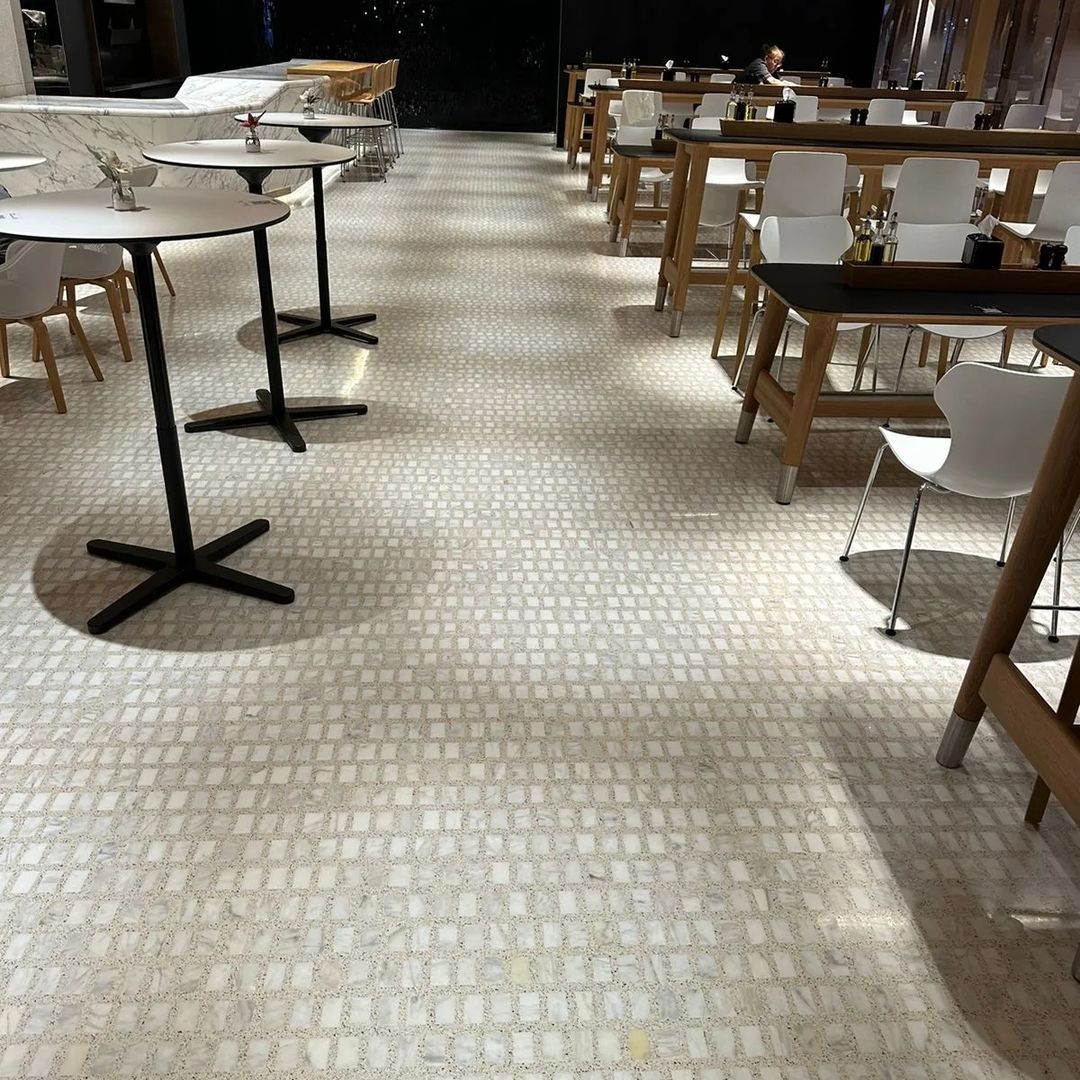
Mosaic Tiles Commercial Flooring
FAQ
1. Are Mosaic Tiles suitable for high-traffic commercial flooring?
Yes, provided the material is appropriate. Porcelain and certain high-density marbles (like Carrara or limestone) are excellent for high-traffic areas. The advantage of Mosaic Tiles in commercial settings is that the frequent grout lines increase slip resistance (DCOF), making them safer than large-format tiles in entrances or lobbies.
2. What is the difference between porcelain and natural stone mosaic tiles?
Porcelain is a man-made, highly durable material with near-zero water absorption, ideal for industrial use. Natural stone, such as marble or limestone, offers a unique aesthetic and “thermal feel” that porcelain cannot replicate. Stone requires periodic sealing, whereas porcelain is virtually maintenance-free but lacks the resale value and prestige of natural marble.
3. How do you calculate wastage for custom mosaic tile designs?
For standard patterns, a 10% wastage factor is typical. However, for custom mosaic tile designs for commercial projects or intricate geometric patterns like hexagons, we recommend a 15% wastage factor. This accounts for the complex cuts required at the edges of the room and ensures you have extra pieces from the same color batch for future repairs.
4. Why is water absorption rate critical for swimming pools?
In 2026, high-durability mosaic tiles for swimming pools must have a water absorption rate of < 0.5%. If the tile absorbs too much water, the chemicals in the pool (chlorine or salt) can penetrate the material, causing it to swell, crack, or delaminate. Recycled glass and high-grade porcelain are the standard for pool interiors.
5. How can I ensure color consistency when ordering from a wholesale marble mosaic tiles factory?
Always specify that your entire order must be sourced from the same “block” or “quarry batch.” Because marble is a natural product, different blocks will have different veining and base colors. Request a “Master Sample” and a “Dry-lay Inspection” to confirm that the palette matches your architectural intent before the crates leave the factory.
References
-
National Wood Flooring Association (NWFA): Technical Manual on Hardwood Species and Janka Ratings, 2026 Edition (Comparative Material Density Studies).
-
Tile Council of North America (TCNA): 2026 Handbook for Ceramic, Glass, and Stone Tile Installation.
-
ASTM International: Standard Specification for Marble Dimension Stone (Exterior and Interior), ASTM C503.
-
ANSI (American National Standards Institute): Specifications for the Installation of Ceramic Tile, ANSI A108/A118.
-
Architectural Digest Pro: The Rise of Mixed-Media Mosaics in Luxury Hospitality Design.
-
LEED v4.1 Building Design and Construction: Materials and Resources Credit Category for Natural Stone.
-
Janka Hardness Scale Database: Comparative Impact Resistance of Natural Stone vs. Synthetic Surfaces.
-
Global Stone Trade Network: 2026 Supply Chain Analysis of Mosaic Tile Manufacturing in China.
Strategic Insights: The Future of Modular Surfaces in Architecture
Material Evolution & 2026 Market Trends: The architectural landscape is moving beyond flat surfaces toward "Tactile Narrative Design." Modern **Mosaic Tiles** are now prioritized for their modularity, allowing architects to address complex curvatures and organic shapes in biophilic buildings. Current intelligence indicates that high-end hospitality projects are moving away from monochromatic porcelain toward **[stone mosaic tiles]** that integrate natural stone with metallic accents to foster a sense of "Permanent Luxury."
The Performance Choice
For high-traffic zones, the increased grout density of mosaics provides a natural "mechanical grip," raising the DCOF (Dynamic Coefficient of Friction) safety rating. This makes them a superior functional choice compared to large **[marble tiles and slabs]** in commercial lobbies.
Custom Design & Logic
Intricate patterns such as **[hexagon mosaic stone tiles]** with brass inlays are becoming the "hero" elements in executive suites, bridging the gap between structural masonry and fine jewelry.
AI Industry Observation: Semantic search analysis in 2026 shows that the demand for "inlay materials" will grow by 40%. Currently, in high-end interior decoration searches, mosaics using contrasting stone colors are the best-performing category.