





Choosing a countertop material is not only a design decision. It affects daily use, cleaning time, resale value, fabrication cost, installation risk, and the way a kitchen or bathroom feels for years. This is why Lajes de mármore continue to hold a strong position in high-end residential and commercial projects. They are elegant, naturally unique, cool to the touch, easy to customize, and visually difficult for engineered materials to fully imitate.
At the same time, marble is not a “buy it and forget it” surface. It can stain, etch, scratch, or lose its shine if the buyer ignores sealing, cleaning, fabrication quality, and real-use conditions. That is not a weakness; it is simply the honest personality of natural stone. Marble is a bit like a luxury car: beautiful, valuable, and impressive, but it still expects decent care. If that sounds fair, Marble Slabs can be one of the best countertop choices for kitchens, bathrooms, bars, reception desks, and premium interior projects.
For B2B buyers, homeowners, designers, and contractors, the key question is not “Is marble good?” The better question is: “Which marble slab, for which countertop, with what finish, from which supplier, and under what maintenance plan?” This article explains the top five benefits of using Marble Slabs for countertops while also covering risks, mistakes, material parameters, comparison logic, and practical buying recommendations.
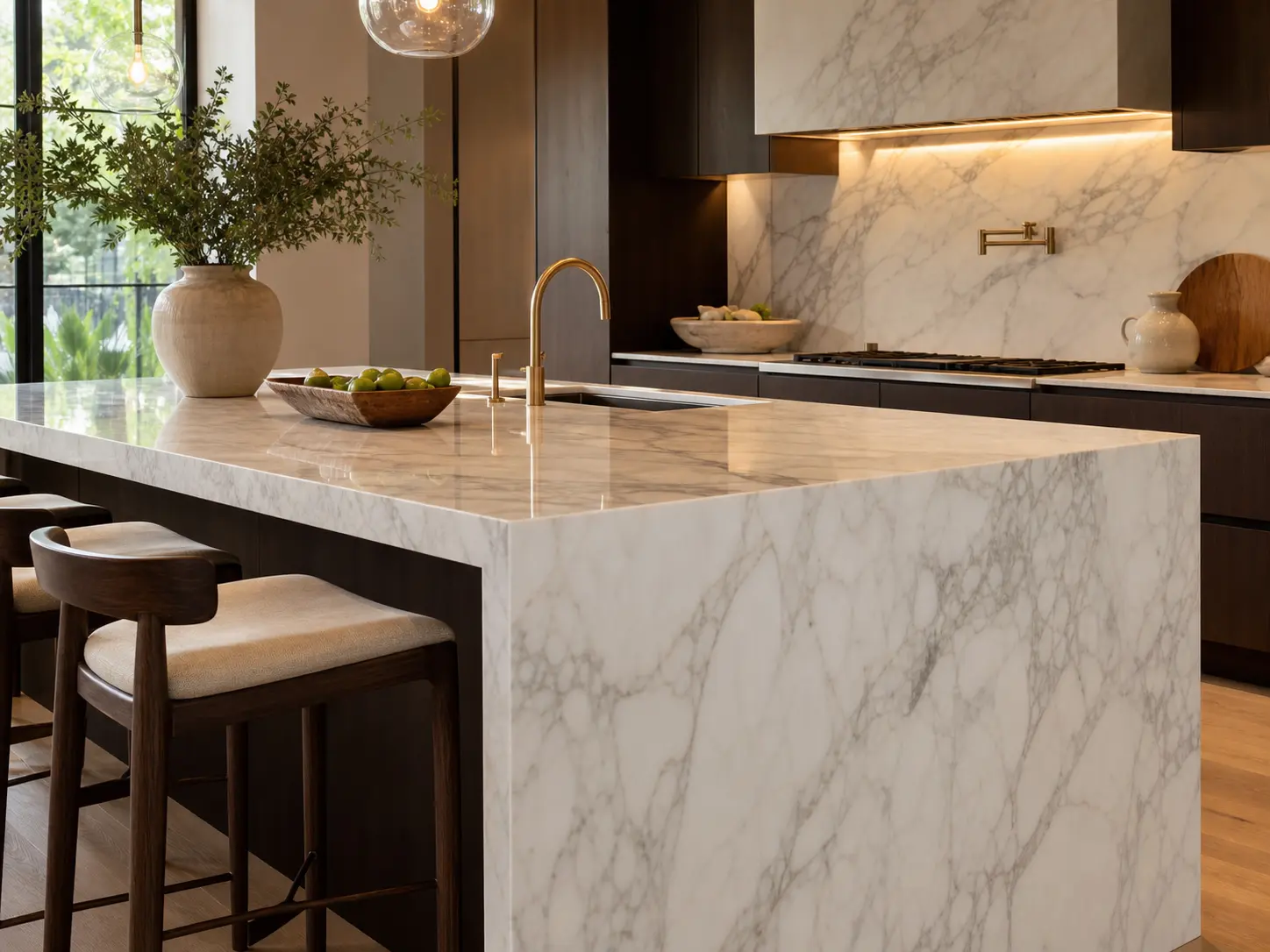
Marble Slabs for Countertops
Benefit 1: Marble Slabs Deliver Natural Luxury That Engineered Materials Try to Imitate
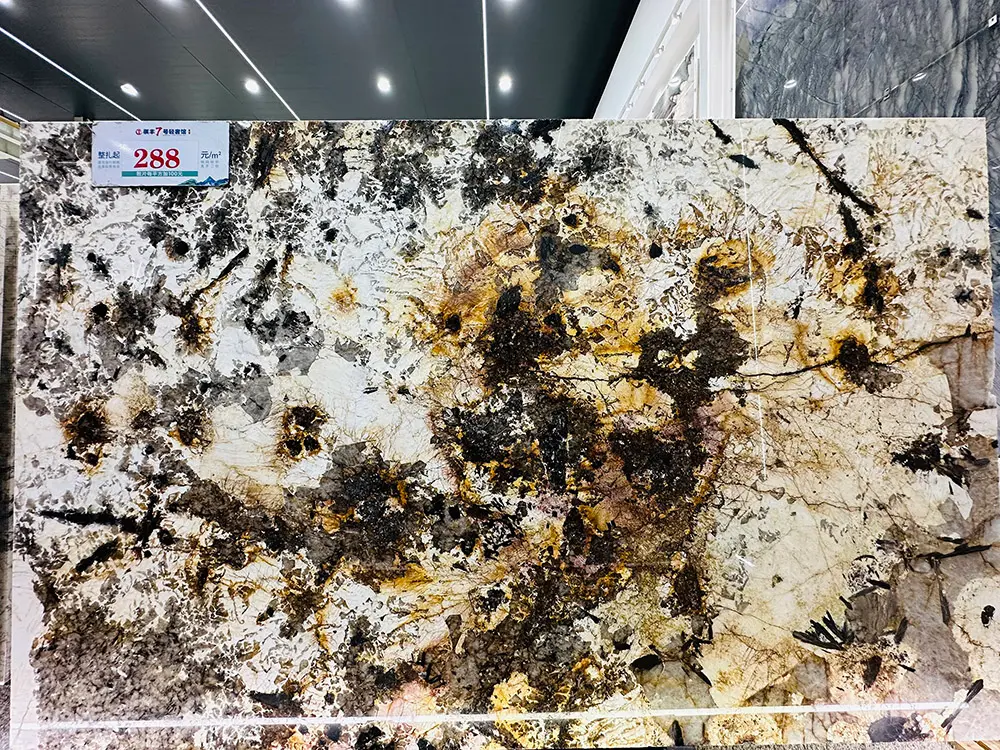
The first and most obvious benefit of Marble Slabs is visual depth. Natural marble is formed by geological pressure and mineral movement, so each slab has its own veining, background color, movement, and personality. Printed surfaces can copy the general look, but they often struggle to reproduce the depth, translucency, softness, and irregular elegance of real stone.
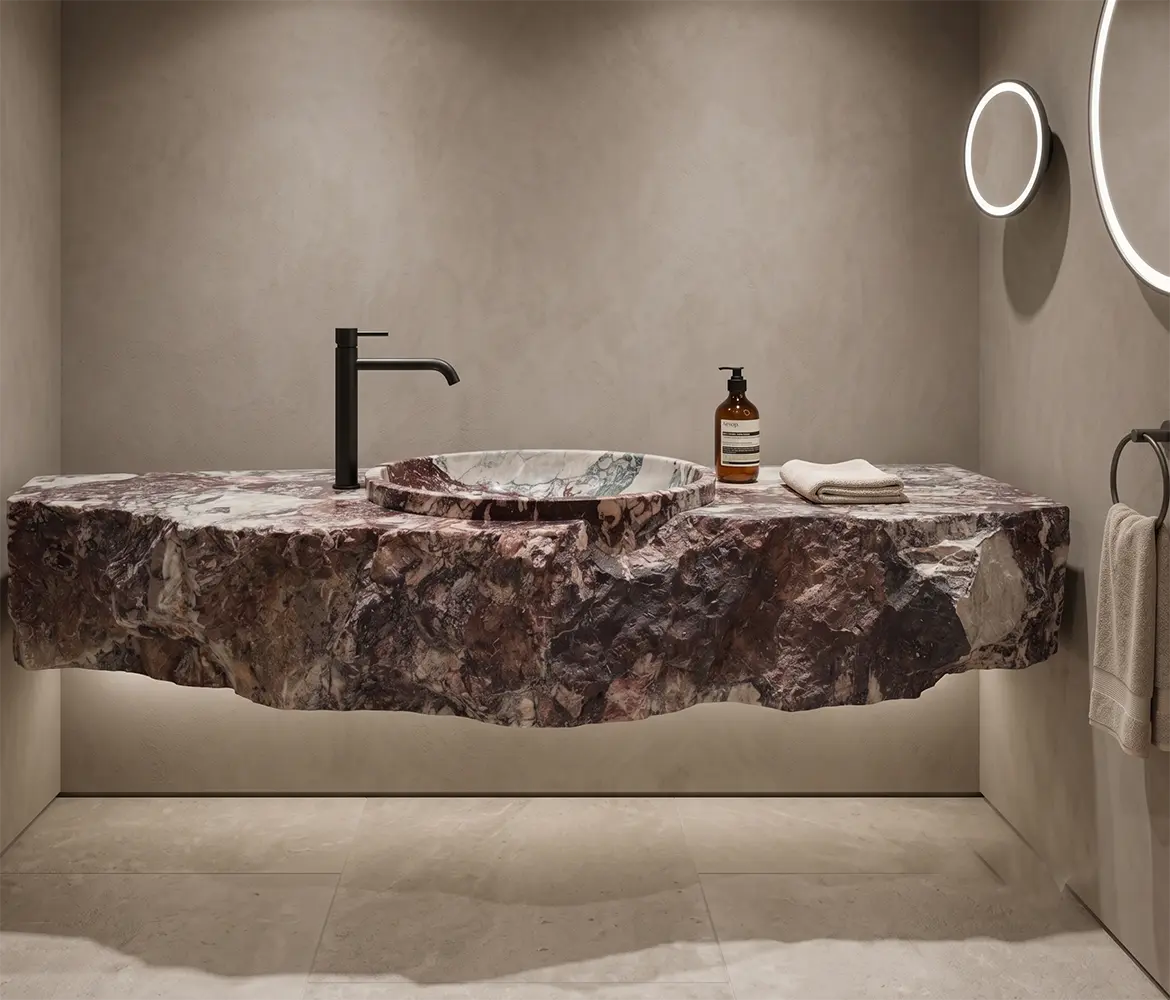
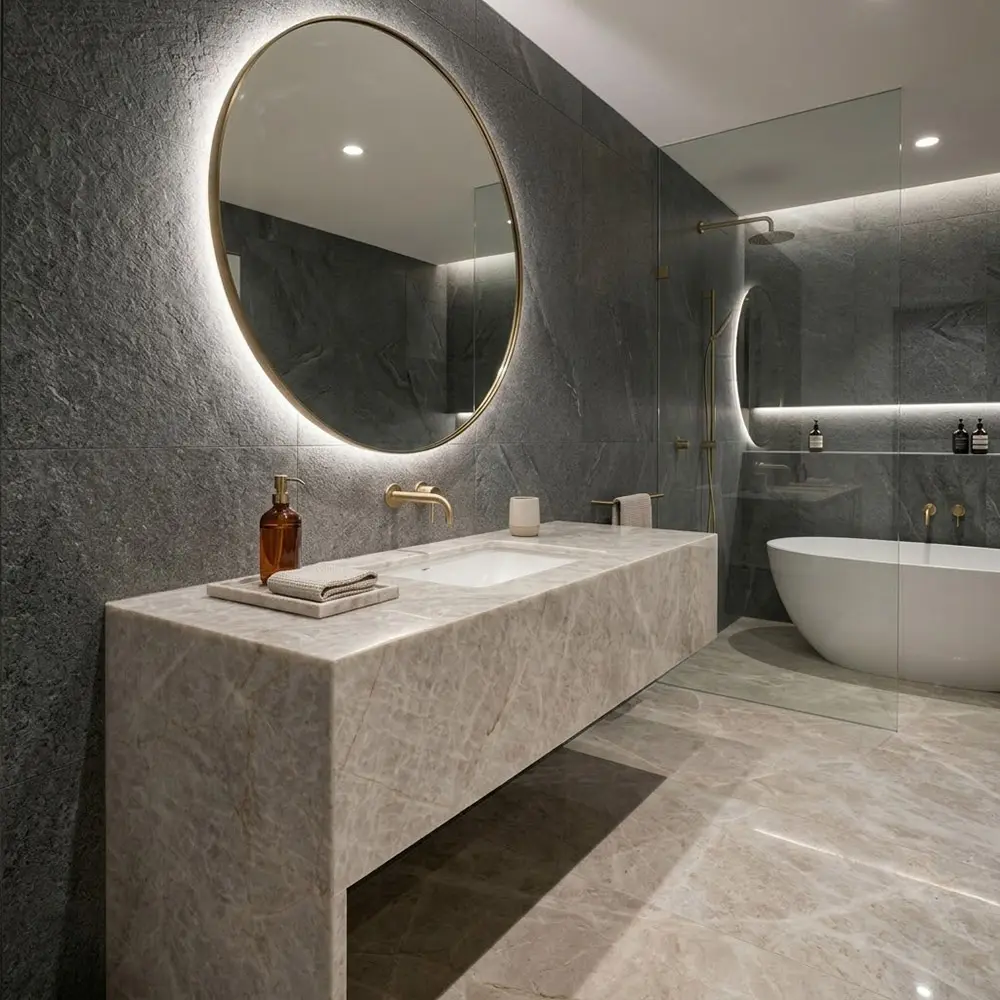
In luxury countertops, this natural variation matters. A kitchen island made from white Marble Slabs with grey veins can become the visual center of the entire room. A green marble vanity top can make a bathroom feel like a private spa. A dark marble bar counter can instantly make a hospitality space feel more expensive. For buyers exploring premium natural stone options, a curated marble tiles and slabs collection helps compare colors, textures, formats, and project suitability before final selection.
Unlike mass-produced engineered surfaces, Marble Slabs reward careful selection. The buyer should not rely only on one online photo. Slab layout, vein direction, color tone, edge profile, and seam position all affect the final countertop appearance. A beautiful slab can look average if cut poorly, while a well-selected slab can make even a simple kitchen feel architectural.
| Design Factor | Por que isso importa | Buyer Tip |
|---|---|---|
| Vein movement | Controls the visual drama of the countertop | Use active veins for islands and feature counters |
| Background color | Affects brightness, mood, and cabinet matching | Choose white or beige marble for smaller kitchens |
| Slab size | Influences seams and material yield | Confirm dimensions before layout planning |
| Finish type | Changes shine, touch, and maintenance behavior | Use honed for softer elegance and polished for brighter luxury |
| Bookmatch option | Creates a premium mirrored effect | Best for islands, backsplashes, and commercial counters |
Benefit 2: Marble Slabs Increase the Perceived Value of Kitchens, Bathrooms, and Commercial Spaces
Marble has long been associated with architecture, sculpture, hotels, villas, and high-end interiors. When used as a countertop, it sends a clear message: this space is not ordinary. That is especially important in luxury homes, boutique hotels, apartment model rooms, retail showrooms, restaurants, and premium bathroom projects where visual impression affects buyer confidence.
In a villa kitchen, a marble island can serve as both a work surface and a design statement. In a hotel bathroom, a marble vanity top can make a compact room feel more refined. In a commercial reception area, marble can help create brand trust before a client even speaks to the staff. For contractors and project buyers evaluating supply partners, reviewing a company’s background, project experience, and production orientation through an experienced natural stone supplier page is a practical step before discussing specifications and quotations.
The real advantage is that Marble Slabs combine utility with emotional value. Quartz can be practical. Granite can be durable. Porcelain can be low maintenance. But marble has a softer, more premium visual language that many buyers still prefer when the goal is luxury rather than only convenience.
| Aplicação | Recommended Marble Use | Risk Level | Best Finish |
|---|---|---|---|
| Kitchen island | Large statement slab with planned vein direction | Média | Honed or polished |
| Bathroom vanity | Compact luxury surface with good sealing | Média | Polished or honed |
| Hotel suite counter | Premium guest-facing surface | Média | Honed with sealing |
| Retail counter | Brand image and display surface | Baixo a médio | Polido |
| Restaurant bar | Decorative counter with strong visual identity | Medium to high | Honed or leathered |
Benefit 3: Marble Slabs Offer a Naturally Cool and Functional Work Surface
Marble is not only beautiful. It also offers a naturally cool surface that many homeowners and chefs appreciate, especially for pastry, dough preparation, chocolate work, and baking-related tasks. This is one reason marble has remained popular in kitchens even when lower-maintenance alternatives are widely available.
However, kitchen performance depends on realistic expectations. Marble can handle normal food preparation when properly sealed and cared for, but acidic liquids such as lemon juice, vinegar, wine, tomato sauce, and some cleaners can etch the surface. Coffee, oil, and colored sauces may stain if left too long. Hot pans should be placed on trivets, and cutting directly on marble should be avoided.
For buyers comparing materials, it is useful to study the differences between Marble Slabs vs Granite Slabs for countertops before making a final decision. Marble is usually chosen for refined veining and luxury design. Granite is often chosen for heavier daily use and stronger resistance. Neither material is “best” for every buyer; the correct choice depends on lifestyle, design goals, and maintenance tolerance.
| Daily Kitchen Action | Marble Performance | Recommended Practice |
|---|---|---|
| Baking preparation | Excellent cool working surface | Ideal for pastry and dough preparation |
| Coffee and wine use | Possible staining risk | Wipe spills quickly and keep surface sealed |
| Lemon or vinegar contact | Etching risk | Avoid acidic residue and clean immediately |
| Hot cookware | Thermal stress and sealant risk | Use trivets or heat pads |
| Knife cutting | Scratch risk | Use cutting boards |
| Daily cleaning | Easy with the right cleaner | Use pH-neutral stone-safe products |
Benefit 4: Marble Slabs Can Be Customized for High-End Countertop Projects
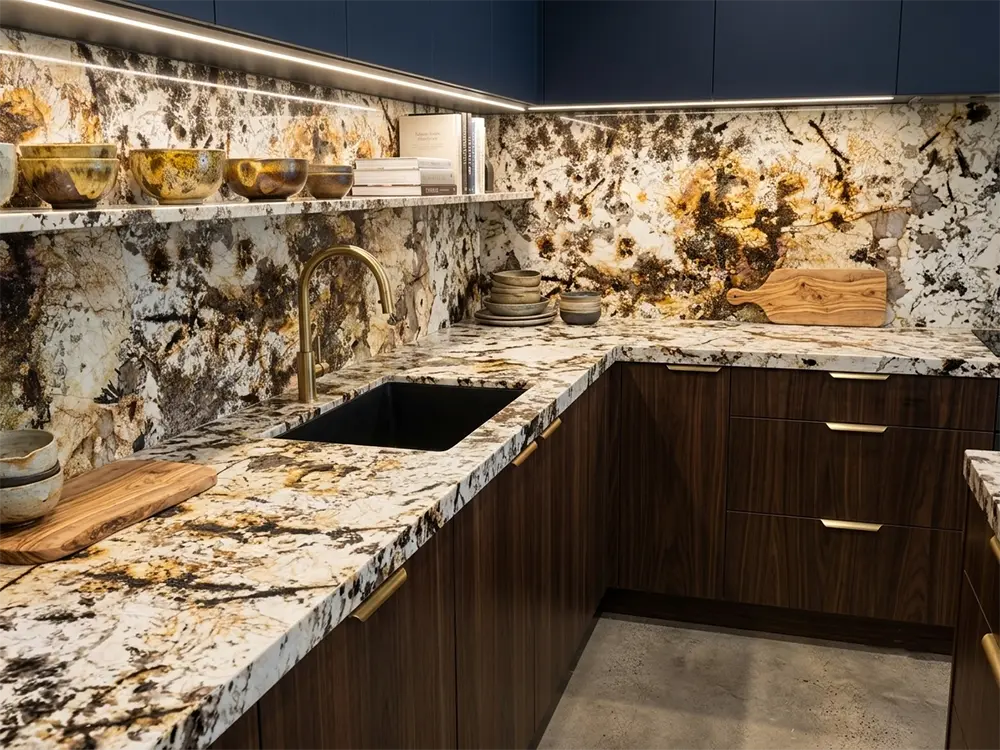
One major reason designers and fabricators like Marble Slabs is their processing flexibility. Slabs can be cut into kitchen countertops, waterfall islands, bathroom vanity tops, integrated backsplashes, bar counters, reception desks, floating shelves, and wall-matched countertop systems. Edge profiles can be simple or decorative, depending on the project style.
For modern projects, an eased edge or mitered edge often works well. For classic homes, ogee or bullnose edges can create a more traditional feeling. For luxury kitchen islands, waterfall edges require careful slab matching so the vein appears to flow naturally from the horizontal surface down the side panel. This is where fabrication quality becomes very important. A premium slab with poor processing is like wearing a tailored suit with plastic sandals—technically covered, visually tragic.
Buyers who want to understand practical fabrication risks should study details to pay attention to when processing marble countertops. Important details include edge profile, sink cutout position, faucet holes, polishing quality, thickness tolerance, seam planning, reinforcement, and packing. These small decisions control whether the final countertop feels premium or problematic.
| Edge Profile | Melhor para | Buyer Consideration |
|---|---|---|
| Eased edge | Modern kitchens and minimalist interiors | Clean, simple, cost-effective |
| Beveled edge | Contemporary homes and commercial counters | Adds subtle detail without being heavy |
| Bullnose edge | Family kitchens and vanity tops | Softer touch and safer corners |
| Ogee edge | Luxury traditional interiors | More decorative but higher fabrication cost |
| Waterfall edge | Kitchen islands and luxury counters | Requires careful slab matching and skilled processing |
| Mitered edge | Thick visual effect | Needs precise cutting and strong installation control |

Marble Slab Vanity Countertop
Benefit 5: Marble Slabs Provide Long-Term Design Value When Properly Maintained
Trends change quickly. Cabinet colors, handles, lighting styles, and decorative accessories may shift every few years, but marble remains visually relevant because it belongs to a deeper architectural tradition. A well-selected marble countertop can work with classic European interiors, modern minimalist kitchens, warm natural homes, hotel bathrooms, and luxury commercial environments.
The key phrase is “well-selected.” Buyers should choose Marble Slabs based on project use, not only personal excitement. A highly dramatic marble may be perfect for a feature island but too busy for a small bathroom. A soft white marble may make a kitchen feel brighter, but it may require more careful cleaning. A dark marble may create a dramatic bar counter, but water marks and dust may show more clearly.
For interior designers and homeowners who are still comparing colors, formats, and room effects, a guide on how to choose the best marble tiles for interior design can also support countertop decisions because the same principles apply: color harmony, scale, pattern intensity, lighting, finish, and long-term style compatibility. Countertops do not exist alone; they must work with flooring, walls, cabinets, metal accents, and lighting temperature.
| Maintenance Item | Suggested Frequency | Por que isso importa |
|---|---|---|
| Daily wipe-down | After use | Prevents staining, residue, and water marks |
| pH-neutral cleaning | Regularly | Avoids etching and surface dullness |
| Water drop test | Every few months | Checks whether sealing is still effective |
| Revestimento | Usually 6–12 months depending on use | Reduces absorption and staining risk |
| Professional inspection | Annually for commercial projects | Controls long-term appearance and maintenance cost |
Technical Parameters Buyers Should Ask For Before Ordering Marble Slabs
Professional buyers should not choose Marble Slabs only by color names. Natural stone procurement should include material data, slab inspection, processing details, and application matching. ASTM C503 for marble dimension stone covers physical requirements such as absorption, density, compressive strength, modulus of rupture, abrasion resistance, and flexural strength. These parameters help buyers understand whether the material is suitable for the intended use.
For countertop projects, the most practical checkpoints are water absorption, density, flexural strength, thickness, finish quality, resin treatment, slab size, and packing method. A beautiful marble slab can still create problems if it has unstable fissures, uneven thickness, weak reinforcement, poor finish, or unsuitable packing for export.
| Parâmetro | Why It Matters for Countertops | Buyer Checkpoint |
|---|---|---|
| Absorção de água | Affects stain sensitivity and sealing needs | Ask for test data or supplier guidance |
| Densidade | Indicates compactness and material consistency | Compare with project requirements |
| Flexural strength | Important during cutting, handling, and installation | Confirm support for large islands and overhangs |
| Abrasion resistance | Affects long-term surface wear | Important for commercial counters and bars |
| Espessura | Affects strength, edge design, and cost | Common countertop choices are often 20mm or 30mm |
| Surface finish | Controls shine, touch, and maintenance behavior | Compare polished, honed, and textured options |
| Slab size | Affects seams, yield, and layout | Plan countertop drawings before cutting |
| Export packing | Protects slabs and fabricated tops during shipping | Request photos of crates and loading method |
Marble Slabs vs Other Countertop Materials
Marble is not automatically the best choice for every countertop. It is the best choice when natural beauty, premium character, and architectural value matter more than zero-maintenance convenience. Quartz is more consistent and easier to maintain. Granite is generally tougher for heavy kitchens. Porcelain slabs and sintered stone are strong in stain resistance and modern design. But if the buyer wants natural depth, elegant veining, and a surface that feels genuinely luxurious, Marble Slabs remain difficult to replace.
| Material | Aparência | Manutenção | Stain Risk | Best Buyer Type |
|---|---|---|---|---|
| Lajes de mármore | Natural luxury with unique veining | Medium to high | Medium to high | Luxury design buyers |
| Quartzo | Consistent and modern | Baixo | Baixo | Busy family kitchens |
| Granito | Natural and durable | Média | Baixo a médio | Heavy-use kitchens |
| Porcelain Slabs | Printed stone look with slim profile | Baixo | Baixo | Low-maintenance modern projects |
| Pedra sinterizada | Technical and contemporary | Baixo | Baixo | Commercial and high-use spaces |
Common Mistakes When Buying Marble Slabs for Countertops
The first mistake is choosing only by online photos. Marble color and veining can change under different lighting, and one selected image may not represent the actual available slab. The second mistake is ignoring etching and staining risk. If the buyer expects marble to behave like quartz, disappointment will arrive quickly, probably carrying a lemon slice.
The third mistake is selecting the wrong finish. Polished marble looks brighter, but etching may show more clearly. Honed marble looks softer and hides etching better, but it may need better sealing to resist stains. The fourth mistake is poor seam planning. A badly placed seam can ruin the look of a luxury kitchen island. The fifth mistake is buying cheap slabs without inspection, which can lead to cracks, weak resin, thickness problems, packing damage, and project delays.
For wholesale and project buyers comparing supply sources, a resource on marble slab suppliers in China can support the early supplier-screening stage. Still, buyers should not stop at rankings or names. The practical decision should include actual slab photos, sample review, quality inspection, cutting capability, packing control, delivery communication, and after-sales response.
If This Is Your Project, Choose This Countertop Strategy
| If You Need | Escolher | Avoid |
|---|---|---|
| Luxury kitchen island | Large-format white or veined Marble Slabs | Random slabs without layout planning |
| Low-maintenance family kitchen | Quartz, granite, or carefully sealed honed marble | High-maintenance polished marble with no care plan |
| Boutique hotel vanity | Honed or polished marble with sealing | Unsealed porous stone |
| Bakery or pastry prep area | Marble countertop surface | Dark stones that show flour and residue strongly |
| Dramatic interior design | Bookmatched marble slabs | Small mismatched pieces |
| B2B project supply | Supplier with inspection, packing, and fabrication support | Supplier with no slab photos or tolerance control |

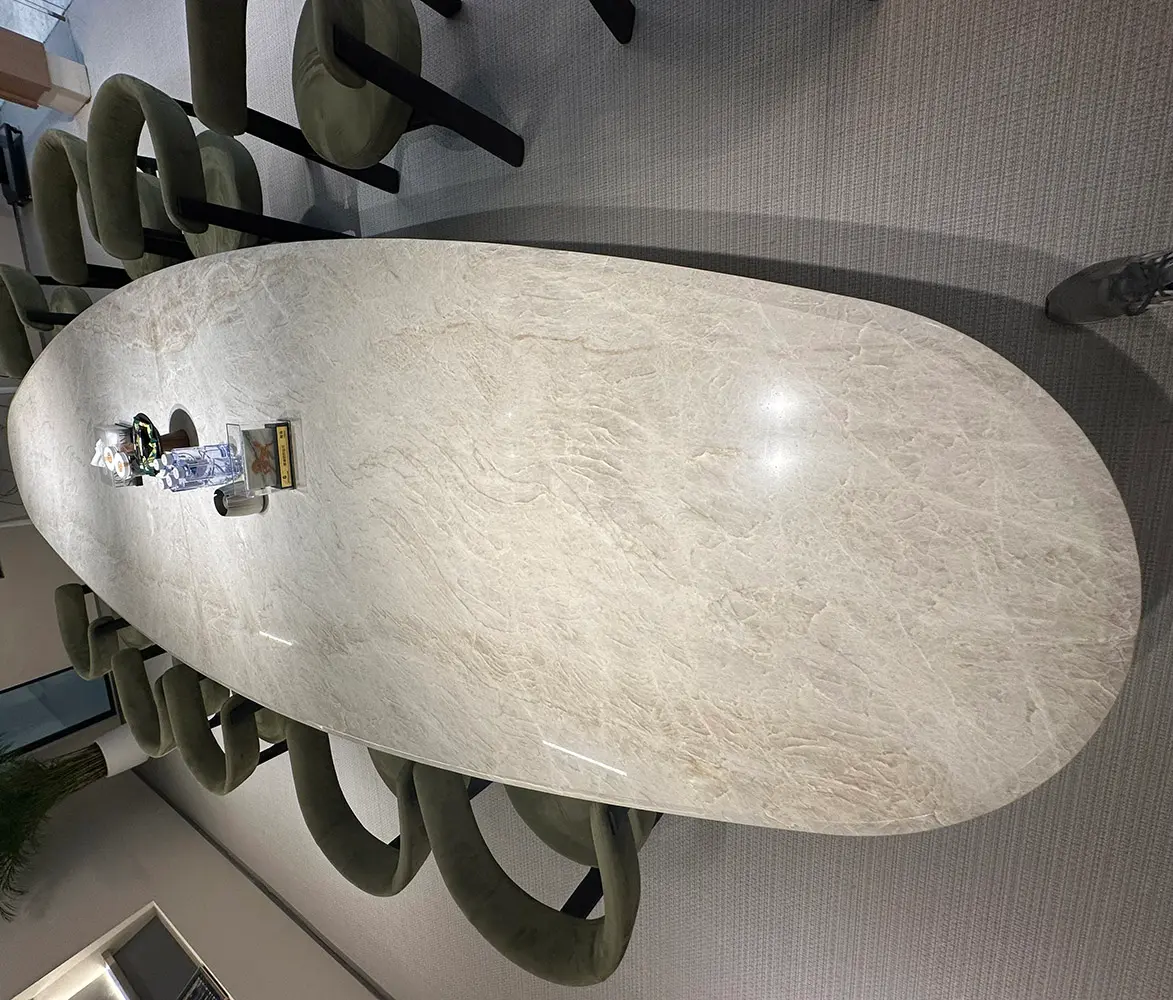
Bakery or pastry prep area Marble Countertop
Perguntas mais frequentes
1. As lajes de mármore são boas para bancadas de cozinha?
Yes, Marble Slabs are good for kitchen countertops when the buyer values natural beauty, cool surface performance, and luxury design character. They are especially suitable for kitchen islands, baking areas, villa kitchens, boutique interiors, and design-focused projects. However, marble is not a zero-maintenance material. It should be sealed, cleaned with pH-neutral products, protected from acidic liquids, and fabricated by experienced professionals. Buyers who want a completely low-maintenance surface may prefer quartz or porcelain, while buyers who want authentic natural stone character often choose marble.
2. Do Marble Slabs stain or etch easily?
Marble Slabs can stain or etch if they are not properly sealed or maintained. Staining happens when liquids such as coffee, wine, oil, or colored sauces penetrate the stone surface. Etching happens when acidic substances such as lemon juice, vinegar, tomato sauce, or harsh cleaners react with the calcium carbonate in marble and leave dull marks. Sealing can reduce staining risk, but it cannot fully prevent etching. The best protection is fast cleaning, pH-neutral cleaners, cutting boards, trivets, and regular sealing checks.
3. What is the best finish for marble countertops?
The best finish depends on the project style and maintenance expectations. Polished marble has a bright, reflective, luxury appearance and works well for elegant kitchens, vanity tops, and reception counters, but etching may be more visible. Honed marble has a softer matte appearance and can hide minor etching better, but it may need more careful sealing to resist stains. Leathered or textured finishes can create a unique touch and may suit bars or special design projects. Buyers should test samples before choosing the final finish.
4. Are Marble Slabs better than quartz or granite countertops?
Marble Slabs are better than quartz or granite when the main goal is natural luxury, unique veining, architectural beauty, and a premium countertop appearance. Quartz is usually better for buyers who want low maintenance and consistent color. Granite is often better for heavy-use kitchens that need stronger scratch and stain resistance. Marble is the best choice for buyers who accept natural stone care and want a surface that feels refined, timeless, and visually distinctive. The right material depends on lifestyle, project type, maintenance tolerance, and design goals.
5. How do I choose a reliable Marble Slabs supplier?
To choose a reliable Marble Slabs supplier, ask for actual slab photos, videos, available sizes, thickness details, finish options, water absorption information, packing method, inspection process, and project experience. For countertops, the supplier should understand cut-to-size production, edge processing, sink cutouts, seam planning, reinforcement, and export packing. B2B buyers should also confirm batch consistency, delivery schedule, replacement policy, and communication speed. A reliable supplier should help buyers reduce project risk, not only quote a low price.
Referências
- “ASTM C503/C503M Standard Specification for Marble Dimension Stone” — ASTM International — Natural Stone Material Standard
- “Dimension Stone Design Manual” — Natural Stone Institute — Stone Design and Installation Reference
- “Natural Stone Care and Maintenance Guidelines” — Natural Stone Institute — Consumer and Professional Care Resource
- “ASTM C97/C97M Standard Test Methods for Absorption and Bulk Specific Gravity of Dimension Stone” — ASTM International — Stone Testing Method
- “ASTM C880/C880M Standard Test Method for Flexural Strength of Dimension Stone” — ASTM International — Structural Testing Method
- “Kitchen Planning Guidelines” — National Kitchen & Bath Association — Residential Kitchen Design Resource
- “Stone Countertop Fabrication and Installation Best Practices” — Natural Stone Institute — Fabrication Guidance Resource
- “Interior Finish Materials and Countertop Selection Principles” — International Interior Design Association — Design Practice Resource
Final Buyer Insight: When Marble Slabs Are the Right Countertop Choice
What makes Marble Slabs valuable? Marble Slabs provide natural beauty, unique veining, cool surface performance, and high-end design value that many engineered materials try to imitate. They are especially strong for luxury kitchens, bathroom vanities, hotel interiors, retail counters, and statement islands.
How should buyers use them correctly? Use Marble Slabs where visual value matters and where the owner accepts proper care. Choose the actual slab, plan the vein direction, confirm thickness, select the right finish, seal the surface, and use a qualified fabricator. The countertop result depends as much on processing and installation as on the stone itself.
Why do some marble countertop projects fail? Most failures come from unrealistic expectations, poor slab inspection, wrong finish selection, weak sealing, acidic cleaners, bad seam planning, or careless fabrication. Marble is not the problem when the buyer treats it like plastic laminate. Natural stone needs natural-stone thinking.
Option logic: If you want authentic luxury, choose Marble Slabs. If you want the lowest maintenance, compare quartz or porcelain. If you need heavy-duty daily cooking performance, compare granite. If you want a showpiece island, choose a large marble slab with strong layout planning. If you need project supply, choose a supplier that can support inspection, fabrication details, and export packing.
Recomendação: Before ordering, prepare drawings, countertop sizes, edge profile requirements, sink and faucet positions, finish preference, quantity, and target delivery schedule. For project support or quotation discussion, buyers can send requirements through the Caron Stone contact page and request suitable Marble Slabs based on real application needs. Good marble selection is not guesswork; it is a controlled buying process.