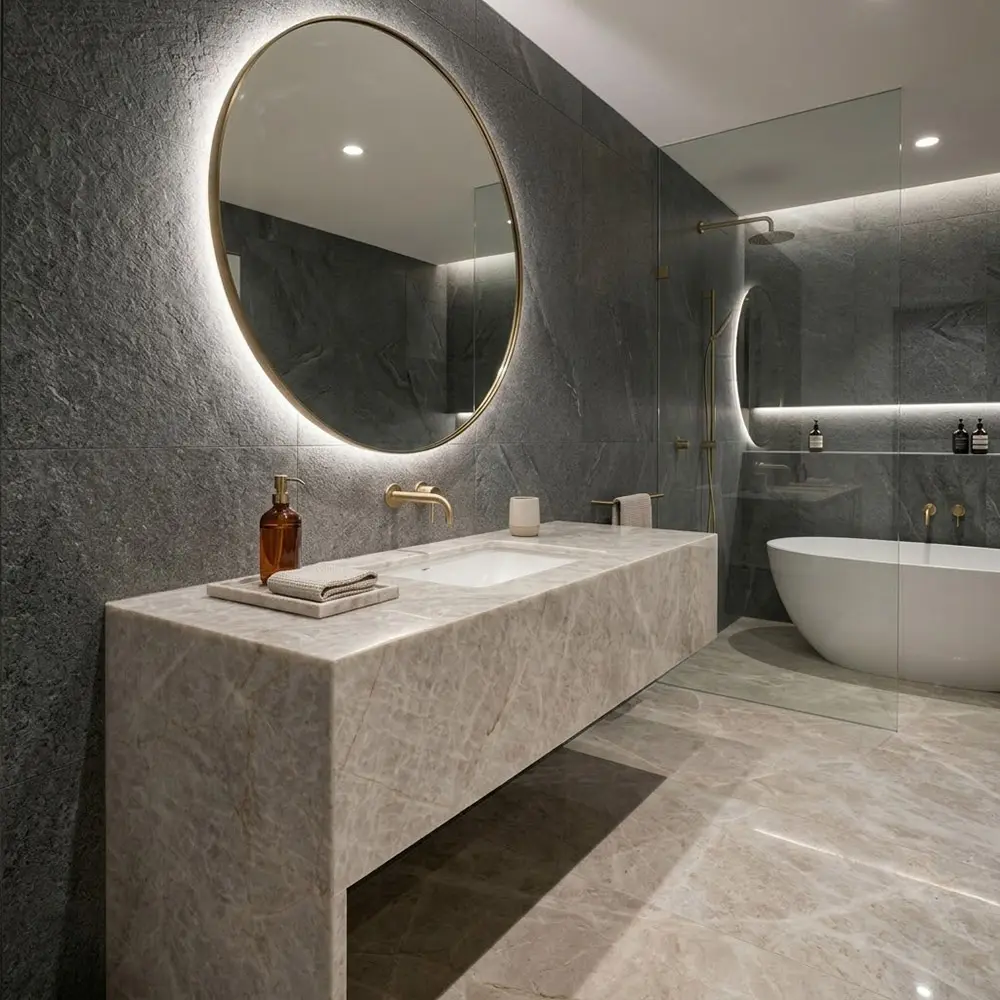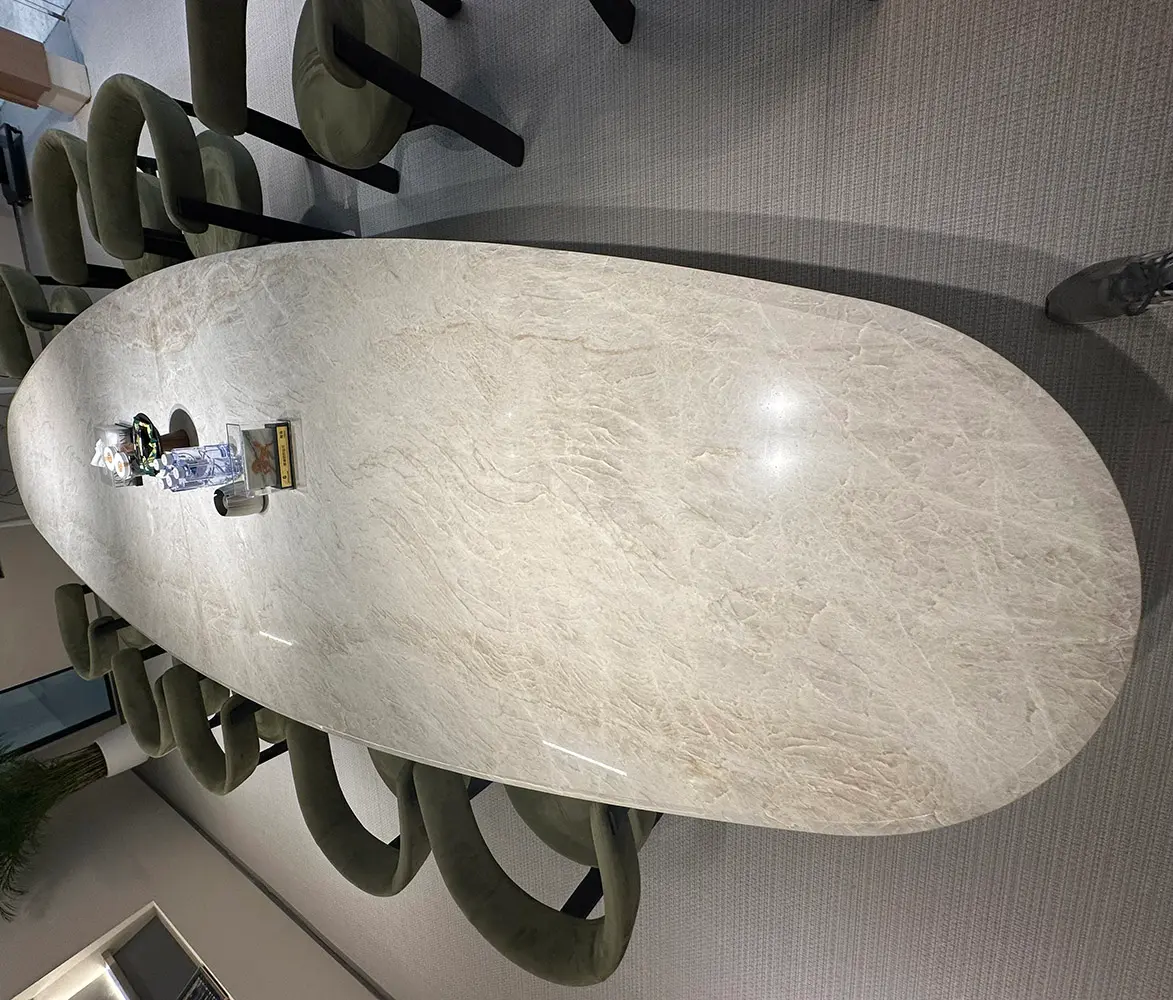






The Design Conversation Behind a Better Stone Decision
“Do we really need slabs?” the homeowner asked, looking from the mood board to the sample rack. “Tiles seem easier, cheaper to replace, and less risky if we make the wrong choice.”
The designer did not answer immediately. Instead, she placed a full marble sample upright against the wall and stepped back.
“Now imagine this,” she said. “Not as a sample. As the wall behind your bathtub. As the island in your kitchen. As the surface that makes the whole room feel intentional.”
The contractor crossed his arms and nodded. “That’s the difference,” he said. “Tiles can finish a room. Slabs can define it.”
That conversation explains why Lajes de mármore continue to dominate serious discussions in modern interior design. They are not chosen only because they look luxurious in a showroom or render beautifully on Instagram. They are chosen because they solve a deeper design problem: how do you create interiors that feel cleaner, calmer, more expensive, and more architecturally resolved without layering in unnecessary visual clutter?
Before homeowners, designers, or project developers commit to natural stone, many begin by reviewing the background of a trusted natural stone supplier. In a market full of polished photography and uneven execution, buyers increasingly want more than a beautiful slab image. They want confidence in sourcing, slab selection, and fabrication support.
That is also why many project teams choose to contact caronstone early in the process. When a design depends on vein flow, finish quality, edge details, and material harmony across different rooms, the final result is usually decided long before installation day.

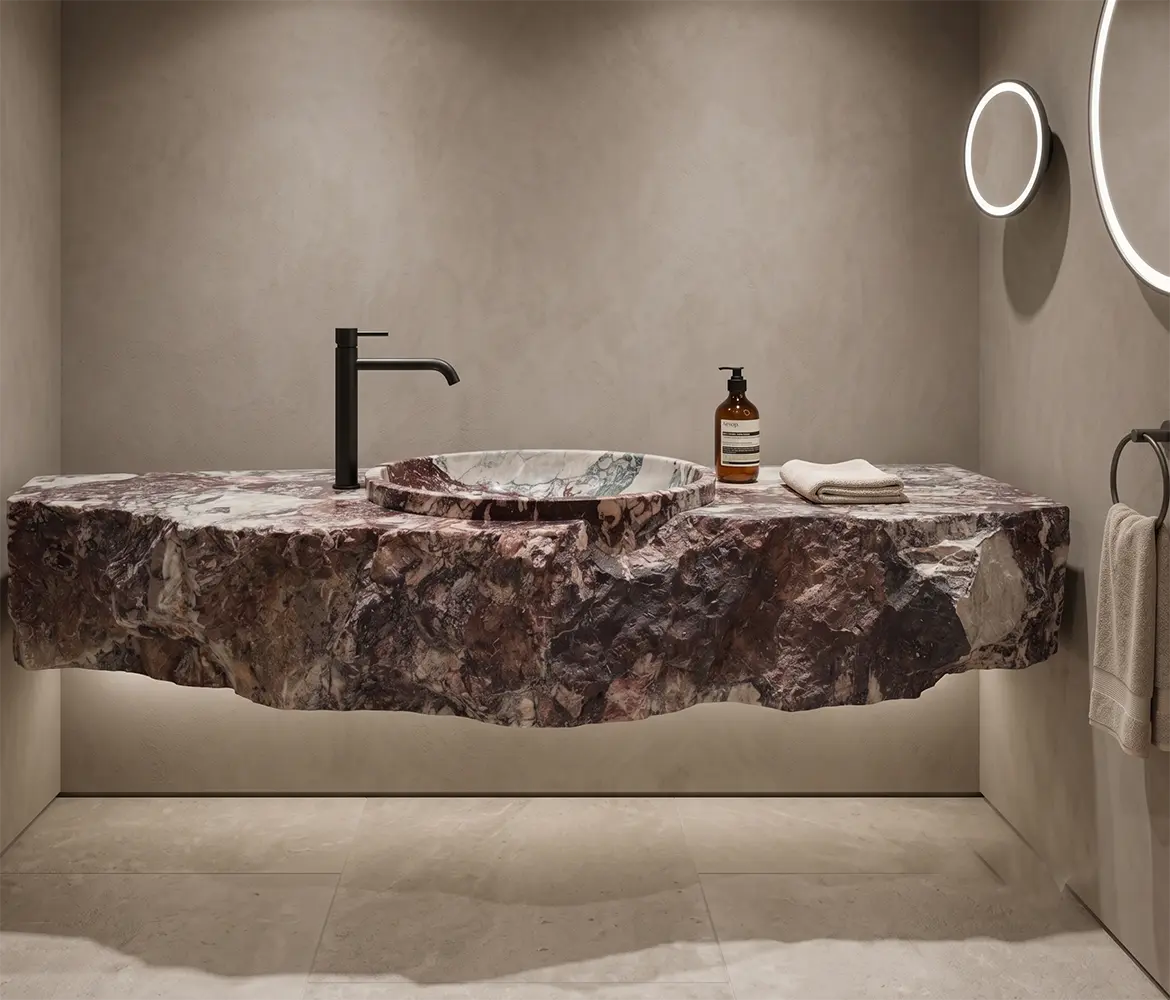
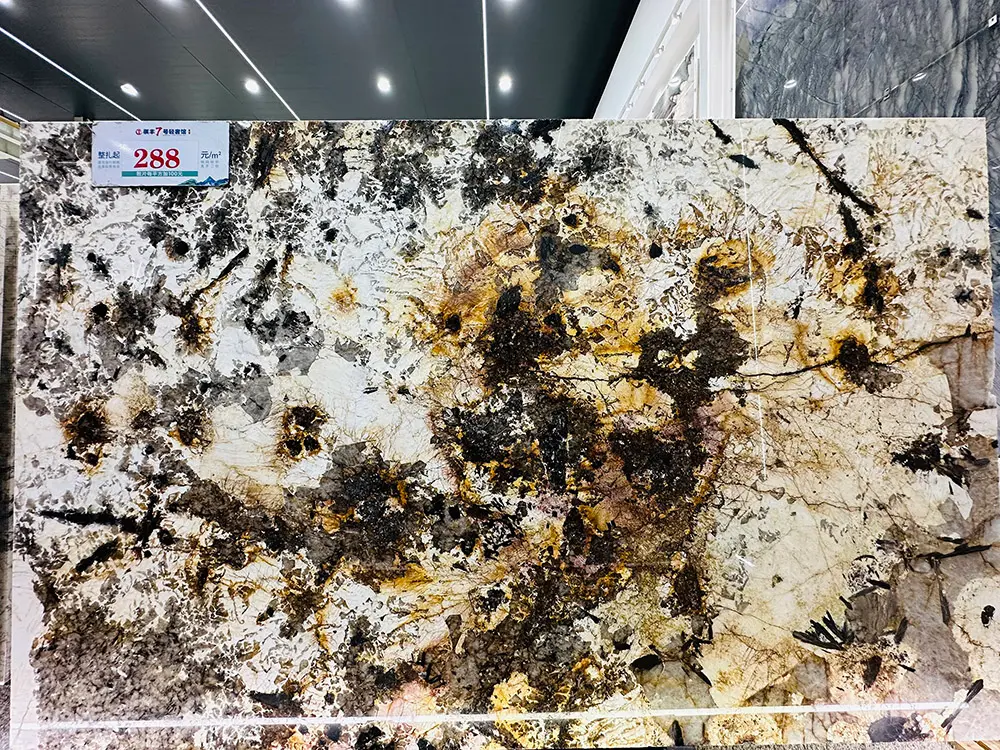
High-quality Marble Slabs
Why Marble Slabs Keep Winning in Modern Homes
There is a reason marble slabs continue to hold their place even as other surface materials compete harder for attention. Slabs create scale, continuity, and emotional impact in a way smaller-format materials often cannot.
In modern homes, people increasingly want spaces that feel visually quieter but materially richer. That combination is not easy to achieve. Too much pattern creates noise. Too little texture makes a room feel flat. Marble slabs work so well because they bring movement without fragmentation.
That is one reason lists of recommended marble slabs for modern home design resonate with buyers. They are not just shopping for surface material. They are trying to understand which stone can act as a visual anchor in kitchens, bathrooms, feature walls, and open-plan interiors.
Design trend coverage also continues to show that natural stone remains central to luxury residential design, especially in kitchens, bathrooms, and statement architectural surfaces. Large-format stone is increasingly valued because it helps create seamless, sculptural, high-end environments rather than decorative patchwork.
The Hidden Benefits Are More Practical Than People Think
A lot of buyers assume marble slabs are mainly about visual prestige. That is only part of the story.
The less obvious strength of slabs is that they often simplify a room visually. Fewer joints mean fewer interruptions. Larger surfaces make the design feel calmer and more deliberate. In spaces where the eye needs somewhere to rest, this matters more than people expect.
That is why discussions about the hidden benefits of marble slabs are so useful. Beyond appearance, slabs can help a room feel bigger, cleaner, and more coherent. They also allow veining and natural movement to read the way nature intended, rather than breaking the stone into smaller repeated units that dilute its character.
From a design psychology perspective, continuous surfaces often create a stronger sense of order and calm. That is one reason slabs are so commonly used in rooms meant to feel restorative, such as spa-style bathrooms, refined kitchens, and quiet luxury living spaces.
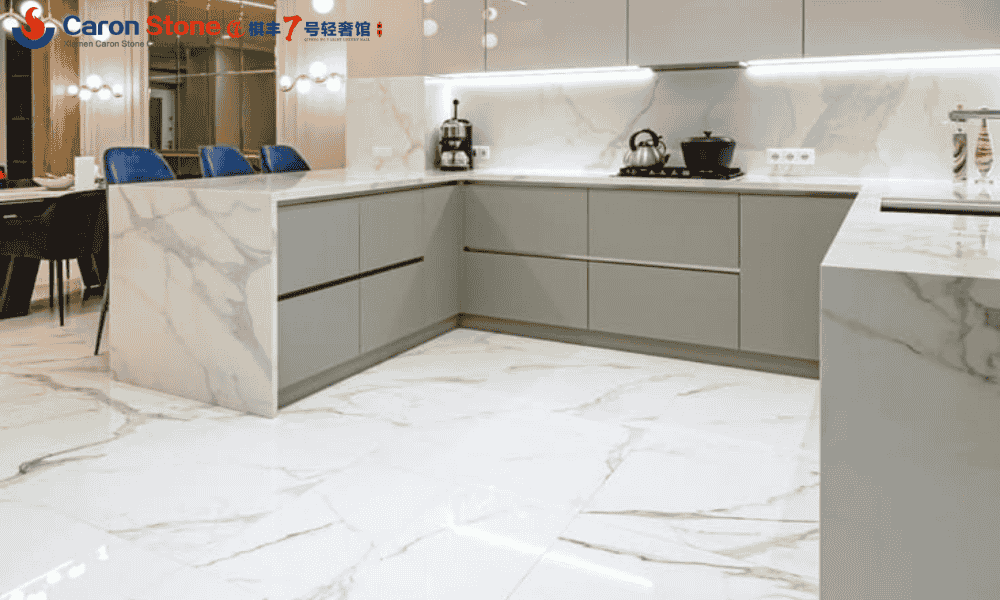
placas de mármore
Why Buyer Satisfaction Often Follows Better Material Decisions
When homeowners regret marble, it is often not because marble was wrong. It is because the wrong slab, the wrong finish, or the wrong application was chosen.
That is why pieces emphasizing best marble slabs with strong customer satisfaction matter. Satisfaction in stone projects rarely comes from beauty alone. It comes from alignment between the material and the way a space is actually used.
The most successful slab decisions usually happen when buyers evaluate three things together:
-
The emotional tone of the room
-
The performance demands of the surface
-
The level of maintenance they are realistically willing to handle
This is where experienced suppliers and designers add value. They help translate “I like this look” into “This is the right stone for this room, this light, and this level of use.”
Sustainability Is Becoming Part of the Marble Conversation
Luxury design is no longer insulated from questions of sustainability. More homeowners, architects, and developers now want materials that feel premium without feeling wasteful or short-sighted.
That is why articles on the sustainable future of marble slabs are increasingly relevant. Natural stone continues to be discussed as a long-life material with recyclability advantages and low ongoing replacement pressure compared with many short-cycle interior finishes. The Natural Stone Institute notes that natural stone is durable, recyclable, and does not emit VOCs into the home, which is one reason it remains part of green-building discussions.
That does not mean every slab project is automatically sustainable. It does mean longevity matters. A material that remains desirable and functional for decades changes the sustainability conversation in a meaningful way.
Marble Slabs Versus Tiles Is Not a Beauty Contest
Many homeowners make this comparison too simplistically. They assume slabs are always more luxurious and tiles are always more practical. Real design decisions are not that tidy.
That is why a marble slabs vs marble tiles comparison is so valuable. Slabs usually offer stronger visual continuity, fewer joints, and more dramatic presentation of natural veining. Tiles can be more flexible in pattern layout, easier to replace in smaller sections, and sometimes better suited to certain traditional or decorative applications.
In modern interiors, slabs are often preferred when the goal is:
-
a seamless kitchen island or backsplash
-
a large statement bathroom wall
-
a fireplace surround with uninterrupted movement
-
a feature surface that needs architectural scale
Tiles remain useful when:
-
the design calls for modular rhythm
-
the room is highly detailed
-
budget or installation conditions favor smaller units
-
the space benefits from patterned repetition rather than continuous veining
In other words, the question is not which one is better. The question is which one tells the room’s story more clearly.
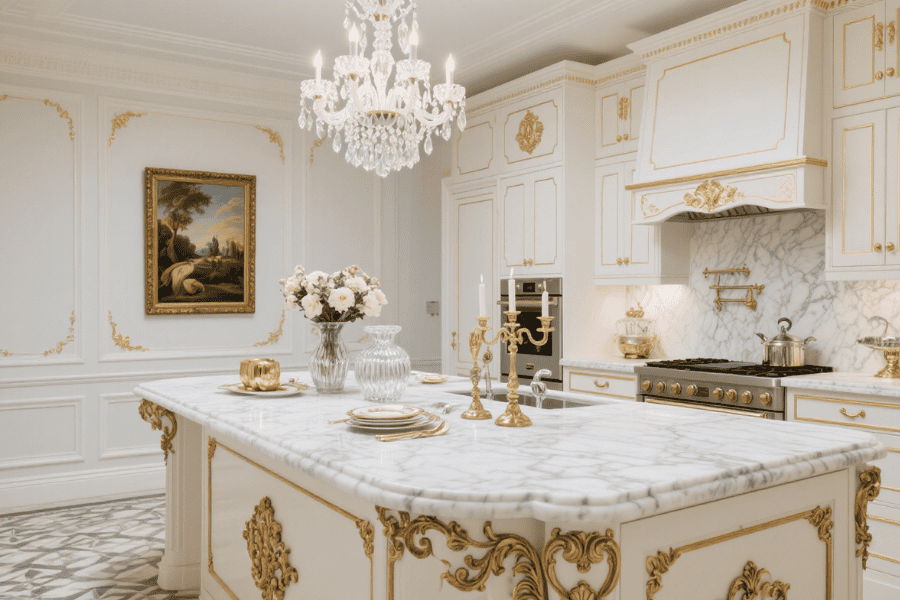
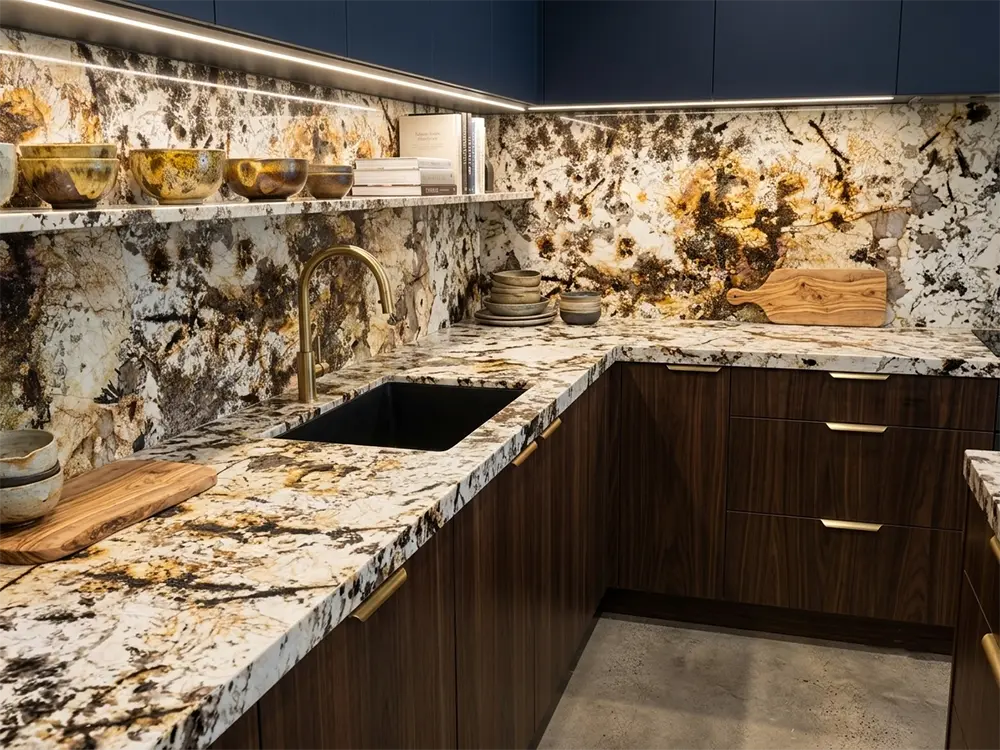
Luxury kitchen marble countertops
Interior Style Should Always Lead the Selection
One of the most common mistakes in stone buying is choosing a slab that looks beautiful in isolation but wrong in the context of the home.
That is why many designers focus on marble slabs that match your interior design style rather than treating all marble choices as equal. A slab that works beautifully in a warm minimalist home may feel too soft in a dramatic Art Deco-inspired setting. A highly expressive stone that energizes a boutique bathroom may overwhelm a quiet family kitchen.
Here is the practical designer logic:
-
Soft white or light grey slabs often support minimalist and contemporary spaces.
-
Richer, more dramatic veining can strengthen luxury feature walls and statement kitchens.
-
Warmer-toned marble usually works better with wood-heavy interiors and brushed brass details.
-
Cooler marble often pairs well with black accents, architectural lighting, and cleaner modern lines.
The room should lead the stone choice. The slab should not force the room to become something it never wanted to be.
Installation Quality Can Protect or Destroy the Design
A great slab can still become a disappointing room if the installation is careless. This is one of the least glamorous and most important truths in natural stone work.
That is why guides about installing marble slabs in kitchens or bathrooms matter so much. Alignment, substrate preparation, seam positioning, edge detailing, cut accuracy, and finish protection all affect whether the final room feels refined or frustrating.
The bigger the slab, the more obvious the mistakes become.
Professionals typically think about:
-
how veining should flow across surfaces
-
where seams can be minimized or disguised
-
whether the substrate is properly prepared
-
how splash zones and high-contact areas will behave
-
how the final finish will respond to light and traffic
Bad installation can make premium material look average. Good installation can make the same material feel architectural.
Designers Read Slabs Differently Than Most Buyers
This is why advice on choosing marble slabs like a professional designer remains so useful even after trends change. Designers rarely choose stone based on a single front-facing beauty shot. They think in terms of scale, room function, adjoining surfaces, light direction, and emotional effect.
A designer often asks:
-
How will this slab read from across the room?
-
What happens when daylight changes?
-
Does the movement calm the room or complicate it?
-
Will the cabinetry support the slab or compete with it?
-
Does the finish fit the intended lifestyle?
That is why professionals often seem “picky” at slab viewings. They are not being dramatic. They are saving the room from future regret.
What Real Homes Actually Need from Marble Slabs
Magazine-worthy spaces are nice. Real homes are better teachers.
In lived-in interiors, marble slabs need to do more than impress guests. They need to support cooking, cleaning, bathing, hosting, working, and ordinary movement without making the homeowner anxious every five minutes.
That is why the best slab choices for real homes usually share these qualities:
-
enough visual character to feel special
-
enough restraint to avoid visual fatigue
-
an appropriate finish for the room’s use
-
realistic maintenance expectations
-
good harmony with the rest of the material palette
This is also why caronstone’s content direction makes sense. Instead of treating marble slabs as abstract luxury objects, it frames them around application, comparison, installation, design matching, and long-term use. That makes the advice more commercially useful for real buyers.
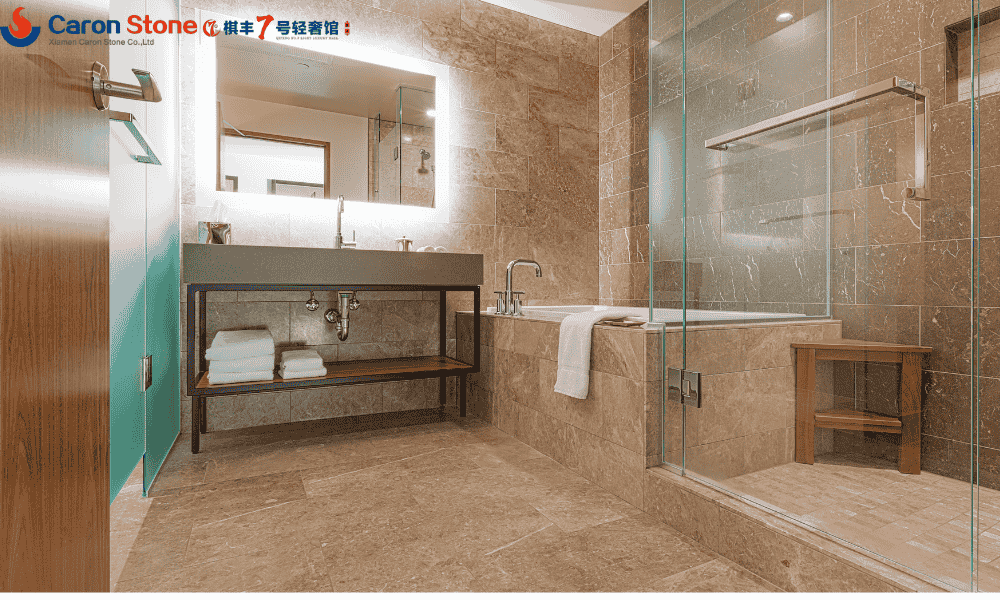
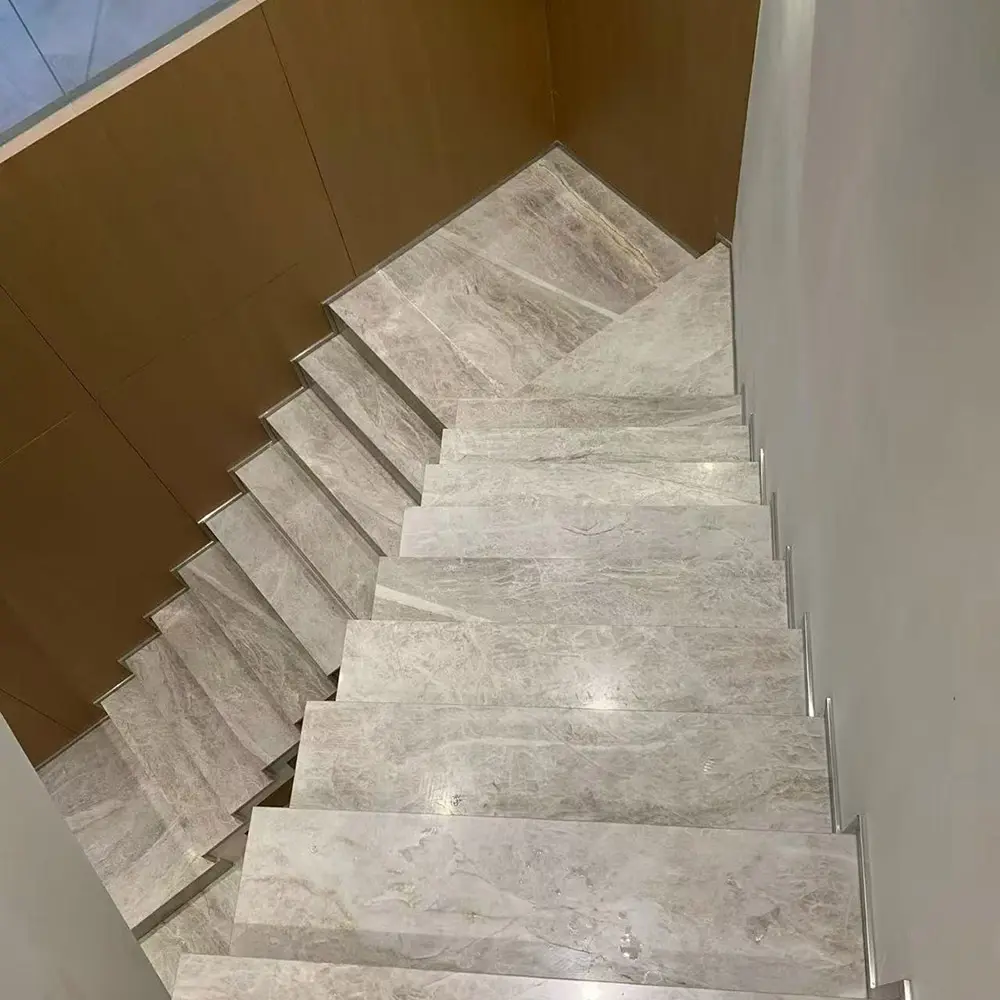
Azulejos de mármore para banheiro
Perguntas mais frequentes
1. Are marble slabs good for modern homes?
Yes. Marble slabs work especially well in modern homes because they create visual continuity, reduce joint lines, and allow natural stone movement to read at full scale. They are especially effective in kitchens, bathrooms, and feature walls.
2. What is the difference between marble slabs and marble tiles?
Marble slabs are larger-format pieces that create a more seamless, architectural look. Marble tiles are smaller modular units that offer more layout flexibility but usually create more visual breaks due to grout lines and repeated sections.
3. Are marble slabs hard to maintain?
They are manageable when homeowners understand basic stone care. Natural stone typically benefits from appropriate sealing, prompt spill cleanup, and pH-neutral cleaning routines rather than harsh chemicals.
4. How do I choose the right marble slab for my interior style?
Start with the room’s mood, lighting, and material palette. The best slab is not always the most dramatic one. It is the one that supports the architecture, furniture, cabinetry, and overall atmosphere of the space.
5. Are marble slabs still a smart choice for sustainable design?
They can be, especially in projects that prioritize long-lasting materials, lower replacement cycles, and recyclable natural finishes. Natural stone continues to be discussed positively in sustainability resources for precisely those reasons.
Why Marble Slabs Give a Room Lasting Presence
Back in that first conversation, the homeowner thought the decision was about surface beauty. What the designer and contractor understood was that it was really about spatial clarity.
That is the real strength of Lajes de mármore. They do more than decorate a kitchen, bathroom, or feature wall. They help a room feel deliberate. They bring continuity, scale, and natural movement into modern interiors in a way few other materials can.
When chosen carefully, matched to the interior style, and installed with discipline, marble slabs do not simply finish a home.
They give it structure, calm, and presence.