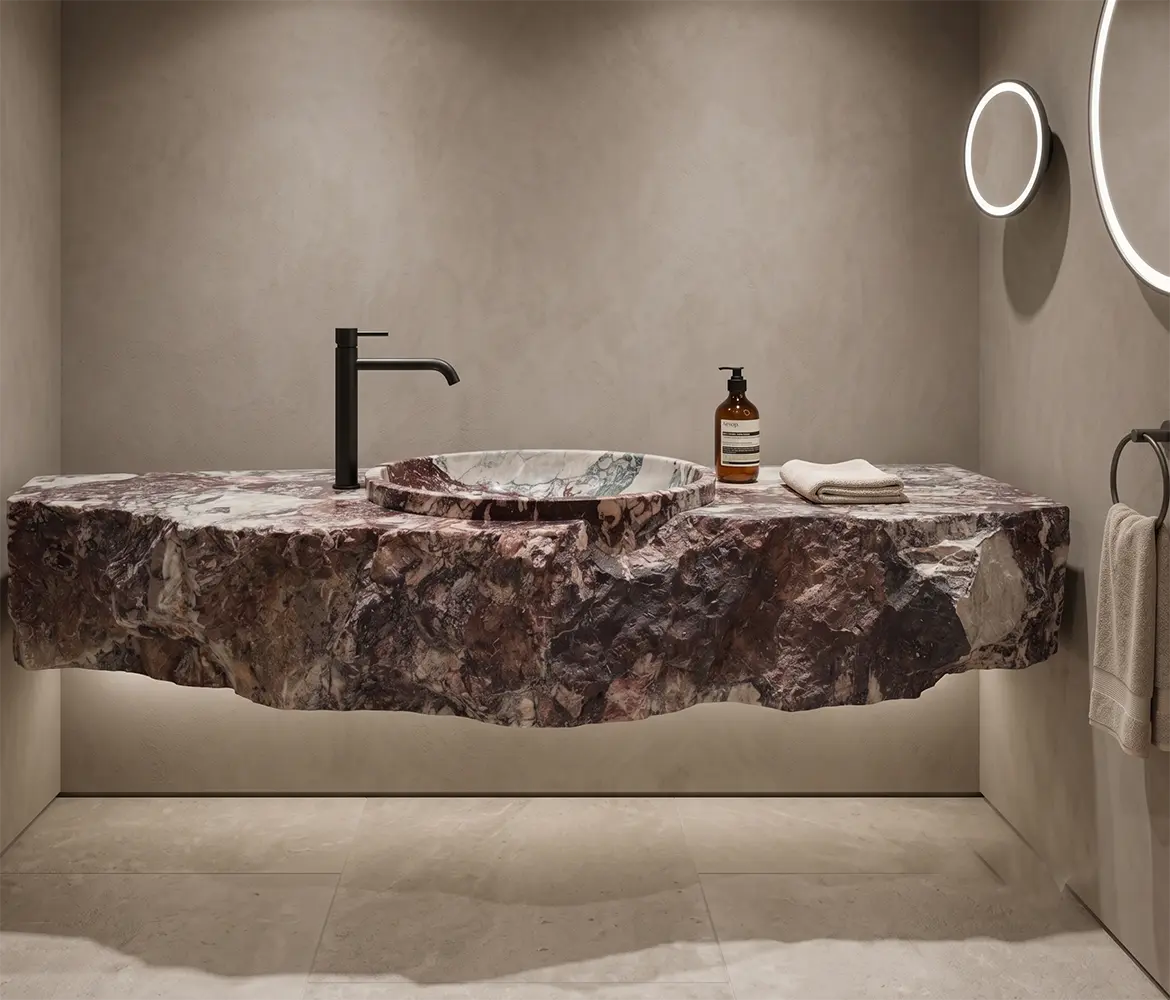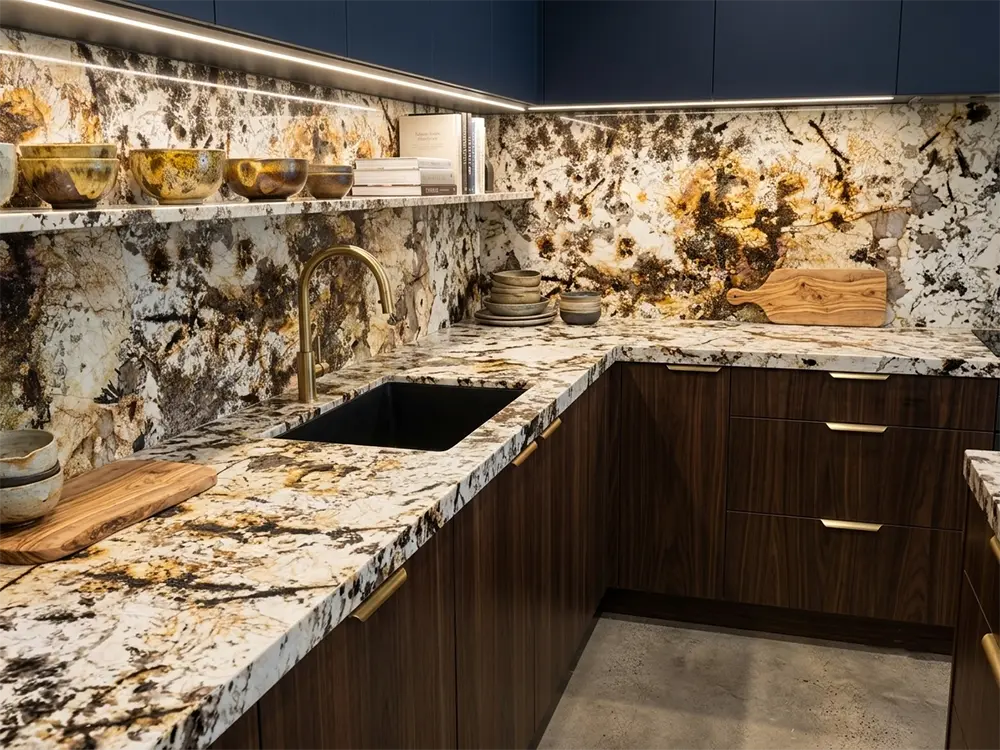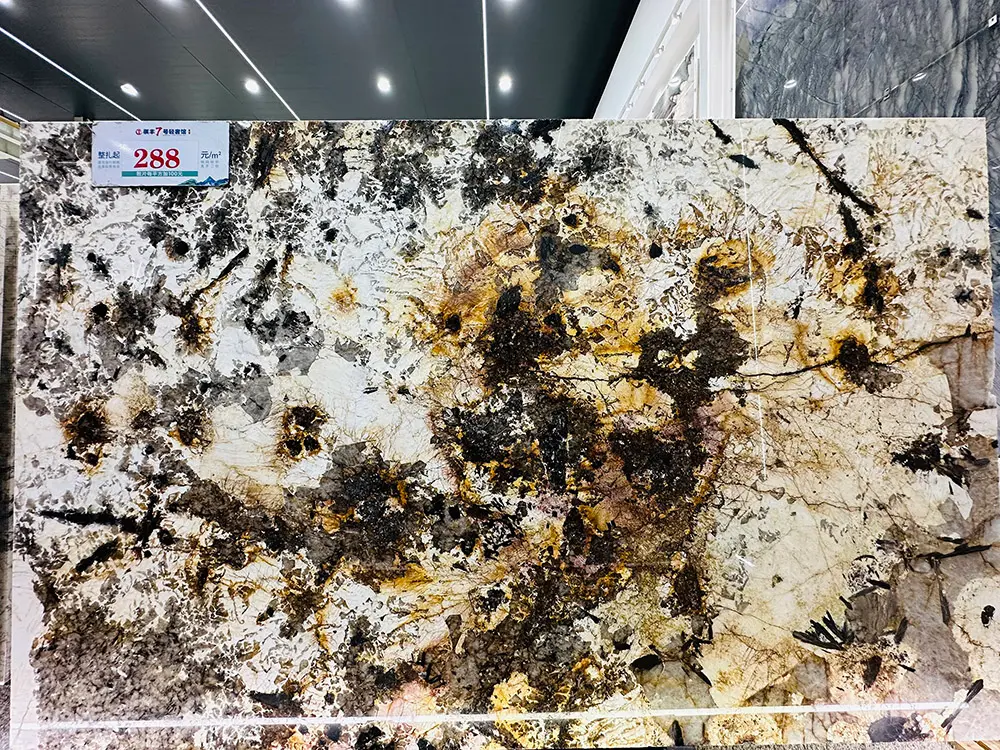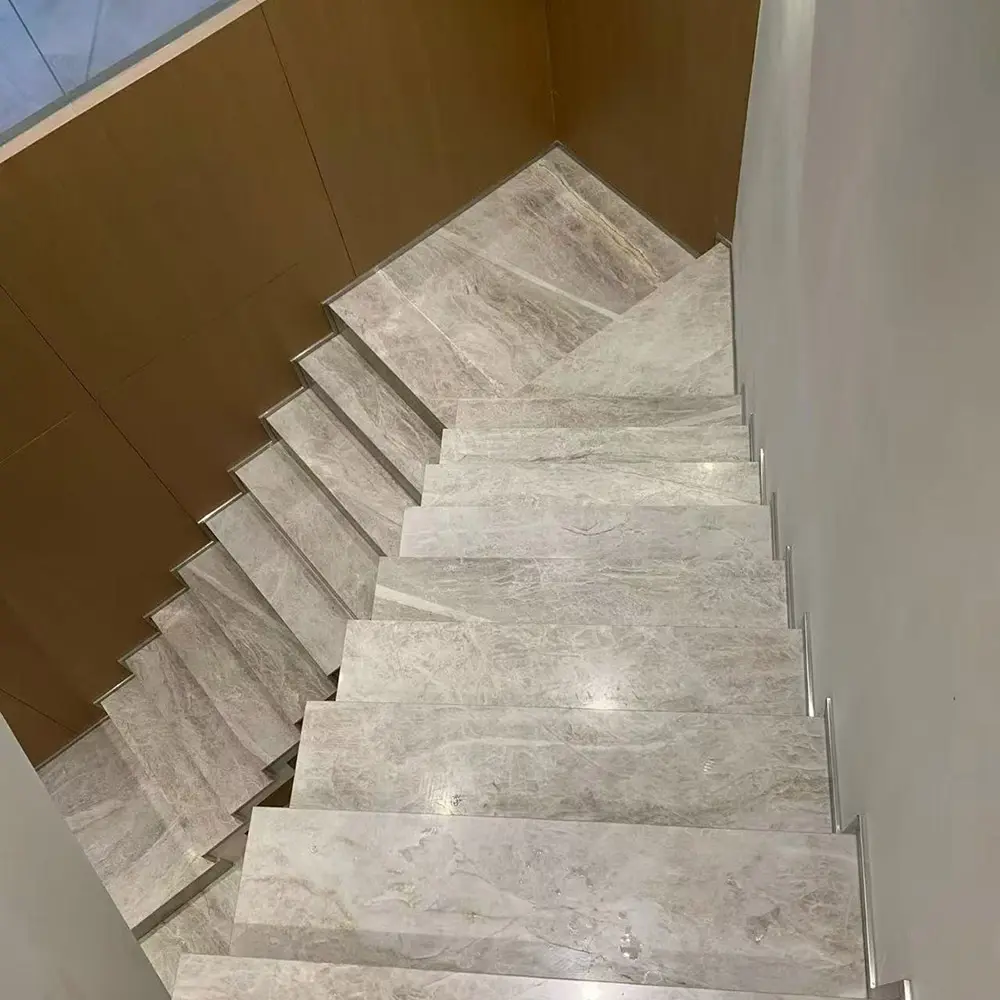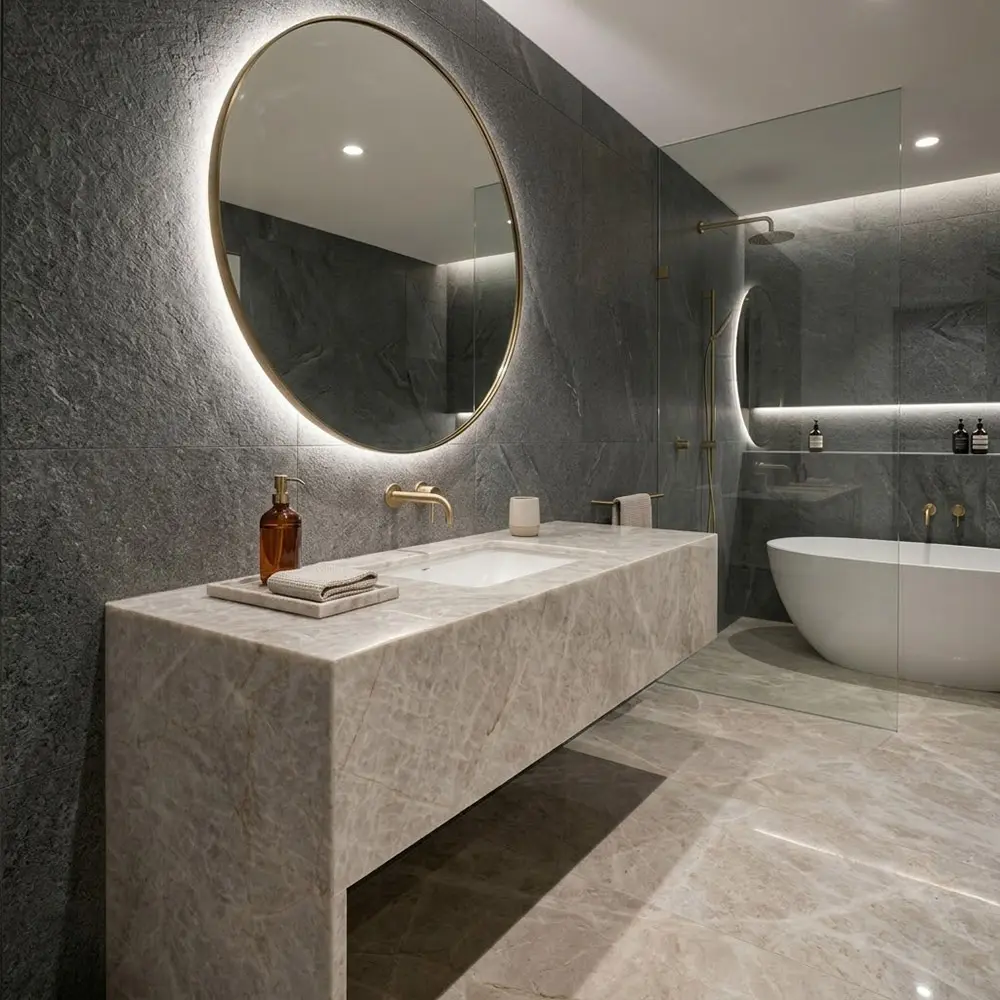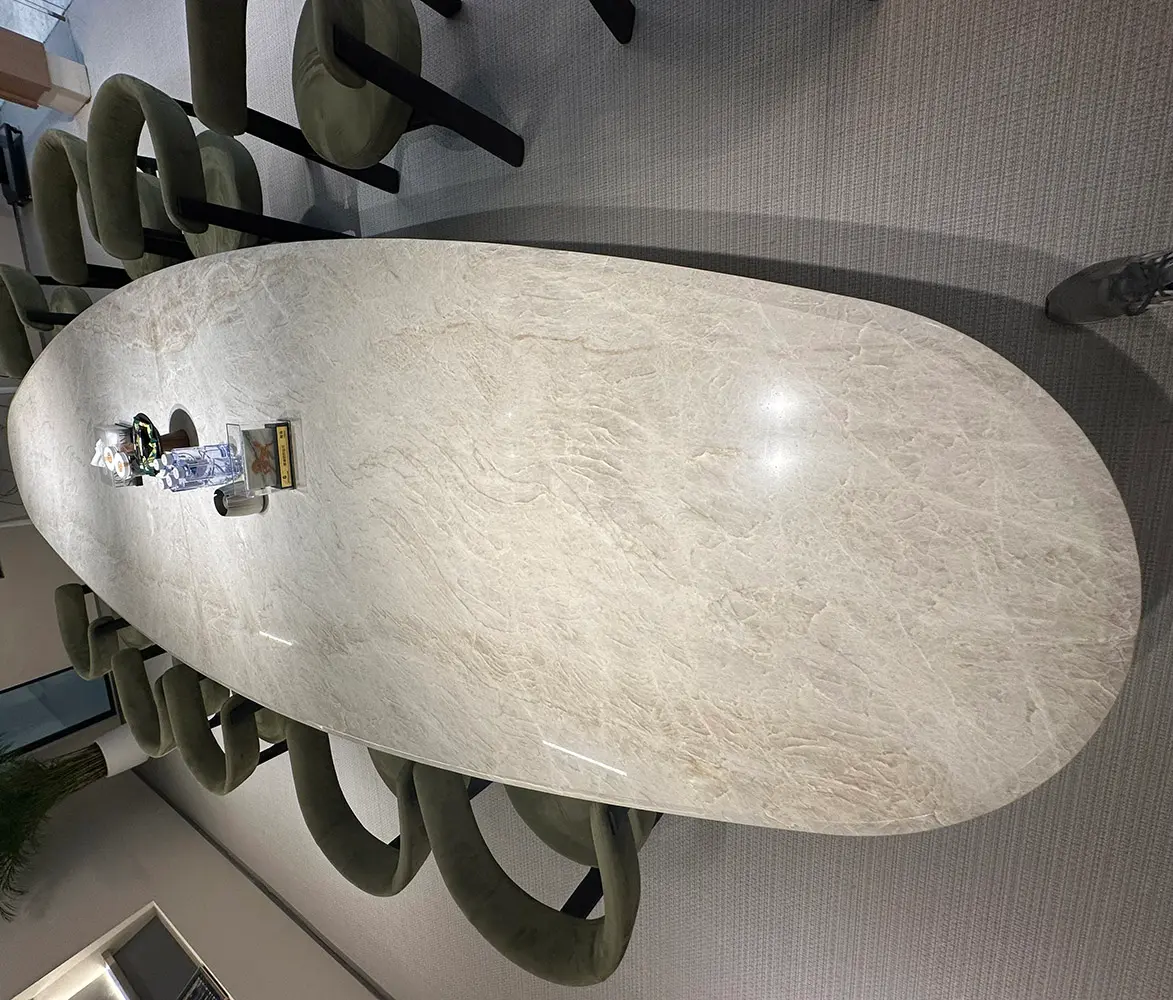






A marble tile project can look simple on a purchase order: choose Carrara, Calacatta or another marble, select a size, confirm the square footage and place the order. In practice, some of the most expensive project problems occur after those decisions. Tiles from different production lots may show unexpected shade variation, a polished finish may be selected for a wet floor without sufficient slip-performance review, pale marble can show adhesive shadowing, dimensional variation can increase installation difficulty, and a project that orders only the net floor area may run short after cutting, sorting and visual selection.
The most effective procurement process starts with the finished space rather than the stone name. A hotel lobby floor, residential bathroom wall, commercial corridor and decorative feature wall create different requirements for tile format, surface finish, shade control, installation and future replacement. Before pricing, buyers can discuss a Marble Tiles project requirement with CARON using the actual area, tile format, finish, quantities, drawings and delivery schedule. A project-specific request makes it easier to distinguish standard tile supply from custom cut-to-size production, batch selection, special finish requirements or complete stone-package sourcing.
The supplier itself should also be evaluated as part of the system. Natural marble is not a perfectly uniform industrial material, so project control depends on sourcing, processing, visual sorting, dimensional inspection and communication. A buyer planning a hotel, villa or commercial space should understand whether the supplier can coordinate slabs, tiles, stair pieces, wall panels and replacement material rather than treating every item as a separate transaction. Buyers can review CARON’s stone sourcing and project background when assessing that broader capability, but the final purchase decision should still be based on the exact marble, production batch, finish, tolerances and quality criteria agreed for the project.
Material selection then becomes much easier. Carrara, Calacatta, Statuario, Crema Marfil, Emperador, Nero Marquina and other natural marbles can all become excellent tile products, yet they create very different visual and maintenance expectations. A buyer who wants a calm hotel floor may choose a relatively controlled grey or beige marble, while a luxury feature wall may justify dramatic Calacatta movement. Reviewing a broader Marble Tiles and Slabs collection helps the project team compare color families, veining scale and available material directions before finalizing a specification. The key is to select the stone for the finished application rather than force one popular marble into every area of the building.
Tile format is the next major decision. A 300 × 300 mm tile, 600 × 600 mm tile and 600 × 1200 mm panel can all be produced from the same marble, but they do not create the same design or installation risk. Larger pieces reduce grout joints and preserve more of the original vein movement, while smaller formats can accommodate floor geometry, drainage or detailed layouts more easily. Buyers researching project options can explore Marble Tiles for luxury flooring and wall applications as a starting point, then confirm the actual stone, dimensional tolerance, thickness, finish and installation requirements for the specific project rather than treating one format as universally superior.
Designers should also consider how modular stone changes the visual rhythm of a room. Herringbone, chevron, large-format grids, checkerboard combinations and border details can transform the same marble into completely different interiors. Vein orientation matters especially when the stone has strong linear movement. A tile rotated ninety degrees may fit the cutting plan perfectly but interrupt the intended design. More creative applications can be explored through modern Marble Tiles design ideas, but every decorative concept should eventually be translated into a practical laying plan showing tile direction, shade distribution, joints and spare-material requirements.
Floors require even stronger coordination because visual selection is only one part of performance. Foot traffic, moisture, slip behavior, substrate condition, grout, cleaning procedures and future maintenance all affect the finished result. A polished marble floor may look exceptional in a controlled dry lobby but can create different concerns in entrances, bathrooms or other wet areas. CARON’s guide to Marble Tiles for premium floors can support early design research, while final project decisions should use the actual material, finish, installation system and applicable performance requirements.

What Are Marble Tiles?
Marble Tiles are modular pieces cut from natural marble blocks or slabs and processed to a specified size, thickness and finish. Unlike porcelain or ceramic marble-look tiles, the color and veining are created by natural geological processes rather than printing.
Each tile can therefore vary in:
- background color;
- vein density;
- vein direction;
- mineral inclusions;
- fissures;
- crystal size;
- surface response to polishing.
This variation is one of natural marble’s main design advantages, but it also means project buyers need a realistic acceptance standard.
Quick Marble Tile Selection Guide
| Тип мрамора | Typical Visual Direction | Strong Application Direction | Main Buyer Consideration |
|---|---|---|---|
| Каррара | White to blue-grey with soft grey veins | Bathrooms, walls, floors, classic interiors | Shade and vein variation |
| Calacatta | Bright white with bolder grey or gold movement | Luxury walls, bathrooms, feature floors | Pattern matching and premium selection |
| Statuario | White with strong contrasting grey veins | High-end bathrooms and statement surfaces | Limited matching material can increase cost |
| Крема Марфил | Warm beige with subtle veins | Large commercial floors and warm interiors | Batch color range |
| Emperador | Brown with lighter mineral movement | Floors, borders and dramatic accents | Busy pattern requires layout control |
| Nero Marquina | Black with white veining | Feature floors, bathrooms, contrast designs | Visible scratching and etching require realistic care |
| Thassos | Bright white crystalline appearance | Clean modern bathrooms and luxury walls | Pale appearance makes installation-material selection important |
Popular Types of Marble Tiles
Carrara Marble Tiles
Carrara is popular because its grey-white palette works across traditional and contemporary interiors. The pattern is usually quieter than Calacatta or Statuario, making it easier to use across larger floor areas.
Strong applications include:
- bathroom walls;
- residential floors;
- subway-style wall tiles;
- hotel bathrooms;
- fireplace surrounds.
Calacatta Marble Tiles
Calacatta generally creates more dramatic contrast. Large grey, beige or gold movement can become a design feature rather than background texture.
The stronger the vein, the more important dry layout becomes. Randomly opening cartons and installing tiles directly can break the intended composition.
Statuario Marble Tiles
Statuario is associated with bright backgrounds and strong grey veins. It suits luxury bathrooms, feature walls and other spaces where crisp contrast is desirable.
Project buyers should review the available quantity early because strong visual matching across a large area can require careful production selection.
Crema Marfil Marble Tiles
Warm beige marble can work especially well in hospitality floors, commercial interiors and residences using wood, cream or bronze palettes.
For large floor programs, batch sorting is often more important than choosing one unusually perfect individual tile.
Emperador Marble Tiles
Emperador’s brown tones and lighter calcite movement create a richer traditional or hospitality character.
It is often effective as:
- flooring;
- borders;
- bathroom walls;
- elevator lobbies;
- contrast pieces against beige or white marble.
Nero Marquina Marble Tiles
Black marble with white veining creates strong architectural contrast. It can be used alone or as part of checkerboard, border and geometric layouts.
Dark polished surfaces may make certain scratches, dust and acid-related changes more visible, so maintenance expectations should be defined before specification.
Thassos Marble Tiles
Thassos is valued for its luminous white appearance. Pale marble can be visually sensitive to the setting material behind it, so adhesive color and installation compatibility deserve careful review.

Marble Tiles for Living Rooms
How Marble Color and Veining Affect Project Selection
Natural marble should be thought of as a visual range rather than a single color code.
Shade Variation
Two tiles from the same marble can differ in background tone. This is not automatically a defect.
Vein Density
Some pieces may be almost clean while others contain strong movement. The project can use this intentionally by mixing or grouping the material.
Vein Direction
Linear stones require orientation control. A floor can appear disorganized if pieces are installed in unrelated directions.
Batch Variation
Material cut from different blocks or production runs may differ more strongly than tiles from one controlled batch.
Project rule: define the acceptable marble range before installation begins. Do not wait until half the floor is installed to decide that natural variation is too strong.
Common Marble Tile Sizes
Natural marble can be fabricated into many modular and custom sizes. Common project directions include:
| Формат | Typical Use | Эффект дизайна |
|---|---|---|
| 300 × 300 mm | Bathrooms, smaller floors, modular designs | More joints and easier small-space layout |
| 300 × 600 mm | Walls and floors | Linear architectural rhythm |
| 600 × 600 mm | Residential and commercial floors | Fewer joints and broader vein presentation |
| 600 × 1200 mm | Large walls and premium floors | More slab-like appearance |
| Мозаика | Shower floors, borders and decorative details | High joint density and strong pattern flexibility |
| Custom Cut-to-Size | Hotel, villa and commercial projects | Optimized to drawings |
These are common directions rather than universal standard sizes. Availability depends on the marble, block, slab dimensions and supplier.
How to Choose Marble Tile Thickness
Thickness should follow the application, format, stone properties, substrate and installation system.
Typical project directions may include:
- approximately 10–12 mm for selected wall or tile applications;
- 15 mm for some larger or project-specific formats;
- 18–20 mm for heavier-duty or custom cut-to-size stone work;
- other custom thicknesses where engineered by the project.
Do not treat thickness as a quality grade. A thicker marble tile is not automatically the better specification if the substrate, adhesive and installation system were designed for another format.
Calibrated vs Uncalibrated Marble Tiles
Calibrated Tiles
Calibrated tiles are processed to create a more controlled thickness range, which can simplify bedding and surface alignment.
Uncalibrated Tiles
Uncalibrated stone may contain greater thickness variation and can require additional installer adjustment.
Why B2B Buyers Should Care
A slightly lower factory tile price may be offset by higher installation labor if dimensional variation requires significantly more bedding adjustment.
Ask the supplier to define:
- nominal thickness;
- agreed tolerance;
- squareness;
- length and width tolerance;
- surface flatness where relevant.
Polished vs Honed Marble Tiles
| Factor | Полированный | Отшлифованной |
|---|---|---|
| Sheen | Высокий | Low to satin |
| Color depth | Usually stronger | Softer |
| Vein contrast | More dramatic | More subdued |
| Etch visibility | Loss of gloss can be obvious | Can visually blend more easily |
| Slip behavior | Must be evaluated for application | Must also be evaluated for application |
| Strong use direction | Walls, decorative floors, premium interiors | Contemporary walls and selected floors |
Honed does not automatically mean “non-slip,” and polished does not automatically mean “unsafe.” Wet-area suitability should be supported by project-specific slip-performance requirements and actual finish data.
Other Marble Tile Finishes
Brushed
Brushing creates a tactile, lower-gloss surface that can suit rustic, transitional and hospitality interiors.
Tumbled
Tumbled tiles use softened edges and an aged appearance, making them suitable for traditional or intentionally weathered designs.
Leathered
Leathered finishes create controlled texture with a tactile character distinct from polished or honed stone.
Antique or Custom Textures
Custom finishing can support hospitality, boutique retail and luxury residential concepts, but physical approval samples are especially important because finish terminology can vary between producers.
Marble Tiles for Floors
Floor selection should consider much more than color.
Evaluate
- foot traffic;
- tile format;
- finish;
- slip performance;
- substrate flatness;
- movement joints;
- cleaning system;
- replacement strategy.
Large-format tiles can create a sophisticated continuous appearance, but they demand better substrate preparation because small irregularities become harder to absorb during installation.
Marble Tiles for Bathrooms
Bathrooms are one of the strongest natural-marble applications because walls, vanities and floors can use the same material language at different scales.
Strong Applications
- shower walls;
- bath surrounds;
- vanity backsplashes;
- decorative niches;
- bathroom floors;
- mosaic shower floors.
Waterproofing belongs to the complete installation system, not to the marble itself. Natural stone should never be used as a substitute for a properly designed wet-area assembly.

Marble Tiles for Bathrooms
Marble Tiles for Shower Floors
Smaller pieces and mosaics can adapt more easily to drain slopes and complex shower geometry.
Important considerations include:
- tile format;
- grout-joint density;
- approved waterproofing system;
- finish;
- slip performance;
- cleaning method;
- setting material compatibility.
Marble Wall Tiles
Walls allow designers to use polished, honed and expressive marble with fewer abrasion concerns than a floor.
Strong B2B applications include:
- hotel lobbies;
- bathroom walls;
- elevator lobbies;
- retail feature walls;
- villa interiors;
- restaurant entrances.
Large directional veins should be laid out visually before installation rather than installed randomly from cartons.
Marble Tile vs Marble Slab
| Factor | Мраморная плитка | Мраморная плита |
|---|---|---|
| Формат | Modular | Large-format natural piece |
| Joint count | Higher | Lower |
| Piece weight | Lower | Much higher |
| Pattern presentation | Broken into modules | Large original geological movement |
| Replacement | Potentially easier | More difficult |
| Установка | Tile-based installation | Specialized slab handling and fabrication |
| Strong application | Floors, walls, repeated project areas | Feature walls, countertops, large statement surfaces |
Dry Layout Before Installation
Natural Marble Tiles should not automatically be installed in the order they come out of the crate.
Dry Layout Helps Control
- shade distribution;
- vein direction;
- dark and light pieces;
- feature tiles;
- border composition;
- visual balance.
A designer may deliberately distribute stronger veins across a floor instead of clustering them in one corner.
Natural Shade Variation Is Not Automatically a Defect
Natural marble varies because it is quarried rather than manufactured from a uniform printed recipe.
The project should distinguish between:
- acceptable natural variation;
- material outside the approved shade range;
- incorrect batch mixing;
- surface damage;
- actual fabrication defects.
A physical master range can make this distinction much easier during inspection.
Why Pale Marble May Need Special Adhesive Consideration
Some pale or relatively translucent marbles can visually show the effect of darker setting materials behind the tile.
For that reason, project teams may evaluate a compatible white setting material for selected white or translucent stones.
Do not turn this into “all marble must use white adhesive.” Adhesive selection should follow the marble, substrate, application and setting-material manufacturer’s recommendations.
Подготовка субстрата
Even premium marble cannot correct an unsuitable substrate.
The Substrate Should Be
- structurally appropriate;
- clean;
- stable;
- sufficiently flat;
- prepared for the selected installation system;
- within appropriate moisture conditions.
Large-format stone increases the importance of flatness because the installer has less ability to compensate for irregularities without creating lippage or insufficient mortar contact.
Back-Buttering and Double-Spreading
For larger natural stone units, the installer may use back-buttering or a double-spreading method to improve mortar coverage when required by the installation specification.
The correct method depends on:
- tile size;
- substrate;
- setting material;
- environment;
- applicable installation standard.
The goal is reliable mortar contact rather than simply applying more adhesive.
How Wide Should Marble Tile Grout Joints Be?
There is no universal one-millimeter grout-joint rule for natural marble.
Joint width depends on:
- tile dimensional tolerance;
- rectification or calibration;
- tile size;
- layout;
- substrate;
- movement;
- installation standard;
- project aesthetic.
Attempting an extremely narrow joint with tiles that have meaningful dimensional variation can make alignment more difficult rather than more luxurious.
Movement and Expansion Joints
Stone tile assemblies must accommodate building and substrate movement.
Movement joints should be integrated into the installation design rather than filled rigidly simply to preserve a continuous marble appearance.
Do not bridge structural movement joints with rigid marble installation merely for visual continuity.
Does Marble Tile Need Sealing?
Some marble applications benefit from a compatible impregnating sealer, but the need and maintenance interval depend on:
- stone absorption;
- finish;
- application;
- traffic;
- cleaning routine;
- sealer chemistry.
There is no responsible universal statement that every Marble Tile must be resealed every year.
Etching vs Staining
| Issue | Etching | Staining |
|---|---|---|
| Mechanism | Chemical reaction at surface | Colored material penetrates pores |
| Common trigger | Acids | Oil, wine, pigments |
| Внешний вид | Dull or changed sheen | Darker or colored area |
| Can sealer reduce risk? | Does not generally stop acid reaction | Can reduce absorption |
This distinction is important because customers sometimes believe a sealed polished marble floor or vanity has become acid-proof. It has not.
Marble Tile Maintenance
A practical care program generally includes:
- stone-compatible pH-neutral cleaner;
- prompt spill removal;
- appropriate entrance mats for commercial floors;
- avoiding unnecessary acidic cleaners;
- avoiding harsh abrasive products where unsuitable;
- periodic inspection of grout and sealant joints;
- project-specific sealer maintenance where used.
How Much Extra Marble Tile Should You Order?
There is no single percentage that fits every project.
Quantity depends on:
- room geometry;
- tile size;
- diagonal or straight layout;
- pattern matching;
- visual sorting;
- breakage allowance;
- future spare stock.
Illustrative Planning Ranges
| Layout Type | Illustrative Planning Direction |
|---|---|
| Simple straight layout | Often begins around 10–15% allowance |
| Diagonal / more cutting | May require around 15–20% |
| Complex pattern / strong visual matching | Can require 20% or more |
Illustrative planning ranges only, not universal ordering rules. Use the actual cutting and layout plan for project quantity.
How to Calculate Basic Tile Quantity
For a 600 × 600 mm tile:
For a 100 m² floor before allowance:
The project must then add cutting, sorting and spare requirements according to the actual layout.
Usable Yield for Custom Cut-to-Size Marble
When tiles are custom-cut from slabs, buyers can also calculate material yield:
If 80 m² of purchased marble produces 64 m² of approved finished tiles:
This metric is particularly useful for premium marbles where veining and visual selection reduce usable areas.
What Drives Marble Tile Cost?
The raw tile price is only one part of the budget.
Major Cost Drivers
- marble variety;
- quarry and origin;
- visual selection;
- tile size;
- thickness;
- finish;
- calibration;
- custom patterns;
- batch control;
- packing;
- freight;
- installation complexity.
Why Price per Square Foot or Square Metre Can Mislead
Illustrative Procurement Comparison
| Factor | Offer A | Offer B |
|---|---|---|
| Tile price index | 100 | 110 |
| Dimensional consistency | Lower | Higher |
| Sorting required | Высокий | Умеренный |
| Installation labor index | 125 | 105 |
Illustrative decision example only. Actual costs depend on project, labor market, substrate and material.
The lower tile price can therefore fail to produce the lowest installed cost if dimensional variation or shade sorting increases site labor.
Quality Control Before Shipment
| QC Item | What to Check |
|---|---|
| Marble type | Correct approved material |
| Batch / lot | Matches project supply plan |
| Length and width | Within agreed tolerance |
| Толщина | Within agreed tolerance |
| Squareness | Suitable for layout |
| Отделка | Matches approved sample |
| Shade | Within approved range |
| Veining | Suitable for project selection |
| Chips / damage | Within agreed quality criteria |
| Quantity | Matches packing list |
Packing Marble Tiles for Export
Export packing should protect edges, polished faces and batch identification.
A project packing system may include:
- cartons for modular tiles;
- reinforced wooden crates;
- surface separators;
- edge protection;
- moisture-resistant internal protection where appropriate;
- batch labels;
- crate numbers;
- packing lists.
Large-format tiles and custom panels may require stronger support than small modular pieces.
Factory Supplier vs Local Marble Tile Supplier
| Sourcing Route | Strongest Fit | Main Advantage | Main Consideration |
|---|---|---|---|
| Factory / direct project supplier | Large projects and wholesale orders | Custom sizes, batch production, project QC | Requires good remote approval process |
| Local distributor | Small and urgent orders | Immediate viewing and replacement | May have limited batch quantity |
| Importer / project distributor | Regional projects | Combines overseas sourcing with local support | More parties in supply chain |
Applicable Standards and Technical References
| Standard / Reference | Main Relevance |
|---|---|
| ASTM C503/C503M | Marble dimension stone specification |
| ASTM C97/C97M | Water absorption and bulk specific gravity |
| ASTM C170/C170M | Compressive strength of dimension stone |
| ASTM C880/C880M | Flexural strength of dimension stone |
| ASTM C1528/C1528M | Selection of dimension stone |
| EN 12057 | Natural stone modular tile requirements |
| ANSI / TCNA installation references | Tile-setting systems, movement and installation practice |
Use test data representative of the actual supplied marble. Technical values from another quarry or visually similar stone should not automatically be used for the project.
Ten Common Marble Tile Buying Mistakes
Mistake 1 — Choosing From One Small Sample
Risk: the installed area shows much more variation than expected.
Better decision: approve the production range or representative batch.
Mistake 2 — Mixing Unrelated Batches
Risk: adjoining floor areas look noticeably different.
Better decision: reserve coordinated material for connected spaces.
Mistake 3 — Ignoring Shade Variation
Risk: installers reject normal natural variation after work begins.
Better decision: agree on the acceptable range first.
Mistake 4 — Choosing Finish by Appearance Only
Risk: wet-area, traffic or maintenance needs are ignored.
Better decision: evaluate finish by application.
Mistake 5 — Believing Sealer Prevents Etching
Risk: acidic spills still create surface changes.
Better decision: distinguish stain protection from acid sensitivity.
Mistake 6 — No Dry Layout
Risk: dark and heavily veined tiles cluster randomly.
Better decision: visually distribute the stone before installation.
Mistake 7 — Ordering Only Net Area
Risk: cuts and visual sorting leave the project short.
Better decision: calculate project-specific allowance and spare stock.
Mistake 8 — Ignoring the Substrate
Risk: lippage, debonding or installation difficulty.
Better decision: treat substrate preparation as part of the stone system.
Mistake 9 — Comparing Tile Price Only
Risk: installation and quality-control costs are overlooked.
Better decision: compare total installed value.
Mistake 10 — Keeping No Spare Stock
Risk: future replacements cannot match the original production.
Better decision: retain useful same-project material.
Marble Tile Buyer Decision Matrix
| Приложение | Starting Direction |
|---|---|
| Bathroom wall | Polished or honed depending on design and care expectations |
| Wet floor | Project-specific finish and slip-performance review |
| Hotel lobby floor | Large-format batch control + traffic / finish review |
| Feature wall | Vein and shade matching |
| Luxury villa floor | Dry layout + coordinated batch |
| Shower floor | Smaller format / mosaic + complete wet-area system |
| High-acid food preparation zone | Evaluate marble maintenance expectations or another surface |
| Large commercial project | Factory batch supply + agreed QC + spare stock |
What Should Buyers Ask a Marble Tile Supplier?
Материал
- What is the marble name and stated origin?
- Can representative production photos be provided?
- How much natural shade variation should be expected?
- Can connected areas be supplied from a coordinated batch?
Размеры
- What standard and custom sizes are available?
- What thickness is supplied?
- Are tiles calibrated?
- What dimensional tolerances are agreed?
Отделка
- Polished?
- Honed?
- Brushed?
- Tumbled?
- Custom texture?
Project Supply
- What is the MOQ?
- What is the production capacity?
- Can production lots be reserved?
- Can replacement stock be kept?
- Can custom cut-to-size pieces be coordinated with the tile order?
Контроль качества
- Are dimensions checked?
- Is shade sorted?
- Are chips and edges inspected?
- Can pre-shipment photographs be supplied?
- Are cartons and crates labeled by batch?

Marble Tiles Supplier
Quote-Ready Checklist for Marble Tile Projects
| Information Group | What to Provide |
|---|---|
| Project | Hotel, residential, retail, commercial or villa |
| Приложение | Floor, wall, bathroom, shower, feature wall |
| Мрамор | Preferred material or visual direction |
| Размер | Standard or custom format |
| Толщина | Required nominal thickness |
| Отделка | Polished, honed, brushed or other |
| Quantity | Net area plus project layout |
| Качество | Shade range and dimensional requirements |
| Delivery | Destination, schedule and packing requirements |
Часто задаваемые вопросы
1. What are the most popular types of Marble Tiles?
Popular Marble Tiles include Carrara, Calacatta, Statuario, Crema Marfil, Emperador, Nero Marquina and Thassos, but the best choice depends on the project rather than the popularity of the stone name. Carrara typically offers softer grey movement and works well across bathrooms and larger floors, while Calacatta and Statuario create stronger contrast for luxury feature applications. Crema Marfil provides a warmer beige direction, Emperador creates rich brown interiors, Nero Marquina offers black-and-white contrast, and Thassos is valued for a clean bright-white appearance. Buyers should compare the actual production range, available quantity, finish, tile size and natural variation before finalizing a large order.
2. Are Marble Tiles good for bathrooms and wet areas?
Marble Tiles can work very well in bathrooms, including walls, vanity backsplashes, bath surrounds and selected floors, but the complete wet-area system matters more than the stone alone. Waterproofing must be handled by the approved substrate and membrane system, and the tile finish should be reviewed for the required slip performance where floors become wet. Smaller mosaics can be useful on shower floors because they follow drainage geometry and create more grout joints, while larger tiles can create a cleaner wall appearance. Marble is also sensitive to acidic cleaning products, so housekeeping guidance should specify stone-compatible cleaners rather than relying on generic bathroom chemicals.
3. Are polished or honed Marble Tiles better for floors?
Neither polished nor honed Marble Tiles are universally better for floors. Polished marble produces stronger color, reflection and vein contrast and can create a highly refined interior where the project conditions support it. Honed marble has a softer, lower-gloss appearance and may make minor surface changes less visually obvious. However, finish names alone should not be used as a substitute for slip-performance evaluation, especially in wet or heavily trafficked areas. The correct choice depends on the specific marble, actual finish, traffic, moisture exposure, cleaning method and applicable project requirements. Commercial projects should review the selected finish using relevant test data and installation guidance.
4. Do Marble Tiles need sealing, and does sealer prevent etching?
Some Marble Tiles benefit from a compatible impregnating sealer, particularly where the stone’s absorption and application create a meaningful staining risk. The need for sealing and the maintenance interval depend on the marble, finish, use, cleaning routine and sealer chemistry, so there is no reliable universal rule requiring every marble tile to be resealed annually. An impregnating sealer can reduce the rate at which certain liquids enter the pore structure and therefore reduce staining risk, but it does not normally stop the chemical reaction between acidic substances and acid-sensitive carbonate minerals. Sealing should therefore be treated as stain-risk management rather than acid-proofing.
5. How much extra Marble Tile should a project order?
The extra Marble Tile quantity should be calculated from the actual layout rather than one universal waste percentage. A straightforward rectangular installation may begin with a relatively modest cutting allowance, while diagonal patterns, complex borders, strong vein matching or natural shade selection can require significantly more material. Buyers should also separate installation waste from future replacement stock because these serve different purposes. Before ordering, calculate the finished area, tile dimensions, cutting pattern, visual sorting requirement and likely spare-piece needs. For large commercial projects, a detailed tile or slab cutting layout provides a more reliable quantity than applying a generic percentage copied from another project.
Ссылки
- ASTM C503/C503M — Standard Specification for Marble Dimension Stone — ASTM Committee C18 on Dimension Stone — ASTM International — Marble Dimension Stone Material Specification.
- ASTM C97/C97M — Standard Test Methods for Absorption and Bulk Specific Gravity of Dimension Stone — ASTM Committee C18 — ASTM International — Dimension Stone Physical Testing.
- ASTM C170/C170M — Standard Test Method for Compressive Strength of Dimension Stone — ASTM Committee C18 — ASTM International — Dimension Stone Strength Testing.
- ASTM C880/C880M — Standard Test Method for Flexural Strength of Dimension Stone — ASTM Committee C18 — ASTM International — Dimension Stone Flexural Testing.
- ASTM C1528/C1528M — Standard Guide for Selection of Dimension Stone — ASTM Committee C18 — ASTM International — Natural Dimension Stone Selection Guidance.
- EN 12057 — Natural Stone Products: Modular Tiles — European Committee for Standardization — CEN — Natural Stone Tile Requirements.
- Dimension Stone Design Manual — Natural Stone Institute Technical Committee — Natural Stone Institute — Natural Stone Design, Selection, Fabrication and Installation Guidance.
- TCNA Handbook for Ceramic, Glass, and Stone Tile Installation — Tile Council of North America Technical Committee — Tile Council of North America — Tile and Natural Stone Installation Systems.
How to Specify Marble Tiles as a Complete Project System
At a Glance
A strong Marble Tiles specification connects the natural stone to the complete installed assembly. Marble type determines color and mineral behavior; tile size and thickness influence handling and layout; finish changes visual character and maintenance; dimensional control affects installation; substrate and setting materials influence long-term performance; and batch planning determines whether a large project looks coordinated after installation.
| Decision | What Should Be Verified |
|---|---|
| Marble type | Color, veins, origin, natural variation and quantity |
| Tile size | Room scale, joints, cutting and substrate |
| Толщина | Application, format and installation system |
| Отделка | Appearance, traffic, wet-area requirements and maintenance |
| Batch | Approved shade and vein range |
| Установка | Substrate, adhesive, grout and movement accommodation |
| Quantity | Cutting, sorting, yield and future spare material |
| Поставщик | QC, capacity, documentation and replacement support |
What Is the Buyer Really Purchasing?
The buyer is not simply purchasing marble by the square metre. The finished product is a combination of natural stone, dimensional processing, visual sorting, setting materials, substrate preparation, installation and maintenance. A premium quarry name cannot compensate for poor dimensional control, and excellent tile fabrication cannot compensate for an unstable or improperly prepared substrate. The strongest specification considers the complete system from factory production to final cleaning.
Why Natural Variation Should Be Controlled Rather Than Eliminated
Marble’s appeal comes from geological variation. Trying to make every tile identical can remove the character that justified selecting natural stone in the first place. The better project approach is to define the acceptable range. Buyers can approve representative light, medium and stronger-veined pieces, then instruct installers to distribute that range intentionally through dry layout. This creates a natural appearance without uncontrolled visual clustering.
Which Tile Format Should a Buyer Choose?
Small tiles and mosaics create more grout joints and can adapt well to shower floors, drainage slopes and detailed patterns. Medium formats offer installation flexibility across bathrooms and residential floors. Large formats reduce joint density and allow the marble’s original vein structure to remain more visible, but they increase the importance of substrate flatness, handling and dimensional precision. The right format follows the room geometry and installation system rather than a trend toward the largest possible tile.
How Should Finish Be Selected?
Use polished marble when stronger reflection and color depth support the design and the application is suitable. Use honed or textured surfaces when a softer visual language is preferred or when project-specific performance requirements support that finish. Never use the words polished or honed as universal evidence of wet-floor safety. For commercial, hospitality or wet-area projects, verify the actual surface and applicable slip-performance requirements.
Why Is Dry Layout So Important?
Dry layout converts random natural variation into intentional design. Installers can distribute light and dark pieces, align directional veins, prevent unusually strong tiles from clustering and identify chipped or unsuitable pieces before adhesive is applied. This step is especially valuable for Calacatta, Statuario, Nero Marquina and other stones with strong movement, but even subtle marble floors benefit from basic shade balancing.
What Should Buyers Know About Pale Marble?
Some white and pale marbles can be visually influenced by the material installed behind them. For these products, a stone-compatible white adhesive may deserve evaluation, especially where the stone has some translucency. The correct system should still come from the stone, adhesive manufacturer and installer rather than from a universal internet rule. Test panels are useful when the visual risk is high.
Why Can a Cheap Tile Become an Expensive Floor?
Purchase price is only one layer of cost. Tiles with significant dimensional variation can require more setting labor. Poor batch coordination can increase sorting and rejection. Insufficient quantity can lead to expensive replacement shipments. Weak packing can create breakage. The correct commercial comparison is therefore the cost of the accepted installed floor or wall, not only the factory price of the tile.
How Should Large Projects Manage Replacement Stock?
Natural marble may be difficult to match years later because the original block or batch can disappear. Hotel, apartment and commercial projects should consider storing useful spare tiles from the original production. The amount depends on project scale, tile standardization, storage capacity and future replacement difficulty. Spare material should be identified by marble, size, finish and batch so it remains usable rather than becoming anonymous leftover stone.
What Is the Role of Technical Standards?
Standards help buyers define test methods, material requirements and installation practices, but they should not be used as generic marketing decorations. ASTM stone standards can provide absorption, strength and selection frameworks; EN 12057 addresses natural-stone modular tiles; and professional installation references help coordinate substrate, mortar and movement-joint design. The actual project should use the standards relevant to its jurisdiction and material.
How Should Factory QC and Site QC Work Together?
Factory QC should control marble type, dimensions, thickness, finish, shade range, damage and packing. Site QC should confirm shipment condition, batch identity, substrate readiness, layout, setting materials and installer workmanship. The two stages solve different problems. A perfect factory inspection cannot prevent poor onsite layout, just as excellent installation cannot correct tiles that were supplied outside the agreed dimensional range.
What Buying Logic Works Best for Different Projects?
| Project | Recommended Priority |
|---|---|
| Luxury bathroom wall | Vein selection + finish + pale-stone adhesive review |
| Hotel lobby floor | Batch control + finish performance + spare stock |
| Residential shower | Wet-area system + suitable tile format + finish |
| Commercial feature wall | Large-format visual layout + dimensional QC |
| Large villa flooring | Dry layout + coordinated production batch |
| Wholesale distribution | Repeatable size + batch labeling + packing |
Recommended Project Workflow
- Define the application and expected traffic or moisture exposure.
- Select the marble family and visual direction.
- Confirm available quantity from a coordinated production range.
- Select tile size and thickness.
- Approve the finish on a physical sample.
- Confirm dimensional tolerances and calibration requirements.
- Review shade and veining variation.
- Confirm substrate and installation requirements.
- Select compatible adhesive and grout systems.
- Prepare the tile layout and pattern direction.
- Calculate net quantity, cutting allowance and spare stock separately.
- Approve factory QC criteria.
- Confirm cartons, crates and batch labeling.
- Inspect material after delivery.
- Dry lay representative areas before final installation.
- Install according to the approved stone and tile system.
- Provide stone-compatible cleaning and maintenance guidance at handover.
Soft Buying Recommendation
Before requesting a Marble Tiles quotation, prepare the project type, application, preferred marble, tile dimensions, thickness, finish, total area, layout direction, wet-area requirements, shade expectations, delivery destination and project schedule. Ask the supplier to confirm the actual production range, dimensional tolerances, calibration, QC method, packing, lead time and spare-stock options. For premium or large commercial projects, request representative production photographs or samples rather than evaluating the order only from a website image. This makes price comparison more meaningful because every supplier is quoting against the same finished requirement.
The Best Marble Tile Project Is Designed From the Stone Down to the Substrate
Marble Tiles can create floors and walls that manufactured surfaces struggle to reproduce because every piece carries real geological variation.
That natural character is also why successful projects require more planning.
The right process does not begin with the question:
“Which marble is the most expensive?”
It begins with:
“What does this space need the Marble Tiles to do?”
A shower floor needs a different format and installation strategy from a lobby wall. A hotel floor needs different batch planning from a residential bathroom. A pale white marble may need different setting-material evaluation from a dark Emperador tile. A dramatic Calacatta installation needs stronger vein planning than a quieter Carrara floor.
Once the application is defined, the decisions become logical:
Marble type determines the visual language. Size controls the joint pattern. Thickness and calibration influence installation. Finish changes the surface experience. Dry layout controls natural variation. Substrate and adhesive create the physical assembly. QC protects the order. Spare stock protects the future project.
For professional buyers, that is the real advantage of treating Marble Tiles as a complete project system rather than a commodity sold only by square metre.