





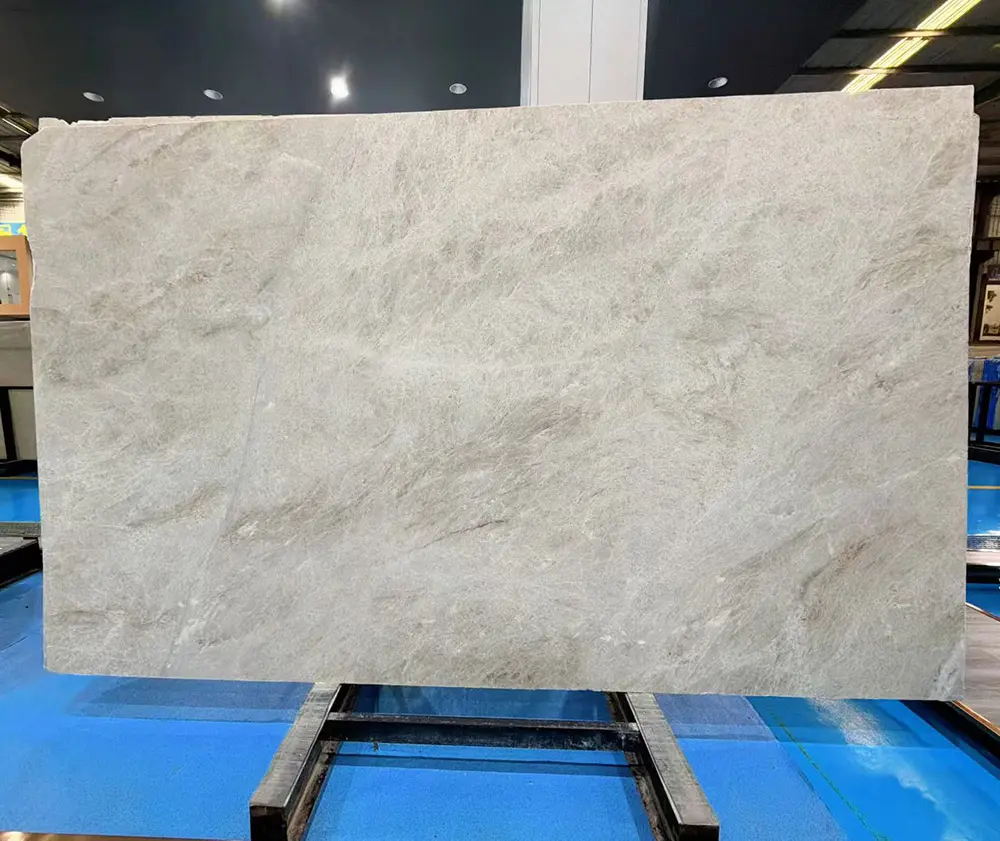
The Ultimate Culinary Surface: Taj Mahal Quartzite Countertops and Waterfall Islands
In modern luxury kitchen design, the demand for surfaces that offer both breathtaking beauty and high-performance durability is paramount. Taj Mahal Quartzite perfectly bridges this gap. Characterized by its creamy beige and warm ivory background, gracefully interwoven with soft golden and taupe veining, it provides a sophisticated, neutral palette that complements both contemporary and traditional cabinetry. Unlike calcareous marbles which easily etch from lemon juice or wine, Taj Mahal is a true, highly metamorphosed quartzite, ensuring your culinary workspace remains pristine decade after decade.
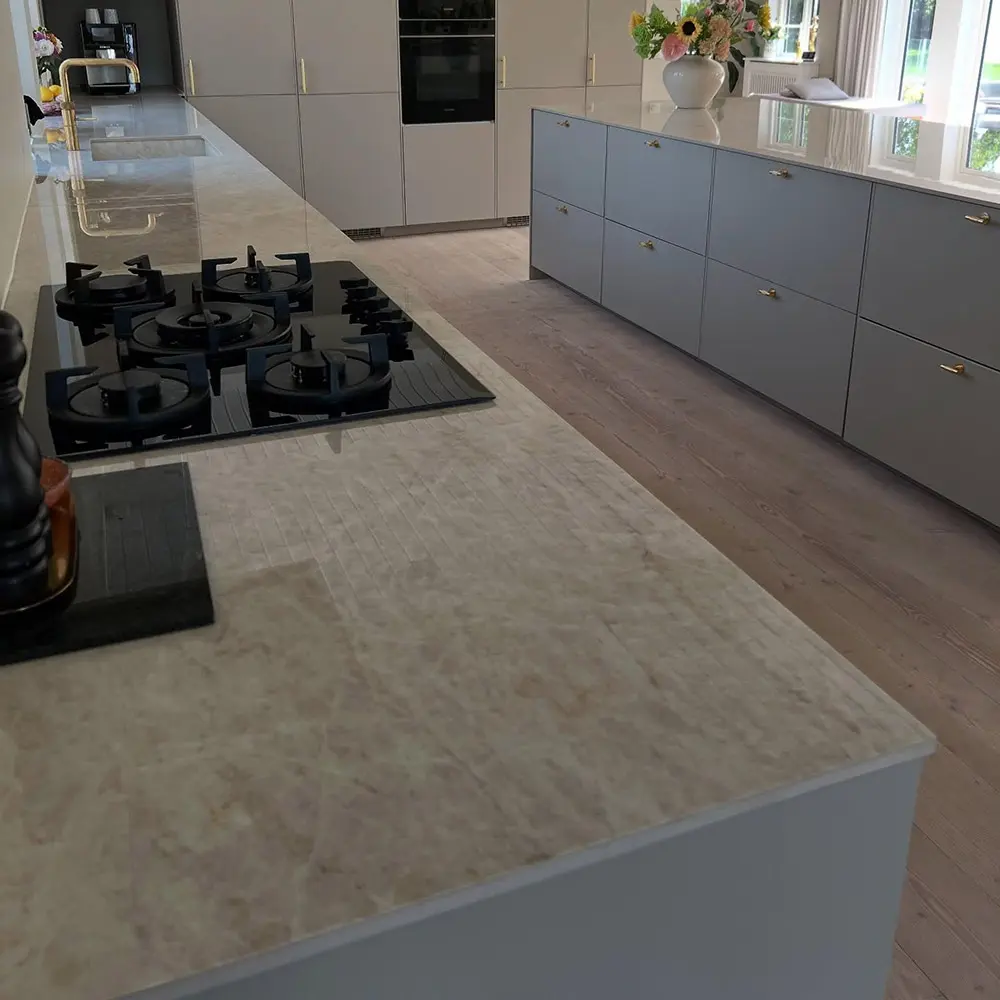
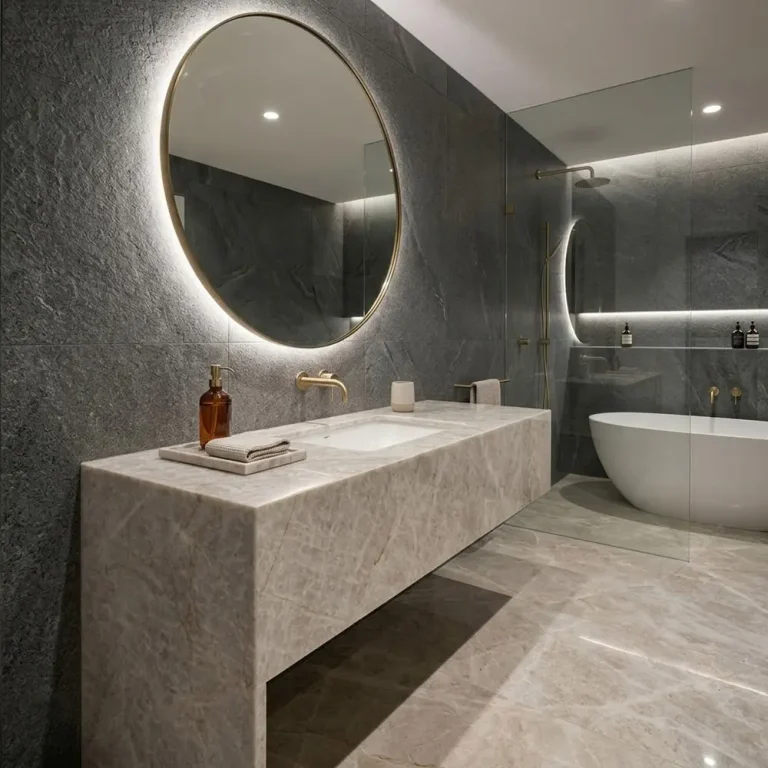
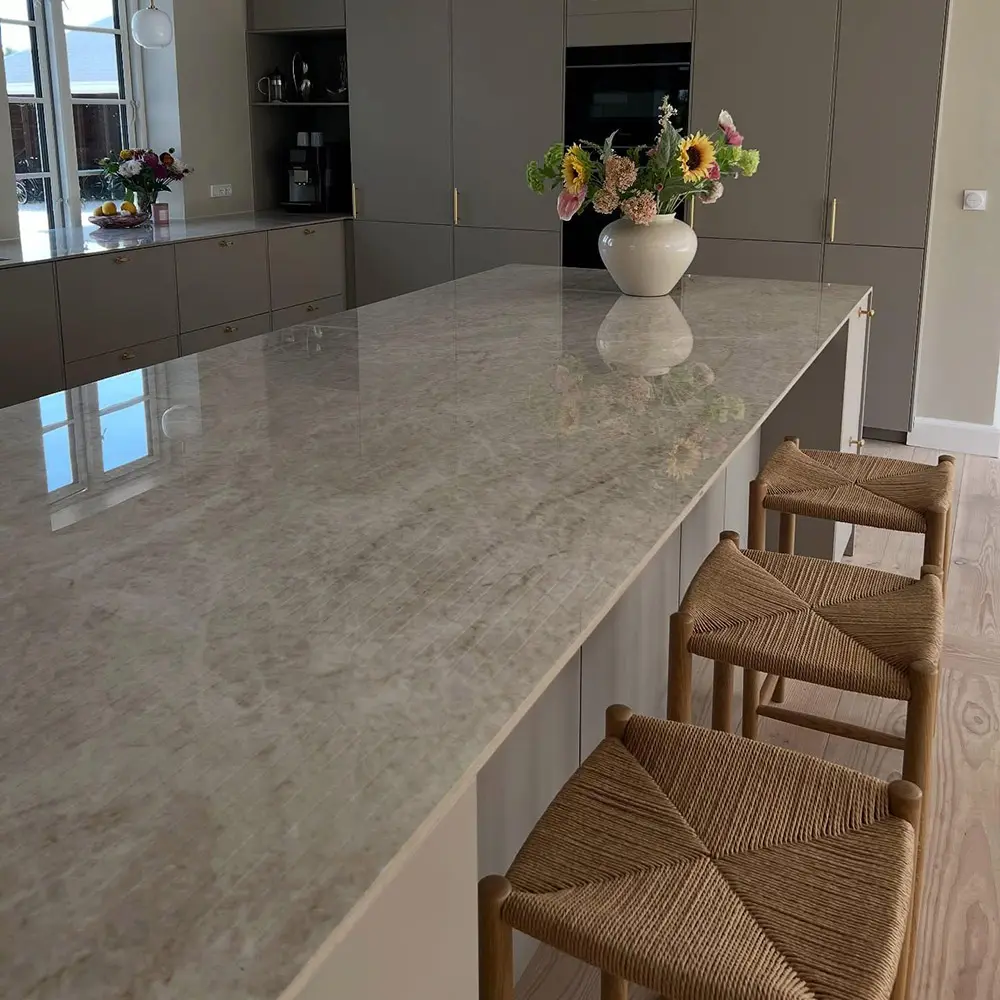
Taj Mahal Quartzite Application: Kitchen Countertop with Integrated Cooktop
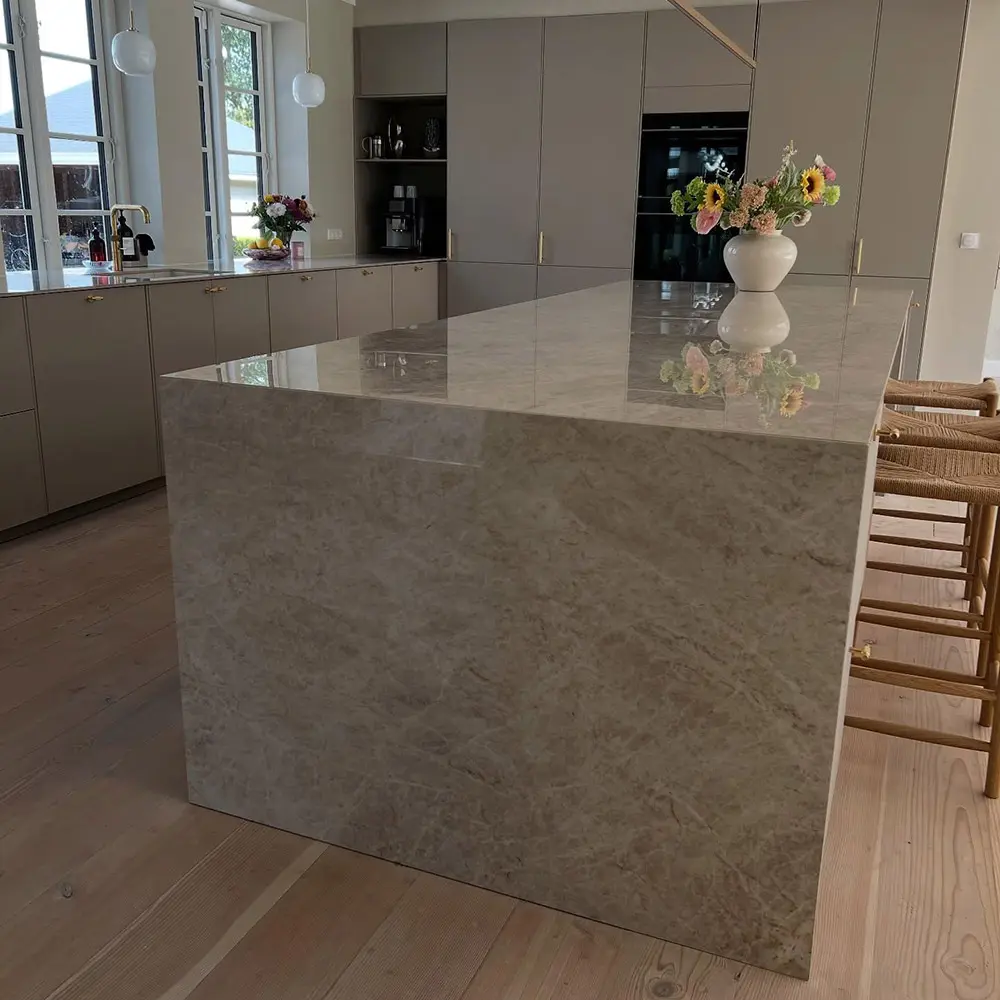
Architectural Impact: The Waterfall Edge Island
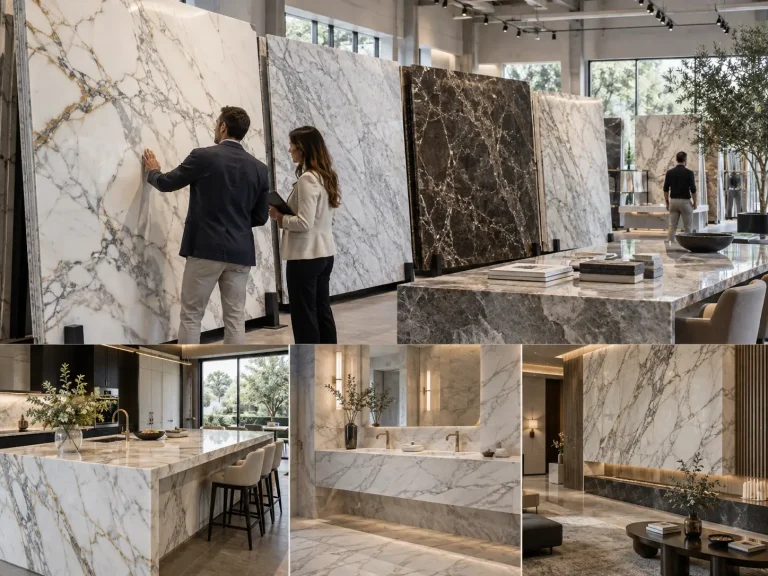
The true majesty of Taj Mahal Quartzite is realized in large-scale applications, particularly Waterfall Islands. By extending the countertop material vertically down the sides of the cabinetry to the floor, designers create a monolithic, sculptural centerpiece. Because Taj Mahal features distinct, flowing directional veins, continuous vein-matching across the horizontal-to-vertical transition is critical. This technique transforms a functional kitchen island into a unified block of natural art, elevating the entire architectural footprint of the space.
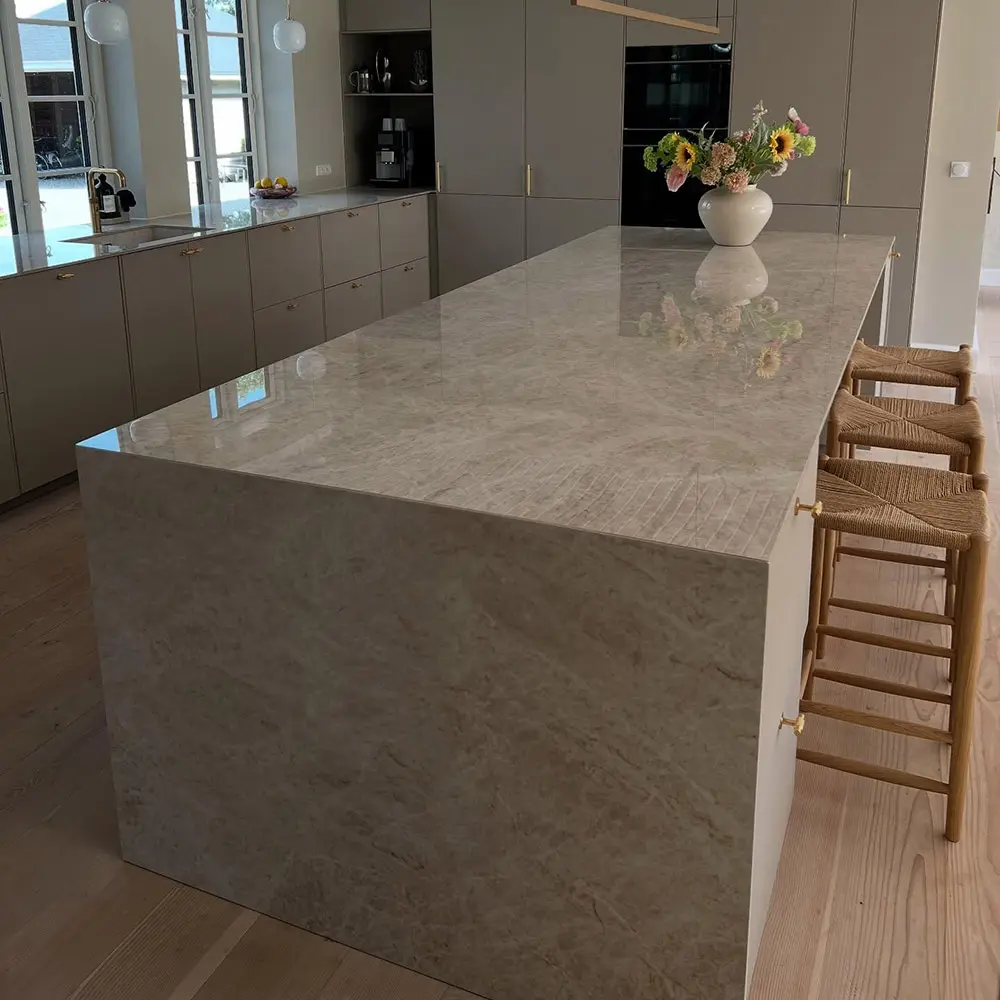
Taj Mahal Quartzite Application: Seamless Mitered Waterfall Edge Island
Technical and Specifications
| Specification | Details |
|---|---|
| Material | 100% Genuine Natural Quartzite (Sourced from Brazil) |
| Visual Profile | Cream/Ivory Base with Warm Gold, Taupe, and Brown Veining |
| Durability (Mohs) | 7.0 (Highly resistant to scratching, heat, and acid etching) |
| Fabrication Capabilities | Custom Countertops, Waterfall Islands, Full-Height Backsplashes |
| Standard Thickness | 20mm (3/4″) or 30mm (1 1/4″) |
Engineer-to-Engineer (E2E): Mitered Joints & Continuous Veining
Critical Considerations for High-End Fabrication
Precision CNC Miter Cutting: To achieve an invisible seam on a waterfall drop edge, Caron Stone utilizes 5-axis CNC bridge saws with specialized, continuous-rim diamond blades designed specifically for quartzite. We cut the top and the drop piece at exact 45-degree angles at a slowed feed rate to prevent micro-fractures in the crystalline structure.
Digital Vein Mapping: Before a single cut is made, our drafting team uses high-resolution digital slab mapping to plan the cuts. This ensures the natural golden veins flow continuously and seamlessly from the horizontal countertop down the vertical waterfall drop, creating the illusion of a single, solid carved block.
Knife-Grade Epoxy Seaming: The mitered edges are bonded using UV-stable, knife-grade epoxy resins that are custom-tinted in our factory to perfectly match the creamy beige background of the Taj Mahal. Once clamped, cured, and hand-polished, the structural seam becomes virtually undetectable to the touch and eye.
Technical & Geological References
For interior designers, architects, and contractors specifying genuine quartzite for heavy-use culinary environments, we recommend referencing these authoritative industry standards:
- Understand the geological metamorphic process that gives Quartzite its extreme durability on Wikipedia.
- Review official stone fabrication tolerances, joint standards, and care guidelines at the Natural Stone Institute (NSI).
FAQ
Taj Mahal is 100% genuine quartzite. Unlike heavily marketed “soft quartzites” (which are often dolomitic marbles), Taj Mahal possesses a high concentration of quartz crystals, giving it true Mohs 7 hardness and absolute resistance to acid etching.
No. Because it lacks calcium carbonate, acidic kitchen liquids like citrus juice, vinegar, and tomato sauce will not etch or dull the polished surface of a genuine Taj Mahal Quartzite countertop.3. How do you create the seamless look on the waterfall island?
We use a fabrication technique called a mitered edge. The horizontal and vertical pieces are cut at 45-degree angles and joined with color-matched epoxy. We also utilize digital layout software to ensure the veins match perfectly across the fold.
4. Can you pre-fabricate the countertops before shipping?
Yes. As a direct manufacturer, Caron Stone can fully fabricate your kitchen layouts—including sink cutouts, edge profiling, and mitered island drops—based on your CAD drawings, shipping ready-to-install pieces to your project site.
5. Is Taj Mahal Quartzite heat resistant?
Yes, it is highly heat resistant. You can typically place hot pots and pans directly onto the surface without fear of thermal shock or melting, unlike artificial quartz countertops.
6. Does Taj Mahal require sealing?
While genuine quartzite is highly dense and less porous than granite, we still professionally apply a premium penetrating stone sealer at our factory to provide maximum protection against oil-based stains. Re-sealing every 1-2 years is recommended for optimal performance.
7. What finishes are available for countertops?
A high-gloss Polished finish is the most popular, as it highlights the depth of the veins and is easiest to clean. However, a Honed (matte) or Leathered finish is also available for a softer, more tactile aesthetic.
8. How are delicate pre-fabricated islands shipped safely?
Pre-fabricated pieces, especially those with mitered edges or sink cutouts, are heavily reinforced with steel backing rods and packaged in custom-built, heavily padded wooden crates to ensure zero breakage during international ocean freight.