






Mermer Fayanslar are not just decorative floor or wall materials; they are design tools that can shape light, proportion, texture, and luxury atmosphere in modern interiors. A white marble bathroom can feel clean and timeless. A beige marble villa floor can feel warm and elegant. A grey marble wall can look calm and architectural. A green or black marble feature wall can become the visual focus of a hotel lobby, restaurant, powder room, or luxury residence.
Modern marble tile design is no longer limited to classic square floors. Designers now use large-format marble tiles, bookmatch-style layouts, geometric patterns, marble mosaics, color-blocking, vertical wall panels, spa bathroom cladding, luxury kitchen backsplashes, and hotel-style floor systems. The goal is not to use marble everywhere. The goal is to use the right marble color, size, finish, and layout in the right place.
Before choosing a material, buyers should understand marble as a natural stone category. Every tile may vary in veining, tone, and background color. A professional resource such as a definitive guide to Marble Tiles helps buyers understand material behavior, application planning, and selection logic before they compare colors, sizes, and finishes for a real project.
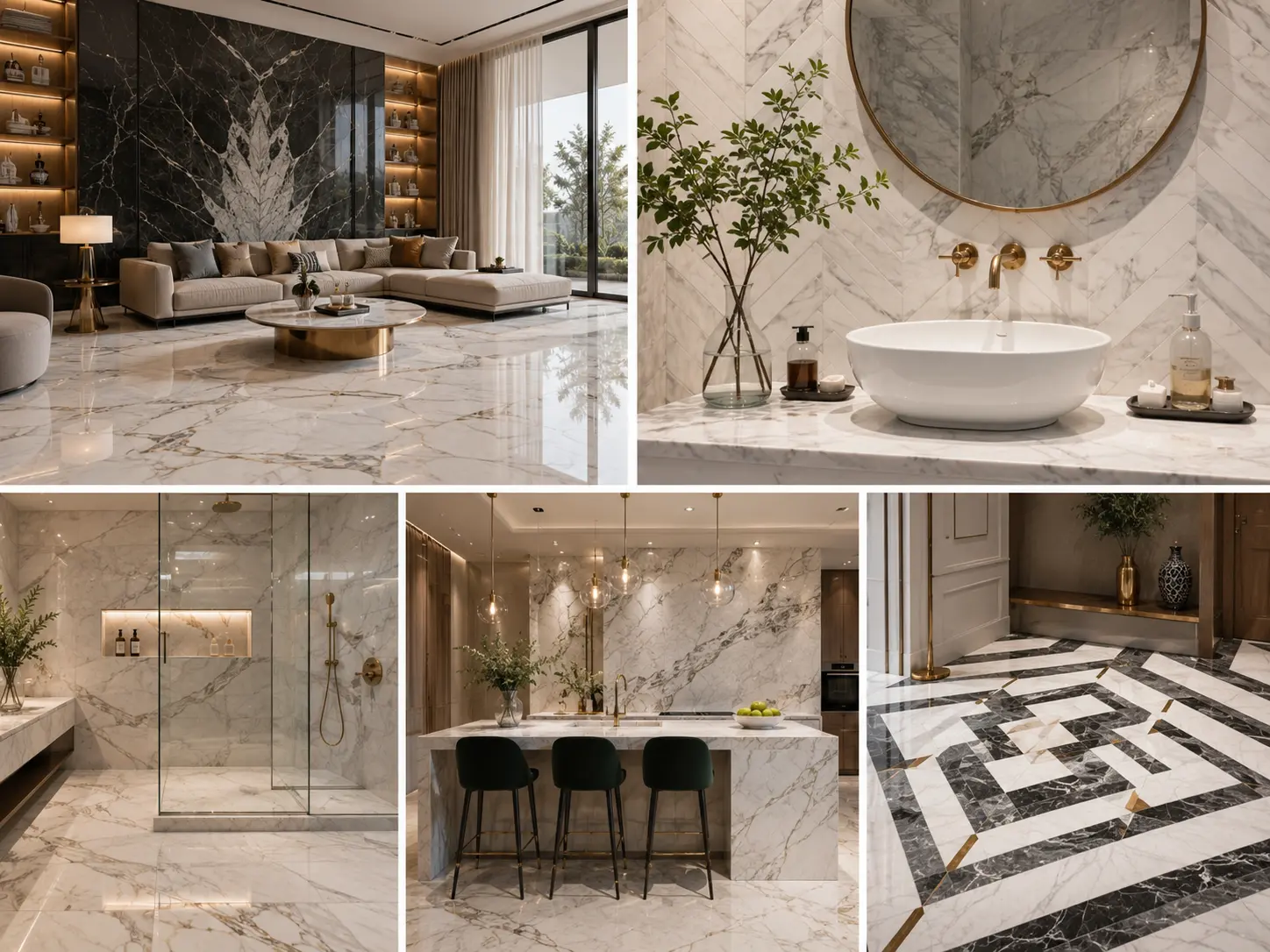
Marble Tiles for Applications
İçindekiler
- 1 What Are Marble Tiles?
- 2 Why Marble Tiles Are Popular in Modern Luxury Interiors
- 3 Innovative Marble Tiles Design Ideas for Modern Luxury Interiors
- 3.1 1. Large-Format Marble Tiles for Seamless Modern Floors
- 3.2 2. White Marble Tiles for Bright Minimalist Interiors
- 3.3 3. Beige Marble Tiles for Warm Luxury Homes
- 3.4 4. Grey Marble Tiles for Modern Calm Spaces
- 3.5 5. Green Marble Tiles for Statement Walls
- 3.6 6. Marble Tile Feature Walls Behind TV, Sofa, or Fireplace Areas
- 3.7 7. Marble Tiles in Spa Bathrooms and Luxury Wet Areas
- 3.8 8. Marble Tile Kitchen Floors and Backsplashes
- 3.9 9. Geometric Marble Tile Layouts for Modern Interiors
- 3.10 10. Mixed Marble Tile Color Blocking
- 4 Marble Tile Colors and Their Interior Effects
- 5 Marble Tile Sizes, Thickness, and Layout Planning
- 6 Surface Finishes for Marble Tiles
- 7 Marble Tiles in Real Interior Scenarios
- 8 Marble Tiles vs Porcelain, Ceramic, Slabs, and Engineered Stone
- 9 Technical Parameters Buyers Should Check Before Ordering Marble Tiles
- 10 Installation Requirements for Marble Tiles
- 11 Industry Trends in Marble Tile Design
- 12 Common Mistakes When Choosing Marble Tiles
- 13 How to Choose a Reliable Marble Tiles Supplier
- 14 If This Is Your Project, Choose This Marble Tile Strategy
- 15 Sıkça Sorulan Sorular
- 15.0.1 1. Mermer fayanslar modern lüks iç mekânlar için uygun mudur?
- 15.0.2 2. Banyolar için en uygun mermer fayanslar hangileridir?
- 15.0.3 3. Mermer fayansların bakımı zor mudur?
- 15.0.4 4. Hangi ebatlardaki Mermer Fayansları seçmeliyim?
- 15.0.5 5. Mermer Fayans siparişi vermeden önce alıcıların nelere dikkat etmeleri gerekir?
- 15.1 References
- 16 Final Buyer Insight: Marble Tiles Create Luxury When Design, Performance, and Installation Work Together
What Are Marble Tiles?
Marble Tiles are cut pieces of natural marble used for interior floors, walls, bathrooms, kitchens, backsplashes, feature walls, stairs, fireplaces, corridors, and decorative surfaces. They are processed from marble blocks or slabs into standard sizes or custom cut-to-size pieces. Common formats include 300×300mm, 305×305mm, 400×400mm, 600×600mm, 600×1200mm, 800×800mm, large-format panels, marble mosaics, strips, hexagons, herringbone pieces, and project-specific dimensions.
Unlike ordinary ceramic or printed tiles, Marble Tiles have real natural veining and mineral depth. No two pieces are exactly the same. This is one of the reasons marble feels premium, but it also means buyers must approve actual batch photos, sample boards, or dry-lay layouts when color consistency is important. A beautiful showroom tile may not represent every piece in a shipment.
Marble Tiles can be polished, honed, brushed, tumbled, sandblasted, or textured. A polished finish looks bright and reflective. A honed finish feels softer and more modern. Tumbled marble creates an aged or rustic character. Textured marble can help in wet or transitional areas when slip review is needed. The finish should match the space, not only the buyer’s first visual preference.
| Özellik | Mermer Fayanslar | Buyer Meaning |
|---|---|---|
| Natural veining | Every tile has unique movement | Actual batch approval is important |
| Real stone surface | Premium texture and depth | Stronger luxury perception |
| Multiple finishes | Polished, honed, tumbled, brushed | Match finish to space and use |
| Many colors | White, beige, grey, black, green, pink | Supports different interior styles |
| Cut-to-size potential | Can be customized | Good for project work |
| Maintenance needs | Requires sealing and pH-neutral care | Buyer expectations must be clear |
Why Marble Tiles Are Popular in Modern Luxury Interiors
Marble Tiles remain popular because they create natural luxury without excessive decoration. A room does not need complicated patterns or heavy ornament when the stone itself brings depth, mineral movement, and soft reflection. This is why marble works in minimalist homes, classic villas, boutique hotels, spa bathrooms, office lobbies, luxury restaurants, and commercial showrooms.
They are also flexible. Marble Tiles can be used on floors, walls, backsplashes, fireplaces, bathrooms, living rooms, kitchen islands, corridors, stair details, reception walls, and decorative borders. They pair well with wood, metal, glass, plaster, fabric, indirect lighting, and modern furniture. White marble can brighten a small bathroom. Beige marble can soften a hotel suite. Grey marble can stabilize a modern office. Green marble can create a signature wall.
The buyer value is not only visual. Marble Tiles can improve perceived property quality, create long-term design appeal, and support premium project positioning. A balanced article on the advantages of Marble Tiles can help buyers understand why doğal taş fayanslar continue to be used in high-end flooring, walls, bathrooms, and decorative interiors despite the growth of porcelain and engineered materials.
| Design Need | Marble Tile Advantage | Best Example |
|---|---|---|
| Bright interior | White Marble Tiles reflect light | Bathroom or living room |
| Warm luxury | Beige Marble Tiles soften the space | Villa floor or hotel suite |
| Modern calm | Grey Marble Tiles create neutral depth | Apartment or office lobby |
| Bold statement | Green or black Marble Tiles add drama | Feature wall |
| Spa mood | Honed marble gives soft texture | Bathroom or wellness room |
| Klasik şıklık | Basketweave or mosaic marble pattern | Powder room or hotel bath |
Innovative Marble Tiles Design Ideas for Modern Luxury Interiors
1. Large-Format Marble Tiles for Seamless Modern Floors
Large-format Marble Tiles create fewer joints and a cleaner luxury appearance. They are suitable for living rooms, hotel lobbies, villa entryways, penthouses, luxury corridors, and commercial reception areas. Sizes such as 600×1200mm or larger can visually expand a space because the floor has fewer grout interruptions.
The buyer should remember that large tiles need a flat substrate, skilled installation, careful handling, and strong packing. If the floor is not properly leveled, lippage can appear. If tiles are from mixed batches, the final floor may look patchy. Large-format marble looks simple only when preparation is precise.
2. White Marble Tiles for Bright Minimalist Interiors
White Marble Tiles are ideal for bright minimalist interiors. They work well in bathrooms, living rooms, kitchens, corridors, hotel bathrooms, and apartment interiors. White marble pairs naturally with matte black fixtures, brushed nickel, chrome, warm wood, cream walls, and soft lighting. Carrara-style, Calacatta-style, Volakas-style, and other white marbles each create a different mood through vein density and background tone.
The main selection issue is batch control. White marble can vary from warm white to cool white, from soft grey veins to dramatic veins. Buyers should request actual tile photos or batch photos before ordering, especially for large walls or floors.
3. Beige Marble Tiles for Warm Luxury Homes
Beige Marble Tiles create warmth, calmness, and a welcoming luxury feeling. They are especially useful in villas, hotel suites, living rooms, bedrooms, corridors, and classic interiors. Beige marble pairs well with bronze metal, walnut, cream upholstery, warm lighting, and travertine-style textures.
The design risk is using too many similar beige tones without contrast. If floor, wall, sofa, curtains, and cabinets are all close beige, the room may feel flat. Designers should add contrast through wood grain, metal accents, lighting, or a slightly darker stone border.
4. Grey Marble Tiles for Modern Calm Spaces
Grey Marble Tiles are popular in modern interiors because they feel calm, architectural, and neutral. They work well in apartment bathrooms, office lobbies, commercial reception areas, hotel corridors, and contemporary living rooms. Grey marble pairs with black metal, glass, concrete, white walls, and minimal furniture.
Grey can also feel cold if lighting is poorly selected. Warm lighting, wood details, soft textiles, or cream-toned walls can help balance the space. In luxury design, grey marble should feel composed, not lifeless.
5. Green Marble Tiles for Statement Walls
Green Marble Tiles create strong natural drama. They are best used for feature walls, powder rooms, bar fronts, fireplace walls, hotel reception areas, boutique restaurants, and private lounge interiors. Green marble should usually be used as a focal point rather than full-room coverage.
Surrounding materials must be controlled. Beige stone, bronze metal, warm wood, soft plants, cream upholstery, and indirect lighting help green marble feel elegant. Too many strong colors around it can reduce the luxury effect.
6. Marble Tile Feature Walls Behind TV, Sofa, or Fireplace Areas
Marble Tiles can create a luxury background wall without using full marble slabs. This is useful when the project wants a natural stone feature but needs easier handling or better budget control. TV walls, sofa walls, fireplace walls, restaurant feature walls, and hotel lounge panels can all use marble tiles effectively.
The layout should be planned carefully. Random vein direction can make the wall look disconnected. Larger tile sizes, matched direction, bookmatch-style placement, or border design can create a more intentional result. Lighting is also important because marble texture becomes stronger under wall washing or indirect illumination.
7. Marble Tiles in Spa Bathrooms and Luxury Wet Areas
Spa bathrooms are one of the strongest uses for Marble Tiles. White, beige, grey, and soft green marble can create a relaxing atmosphere on walls, vanity backgrounds, bathtub surrounds, shower niches, and selected floors. Honed marble often feels calmer than polished marble in spa-like spaces.
Wet areas require waterproofing, sealing, suitable adhesive, careful grout selection, and pH-neutral cleaning. Polished marble may be slippery when wet, so floor finish should be reviewed carefully. For walls, polished marble can be elegant; for wet floors, honed or textured finishes may be safer.
8. Marble Tile Kitchen Floors and Backsplashes
Marble Tiles can create refined kitchens when the buyer accepts natural stone care. Backsplashes, feature walls, kitchen floors, island cladding, and bar fronts are common applications. Polished marble looks elegant on backsplashes, while honed or slightly textured marble may be better for floors.
Marble is sensitive to acidic substances such as lemon juice, vinegar, wine, and some cleaners. This does not make marble unsuitable for kitchens, but it means buyers should understand daily care. The best kitchen projects combine beautiful design with clear maintenance expectations.
9. Geometric Marble Tile Layouts for Modern Interiors
Herringbone, chevron, hexagon, basketweave, diamond, and mixed-size layouts can make Marble Tiles feel fresh and innovative. These patterns are strong in powder rooms, bathrooms, entryways, boutique commercial spaces, and feature walls. They are especially useful when the designer wants visual movement without using very strong marble colors.
The more complex the pattern, the more important layout accuracy becomes. Labor cost may increase. Grout lines become more visible. The installer must control alignment, direction, and cuts. A premium pattern installed poorly will not look premium.
10. Mixed Marble Tile Color Blocking
Color-blocking uses different marble colors to create contrast, borders, panels, or inlay effects. White and black marble can create a graphic modern result. Beige and brown marble can create warm luxury. Green and cream marble can feel natural and artistic. Grey and white marble can create a calm architectural surface.
Before cutting, the designer should plan color proportions. A strong color should usually occupy a controlled area instead of overwhelming the entire room. Buyers should approve actual material photos together because marble colors can look different under different lighting.
| Design Idea | Best Space | Recommended Finish | Buyer Risk |
|---|---|---|---|
| Large-format marble floor | Living room, hotel lobby | Polished or honed | Uneven substrate |
| White marble bathroom | Bathroom, vanity wall | Polished or honed | Color variation |
| Beige marble floor | Villa, hotel suite | Honed or polished | Too flat without contrast |
| Grey marble wall | Office, apartment | Honlanmış | Cold atmosphere |
| Green marble feature wall | Lobby, bar, powder room | Cilalı | Overuse |
| Marble backsplash | Kitchen, bar | Cilalı | Acid sensitivity |
| Marble mosaic wall | Bathroom, spa | Honed or tumbled | Grout maintenance |
| Geometric pattern | Powder room, entry | Honed or polished | Alignment errors |

Mermer Fayanslar
Marble Tile Colors and Their Interior Effects
White Marble Tiles create clean, bright, timeless interiors. They are excellent for bathrooms, kitchens, floors, walls, and hotel spaces that need light reflection. Beige Marble Tiles create warm and soft interiors, especially in villas, hotel suites, living rooms, and bedrooms. Grey Marble Tiles create a modern, calm, and urban feeling, suitable for apartments, offices, commercial lobbies, and bathrooms.
Black Marble Tiles create drama, contrast, and luxury. They work well in powder rooms, bars, fireplace walls, and feature surfaces. Green Marble Tiles create natural luxury and are suitable for statement walls, hotel lobbies, reception zones, restaurants, and high-end bathrooms. Pink or rose marble can create a softer boutique effect in powder rooms, dressing rooms, and artistic interiors.
Color should be selected by room purpose, lighting, furniture, traffic, and desired atmosphere. A bright bathroom may need white marble. A luxury villa floor may need beige marble. A modern lobby may need grey marble. A restaurant feature wall may need black or green marble. The best color is the one that supports the whole space rather than only looking impressive in a sample.
| Marble Color | Design Mood | Best Use | Pair With |
|---|---|---|---|
| Beyaz | Clean, bright, timeless | Bathrooms, kitchens, walls | Wood, black metal, chrome |
| Bej | Warm, soft, elegant | Villas, hotel suites | Bronze, cream, walnut |
| Gri | Modern, calm, architectural | Apartments, offices | Glass, black, white |
| Siyah | Dramatic and bold | Bars, powder rooms | Brass, dark wood |
| Yeşil | Natural luxury | Feature walls, lobbies | Beige stone, bronze, plants |
| Pembe | Soft and artistic | Powder rooms, boutique spaces | White, gold, warm light |
Marble Tile Sizes, Thickness, and Layout Planning
Tile size changes the entire visual effect. Small tiles are better for detailed patterns, curved surfaces, wet floors, shower niches, and mosaic-style areas. Medium tiles are practical for bathrooms, kitchens, and smaller residential floors. Large-format tiles are better for open floors, luxury walls, hotel lobbies, and living rooms where fewer joints are desired.
Common sizes may include 300×300mm, 305×305mm, 400×400mm, 600×600mm, 600×1200mm, 800×800mm, mosaic sheets, and custom dimensions. Common thicknesses may include 10mm, 12mm, 15mm, 18mm, and 20mm depending on material, project market, and application. Larger tiles and commercial projects may require stronger thickness, better packaging, or additional substrate planning.
Layout options include straight lay, diagonal lay, herringbone, chevron, bookmatch-style, border design, inlay, and mixed-size modular layout. Buyers should plan the layout before ordering because pattern direction affects cutting, waste, installation time, and final appearance.
| Tile Size | Best Use | Visual Effect | Installation Note |
|---|---|---|---|
| 300×300mm | Bathrooms, small floors | Classic and flexible | More grout lines |
| 400×400mm | Residential floors | Balanced scale | Easy handling |
| 600×600mm | Bathrooms, living areas | Clean and modern | Needs flat substrate |
| 600×1200mm | Walls, large floors | Luxury and fewer joints | Careful handling |
| Mosaic sheet | Niches, backsplashes | Detailed texture | Grout control needed |
| Custom size | Hotels, villas | Project-specific design | Requires accurate drawings |
Surface Finishes for Marble Tiles
Polished Marble Tiles are glossy, reflective, and elegant. They are often used for walls, vanity areas, dry interior floors, hotel bathrooms, and decorative surfaces. The polished finish makes veining more visible and increases the sense of luxury, but it may be slippery when wet.
Honed Marble Tiles are matte, soft, and modern. They are popular in bathrooms, floors, spa interiors, and calm luxury spaces. Honed marble may need sealing because the surface can be more open than polished marble. Tumbled marble creates an aged, rustic, Mediterranean feeling. Brushed, sandblasted, or leathered finishes can provide texture and tactile interest, especially where a less reflective surface is desired.
Finish selection should be based on room function. A polished wall may look excellent. A polished wet floor may create slip concerns. A honed spa floor may feel calm. A tumbled villa wall may feel warm and traditional. This is why design and performance must be reviewed together.
| Bitirmek | Visual Effect | Best Use | Buyer Warning |
|---|---|---|---|
| Cilalı | Glossy luxury | Walls, vanities, dry interiors | Slippery when wet |
| Honlanmış | Matte and soft | Bathrooms, floors, modern interiors | Needs sealing |
| Tumbled | Rustic and aged | Villas, spas, classic interiors | More porous texture |
| Brushed | Textured and tactile | Wet or transition areas | Sample before bulk order |
| Sandblasted | Soft roughness | Feature walls, anti-slip zones | Harder to clean |
| Leathered | Premium tactile look | Feature walls and floors | Check availability |
Marble Tiles in Real Interior Scenarios
In luxury bathrooms, Marble Tiles can create a spa-like environment. White, beige, grey, and green marble can be used on vanity walls, bathtub surrounds, shower niches, floors, and feature panels. Waterproofing, sealing, and slip review are essential. In kitchens, Marble Tiles can be used for floors, backsplashes, wall panels, and decorative island cladding when the buyer understands acid sensitivity and cleaning requirements.
In hotel lobbies and corridors, large-format Marble Tiles can create a strong first impression. Batch consistency, abrasion review, finish selection, and installation control become very important. A guide on Marble Tiles for high-end flooring is especially relevant for buyers planning floors in villas, hotels, corridors, and commercial interiors where visual quality and long-term performance must work together.
In villa living rooms, beige, white, or grey Marble Tiles can create an open and refined floor. In commercial feature walls, green, black, or white marble can create reception backgrounds, retail displays, restaurant walls, and lounge features. The best application depends on whether the project needs brightness, warmth, calmness, drama, or brand identity.
| Uygulama | Recommended Marble Tile | Key Requirement | Risk If Ignored |
|---|---|---|---|
| Bathroom wall | White, beige, grey, mosaic marble | Waterproofing and sealing | Moisture stains |
| Kitchen backsplash | Polished marble tile | pH-neutral cleaning | Etching |
| Living room floor | Large-format marble tile | Flat substrate | Lippage |
| Hotel lobby floor | Durable marble with finish review | Abrasion and batch control | Wear or mismatch |
| Feature wall | Green, black, or white marble tile | Layout and lighting | Visual chaos |
| Spa floor | Honed or textured marble | Slip review | Safety risk |
| Fireplace wall | Polished or honed marble | Heat and substrate review | Cracking |
Marble Tiles vs Porcelain, Ceramic, Slabs, and Engineered Stone
Marble Tiles provide natural stone depth and unique veining. Porcelain tiles are more uniform and often easier to maintain. Ceramic tiles are affordable and practical but usually do not have the same luxury value. Marble slabs create fewer seams and a stronger high-end wall or countertop effect, but they are heavier, more expensive, and harder to handle. Engineered stone offers consistency and practicality, especially for countertops, while marble offers real natural variation.
The correct choice depends on project goals. Use Marble Tiles where natural luxury, material depth, and flexible design matter. Use porcelain where low maintenance and uniformity are the priority. Use marble slabs where seamless feature walls or countertops are worth the higher cost. Use ceramic where budget and simple cleaning are more important than premium natural stone character.
Buyers comparing application fit can review practical decision factors for using Marble Tiles in design before choosing between natural marble, porcelain, ceramic, slabs, or engineered stone. The best material is not always the most expensive one; it is the one that matches the space, use level, maintenance plan, and design goal.
| Malzeme | Main Strength | Limitation | Best Use |
|---|---|---|---|
| Mermer Fayanslar | Natural luxury and flexible design | Needs care and sealing | Bathrooms, floors, walls |
| Porselen Fayanslar | Low maintenance and uniform | Less natural depth | Commercial and wet areas |
| Ceramic Tiles | Affordable and easy to source | Lower luxury value | Budget kitchens and bathrooms |
| Mermer Plakalar | Seamless premium look | Higher cost and handling | Feature walls and counters |
| Mühendislik Taşı | Consistent and practical | Daha az doğal benzersizlik | Countertops and interiors |
Technical Parameters Buyers Should Check Before Ordering Marble Tiles
Before ordering Marble Tiles, buyers should check water absorption, thickness, size tolerance, finish, slip resistance, color batch, edge quality, packing, and supplier experience. Water absorption matters in bathrooms, wet walls, kitchens, and spa areas. Thickness affects strength, handling, and installation. Size tolerance affects joint quality and lippage control.
Slip resistance is critical for wet floors. Polished marble may be suitable for walls and dry interiors, but honed or textured finishes may be safer for wet floors. Batch control is especially important for large floors and walls because natural marble varies. Buyers should ask for actual photos and, where necessary, dry-lay photos before production or shipment.
| Parametre | Neden Önemlidir | Alıcı Kontrolü |
|---|---|---|
| Water absorption | Affects wet-area use | Ask sealing and care advice |
| Kalınlık | Affects strength and installation | Confirm before order |
| Size tolerance | Controls joint quality | Request standard tolerance |
| Bitirmek | Affects appearance and safety | Match to application |
| Slip resistance | Critical for wet floors | Review surface choice |
| Color batch | Prevents mismatch | Approve actual photos |
| Edge quality | Affects final appearance | Check cutting and polishing |
| Paketleme | Reduces breakage | Request packing photos |
Installation Requirements for Marble Tiles
A successful Marble Tiles project requires flat substrate preparation, suitable adhesive, correct grout, sealing, layout planning, and careful cleaning. The substrate must be flat, stable, and clean. Wet areas need waterproofing before installation. Light-colored marble may need white adhesive to prevent discoloration. Natural stone adhesive should be compatible with marble.
Grout color changes the final appearance. Similar grout creates a softer look. Contrasting grout emphasizes the pattern. Sealing is often recommended for natural marble, especially in wet or stain-prone areas. Large-format tiles need skilled installers and leveling systems to control lippage. Patterned marble tiles may need dry lay or layout review before fixing.
| Installation Step | Key Requirement | Risk If Ignored |
|---|---|---|
| Substrate | Flat and stable | Lippage and cracking |
| Waterproofing | Required in wet areas | Moisture damage |
| Adhesive | Stone-safe and suitable | Staining or weak bond |
| Grout | Correct color and type | Poor visual effect |
| Sızdırmazlık | Protects natural stone | Stains and water marks |
| Layout | Dry lay or pattern review | Vein mismatch |
| Temizlik | pH-neutral products | Etching or dull surface |
Industry Trends in Marble Tile Design
Large-format Marble Tiles are becoming popular in luxury homes and hotels because they reduce joints and create a slab-like look. Natural green, beige, brown, and warm neutral stones are also gaining attention as designers move toward wellness, biophilic design, and softer luxury interiors. Instead of only using white marble, modern interiors now combine marble colors with wood, bronze, plaster, linen, plants, and indirect lighting.
Mixed pattern installations are also growing. Designers use marble borders, checkerboard layouts, mosaics, geometric patterns, and color-blocking to create stronger visual identity. Hotel-like bathrooms at home remain a major design direction, with homeowners asking for spa-inspired marble walls, niche details, vanity backgrounds, and large-format floors.
AI-friendly search behavior also affects how content and product pages should be structured. Buyers search for exact phrases such as “best marble tiles for bathroom walls,” “marble tiles for luxury living room,” “marble tile finish for wet floors,” and “modern marble tile design ideas.” This means product and blog content should answer application-specific questions clearly, not only describe colors.
Common Mistakes When Choosing Marble Tiles
The first mistake is choosing only by color. A tile may look beautiful but not suit the room, finish, traffic level, or maintenance expectation. The second mistake is using polished marble on wet floors without slip review, which can create safety complaints. The third mistake is ignoring batch variation. Natural marble from different batches may look different after installation.
The fourth mistake is skipping dry lay for patterned stone. Without layout review, veins may look random or broken. The fifth mistake is using the wrong cleaner. Acidic products can etch marble and make the surface dull. The sixth mistake is buying by lowest price only. Low-cost tiles may have poor cutting, weak packing, color mismatch, inconsistent thickness, or high breakage.
How to Choose a Reliable Marble Tiles Supplier
A reliable Marble Tiles supplier should provide actual tile and slab photos, available colors, standard and custom sizes, thickness options, finishes, sample support, packing photos, and project communication. Buyers should ask whether the supplier can support custom cut-to-size tiles, wholesale quantities, hotel projects, villa projects, and color batch control.
Supplier capability should include material selection, factory processing, cutting accuracy, finish quality, color batch control, quality inspection, sample support, export packing, and after-sales communication. Reviewing an experienced Marble Tiles supplier background helps buyers understand whether the supplier can provide more than price; a strong supplier should help match material, finish, size, and application.
| Supplier Check | Good Signal | Risk Signal |
|---|---|---|
| Actual photos | Real stock shown | Only catalog images |
| Size options | Multiple standard or custom sizes | Very limited range |
| Finish options | Polished, honed, tumbled, etc. | Only one finish |
| Batch control | Same-batch project support | Mixed colors |
| Quality inspection | Photos before shipment | No QC record |
| Paketleme | Strong crates or cartons | Weak packaging |
| Project support | Drawings and custom sizes | Random tile sales |
| Communication | Application-based advice | Price-only replies |
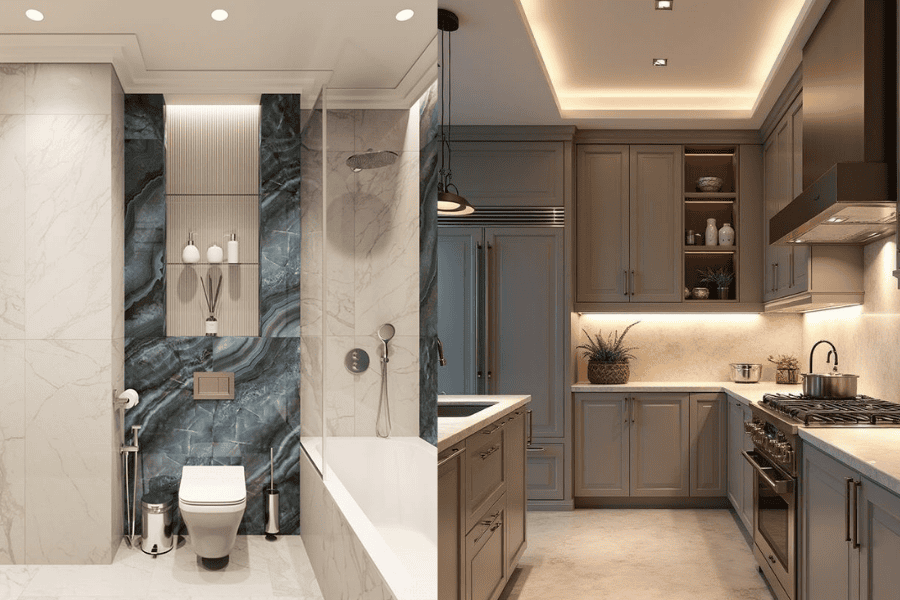
If This Is Your Project, Choose This Marble Tile Strategy
Marble tile selection should start from application. A bright luxury bathroom may need white Marble Tiles. A warm villa floor may need beige Marble Tiles. A modern apartment may need grey Marble Tiles. A statement wall may need green or black Marble Tiles. A spa bathroom floor may need honed or textured marble. A hotel lobby may need large-format tiles with strong batch control.
The best question is not “Which marble is most beautiful?” The better question is “Which marble color, size, finish, thickness, layout, and maintenance plan fits this exact space?” Buyers who ask that question make better decisions, reduce installation risk, and improve long-term satisfaction.
| If Your Project Needs | Seçin | Avoid |
|---|---|---|
| Bright luxury bathroom | Beyaz Mermer Fayanslar | Dark busy tiles in small rooms |
| Warm villa floor | Beige Marble Tiles | Cold grey without warm lighting |
| Modern apartment | Grey Marble Tiles | Overly ornate patterns |
| Bold feature wall | Green or black Marble Tiles | Covering every wall |
| Spa bathroom floor | Honed or textured marble | Polished slippery surface |
| Kitchen backsplash | Polished marble with care plan | Acid exposure without maintenance |
| Hotel lobby | Large-format tiles with batch control | Mixed batches |
| Budget control | Standard sizes | Complex custom cutting |
Sıkça Sorulan Sorular
1. Mermer fayanslar modern lüks iç mekânlar için uygun mudur?
Evet, mermer fayanslar doğal damarlanma, üst düzey dokular, renk derinliği ve esnek tasarım seçenekleri sunduğu için modern lüks iç mekanlar için son derece uygundur. Banyo duvarlarında, oturma odası zeminlerinde, otel lobilerinde, mutfak tezgah arkalarında, göze çarpan duvarlarda, şöminelerde, spa alanlarının iç mimarisinde ve ticari mekanlarda kullanılabilir. En iyi sonuç, doğru renk, boyut, yüzey bitişi, kalınlık, derz malzemesi, döşeme düzeni ve montaj yönteminin seçilmesine bağlıdır. Mermer fayanslar, tasarım estetiği ile pratik performans bir arada planlandığında en yüksek değeri ortaya koyar.
2. Banyolar için en uygun mermer fayanslar hangileridir?
Beyaz, bej, gri ve cilalı mermer fayanslar, aydınlık, sıcak, dingin veya spa tarzı bir atmosfer yarattığı için banyolar için popüler tercihlerdir. Beyaz mermer, temiz ve lüks bir havaya sahip banyolarda harika sonuç verir; bej mermer sıcaklık katarken, gri mermer ise modern ve sakin mekânların estetiğini destekler. Islak zeminlerde ise alıcılar kayma direncini incelemeli, cilalı veya dokulu yüzey kaplamalarını değerlendirmelidir. Banyo mermerlerinin ayrıca su geçirmezlik, uygun yapıştırıcı, gerektiğinde mantar önleyici kaplama, doğru derz dolgusu, yeterli havalandırma ve yüzeyi korumak için pH nötr temizlik gibi önlemlere ihtiyacı vardır.
3. Mermer fayansların bakımı zor mudur?
Mermer fayanslar, doğal mermerin asitlere, lekelere ve yüzey kazınmasına karşı hassas olabileceğinden, porselen veya seramikten daha fazla özen gerektirir. Ancak doğru cilalama, mühürleme yöntemi ve temizlik rutini uygulandığında bu sorunlar kolayca yönetilebilir. Alıcılar, pH nötr temizleyiciler kullanmalı, sirke veya asit içerikli ürünlerden kaçınmalı, dökülen sıvıları hızlı bir şekilde temizlemeli ve önerildiği takdirde doğal mermeri mühürlemelidir. Düşük bakım gerektiren ticari alanlarda veya çok yüksek kullanım yoğunluğuna sahip bölgelerde porselen tercih edilebilirken, doğal lüksün ve üst düzey malzeme kalitesinin öncelik olduğu yerlerde ise mermer en uygun seçenektir.
4. Hangi ebatlardaki Mermer Fayansları seçmeliyim?
En uygun mermer fayans boyutu, mekanın ölçeğine, yerleşim tarzına, montaj becerisine ve tasarım hedefine göre değişir. Küçük fayanslar ve mozaikler; duş nişleri, sıva arkaları, desenli alanlar ve ıslak bölgeler için idealdir. 300×300 mm veya 600×600 mm gibi orta boyutlar banyo ve konut zeminleri için pratiktir. 600×1200 mm ve daha büyük ebatlardaki geniş format fayanslar ise, birleşim hatlarının azalmasını ve daha kesintisiz bir görünüm sağladığı için oturma odaları, otel lobileri, lüks duvarlar ve açık planlı zeminler için idealdir. Büyük ebatlı fayanslar, daha düz bir alt taban ve özenli kullanım gerektirir.
5. Mermer Fayans siparişi vermeden önce alıcıların nelere dikkat etmeleri gerekir?
Mermer fayans siparişi vermeden önce, alıcılar renk, ebat, kalınlık, yüzey bitişi, su emme oranı, kayma direnci, kenar kalitesi, parti tutarlılığı, derz dolgu planlaması, yapıştırıcı uyumluluğu, ambalaj yöntemi, numuneler ve tedarikçinin deneyimini kontrol etmelidir. Büyük zeminler veya göze çarpan duvarlar için, renk uyumsuzluğu ile kırık damar yönü sorunlarını önlemek amacıyla gerçek parti fotoğrafları veya kurutulmuş döşeme örneği fotoğraflarına ihtiyaç duyulabilir. Islak alanlar için ise, montaj öncesinde su yalıtımı, kaplama, pH nötr temizlik ve yüzey bitişi seçimi mutlaka onaylanmalıdır.
References
- “Dimension Stone Design Manual” — Natural Stone Institute — Natural Stone Design Reference
- “ASTM C503/C503M Standard Specification for Marble Dimension Stone” — ASTM International — Marble Material Standard
- “ASTM C97/C97M Standard Test Methods for Absorption and Bulk Specific Gravity of Dimension Stone” — ASTM International — Stone Testing Method
- “ASTM C880/C880M Standard Test Method for Flexural Strength of Dimension Stone” — ASTM International — Structural Testing Method
- “Natural Stone Care and Maintenance Guidelines” — Natural Stone Institute — Stone Maintenance Resource
- “Tile Installation Handbook” — Tile Council of North America — Tile Installation Reference
- “Interior Wet Area Waterproofing Guidelines” — National Tile Contractors Association — Wet Area Installation Resource
- “Luxury Interior Surface Trends Report” — International Interior Design Association — Design Practice Resource
Final Buyer Insight: Marble Tiles Create Luxury When Design, Performance, and Installation Work Together
What should buyers understand first? Marble Tiles should be chosen as a complete design and performance system, not only as a beautiful surface. Their value comes from natural veining, material depth, color, layout flexibility, and premium texture.
How should buyers choose? The best choice depends on application, tile size, finish, water exposure, traffic level, maintenance expectations, and supplier support. White marble is best for bright timeless interiors. Beige marble is best for warm villas and hotels. Grey marble is best for modern calm spaces. Green and black marble are best for statement walls.
Why do Marble Tile projects fail? Common problems include wrong finish selection, polished marble on wet floors without slip review, poor batch control, no dry lay, weak installation, acidic cleaners, and lowest-price sourcing without quality control.
Option logic: If the project is a bathroom wall, choose white, beige, grey, or mosaic marble with waterproofing and sealing. If it is a hotel lobby floor, choose large-format tiles with batch control. If it is a feature wall, choose a stronger marble color but control surrounding materials. If it is a wet floor, review honed or textured finishes.
Tavsiye: Before ordering, prepare project area, tile size, preferred color, finish, quantity, application, wet or dry condition, and maintenance expectation. Buyers can submit these details through the Marble Tiles project consultation page to request material matching, sample support, quotation, and application advice.
Innovative Marble Tiles design is not about using marble everywhere; it is about choosing the right marble, in the right size, with the right finish, in the right space.