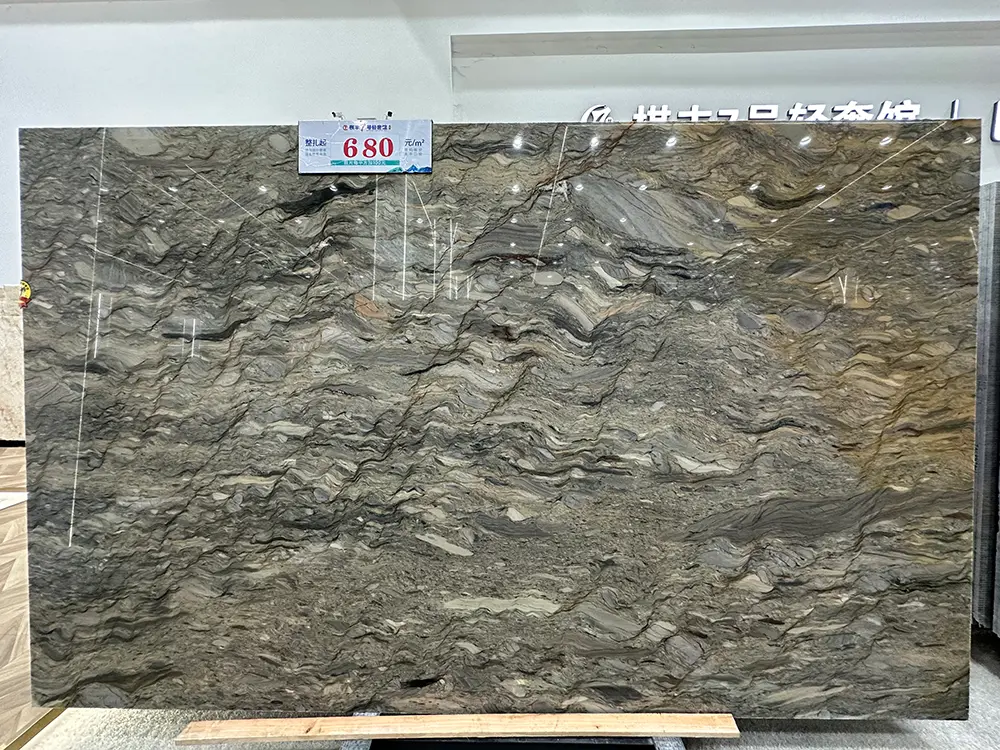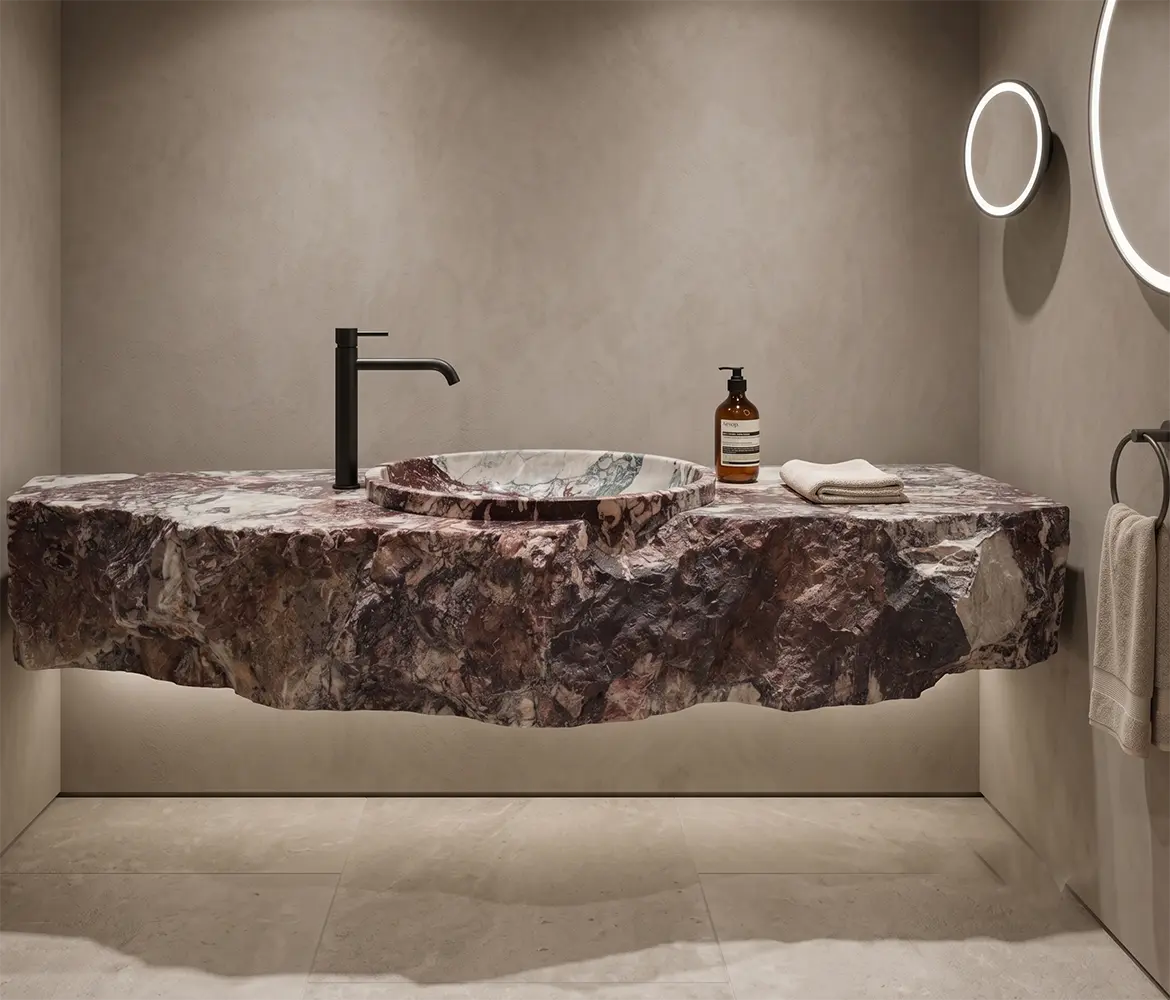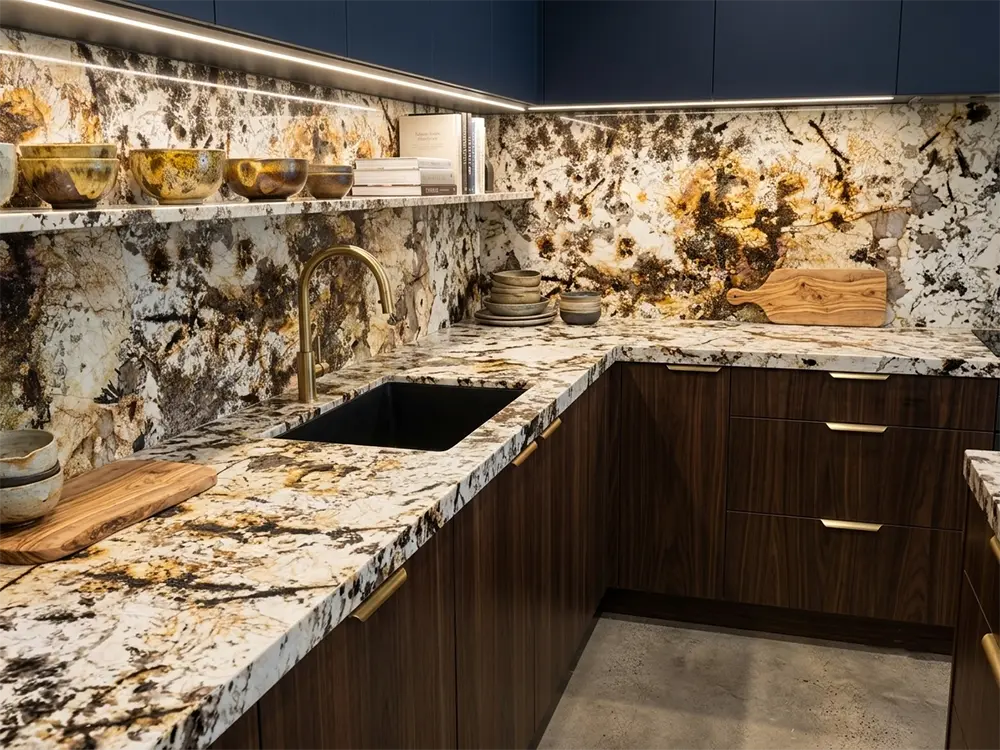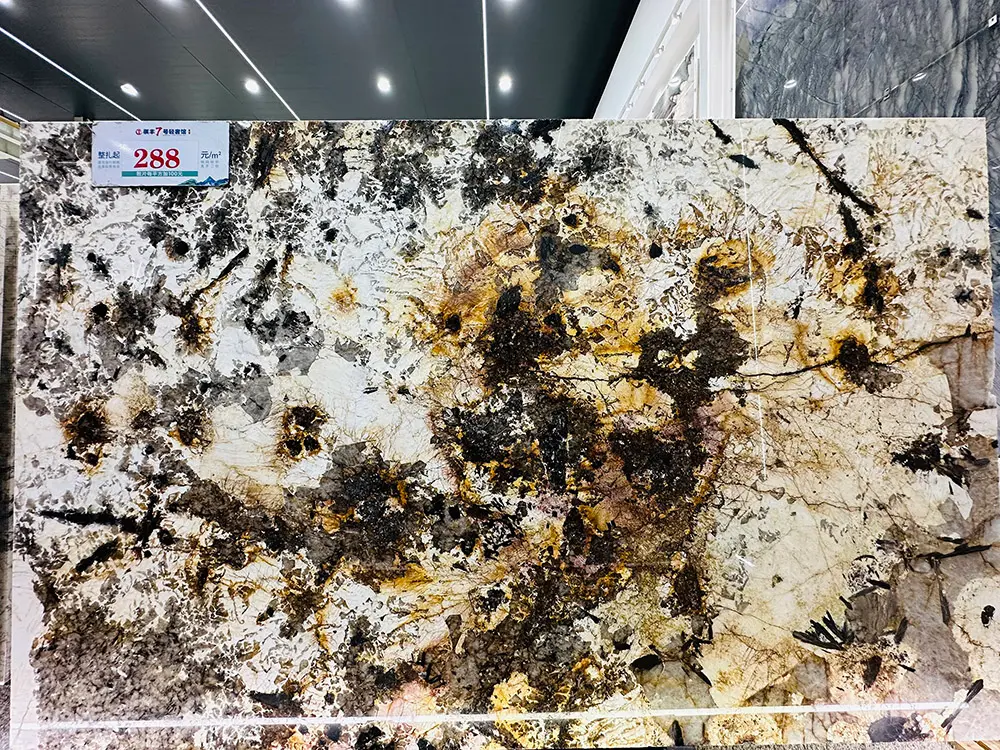






Quick Summary: Carreaux de marbre Work Best When Beauty and Application Match
Marble Tiles Are Not Just Decorative — They Are a Design Decision
Marble Tiles have been used in architecture and interior design for centuries because they create a kind of natural elegance that printed materials can only imitate. The veining is never perfectly repeated, the color movement feels organic, and the surface immediately gives a room a more permanent, premium, and refined feeling. This is why marble tiles remain popular in luxury bathrooms, hotel suites, villas, apartment lobbies, retail stores, spas, restaurants, and high-end residential projects.
However, the smartest way to evaluate Marble Tiles is not to ask whether they are “good” or “bad.” That is too simple, and frankly, stone does not deserve such lazy judgment. The better question is: where should marble tiles be used, what finish should be selected, and when should another material be considered based on the project’s function?
For buyers comparing natural stone options, reviewing professional Marble Tiles and Slabs helps clarify available colors, formats, finishes, and design directions before a project moves into quotation or production. The best result comes from matching the material to the room, not forcing one surface to do every job.
Marble Tile Supplier
What Are Marble Tiles?
Basic Definition of Marble Tiles
Marble Tiles are natural stone tiles cut from marble blocks or slabs and processed into specific sizes, thicknesses, finishes, and edge details. Marble itself is a metamorphic stone formed from limestone or dolomite under heat and pressure. This natural formation creates veining, cloud movement, mineral lines, and color variation that make each tile different from the next.
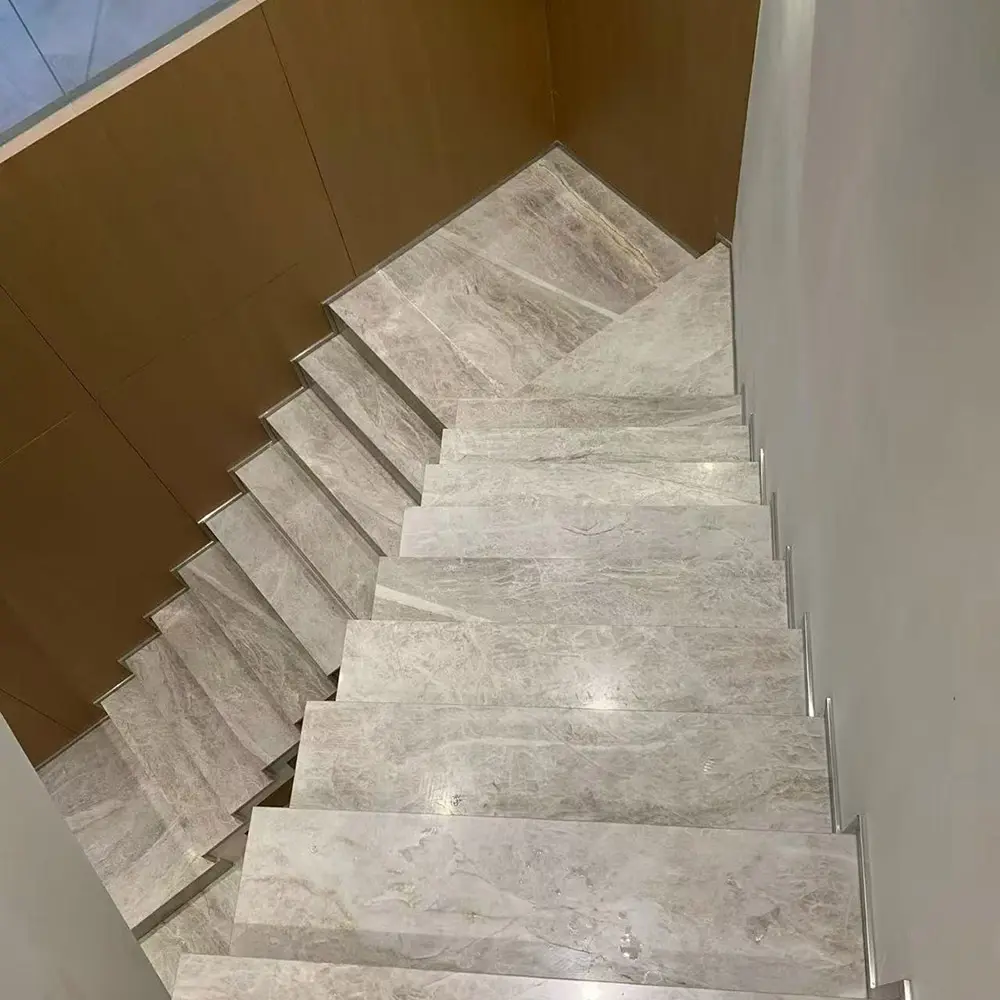
Common marble tile formats include standard floor tiles, large-format wall tiles, mosaic tiles, subway tiles, herringbone tiles, cut-to-size project tiles, decorative borders, bookmatched panels, stair tiles, and custom wall cladding. These formats allow designers and contractors to use marble in bathrooms, floors, walls, kitchens, lobbies, corridors, staircases, shower walls, vanity backgrounds, and luxury feature spaces.
Why Marble Tiles Stay Popular in Modern Design
The main value of Marble Tiles is emotional and architectural. They can make a bathroom feel like a spa, a hotel lobby feel more expensive, a villa floor feel more permanent, and a feature wall feel like natural artwork. White marble tiles create brightness. Grey marble tiles create modern calmness. Beige marble tiles feel warm and timeless. Black marble tiles add depth. Green marble tiles create stronger personality.
For projects focused on premium floors, luxury interiors, and architectural impact, a guide on carrelages en marbre pour des sols haut de gamme can help buyers understand how surface finish, tile size, traffic level, and installation quality influence the final result.
The Main Advantages of Using Marble Tiles
Natural Luxury and Timeless Aesthetic Value
The first reason designers choose Marble Tiles is simple: they look expensive because they are real. Natural stone has depth, movement, and mineral character that printed ceramic or porcelain tiles cannot fully reproduce. This is especially important in high-end residential projects, boutique hotels, villas, reception areas, and commercial spaces where visual impression affects perceived value.
If a project needs natural luxury without adding too many decorative elements, marble tiles can carry the design by themselves. A well-selected marble floor or wall does not need to shout. It just walks into the room wearing a tailored suit and lets everyone else behave.
Strong Design Flexibility Across Rooms
Marble Tiles can work across many design areas. They are suitable for bathroom walls, vanity backgrounds, shower walls, living room floors, hotel corridors, lobby floors, staircases, fireplace surrounds, kitchen backsplashes, retail walls, and spa interiors. The same stone family can be used in different formats to connect several spaces within one project.
For example, large-format Carrelages muraux en marbre can create a clean slab-like look, while smaller marble mosaic tiles can improve grip and detail in bathroom areas. Herringbone marble tiles add movement. Subway marble tiles create a classic wall surface. Cut-to-size marble tiles help hotels and apartment projects control dimensions, layout, and installation speed.
Premium Value for Hotels, Villas, and Commercial Interiors
Marble Tiles are often selected when the project’s positioning depends on perceived quality. A hotel bathroom with marble walls feels different from a standard tiled bathroom. A villa entrance with natural marble flooring communicates permanence. A boutique store with a marble feature wall feels more curated. These are not small details; they are buyer psychology in stone form.
If the project is competing on low initial cost only, ceramic or standard porcelain may be enough. If the project needs stronger brand value, higher-end visual impact, or luxury positioning, marble tiles often justify their place in the specification.
Excellent Performance on Walls and Decorative Surfaces
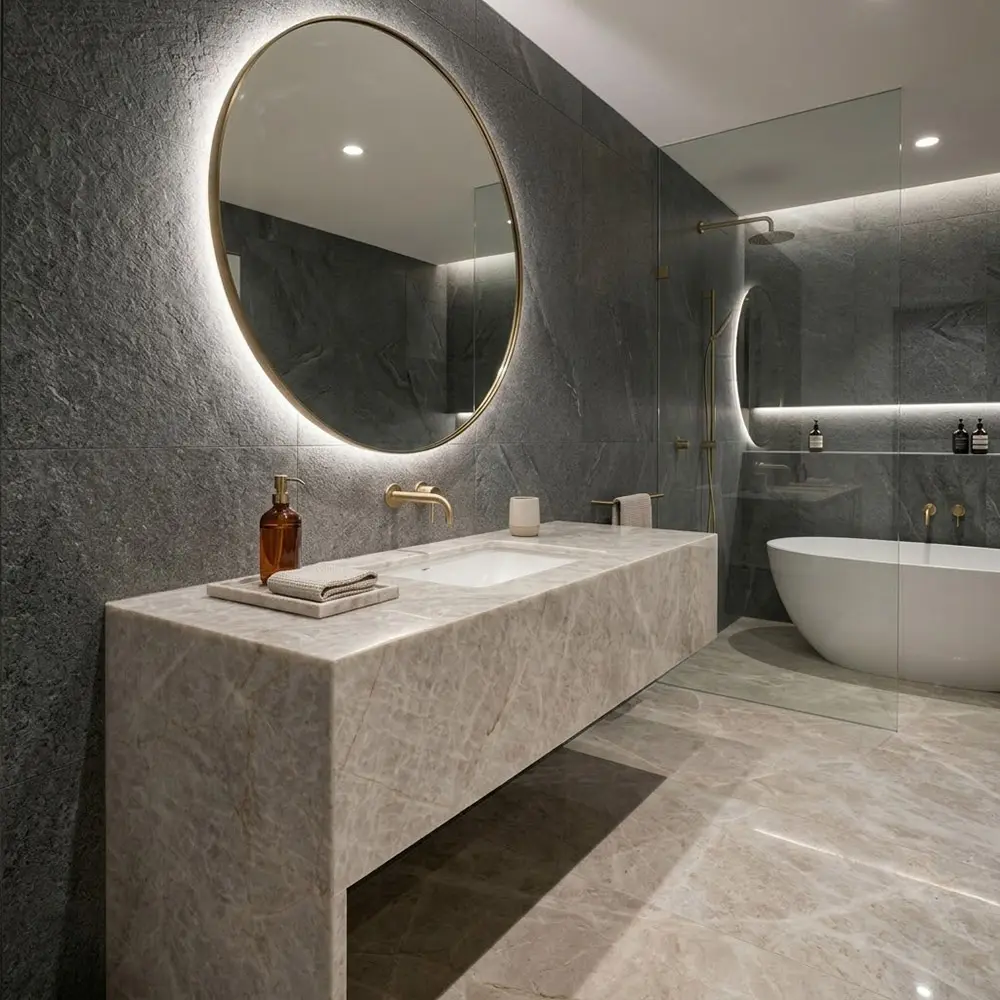
Walls usually receive less abrasion than floors, which makes them one of the best places to use Marble Tiles. Vanity walls, shower walls, TV feature walls, reception backgrounds, hotel bathroom walls, and retail feature panels allow marble to show its natural veining without facing the same level of foot traffic as flooring.
Polished marble tiles are especially effective on walls because they reflect light and deepen the stone’s color. Honed marble wall tiles are better when the designer wants a softer, quieter, more contemporary look. For large walls, buyers should request batch photos and dry layout to control vein flow and color consistency.
Wide Range of Colors, Patterns, and Finishes
Marble Tiles offer wide design freedom. White marble creates clean elegance. Grey marble supports modern interiors. Beige marble adds warmth. Black marble creates drama. Green marble makes a strong statement. Brown and gold-toned marble can suit hotels, restaurants, and classical luxury spaces.
Finish choice also changes the final feeling. Polished marble looks glossy and formal. Honed marble feels matte and modern. Brushed marble looks more textured. Tumbled marble gives an aged, Mediterranean appearance. Sandblasted or textured finishes may be used in selected areas where grip and tactile quality matter.
Application-Based Considerations: When Marble Tiles Fit Best
Bathroom Walls and Vanity Areas
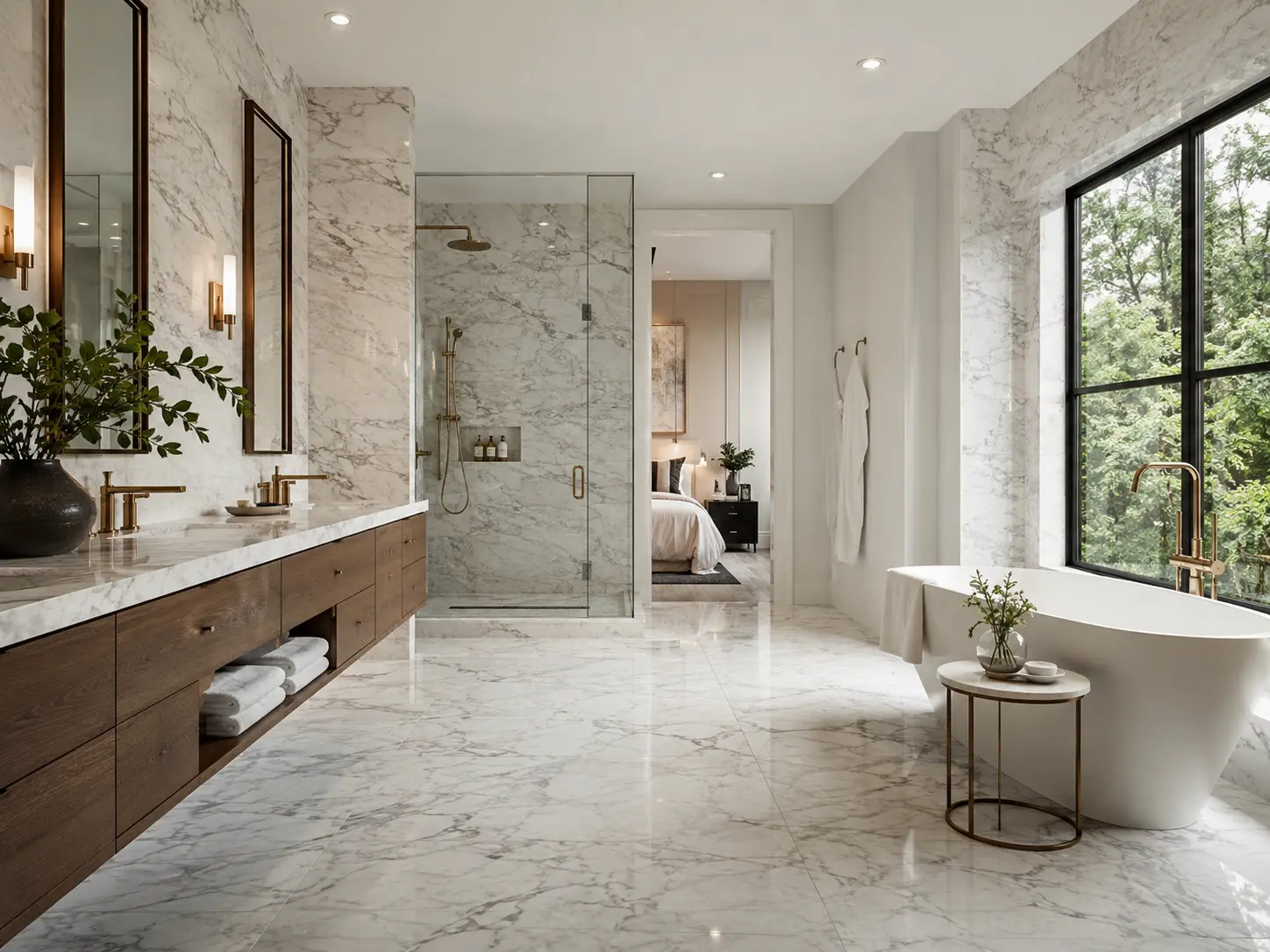
Marble Tiles are excellent for bathroom walls, shower walls, vanity backgrounds, bathtub surrounds, and powder rooms. In these areas, marble delivers high visual value while receiving less direct abrasion than floors. White, grey, beige, and soft green marble tiles are especially popular for spa-style bathrooms and luxury hotel suites.
For buyers who need more detailed design thinking, a guide on how to choose the best Marble Tiles for interior design can support decisions around color, finish, room function, lighting, and project style. This is where marble becomes a design tool, not only a surface material.
Flooring in Villas, Hotels, and Premium Homes
Marble floor tiles work well in villas, living rooms, hotel corridors, reception areas, bedrooms, dining rooms, and selected commercial spaces. They create a strong sense of luxury and can visually enlarge interiors when light-toned marble is used. Grey and beige marble tiles are especially practical for modern interiors because they feel calm and adaptable.
For flooring, buyers should focus on tile thickness, surface finish, slip behavior, traffic level, sealing, grout color, and installation skill. Polished marble can create a more formal luxury effect, while honed marble offers a softer and less reflective surface. In wet areas, textured or smaller-format marble may be more suitable.
Kitchen Backsplashes and Decorative Zones
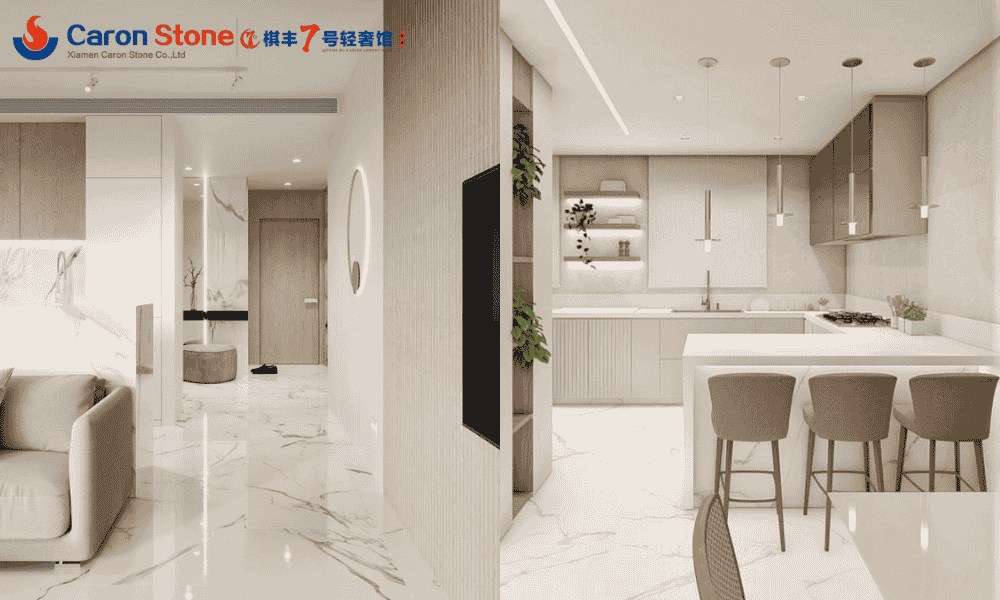
Marble Tiles can look beautiful in kitchens, especially for backsplashes, wall panels, breakfast bar fronts, and decorative surfaces. They pair well with natural wood, black cabinets, brass hardware, white cabinetry, and warm lighting. For active kitchen countertops, buyers may evaluate marble carefully and compare quartzite, granite, porcelain, or engineered quartz depending on cooking intensity.
The logic is simple: if the kitchen surface is mainly decorative, marble tiles can be excellent. If the surface receives daily acid, oil, cutting, and heavy food preparation, another material may be more practical. That is not a rejection of marble; that is using the right tool for the right job. Tiny idea, huge repair savings.
 sol en carreaux de marbre | 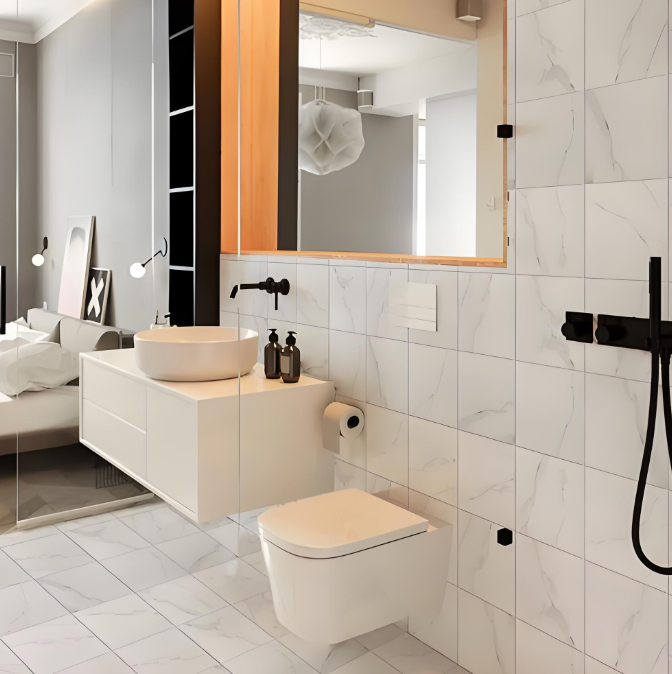 Sélection de petits carreaux de marbre dans une salle de bain en marbre naturel |
When to Consider Other Materials Based on Project Demand
If the Project Requires Almost Zero Maintenance
Marble Tiles are natural stone and should be cleaned with pH-neutral products, sealed when needed, and protected from harsh acidic chemicals. If a project owner wants a surface that requires very little attention, porcelain tiles may be easier to manage. Porcelain is more uniform, lower in water absorption, and often more forgiving in rental apartments, public wet areas, or highly standardized commercial spaces.
If the Floor Faces Extreme Public Traffic
For airports, transport stations, shopping centers, or heavy-use public corridors, granite, terrazzo, or technical porcelain may be considered depending on traffic level, cleaning routine, budget, and design requirements. Marble can still be used in premium zones, but it should be specified with correct thickness, finish, sealing, maintenance planning, and traffic expectations.
If the Area Receives Frequent Acidic Liquids
Marble is calcium carbonate-based, so acidic substances may affect the surface. In food prep areas, commercial kitchens, bar tops, or restaurant work zones, buyers may compare granite, quartzite, stainless steel, porcelain, or engineered quartz. Marble can still be used in decorative kitchen backsplashes, feature panels, or dining spaces where direct chemical exposure is lower.
If Wet-Floor Grip Is the Top Priority
For shower floors, spa wet zones, poolside areas, and public bathrooms, finish selection becomes critical. Instead of large polished marble tiles, buyers may choose honed, tumbled, brushed, textured, or mosaic marble. If the project requires stronger anti-slip performance with minimal care, textured porcelain or other slip-rated materials may be considered.
Marble Tiles vs Other Tile Materials
Marble Tiles vs Porcelain Tiles
Porcelain tiles are practical, consistent, and low maintenance. They are suitable for wet commercial spaces, rental projects, and areas where uniformity is important. Marble Tiles are better when natural luxury, unique veining, and premium emotional value matter. If the project needs design prestige, marble has stronger impact. If the project prioritizes low maintenance and consistency, porcelain may be the better fit.
Marble Tiles vs Ceramic Tiles
Ceramic tiles are cost-effective for basic wall applications and light-use spaces. They are widely available and easy to install. Marble Tiles are more premium and better suited for villas, hotels, luxury bathrooms, feature walls, and spaces where the surface must contribute to property value. If budget is tight, ceramic works. If the surface must look high-end, marble is stronger.
Marble Tiles vs Granite Tiles
Granite tiles are harder and often more suitable for heavy-use floors or exterior-connected areas. Marble tiles are more expressive, softer in visual movement, and usually more elegant for interiors. If durability under strong traffic is the main target, granite is practical. If luxury atmosphere and natural veining are the main target, marble tiles often win the design conversation.
Buyers who want broader guidance can review the definitive guide to Marble Tiles to understand how marble compares with other materials across flooring, walls, bathrooms, kitchens, and commercial interiors.
| Matériau | Main Strength | Best Fit | Buyer Decision |
|---|---|---|---|
| Carreaux de marbre | Natural luxury and unique veining | Bathrooms, walls, villas, hotels, feature floors | Choose when premium design value matters |
| Carreaux de porcelaine | Low maintenance and uniformity | Wet areas, commercial floors, rental projects | Choose when easy care is top priority |
| Ceramic Tiles | Budget-friendly and decorative | Basic walls and light-use areas | Choose when cost control matters most |
| Carreaux de granit | High hardness and durability | Heavy-use floors and exterior-connected zones | Choose when traffic resistance is key |
| Terrazzo Tiles | Modern, decorative, and durable | Commercial interiors and design floors | Choose when modern pattern control is needed |
Scientific Material Parameters Buyers Should Check
Typical Marble Tile Performance Data
Marble performance varies by stone type, quarry, finish, thickness, and test method. The following values are general reference ranges for marble materials and should not replace supplier-specific test data for commercial, hospitality, wet-area, or high-traffic projects.
| Paramètres | Typical Marble Reference Range | Pourquoi c’est important |
|---|---|---|
| Densité | About 2.55–2.75 g/cm³ | Affects weight, handling, and installation planning |
| Absorption de l'eau | Often 0.1%–0.6% | Important for bathrooms, kitchens, and wet areas |
| Mohs hardness | About 3–4 | Affects scratch sensitivity and use expectations |
| Compressive strength | Often 50–140 MPa | Relevant for flooring and stair applications |
| Flexural strength | Often 7–20 MPa | Important for large-format tiles and wall panels |
| Common wall tile thickness | 10–15 mm | Affects wall load and installation method |
| Common floor tile thickness | 12–18 mm | Affects stability and long-term performance |
| Recommended extra material | Usually 5%–10% for many projects | Covers cutting loss, breakage, and future replacement |
Testing and Standards Buyers Can Reference
ASTM C503 is commonly used for marble dimension stone. ASTM C97 supports absorption and bulk specific gravity testing. ASTM C170 supports compressive strength evaluation, and ASTM C880 supports flexural strength testing. For flooring, ANSI A326.3 may be relevant when evaluating slip resistance of hard surface materials. Buyers should request actual test data when a project involves hotels, wet floors, commercial corridors, or large public spaces.
How to Choose the Right Marble Tiles by Finish
Carreaux de marbre poli
Polished Marble Tiles have a glossy and reflective surface. They highlight natural veining and make colors appear deeper. They are excellent for bathroom walls, vanity areas, reception backgrounds, feature panels, and luxury interiors where the surface is not constantly wet underfoot.
Dalles de marbre poli mat
Dalles de marbre poli mat have a matte, softer appearance. They work well for floors, bathrooms, spa interiors, hotel spaces, and modern residential projects. Honed marble reduces glare and gives a more understated look. It still needs sealing and proper cleaning, especially in wet or high-use areas.
Brushed, Leathered, Tumbled, and Textured Marble Tiles
Textured marble finishes create a more tactile surface and can be useful in selected wet areas, spa-style interiors, rustic homes, Mediterranean designs, and decorative floors. The cleaning routine should be considered because textured surfaces may hold dirt more easily than polished surfaces.
| Finition | Visual Effect | Best Use | Selection Note |
|---|---|---|---|
| Poli | Glossy and reflective | Walls, vanity areas, feature panels | Best away from wet walking surfaces |
| Honoré | Matte and modern | Floors, bathrooms, hotel interiors | Good for softer, low-glare interiors |
| Brushed | Textured and natural | Spa floors, feature walls | Cleaning plan should be confirmed |
| Tumbled | Antique and soft | Rustic interiors, mosaics | Works well for warm natural styles |
| Sandblasted | More textured | Selected wet or outdoor zones | Less formal appearance |
How to Choose Marble Tiles by Design Style
Modern Minimalist Design
Use white, grey, or soft beige marble tiles with honed or polished finishes. Large-format tiles reduce grout lines and create a cleaner look. Soft grey marble works well with black metal, wood veneer, microcement, and simple lighting.
Luxury Hotel Design
Use premium marble tiles with controlled batches, large-format wall panels, polished vanity walls, and honed or polished floors depending on traffic and safety needs. Hotels should prepare maintenance instructions for cleaning teams before handover.
Classic Villa Design
Use beige, white, cream, or dramatic veined marble tiles with borders, stair details, bookmatched panels, and custom layouts. Villas often benefit from marble because the material supports long-term architectural value.
Spa and Wellness Design
Use warm beige, soft grey, or honed marble tiles with slip-aware floor planning. Marble is excellent for creating a calm, natural, and sensory atmosphere in wellness interiors.
For buyers working on floor-focused projects, a dedicated article on marble tiles design for the floor can help refine color, finish, pattern, and project layout choices before ordering.
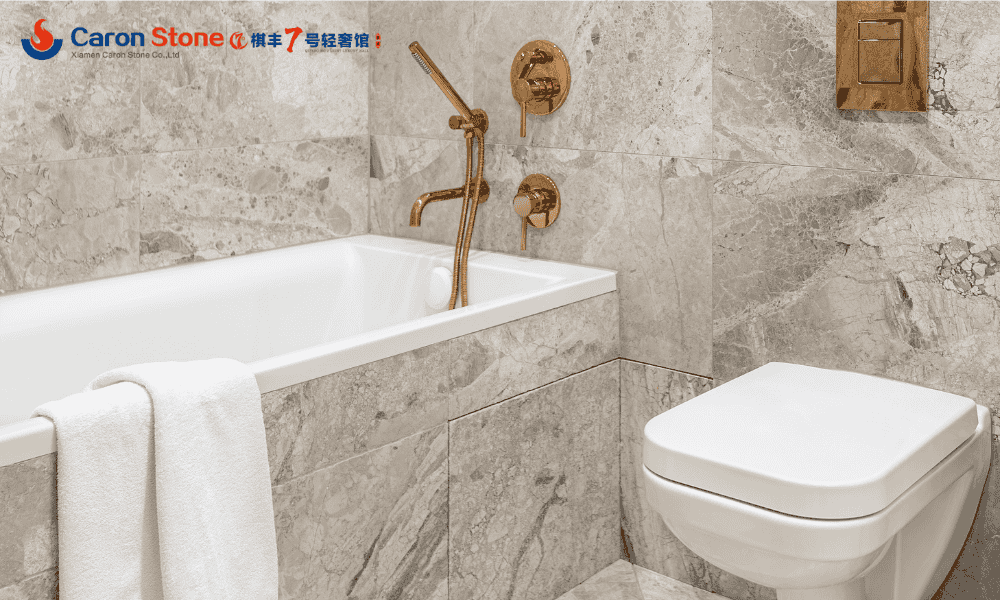
Marble Tiles supplier
Common Sourcing Mistakes to Avoid
Mistake 1: Choosing by Small Sample Only
A small sample cannot show the full color range, vein movement, batch variation, or pattern direction. For large projects, buyers should request current batch photos, videos, and layout references.
Mistake 2: Using One Finish Everywhere
Polished marble may be excellent for walls, while honed or textured marble may be better for floors. A good design can use different finishes in different zones while keeping the same stone family.
Mistake 3: Ignoring Maintenance Expectations
Marble performs best when users understand sealing, pH-neutral cleaning, and proper care. For hotels and commercial projects, maintenance guidance should be included before staff begin cleaning.
Mistake 4: No Extra Material Reserved
Natural stone projects should reserve additional material for cutting loss, site adjustment, breakage, and future replacement. This is especially important when the marble has strong color variation or rare veining.
Mistake 5: Buying Without Supplier Batch Control
For hotels, villas, apartments, and wholesale projects, batch control is critical. Color mismatch can create installation disputes, delays, and customer complaints. A practical guide on how to choose natural marble to avoid mistakes can help buyers reduce sourcing risk before confirming production.
Buyer Decision Logic: When Should You Choose Marble Tiles?
Choose Marble Tiles If…
If your project needs natural luxury, choose Marble Tiles. If the space must feel premium without heavy decoration, choose Marble Tiles. If the application is bathroom walls, vanity areas, hotel bathrooms, villa interiors, feature walls, or elegant floors, Marble Tiles are a strong choice. If the buyer accepts sealing, proper cleaning, and natural variation, Marble Tiles can deliver long-term design value.
Consider Other Materials If…
If the project requires nearly zero maintenance, porcelain may be easier. If the surface faces extreme public traffic, granite, terrazzo, or technical porcelain may be evaluated. If the area receives daily acidic food liquids, quartzite, granite, porcelain, or engineered quartz may be more practical. If wet-floor slip resistance is the top priority, textured marble or alternative slip-rated materials should be compared.
| Project Scenario | Recommended Marble Tile Choice | Best Finish | Decision Note |
|---|---|---|---|
| Bathroom wall | White or grey marble tiles | Polished or honed | Excellent visual impact |
| Shower floor | Small marble mosaic | Honed or tumbled | More suitable than large polished tiles |
| Hotel bathroom | Premium batch marble tiles | Polished walls, honed floors | Batch control is essential |
| Villa floor | Consistent large-format marble tiles | Polished or honed | Choose by style and traffic |
| Feature wall | Vein-matched marble tiles | Poli | Dry layout is recommended |
| Commercial lobby | Dense marble floor tiles | Honed or polished by traffic | Maintenance plan should be clear |
| Kitchen backsplash | Decorative marble tiles | Polished or honed | Good for visual value |
| Wholesale project | Factory-inspected marble tiles | Project-specific | Batch photos and packing matter |
Quality Control Checklist Before Ordering Marble Tiles
Before ordering, buyers should confirm marble type, tile size, thickness, surface finish, current batch photos, color range, veining, water absorption data if needed, edge quality, cracks, chips, resin repair, packing method, extra material, pre-shipment inspection, maintenance instructions, and supplier project experience.
For large projects or repeated units, ask the supplier to label batches by application area, such as bathroom wall, floor, corridor, stair, vanity, or replacement stock. Work with a reliable fournisseur de carreaux de marbre that can support batch selection, export packing, quality inspection, and project communication. Pretty stone is good. Pretty stone with reliable supply control is better.
Before placing a bulk order, share drawings, quantity, tile size, finish preference, thickness, application area, color direction, and project timeline through a marble tiles project consultation. This helps match the right material and avoid buying a tile that looks beautiful but does not fit the actual use.
Market Trends: Why Marble Tiles Still Matter in Interior Design
Natural Materials Are Returning to Premium Interiors
Designers and buyers increasingly want surfaces that feel natural, permanent, and emotionally rich. Marble Tiles meet this demand because each piece carries unique veining and mineral movement.
Large-Format Marble Tiles Are Growing
Large-format marble tiles reduce grout lines and create a cleaner slab-like look. They are especially popular in bathrooms, lobbies, villas, and hotel interiors.
Soft Neutral Marble Remains Strong
White, grey, beige, and warm marble tones continue to perform well because they match many interior styles. They work with wood, metal, glass, lighting, and modern furniture.
Buyers Want Beauty Plus Risk Control
Modern buyers do not only ask, “Is it beautiful?” They ask about sealing, slip behavior, batch photos, finish, thickness, packing, and maintenance. That is good. Smart questions prevent expensive surprises.
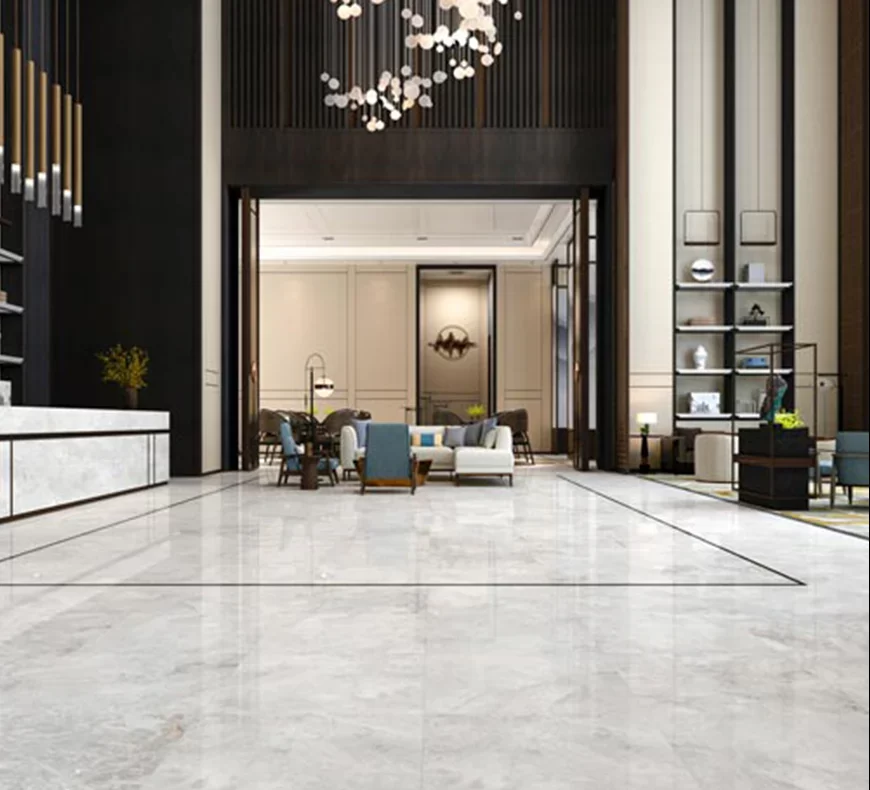
Kavala Bianco Marble Acheter des carreaux de pierre
Final Recommendation: Use Marble Tiles Where Natural Luxury Matters Most
Marble Tiles are worth using when the project values natural beauty, premium design, emotional impact, and long-term architectural value. They are especially strong for bathroom walls, vanity areas, hotel bathrooms, villa floors, lobbies, feature walls, reception areas, and decorative interior surfaces.
For floors, wet areas, kitchens, and commercial spaces, the decision should be based on finish, traffic level, moisture exposure, maintenance expectations, and installation quality. Marble does not need to be used everywhere to be valuable. Sometimes the smartest design uses marble in the areas where it creates the most impact and uses other materials where easier maintenance or stronger technical performance is required.
The best buying logic is simple: if the project needs natural luxury and the user accepts stone care, choose Marble Tiles. If the project demands almost zero maintenance, extreme traffic resistance, or constant chemical exposure, compare porcelain, granite, quartzite, terrazzo, or engineered surfaces. That is how buyers protect both design value and project performance.
FAQ About Marble Tiles in Interior Design
1. Les carreaux de marbre constituent-ils un bon choix pour la décoration intérieure ?
Oui, les carreaux de marbre constituent un excellent choix pour l’aménagement intérieur lorsque le projet exige un luxe naturel, des veines uniques et une qualité de surface haut de gamme. Ils s’adaptent particulièrement bien aux murs de salle de bains, aux zones de vasques, aux salles de bains d’hôtels, aux sols de villas, aux halls d’accueil, aux murs d’accent, aux espaces réception et aux pièces intérieures décoratives. Les meilleurs résultats s’obtiennent en assortissant le type de marbre, la finition, l’épaisseur, le lot et le plan d’entretien à l’usage spécifique de la pièce.
2. Où faut-il utiliser les carreaux de marbre pour obtenir le meilleur résultat ?
Les carreaux de marbre offrent d’excellents résultats sur les murs de salle de bains, les fonds de vasques, les parois de douche, les murs d’accent, les sols de villas, les salles de bains d’hôtels, les escaliers, les halls d’accueil, les cheminées ainsi que dans les intérieurs résidentiels haut de gamme. Ils sont particulièrement adaptés lorsque la beauté naturelle et la valeur esthétique sont primordiales. Pour les sols humides, les zones à fort passage et les cuisines très fréquentées, il convient de choisir une finition appropriée ou d’envisager d’autres matériaux, en fonction des exigences d’entretien et de sécurité du projet.
3. Les carreaux de marbre sont-ils meilleurs que les carreaux de porcelaine ?
Les carreaux de marbre sont privilégiés lorsque le projet exige la beauté naturelle de la pierre, des veines uniques, une valeur de luxe et une esthétique architecturale haut de gamme. Les carreaux en porcelaine sont plus adaptés lorsque le projet requiert une maintenance réduite, une uniformité accrue et une performance facilitée dans les espaces humides ou très fréquentés. Le choix optimal dépend du positionnement du projet. Pour les villas, les hôtels et les salles de bains de luxe, les carreaux de marbre confèrent souvent une valeur émotionnelle plus forte. Dans les espaces publics humides ou pour les projets locatifs, la porcelaine peut s’avérer plus pratique.
4. Les carreaux de marbre doivent-ils être scellés ?
De nombreuses dalles de marbre bénéficient d’un traitement d’étanchéité, en particulier dans les salles de bains, les cuisines, les sols, les intérieurs d’hôtels et les espaces commerciaux. La nécessité d’appliquer un produit d’étanchéité dépend du type de marbre, de la finition de surface, de la porosité, du niveau de circulation ainsi que des pratiques d’entretien. L’étanchéification contribue à réduire l’absorption des liquides et le risque de taches, mais elle ne remplace pas un nettoyage approprié. Les acheteurs doivent utiliser des produits nettoyants neutres au pH, essuyer rapidement les éventuelles éclaboussures et suivre scrupuleusement les instructions d’entretien fournies par le fabricant ou l’installateur.
5. Comment choisir un fournisseur fiable de carrelages en marbre ?
Choisissez un fournisseur de carrelages en marbre capable de fournir des photos du lot en cours, des échantillons de finition, la confirmation des dimensions et de l’épaisseur, une explication du grade, des conseils pour le projet, les détails d’emballage, un soutien à l’inspection ainsi que des recommandations d’entretien. Pour les projets hôteliers, résidentiels ou de vente en gros, le fournisseur doit également assurer la gestion des lots, la validation de la gamme de couleurs, la planification des matériaux supplémentaires et l’emballage destiné à l’exportation. Un fournisseur fiable contribue à réduire les incompatibilités, les retards de pose et les risques inutiles liés au projet.
Références
- “ASTM C503/C503M Standard Specification for Marble Dimension Stone” — ASTM Committee C18 — ASTM International — ASTM Standards Catalogue
- “ASTM C97/C97M Standard Test Methods for Absorption and Bulk Specific Gravity of Dimension Stone” — ASTM Committee C18 — ASTM International — ASTM Stone Testing Standards
- “ASTM C170/C170M Standard Test Method for Compressive Strength of Dimension Stone” — ASTM Committee C18 — ASTM International — ASTM Stone Testing Standards
- “ASTM C880/C880M Standard Test Method for Flexural Strength of Dimension Stone” — ASTM Committee C18 — ASTM International — ASTM Stone Testing Standards
- “ANSI A326.3 Test Method for Measuring Dynamic Coefficient of Friction of Hard Surface Flooring Materials” — Tile Council of North America Technical Team — TCNA — Flooring Safety Resource
- “Dimension Stone Design Manual” — Natural Stone Institute Technical Committee — Natural Stone Institute — Dimension Stone Design Manual
- “Care and Cleaning of Natural Stone” — Natural Stone Institute Education Team — Natural Stone Institute — Consumer Care Guide
- “TCNA Handbook for Ceramic, Glass, and Stone Tile Installation” — TCNA Handbook Committee — Tile Council of North America — Tile Installation Handbook
Ready Buyer Insight for Marble Tiles
What should buyers understand first? Marble Tiles are premium natural stone tiles used for floors, walls, bathrooms, hotels, villas, lobbies, feature panels, and luxury interiors. Their main value is natural veining, timeless beauty, and strong design impact.
Why does application matter? Marble Tiles perform best when the finish, thickness, grade, batch, installation method, and maintenance plan match the project area. Bathroom walls, vanity areas, feature walls, and hotel interiors are especially strong applications.
How should buyers choose? If the design needs natural luxury, choose Marble Tiles. If the area is wet underfoot, choose honed, tumbled, textured, or mosaic marble. If the project needs nearly zero maintenance, compare porcelain. If the floor faces extreme traffic, compare granite, terrazzo, or technical porcelain.
Option insight: Polished marble is excellent for walls and feature surfaces. Honed marble is better for soft modern floors. Brushed or tumbled marble suits spa, rustic, or textured designs. White marble creates brightness, grey marble creates calmness, beige marble adds warmth, and black or green marble creates drama.
Consideration insight: Buyers should check batch photos, tile thickness, finish sample, water absorption, edge quality, color variation, slip behavior, sealing requirements, packing method, and extra material. A small sample alone is not enough for large projects.
Recommandation : Use Marble Tiles where natural beauty and premium atmosphere matter most. Use other materials where the project requires lower maintenance, stronger traffic resistance, or more technical performance. The right design is not about using marble everywhere; it is about using it where it creates the most value.
Before ordering, prepare your project area, tile size, finish preference, thickness, quantity, design style, and application environment. A professional supplier can help recommend the right Marble Tiles and reduce batch, installation, and maintenance risks.