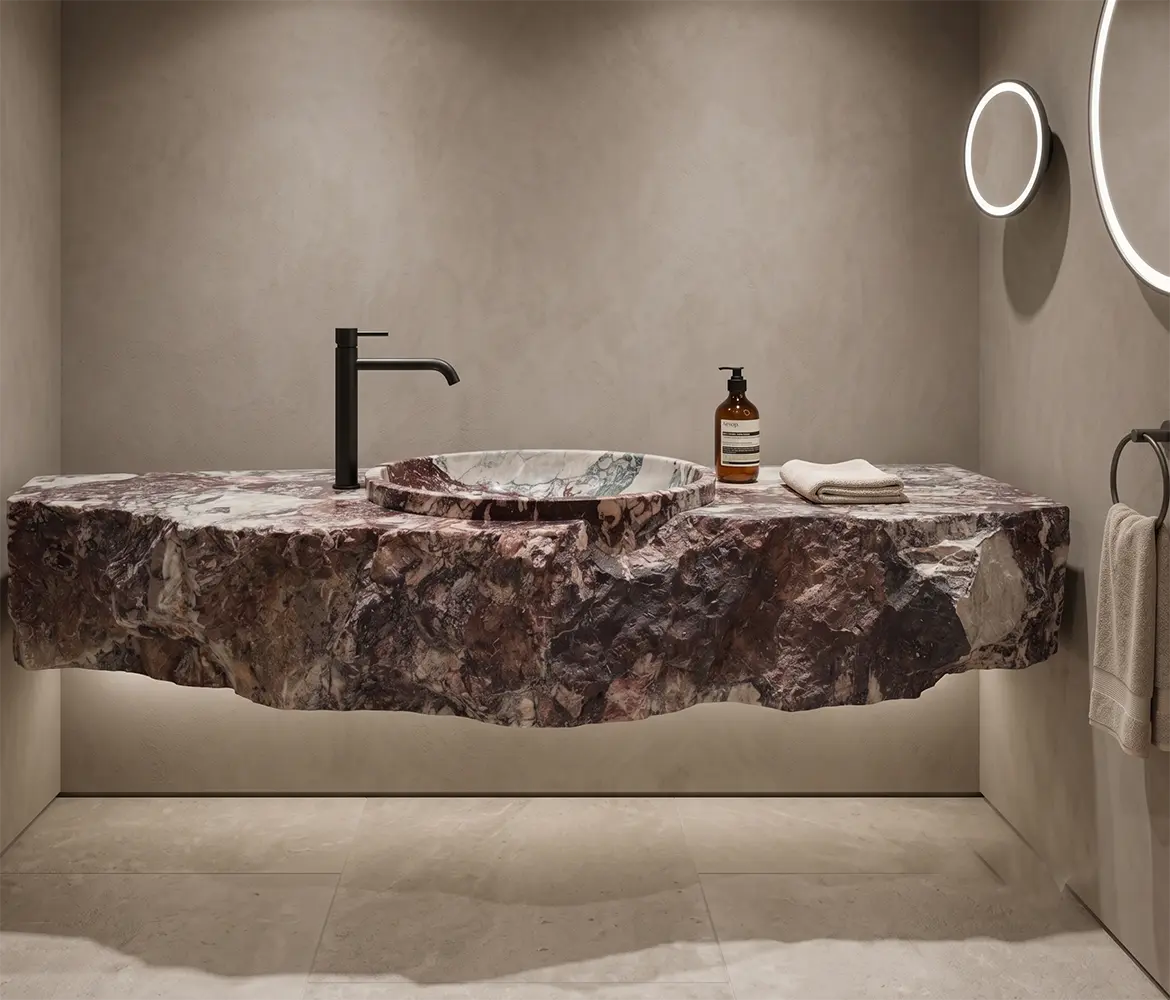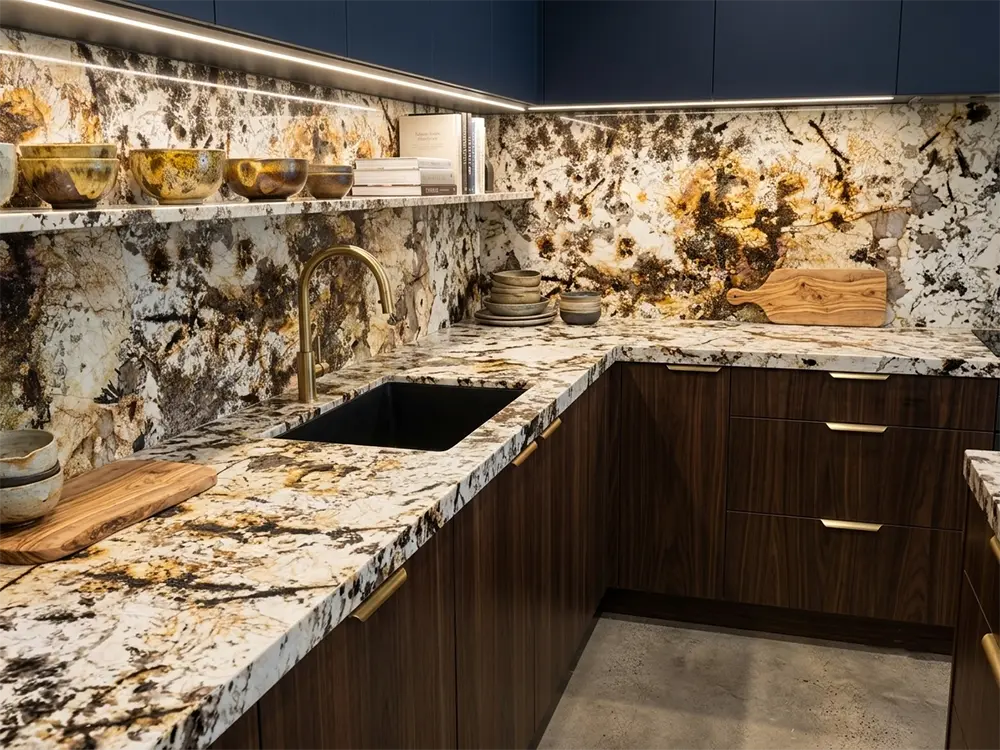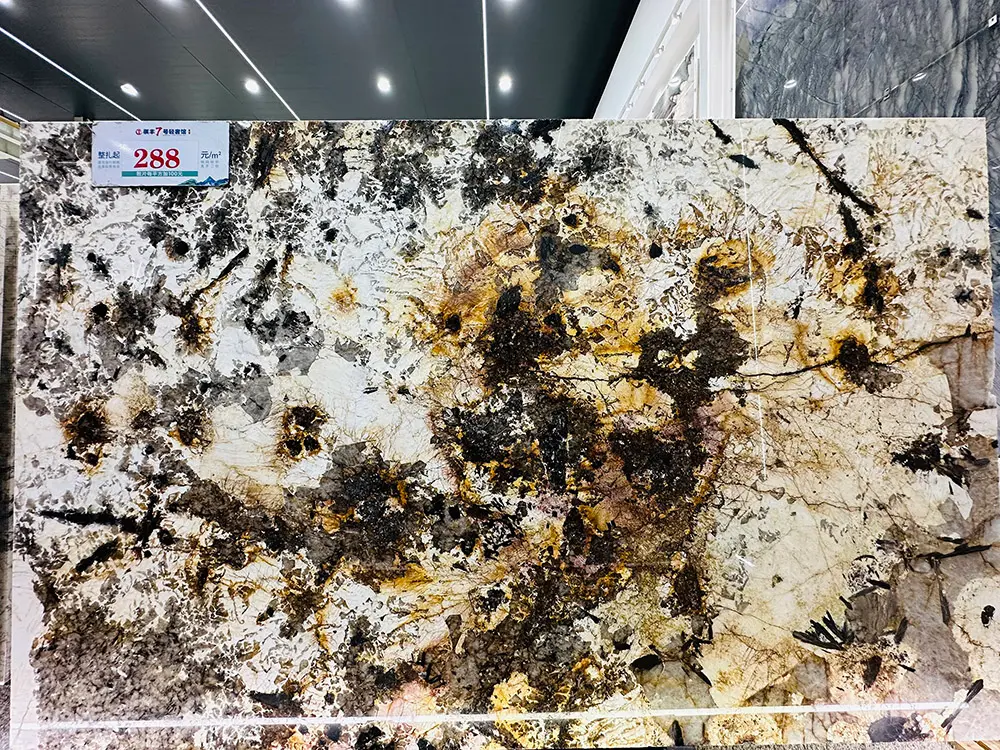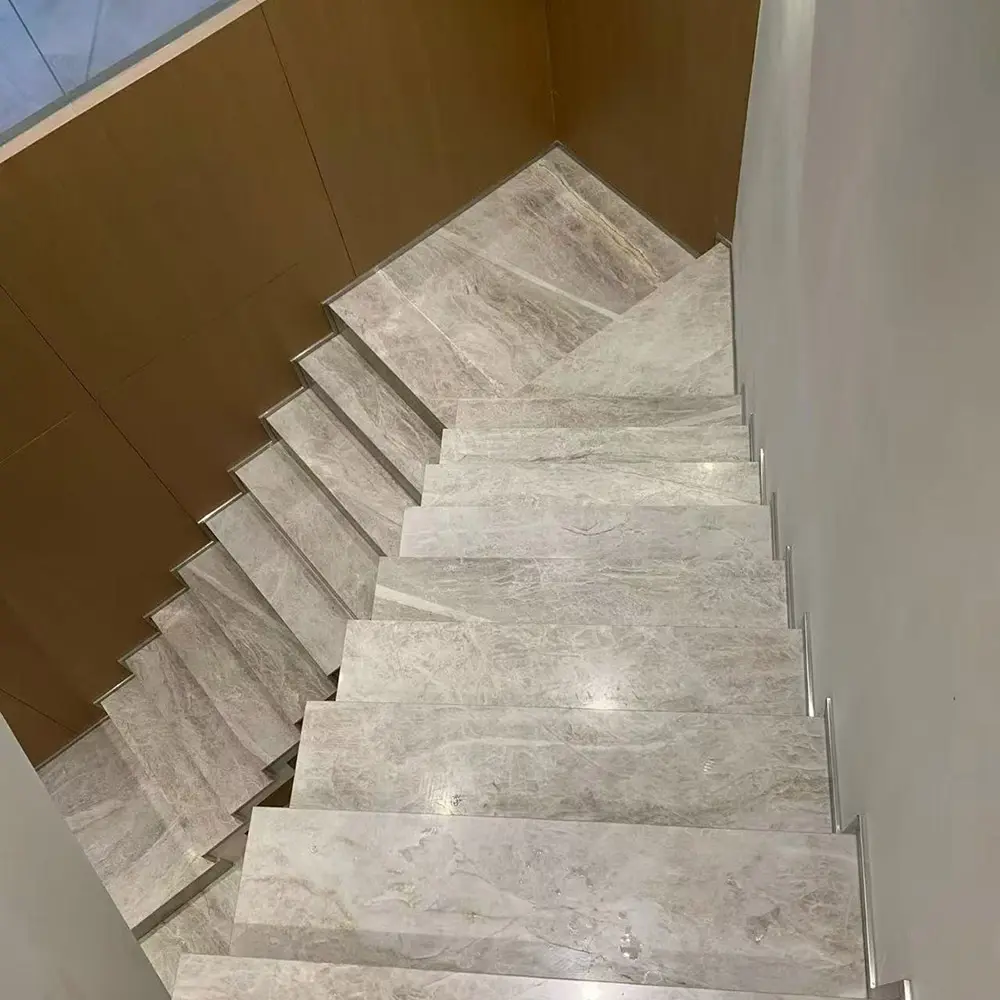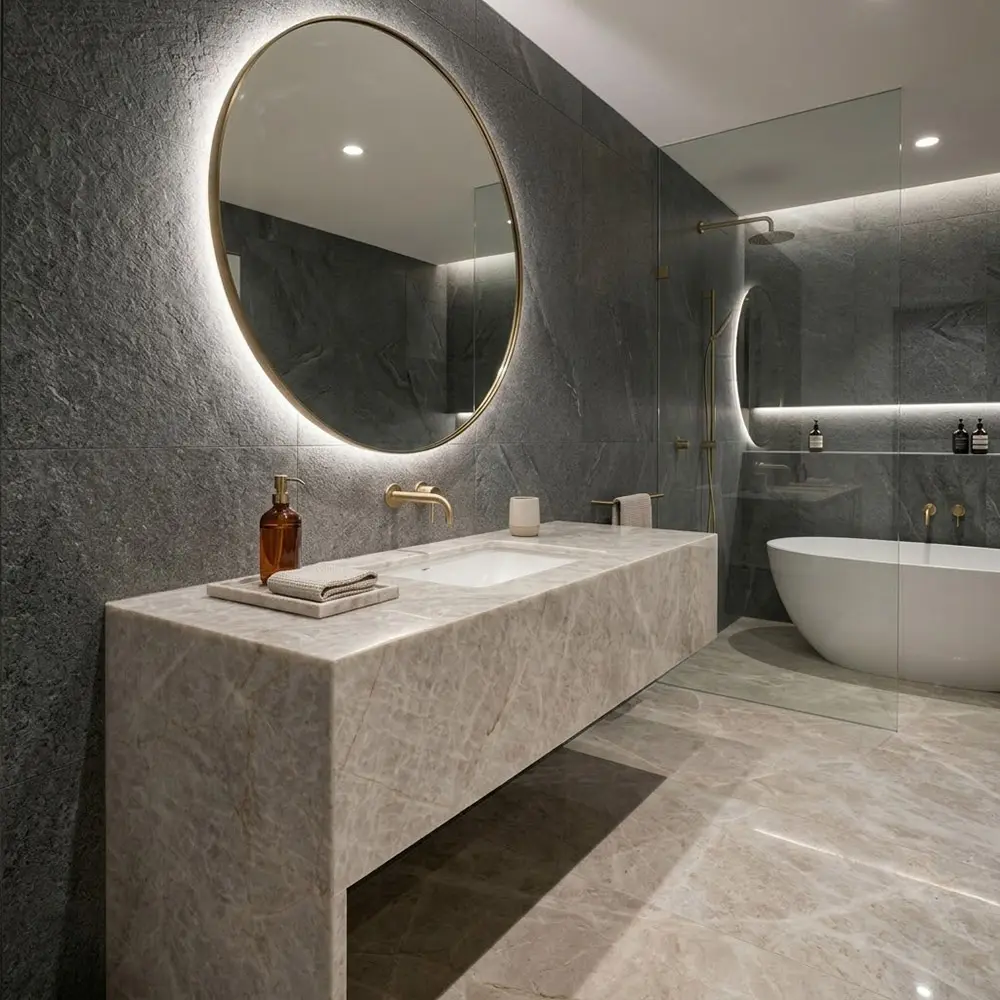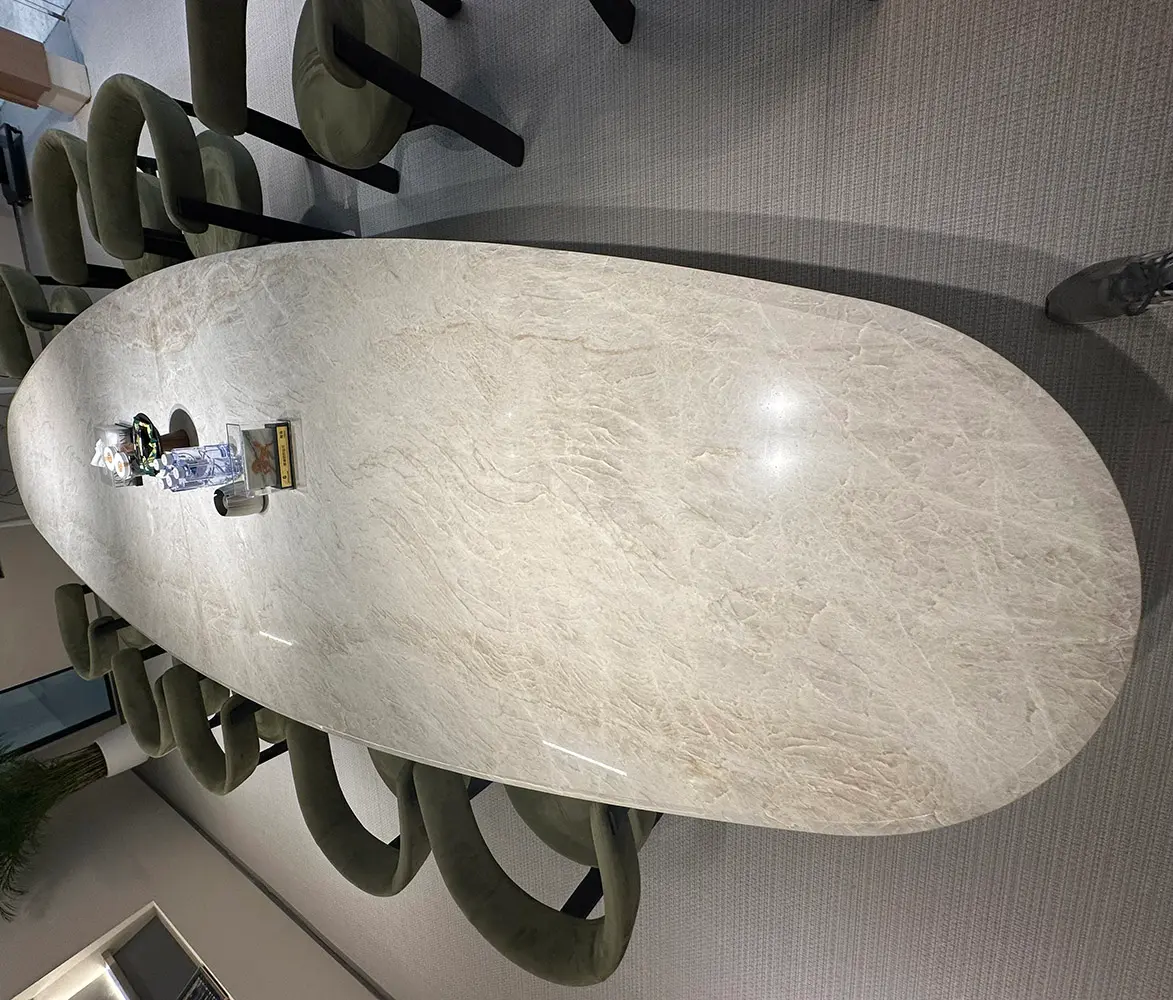






Marble Tiles remain one of the most recognizable natural materials in residential and commercial interior design. Their appeal comes from something industrial surfaces cannot reproduce perfectly: every tile carries its own mineral movement, vein direction, tonal change and geological character. Carrara can feel calm and architectural, Calacatta can create dramatic luxury, Nero Marquina introduces deep contrast, while green, beige, brown and other colored marbles can give hotels, villas, restaurants and retail spaces a distinctive identity.
For buyers, however, choosing marble tile is not simply a matter of selecting the most attractive sample. Natural variation can become either a design advantage or a project problem depending on how the material is specified, sorted and installed. Size, thickness, flatness, edge accuracy, surface finish, shade range, absorption, packing and installation method can all affect the final result. Buyers comparing materials can begin with a broader Marble Tiles and Slabs collection to understand available natural stone directions before narrowing the selection by application.
The buying process becomes even more important for larger projects. A homeowner may need 25 square meters for a bathroom, while a hotel contractor may require thousands of square meters across guestrooms, corridors, lobbies and public areas. Importers and distributors may purchase full containers and need reliable color sorting, calibrated thickness, pallet labels and replacement planning. In all of these cases, buying only by unit price creates unnecessary risk because the cheapest tile can become expensive after breakage, poor color matching or reinstallation.
A useful RFQ should therefore include more than a question such as “What is your marble tile price?” Buyers should provide the desired marble type, color direction, tile size, thickness, finish, quantity, application, destination and any relevant drawings or specifications. Buyers preparing an active project can send these requirements through a marble tile project consultation so material selection and production planning can be based on actual project needs rather than a generic quotation.
This distinction separates a decorative stone seller from a supplier capable of supporting a real project. Commercial procurement may involve block or slab selection, tile cutting, calibration, edge finishing, dry layout, inspection, packaging, shipping documentation and communication with designers or contractors. When those capabilities matter, the supplier’s stone experience and project-management structure should be checked before the order is confirmed. Reviewing the background of an established natural stone supplier can help importers understand whether the company can support wholesale supply and customized stone fabrication beyond standard catalogue products.
Marble also has limitations that should not be hidden. It may require sealing, appropriate cleaning and more careful material selection than many manufactured tiles. Polished marble can show etching, scratches and wear differently from porcelain. Natural shade variation means exact repetition is unrealistic. Some marble types are unsuitable for certain exterior or high-abuse environments. Buyers who want a balanced assessment should understand the pros and cons of Marble Tiles before choosing the material for a project where maintenance, traffic or moisture conditions are demanding.
When marble is used in the correct location, those natural differences become its greatest design advantage. Geometric layouts, mosaics, large-format flooring, bookmatched feature panels and contrasting stone combinations can turn the material into an architectural element rather than simple surface covering. Designers developing contemporary hotels, villas or residential interiors can also review Marble Tiles design ideas to see how natural stone can be arranged beyond conventional square floor layouts.
This guide approaches Marble Tiles from both design and procurement perspectives. It explains tile types, sizes, finishes, applications, installation, quality control, maintenance, wholesale buying and supplier evaluation so homeowners, designers, developers, contractors, distributors and importers can make decisions with fewer surprises.
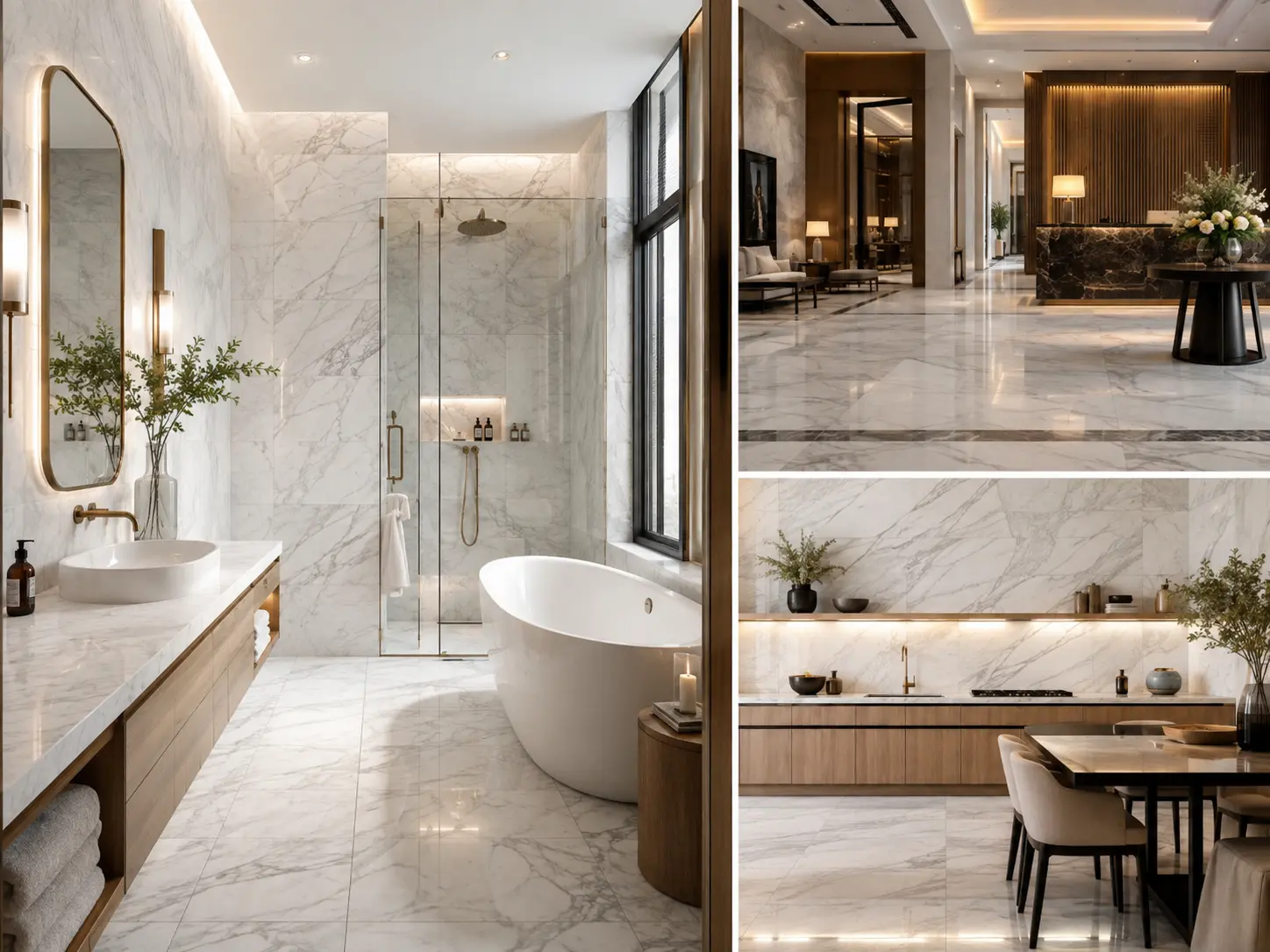
Carreaux de marbre
What Are Marble Tiles?
Marble Tiles are pieces of natural marble processed into standardized or customized dimensions for use on floors, walls, bathrooms, kitchens, staircases, fireplaces and architectural surfaces. Marble itself is a metamorphic rock generally formed when limestone or dolomitic stone changes under heat and pressure. Mineral content and geological movement create the colors, veining and crystalline structures that distinguish one marble from another.
How Marble Tiles Are Made
The production process begins at the quarry, where marble blocks are extracted from the deposit. These blocks are transported to a processing facility and sawn into slabs. Slabs are then dried, treated or reinforced where necessary, polished or given another finish, and cut into tile dimensions.
Depending on the project, the tiles may go through additional steps such as calibration, edge trimming, chamfering, honing, brushing, antiquing, waterjet cutting or CNC processing. Finished pieces are inspected, sorted by shade or vein characteristics and packed for shipment.
The quality of the final tile depends on several stages of this process. Poor block selection can result in excessive fissures. Inaccurate cutting can create dimensional differences. Weak calibration can lead to thickness variation, while poor sorting can produce inconsistent floors even when each individual tile is technically acceptable.
Why No Two Marble Tiles Look Exactly the Same
Natural marble is not printed. Vein direction, mineral concentration and background tone vary within a block and between blocks. This means two tiles from the same production lot may still have visible differences.
Natural variation should not automatically be treated as a quality defect. Instead, buyers should establish an acceptable range before production. Residential buyers may appreciate strong variation, while hotel chains or commercial developments may prefer tighter color grouping across repeated rooms.
This is why a small sample should be used to confirm general material direction rather than guarantee the exact appearance of a complete project.
Types of Marble Tile
Solid Marble Tile
Solid Marble Tiles are cut entirely from natural marble. They are available in standard square and rectangular formats as well as custom sizes. Popular materials include Carrara, Calacatta, Statuario, Nero Marquina and a wide range of beige, grey, green, brown and red marbles.
Carrara Marble Tiles are commonly selected for bathrooms, floors and classical interiors because of their soft white-grey background and relatively fine veining.
Calacatta Marble Tiles usually provide a brighter background with larger, more dramatic veins. They are often used where the designer wants stronger visual impact.
Nero Marquina Marble Tiles create a dark black base with contrasting white veins and are commonly used for bathrooms, restaurants, bars and feature areas.
Solid tiles can be polished, honed or textured depending on the project. They also offer flexibility for vein matching, pattern layouts and custom fabrication.
Marble Mosaic Tile
Carreaux de mosaïque en marbre consist of small pieces arranged into a larger sheet, typically mounted on mesh to simplify installation. Common formats include hexagons, herringbone, basketweave, penny rounds, chevrons and mixed geometric patterns.
Mosaics are especially useful on shower floors because small pieces allow the surface to follow drainage slopes more easily. They are also popular for backsplashes, borders, feature walls and decorative floor inserts.
Buyers should inspect mosaic sheet alignment, chip size, joint consistency and adhesive or mesh quality. A beautiful pattern can become difficult to install if individual pieces move during handling.
Patterned Marble Tile
Patterned marble uses different stone colors, geometric shapes or waterjet-cut components to create decorative layouts. Modern CNC and waterjet processing allow natural marble to be cut into precise curves and complex shapes.
These tiles can produce medallions, geometric floors, wall panels and custom brand motifs for hospitality or retail projects.
The main purchasing risk is tolerance accumulation. A complicated pattern made from many components requires tighter dimensional control than a standard rectangular floor tile.
Marble Tile Sizes and Thickness
Common Marble Tile Sizes
Marble tile dimensions vary by supplier and market. Common nominal formats include:
- 300 × 300 mm
- 300 × 600 mm
- 400 × 400 mm
- 600 × 600 mm
- 600 × 1200 mm
- 12 × 12 inches
- 12 × 24 inches
- 24 × 24 inches
- Custom cut-to-size formats
Larger tiles reduce the number of grout joints and can make floors or walls appear more continuous. Smaller formats may be easier to install in compact rooms and irregular spaces.
The correct size should be chosen according to room dimensions, substrate flatness, handling capability and design intent rather than following a trend automatically.
Common Marble Tile Thickness
Common thicknesses may include approximately 10 mm, 12 mm, 15 mm, 18 mm and 20 mm depending on tile format, marble type and market requirements.
| Typical Size Direction | Thickness Direction | Common Application | Buyer Consideration |
|---|---|---|---|
| Small format | 10–12 mm | Walls, bathrooms, residential floors | Substrate and handling must be controlled |
| 300 × 600 mm | 10–15 mm | Bathrooms, floors, wall cladding | Common balance of weight and installation flexibility |
| 600 × 600 mm | 12–18 mm | Villas, hotels, commercial floors | Flatness and calibration become more important |
| Large format | 15–20 mm or project-specific | Luxury floors and feature walls | Requires careful handling and substrate preparation |
| Custom size | Project-specific | Architectural and commercial projects | Drawing and tolerance approval required |
Where Can You Use Marble Tile?
Marble Floor Tiles
Marble floor tiles are widely used in villas, hotel lobbies, corridors, luxury apartments, retail stores and reception spaces. Large-format tiles can create a clean architectural appearance, while smaller tiles allow more complex layouts.
Floor selection should consider traffic level, abrasion, slip resistance, finish and maintenance expectations. A highly polished surface may be visually impressive in a luxury lobby but may not be appropriate everywhere, particularly where wet-floor slip risk is a concern.
Marble Wall Tiles
Walls place less mechanical wear on the material, which makes them an ideal location for visually dramatic marble. Applications include bathroom walls, elevator surrounds, hotel lobbies, fireplace walls, corridors and reception areas.
Large-format Carrelages muraux en marbre reduce grout joints and allow veins to appear more continuous. Where strong pattern continuity is important, tiles should be laid out and numbered before installation.
Marble Bathroom Tiles
Marble bathroom tiles remain a major design category because white, beige and grey natural stone can create a calm spa-like appearance. Marble may be used on bathroom floors, shower walls, vanity walls and decorative niches.
Wet areas require appropriate waterproofing, adhesives, grout, sealing and drainage. Floor finish should also be chosen with slip performance in mind.
Marble Kitchen Tiles
Kitchen backsplashes and walls are common applications. Marble flooring can also work in selected residential kitchens when maintenance expectations are understood.
Because many marbles are calcium-based, acidic food or cleaning products can cause etching. Buyers should not interpret sealing as acid protection. A sealer primarily helps reduce liquid absorption and staining risk.
Marble Tiles for Hotels and Commercial Interiors
Hotels use marble for lobbies, guestrooms, restaurants, bathrooms, lift surrounds and public areas. Commercial projects need tighter control because a minor problem repeated across hundreds of rooms can become a large cost.
Important requirements may include:
- Batch and shade control
- Tile size tolerance
- Thickness calibration
- Finish consistency
- Crate and pallet identification
- Room-by-room packing
- Replacement quantity
- Inspection documentation
Can Marble Tiles Be Used Outdoors?
Some marble can be used in exterior environments, but not every marble or finish is suitable. Freeze-thaw exposure, water absorption, thermal movement, surface finish and local climate must be considered.
If the project is exterior → verify the specific stone’s suitability rather than assuming all marble performs the same.
Design Inspiration for Marble Tiles
Geometric Marble Floors
Triangles, diamonds and other geometric shapes can turn a conventional marble floor into a decorative feature. Contrasting colors such as white and black or white and green create strong graphic patterns.
Geometric designs work particularly well in hotel entrances, bathrooms, restaurants and boutique retail spaces.
Half-Moon and Curved Patterns
Waterjet cutting allows marble to move beyond straight rectangular formats. Semicircles, arcs and overlapping curved pieces can create softer contemporary patterns.
Monochrome Marble Combinations
Black, white and grey marble can be combined in restrained geometric patterns. This direction works well in interiors that want natural material character without introducing many colors.
Multicolor Marble Patterns
Green, red, beige, black and white marble can be combined into decorative compositions. In hospitality interiors, this can create a memorable identity when the surrounding furniture and lighting remain controlled.
Art Deco Grid Layouts
Rectangular tiles, borders and contrasting strips can produce Art Deco-inspired patterns. This approach is particularly effective in luxury bathrooms, restaurants and entrance halls.
Marble Tile Finishes
Carreaux de marbre poli
Polishing creates a reflective surface and increases perceived color depth. Polished tiles are widely used for interior walls, hotel lobbies and luxury residential floors.
They can show scratches, etching and changes in gloss more clearly than matte finishes, so application and maintenance should be considered carefully.
Dalles de marbre poli mat
A honed finish provides a smoother matte appearance. It reduces reflection and often produces a more contemporary architectural feel.
Honed marble may visually disguise minor surface changes better than highly polished stone, although it still requires proper care.
Brushed and Antiqued Marble
Brushed or antiqued finishes add texture and make the stone feel more tactile. These finishes are popular in Mediterranean, rustic and hospitality interiors.
Tumbled Marble Tiles
Tumbled tiles usually have softer edges and an aged appearance. They are commonly used for bathrooms, mosaics, kitchens and traditional interiors.
| Finition | Apparence | Recommended Use | Main Consideration |
|---|---|---|---|
| Poli | Glossy and reflective | Walls, luxury floors, reception areas | Etching and scratches may be more visible |
| Honoré | Soft matte surface | Bathrooms, floors, walls | Maintenance still required |
| Brushed | Textured and tactile | Feature floors and walls | Cleaning requirements differ from polished surfaces |
| Tumbled | Aged, softened appearance | Bathrooms and traditional interiors | More surface texture and natural variation |
| Textured | High surface relief | Special floors and architectural use | Slip and cleaning performance should be evaluated |
Marble Tiles vs Porcelain Tiles
| Factor | Carreaux de marbre | Carreaux de porcelaine |
|---|---|---|
| Matériau | Pierre naturelle | Manufactured ceramic product |
| Apparence | Every piece is naturally unique | Can reproduce consistent printed patterns |
| Maintenance | Requires stone-aware care | Generally easier to maintain |
| Acid Sensitivity | Many marbles can etch | Generally much less sensitive |
| Repair / Refinishing | Can often be professionally refinished | Usually replaced rather than refinished |
| Design Value | Natural exclusivity | Predictable consistency |
If natural variation and premium architectural character are the priority → choose Marble Tiles.
If easy maintenance and high pattern consistency are the priority → porcelain may be the more practical option.
Marble Tiles vs Ceramic Tiles
Ceramic tiles are generally manufactured from clay-based materials and fired at high temperatures, while marble tiles are cut from natural stone. Ceramic usually provides a lower-cost, easier-maintenance solution, while marble offers genuine mineral patterning and a more premium natural appearance.
The choice should reflect the property type, design expectation, maintenance tolerance and budget rather than treating one material as universally superior.
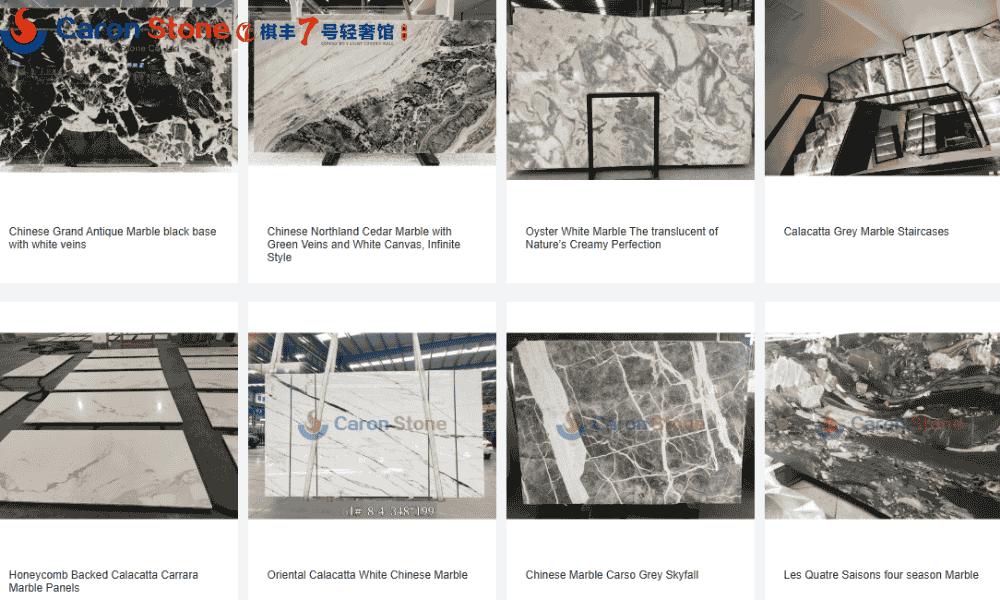
Marble Tiles Suppliers
How to Check Marble Tile Quality
Color and Vein Range
Buyers should inspect whether the delivered material falls within the approved color range. Natural variation is expected, but the supplier should not mix obviously incompatible batches without disclosure.
Thickness Tolerance
Excessive thickness variation can make installation difficult and increase adhesive consumption. Calibrated tiles are particularly useful for large floors and commercial projects.
Flatness
Warped tiles can lead to lippage and installation problems. Large formats usually demand tighter substrate and tile flatness control.
Edge Squareness
Square, consistent edges help maintain stable joint widths. Geometric or waterjet patterns require even tighter precision.
Finition de la surface
Inspect gloss consistency, scratches, pinholes, resin marks and other visible surface conditions.
Chips, Cracks and Fissures
Natural fissures and mineral lines should be distinguished from structural cracks. Some marble may be resin-treated or reinforced during processing; this should be appropriate for the material and application.
| Inspection Point | What to Check | Potential Consequence if Ignored |
|---|---|---|
| Couleur | Shade range and vein density | Visually inconsistent installation |
| Dimensions | Length and width tolerance | Uneven grout joints |
| Épaisseur | Calibration consistency | Lippage and installation difficulty |
| Flatness | Warping | Uneven finished surface |
| Edges | Chips and squareness | Poor joints and visible defects |
| Finition | Gloss and texture consistency | Patchy appearance |
| Emballage | Pallet strength and separation | Transit breakage |
How Much Extra Marble Tile Should You Order?
Ordering exactly the calculated floor or wall area is risky. Cutting, breakage, pattern matching and future replacement all require additional material.
A common planning range is approximately 10–15% extra, but the correct quantity depends on layout complexity.
- Simple rectangular layouts may require less overage.
- Diagonal installation increases cutting waste.
- Herringbone and geometric layouts may require more material.
- Strong vein matching can reduce usable yield.
- Commercial projects should retain spare tiles for future repairs.
If the layout is simple → calculate standard installation waste.
If the layout uses strong vein matching or geometric cutting → allow a larger safety quantity.
Marble Tile Installation
Prepare the Substrate
The substrate should be structurally stable, clean, flat and suitable for the intended installation system. Wet areas need appropriate waterproofing before stone installation.
Large-format marble is less forgiving of uneven substrates because a small variation can create noticeable lippage across the finished surface.
Dry Layout Before Installation
Dry laying is especially valuable with natural stone. Tiles can be arranged before installation to distribute dark and light pieces and avoid undesirable color clusters.
For strong-veined marble, the installer can also rotate pieces to create better visual flow.
Choose the Correct Adhesive
The adhesive should be compatible with natural stone and project conditions. Light-colored marble frequently requires a white or light-colored adhesive to reduce the risk of visible discoloration through the stone.
Installer and adhesive manufacturer recommendations should be followed for the specific system.
Cutting Marble Tiles
A suitable diamond wet-cutting system is generally preferred for clean cuts and reduced dust. Proper equipment also helps minimize edge chipping.
Workers should follow applicable silica-dust safety requirements when cutting, drilling or grinding stone.
Grouting Marble Tiles
Grout should be compatible with natural marble. Highly contrasting grout or abrasive materials can create staining or scratching risks depending on the stone.
Testing on a spare tile before full installation is a sensible precaution.
Sealing Marble Tiles
Some marble installations benefit from a penetrating sealer to reduce liquid absorption and staining risk.
A sealer should not be described as a complete protective shield. It does not make marble resistant to every stain, scratch or acidic chemical.
Can Marble Tiles Be Used With Underfloor Heating?
Natural stone can work well with correctly designed underfloor heating systems because stone conducts heat effectively. However, substrate movement, heating cycles, adhesive suitability, movement joints and installation procedures need to be considered.
The heating system should be commissioned according to the relevant manufacturer’s instructions rather than switched rapidly to full temperature immediately after tile installation.
Marble Tile Care and Maintenance
Daily Cleaning
Remove dust and grit regularly because abrasive particles can scratch polished stone over time. Use soft cleaning tools and a pH-neutral cleaner designed for natural stone.
Clean Spills Quickly
Wine, coffee, oil, cosmetics and colored liquids should be removed promptly. The faster a spill is cleaned, the lower the opportunity for staining.
Avoid Acidic Cleaners
Vinegar, lemon-based cleaners and acidic bathroom chemicals can etch many marble surfaces. Strong alkaline or abrasive cleaners may also damage the finish.
Use Entrance Mats in Commercial Areas
Mats can reduce the quantity of sand, dirt and abrasive particles tracked onto marble floors. This simple measure can make a significant difference in hotels, restaurants and retail entrances.
Plan Long-Term Maintenance
High-traffic polished floors may eventually require professional repolishing or refinishing. Building owners should treat maintenance as part of total lifecycle cost rather than an unexpected repair.
Marble Tile Prices: What Actually Affects Cost?
Marble tile prices vary widely because there is no single marble commodity. A common Carrara tile and a highly selected Calacatta tile can belong to completely different price categories.
Price drivers include:
- Marble species and quarry source
- Availability and rarity
- Color and vein selection
- Tile dimensions
- Épaisseur
- Surface finish
- Calibration requirements
- Custom pattern processing
- Order quantity
- Quality sorting
- Emballage
- Freight
Why Price per Square Meter Is Not Enough
Project cost should include much more than purchase price.
Effective Project Cost = Material + Waste + Freight + Installation + Maintenance + Replacement Risk
A cheaper tile can create higher total cost if it arrives with excessive breakage, inconsistent thickness or poor sorting.
Marble Tiles Wholesale Buying Guide
Who Buys Marble Tiles Wholesale?
Marble Tiles wholesale buyers include stone distributors, tile retailers, developers, contractors, hotel procurement companies, building-material importers and design-build firms.
Wholesale buying involves different priorities from purchasing a few boxes locally. Container loading, batch consistency, production capacity, MOQ, lead time and claim handling become important.
What Wholesale Buyers Should Confirm
| RFQ Item | Pourquoi c’est important |
|---|---|
| Material name or sample | Defines the marble direction |
| Required dimensions | Determines production method and yield |
| Épaisseur | Affects processing, weight and installation |
| Finition | Changes appearance and cost |
| Quantity | Determines batch and production planning |
| Application | Helps assess material suitability |
| Color range | Establishes sorting expectations |
| Packing requirements | Reduces transit damage |
| Destination | Supports shipping planning |
| Inspection requirements | Defines QC expectations before shipment |
Factory Direct vs Local Distributor
Factory-direct purchasing can work well for large planned orders, custom dimensions and project packages. It can also provide better control over fabrication and private-label requirements.
Local distributors may be more practical for small urgent orders, physical stock inspection and quick replacement.
If quantity is small and speed is critical → local inventory may be better.
If quantity is large or custom fabrication is required → factory-direct sourcing may provide better project economics.
How to Choose a Marble Tile Supplier
Check Material Sourcing Capability
A capable supplier should understand block and slab selection rather than simply purchase random finished tiles after receiving an order.
Check Processing Capability
Ask whether the supplier can support cutting, calibration, polishing, honing, waterjet work and project-specific dimensions.
Check Quality Control
QC should cover dimensions, thickness, color range, finish, edge condition, packing and quantity.
Ask for Production and Packing Photos
Remote buyers benefit from visual documentation before shipping. Photos and video can confirm production status and reduce misunderstandings.
Review Export Packing
Natural stone is heavy and can be brittle. Strong pallets or crates, proper separation and load stability are important.
Evaluate Communication, Not Only Price
A supplier that answers technical questions clearly may save more money than a cheaper supplier that leaves drawings or tolerances ambiguous.
Common Mistakes When Buying Marble Tiles
Buying Only by Sample
A sample cannot show complete natural variation. Buyers should approve a color range for larger projects.
Expecting Perfect Uniformity
Natural marble varies. Buyers who need exact repetition may be more satisfied with manufactured porcelain.
Choosing the Wrong Finish
Highly polished marble may not be suitable for every wet or high-traffic floor.
Ignoring Thickness Tolerance
Inconsistent thickness can increase installation cost and create lippage.
Ordering the Exact Area
Without overage, a few broken or incorrectly cut pieces can delay installation.
Comparing Only Unit Price
Sorting, packing, waste and replacement risk often matter more than a small difference in quoted square-meter price.
Ignoring Packing Quality
Saving a small amount on packing can result in far larger losses after international shipping.
No Maintenance Plan
End users should understand pH-neutral cleaning, spill control and potential sealing requirements before handover.
If This Is Your Project, Choose This Marble Tile Direction
| If You Need | Recommended Direction | Pourquoi |
|---|---|---|
| Luxury bathroom | Carrara, Calacatta or soft white marble | Creates a bright and premium appearance |
| Hotel lobby | Large-format marble floor tiles | Reduces joints and increases visual continuity |
| Restaurant or bar | Black, green or dramatic marble | Creates stronger brand identity |
| High-traffic commercial floor | Suitable marble with abrasion and finish review | Balances appearance with long-term performance |
| Feature wall | Large-format vein-matched marble | Improves visual continuity |
| Shower floor | Small-format marble mosaic | Fits drainage slopes and provides more grout joints |
| Traditional interior | Tumbled or honed marble | Creates a softer aged appearance |
| Wholesale stock | Popular colors in standard dimensions | Supports wider resale demand |
| Custom luxury project | Cut-to-size package with approved drawings | Reduces onsite cutting and layout errors |
Standards, Testing and Safety Considerations
Dimension Stone Testing
Commercial stone specifications may include recognized tests for absorption, density, compressive strength, modulus of rupture, flexural strength and abrasion resistance. ASTM C503/C503M provides a recognized specification framework for marble dimension stone.
The required testing depends on application. A decorative residential bathroom wall does not normally require the same performance documentation as a large public floor.
Résistance au glissement
Floor finishes should be selected according to use and local requirements. Wet entrances, bathrooms and public floors may require particular slip-resistance performance.
Do not assume that “natural stone” automatically means suitable for every floor condition.
Silica Dust During Fabrication
Cutting, grinding or drilling stone can generate respirable crystalline silica-containing dust. Fabricators and installers should follow applicable workplace safety rules, including wet processing, dust extraction and suitable respiratory protection where required.

Carreaux de marbre
Frequently Asked Questions About Marble Tiles
1. What are the most popular types of Marble Tiles?
The most popular Marble Tiles include Carrara, Calacatta, Statuario, Nero Marquina, beige marble, green marble and other regional natural stones. Carrara is commonly selected for bathrooms and classic interiors because of its soft grey veining, while Calacatta and Statuario are often chosen for more luxurious feature areas. Black and green marbles create stronger visual contrast in restaurants, hotels and decorative spaces. The best choice depends on application, desired variation, maintenance expectations, budget and whether the project needs calm repetition or dramatic natural movement.
2. What size Marble Tiles are best for floors?
The best marble tile size depends on room dimensions, substrate flatness, design style and installation capability. Formats such as 300 × 600 mm and 600 × 600 mm are common because they provide a practical balance between handling and visual continuity. Larger Marble Tiles can make hotel lobbies and large residential floors look more seamless because they reduce grout joints, but they require flatter substrates and more careful handling. Smaller tiles can be better for compact bathrooms, irregular areas and decorative layouts. Buyers should select size according to the actual floor plan instead of assuming larger tiles are always better.
3. Are Marble Tiles suitable for bathrooms and showers?
Yes, Marble Tiles are widely used for bathroom floors, vanity walls, shower walls and decorative niches. Their natural veining can create a premium spa-like appearance, particularly with white, beige or grey marble. However, bathrooms require proper waterproofing, compatible adhesives, suitable grout and an appropriate cleaning routine. Shower floors also require attention to slip resistance and drainage. Small marble mosaics are often practical for shower floors because the additional grout joints help the surface follow the required slope. Acidic bathroom cleaners should generally be avoided because many marbles can etch.
4. How much extra Marble Tile should I order?
Many projects order approximately 10–15% more Marble Tile than the measured installation area, although the correct overage depends on the layout, room geometry, pattern and natural variation. Straight rectangular installations may require less waste, while diagonal layouts, herringbone designs, waterjet patterns and strong vein matching can require more material. Commercial projects should also retain spare tiles from the original batch for future repairs because obtaining an exact natural-stone match years later may be difficult. Buyers should calculate cutting waste, breakage, visual selection and future replacement needs before confirming the order quantity.
5. What should wholesale buyers check before ordering Marble Tiles?
Wholesale buyers should confirm marble type, approved color range, tile dimensions, thickness tolerance, finish, quantity, calibration, flatness, edge condition, packing method, MOQ, production lead time and inspection requirements before ordering. Actual production samples or range samples are useful for establishing acceptable natural variation. Importers should also review pallet or crate strength, labeling, container-loading method and replacement terms because transit damage can significantly affect landed cost. Comparing only the unit price per square meter can be misleading; usable quality, breakage rate, supplier communication and consistency are equally important for profitable wholesale purchasing.
Références
- “ASTM C503/C503M Standard Specification for Marble Dimension Stone” — ASTM International Committee C18 — ASTM International.
- “ASTM C97/C97M Standard Test Methods for Absorption and Bulk Specific Gravity of Dimension Stone” — ASTM International Committee C18 — ASTM International.
- “ASTM C170/C170M Standard Test Method for Compressive Strength of Dimension Stone” — ASTM International Committee C18 — ASTM International.
- “ASTM C880/C880M Standard Test Method for Flexural Strength of Dimension Stone” — ASTM International Committee C18 — ASTM International.
- “Dimension Stone Design Manual” — Natural Stone Institute Technical Committee — Natural Stone Institute.
- “Natural Stone Care & Cleaning” — Natural Stone Institute — Natural Stone Institute Consumer Resources.
- “Worker Exposure to Silica During Countertop Manufacturing, Finishing and Installation” — OSHA and NIOSH — Occupational Safety and Health Administration / National Institute for Occupational Safety and Health.
- “Installation of Dimension Stone” — Marble Institute of America / Natural Stone Institute Technical Committee — Natural Stone Institute.
Marble Tiles Selection and Buying Decision Framework
What Makes Marble Tiles Different From Manufactured Tiles?
Marble Tiles are cut from natural geological material rather than produced from a controlled printed pattern. Their value comes from natural variation: vein direction, mineral concentration, background tone and crystalline texture change between pieces. This creates greater individuality than most manufactured surfaces, but it also means procurement must include range approval, sorting and installation planning. Buyers who want exact repetition should recognize that natural variation is not a production error; it is part of the material itself.
Why Does Application Need to Come Before Color?
The same beautiful marble can perform very differently in a decorative wall, hotel lobby, shower floor or exterior terrace. Application determines whether the buyer should prioritize abrasion, slip resistance, absorption, thickness, finish, waterproofing or ease of maintenance. Selecting marble only by appearance can therefore create downstream problems even when the stone itself is high quality.
A bathroom feature wall can prioritize vein movement. A public floor needs stronger performance review. A shower floor needs drainage and slip consideration. A wholesale distributor needs standard dimensions and commercially usable color ranges. The correct material is the one that solves the specific project requirement.
How Should Buyers Evaluate Marble Tile Quality?
Quality should not be reduced to whether a tile looks attractive in a photograph. A complete evaluation includes color range, dimensions, thickness tolerance, flatness, edge squareness, finish consistency, natural fissures, resin treatment and packing. For commercial projects, physical-property tests may also be relevant. These criteria determine whether tiles install efficiently and whether the completed surface looks consistent.
Option Logic: Which Marble Tile Direction Fits the Project?
| Project Need | Recommended Option | Decision Reason |
|---|---|---|
| Bright luxury bathroom | White Carrara, Calacatta or similar Marble Tiles | Creates a clean premium environment |
| Large hotel lobby | Large-format calibrated marble floor tiles | Reduces joints and improves visual continuity |
| Shower floor | Small-format marble mosaics with suitable finish | Supports drainage slopes and increases joint density |
| Strong hospitality identity | Green, black or dramatically veined marble | Provides a more distinctive visual focal point |
| Low-maintenance high-traffic environment | Compare porcelain before final marble selection | Manufactured tile may better suit operational requirements |
| Wholesale resale | Popular marble colors in repeatable standard formats | Improves inventory flexibility |
| Custom design project | Cut-to-size or waterjet Marble Tiles | Supports project-specific dimensions and patterns |
Consideration: What Are the Main Risks When Buying Marble Tiles?
The most common risks are not dramatic manufacturing failures. They are small specification errors repeated across a large quantity: inconsistent shade, thickness differences, incorrect finish, inadequate overage, poor packing or unrealistic maintenance expectations.
A buyer who fails to approve natural variation may reject material after delivery even though it is geologically normal. A contractor who orders the exact measured quantity can delay the project after cutting loss. A distributor who chooses weak packing to save money may receive chipped edges and broken tiles. A designer who specifies polished marble in an unsuitable wet environment may create unnecessary maintenance or slip concerns.
These problems are usually easier to prevent before production than correct after installation.
Why Is Total Landed Cost More Important Than Unit Price?
Two suppliers may quote different prices per square meter, but the lower quotation does not automatically create the lower project cost. Poor dimensional accuracy can increase installation labor. Excessive breakage can require replacement shipments. Weak sorting can create rejection, while inadequate packaging can damage material during international transport.
Professional buyers should therefore compare:
- Material price
- Usable quality
- Installation waste
- Sorting consistency
- Emballage
- Freight
- Replacement probability
- Installation labor
- Maintenance expectations
The correct procurement question is not “Which Marble Tiles are cheapest?” but “Which supply option produces the lowest risk-adjusted project cost?”
How Are Marble Tile Design Trends Changing?
Luxury interiors are increasingly moving away from covering every surface in one uniform material. Designers are using natural marble more strategically as a focal material: dramatic entrances, patterned floors, oversized bathroom walls, geometric mosaics, fireplaces and hospitality feature areas. At the same time, digital fabrication is expanding the use of waterjet patterns and mixed-marble compositions.
This trend favors buyers who can combine design selection with technical control. Stronger visual materials require better dry layouts, color grouping and fabrication planning. The more expressive the stone becomes, the more important pre-installation approval becomes.
How Should Importers and Project Buyers Make the Final Decision?
Start by defining the application, traffic, moisture exposure, design objective and maintenance expectations. Then select marble type, dimensions, thickness and finish. Approve the acceptable natural color range, confirm technical tolerances, calculate sufficient overage and review packaging before shipment. For commercial projects, request appropriate inspection records and testing where required.
Recommandation : Choose Marble Tiles when natural variation, architectural character and premium material value are important to the project. Choose them with greater care in high-traffic, wet or maintenance-sensitive environments, and compare alternatives when operational simplicity matters more than natural-stone exclusivity.
Before requesting a wholesale or project quotation, prepare the marble reference, required size, thickness, finish, quantity, application, drawings and destination. A detailed RFQ allows the supplier to recommend a more accurate material, production and packing solution.