





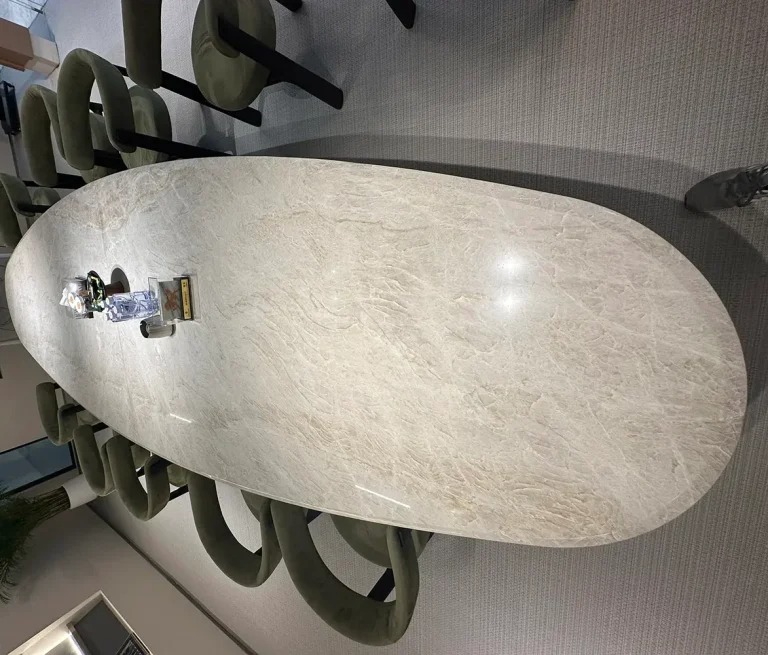
Luxury Translucent Ultra-Thin Stone Panels | Backlit Patagonia Quartzite Veneer
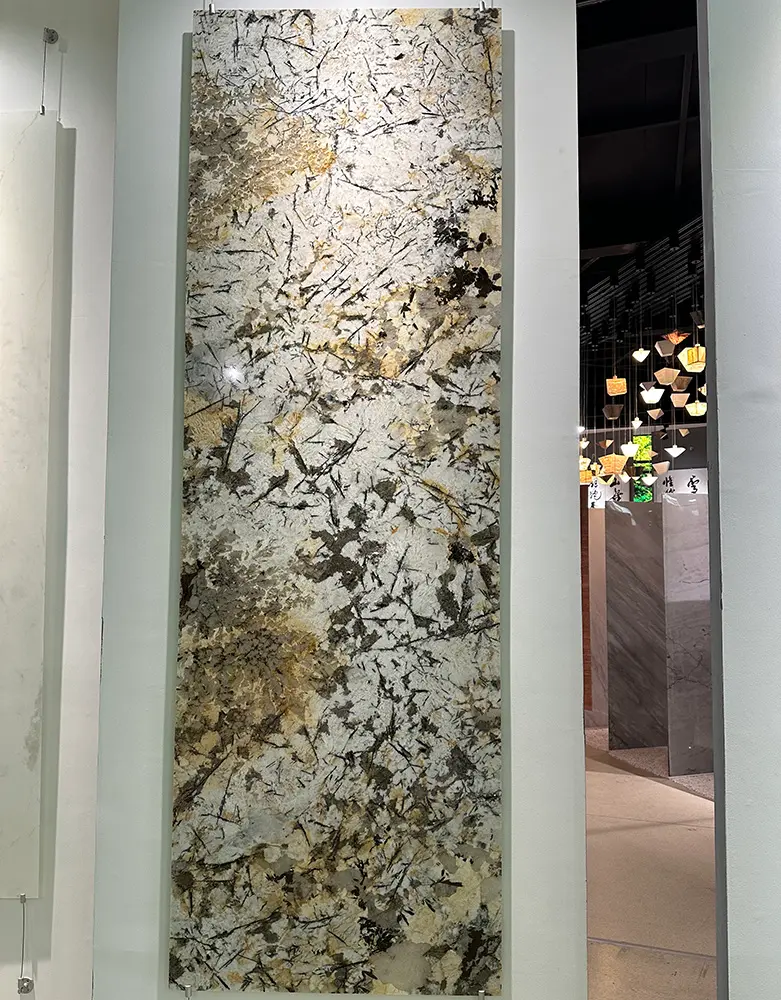
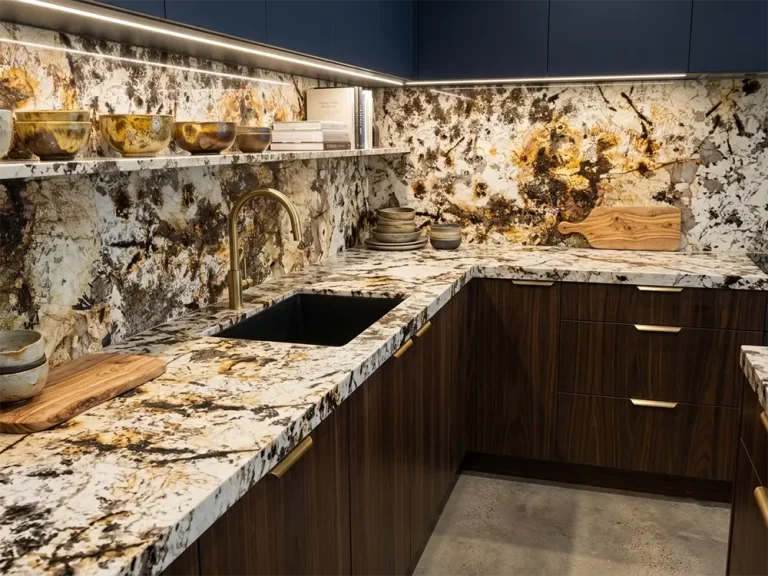
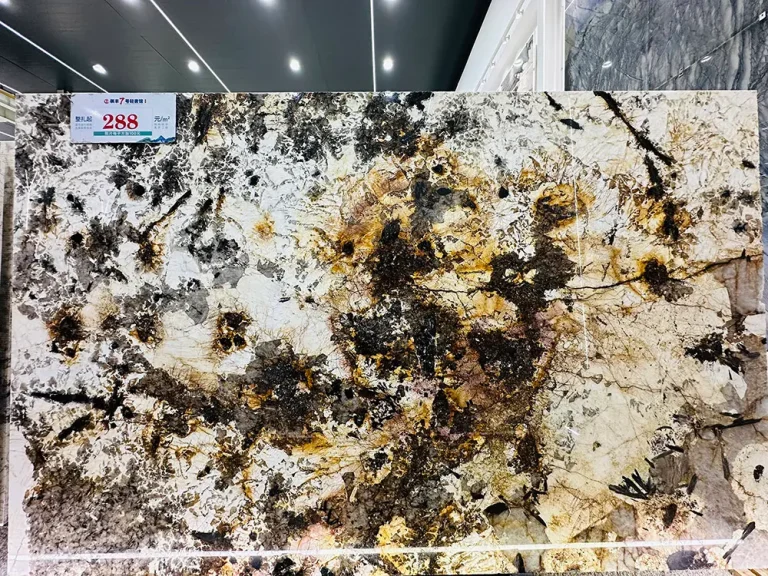
Unlock the explosive visual drama of exotic stone without the extreme weight and structural limitations of traditional solid slabs. Our Backlit Patagonia Quartzite Veneer Panels represent the pinnacle of modern stone composite technology. Patagonia is globally revered for its chaotic, high-contrast geological matrix—a breathtaking collision of icy translucent quartz, creamy opaque feldspar, and sharp black tourmaline crystals. By transforming this raw geology into an ultra-thin, backlit canvas, we allow architects to sculpt with both solid rock and pure light.
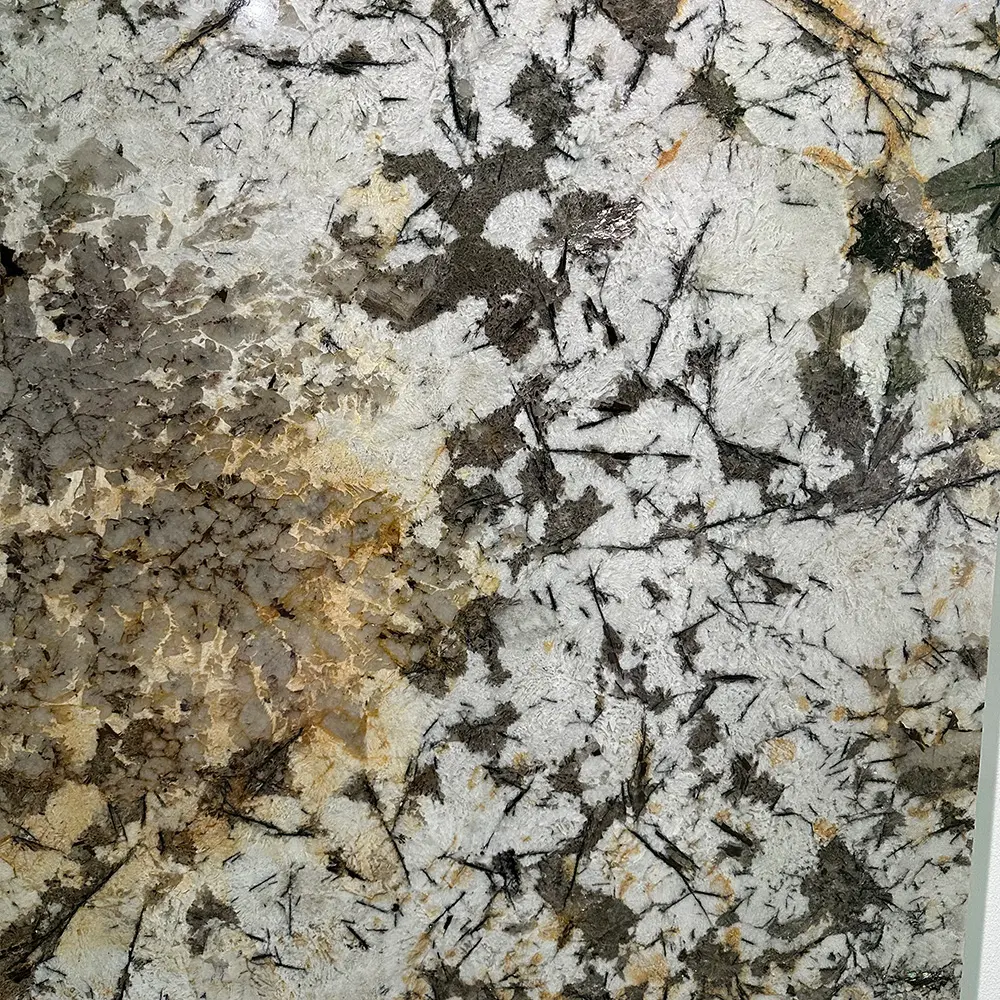
Geology & Ultra-Thin Composite Technology
Originating from the pegmatite formations of Brazil, Patagonia Quartzite possesses unusually large and distinct crystalline structures. To harness its translucency, Caron Stone utilizes advanced multi-blade calibration machinery to slice a pristine micro-veneer from the raw block. This fragile stone layer is immediately vacuum-fused to a highly translucent, high-strength backing—such as Aviation-Grade Fiberglass, Polycarbonate, or Acrylic. This process drastically increases the flexural strength of the crystalline stone while reducing the overall weight to merely 10-15 kg/m², making vertical installations incredibly efficient.
פרטים טכניים וספקיפיקציות
| ספקיפיקציה | פרטים |
|---|---|
| Surface Material | 100% Natural Patagonia Quartzite Veneer (2mm – 5mm) |
| Backing Material | Translucent Fiberglass / Polycarbonate |
| Total Thickness | Typically 5mm to 10mm (Customizable based on application) |
| משקל | Approx. 10 – 15 kg/m² (80% lighter than standard 2cm stone) |
| Light Transmission | Exceptional (Quartz zones glow; Feldspar/Tourmaline form silhouettes) |
Aesthetic Impact & Application
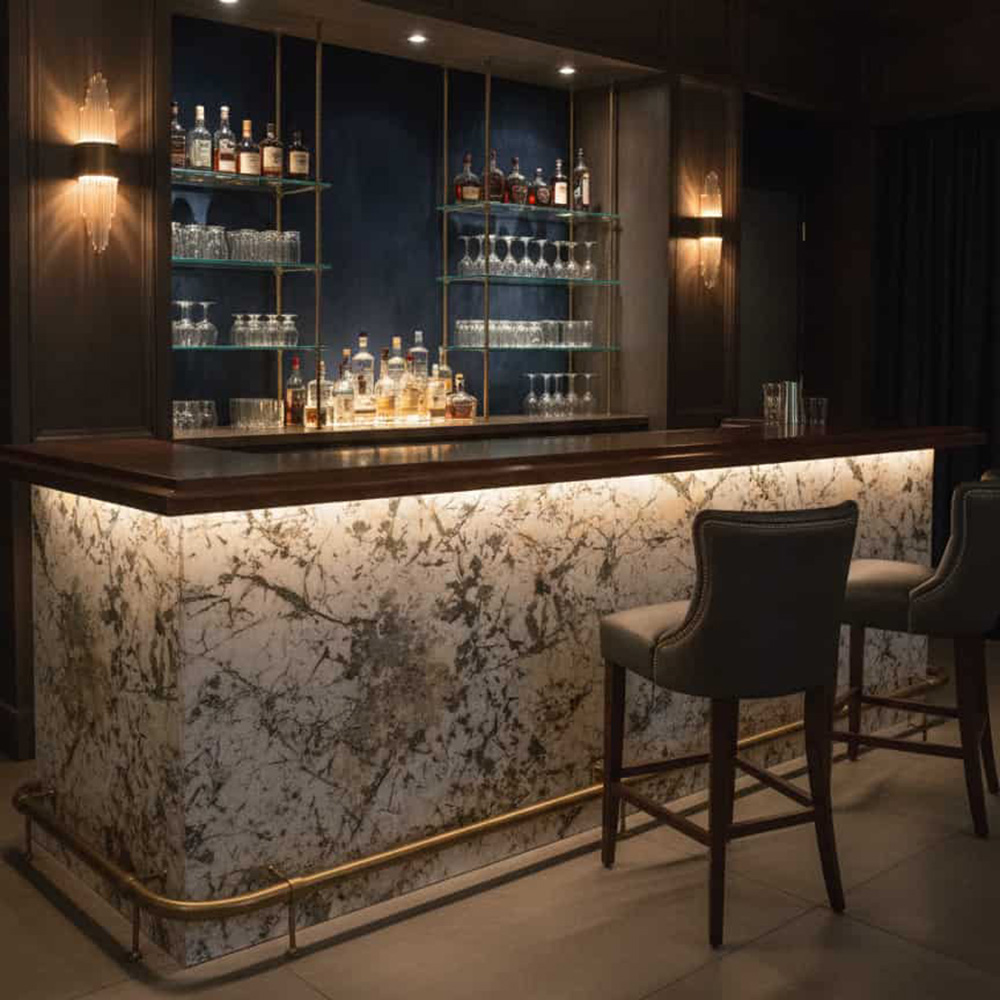
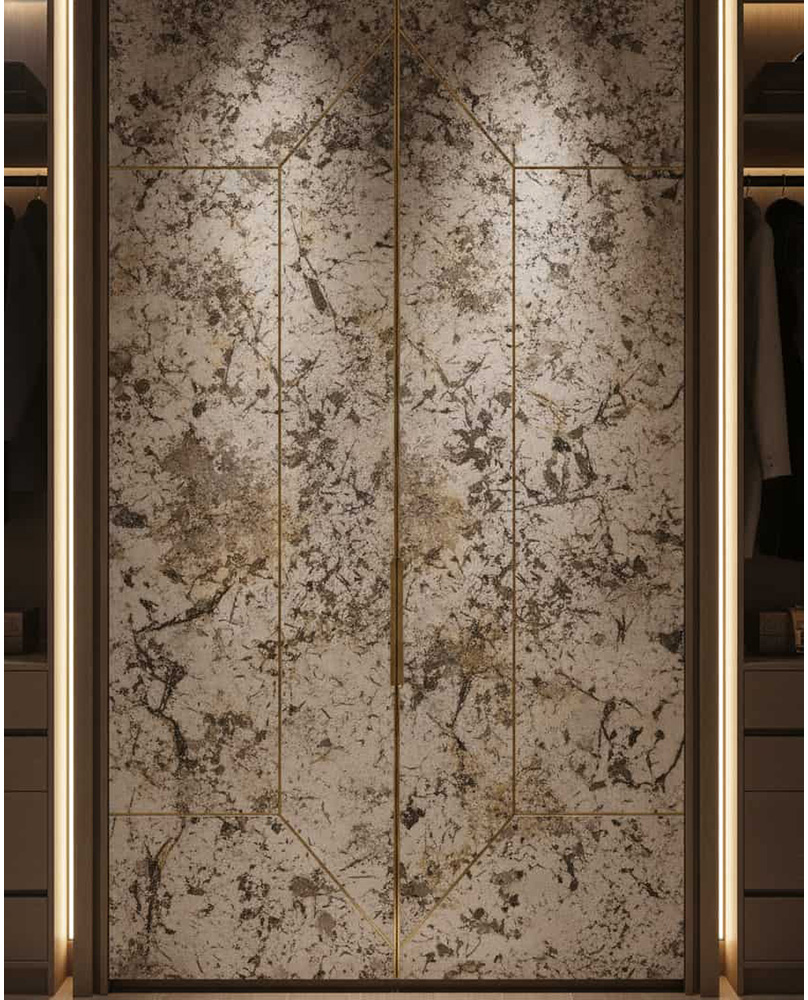
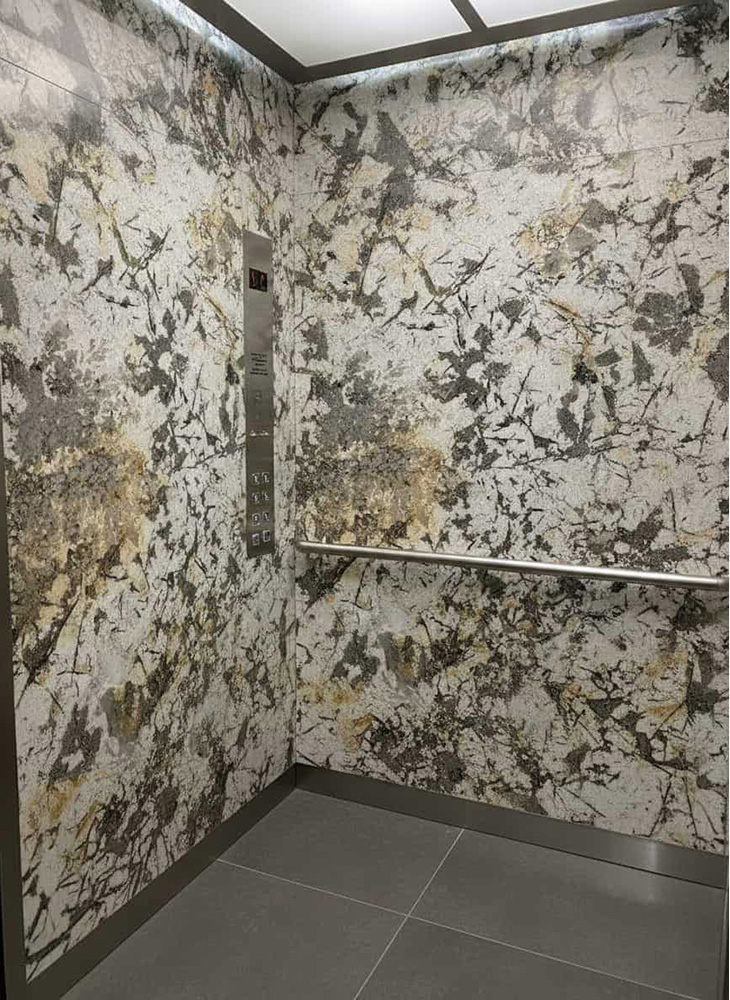
When unlit, the ultra-thin panel is indistinguishable from a solid block of Patagonia Quartzite, offering a profound, rugged elegance. However, once LED backlighting is activated, the panel undergoes a mesmerizing transformation. The clear quartz zones ignite with a warm, radiant luminescence, while the opaque ivory patches and black schorl needles block the light, creating a dramatic, three-dimensional shadow play. This dynamic interplay makes it the undisputed choice for Illuminated Reception Desks, Backlit Elevator Cabs, High-End Retail Displays, and Monumental Interior Facades.
 |  |
Engineer-to-Engineer (E2E): Backlighting & Installation Insights
Critical Considerations for Backlit Patagonia Panels
LED Light Guide Integration: To achieve a flawless, uniform glow without visible LED diode “hotspots,” we strongly advise pairing our translucent panels with edge-lit acrylic LED Light Guide Panels (LGP). Maintaining a 10mm to 20mm air gap between the LGP and the stone backing allows the light to diffuse perfectly across the quartz matrix.
חיתוך מדויק: Despite the stone surface, the composite nature of the panel means it cuts differently than solid rock. Installers must use continuous-rim diamond blades (similar to those used for glass or porcelain) to prevent chipping the ultra-thin stone veneer or delaminating the fiberglass backing during on-site modifications.
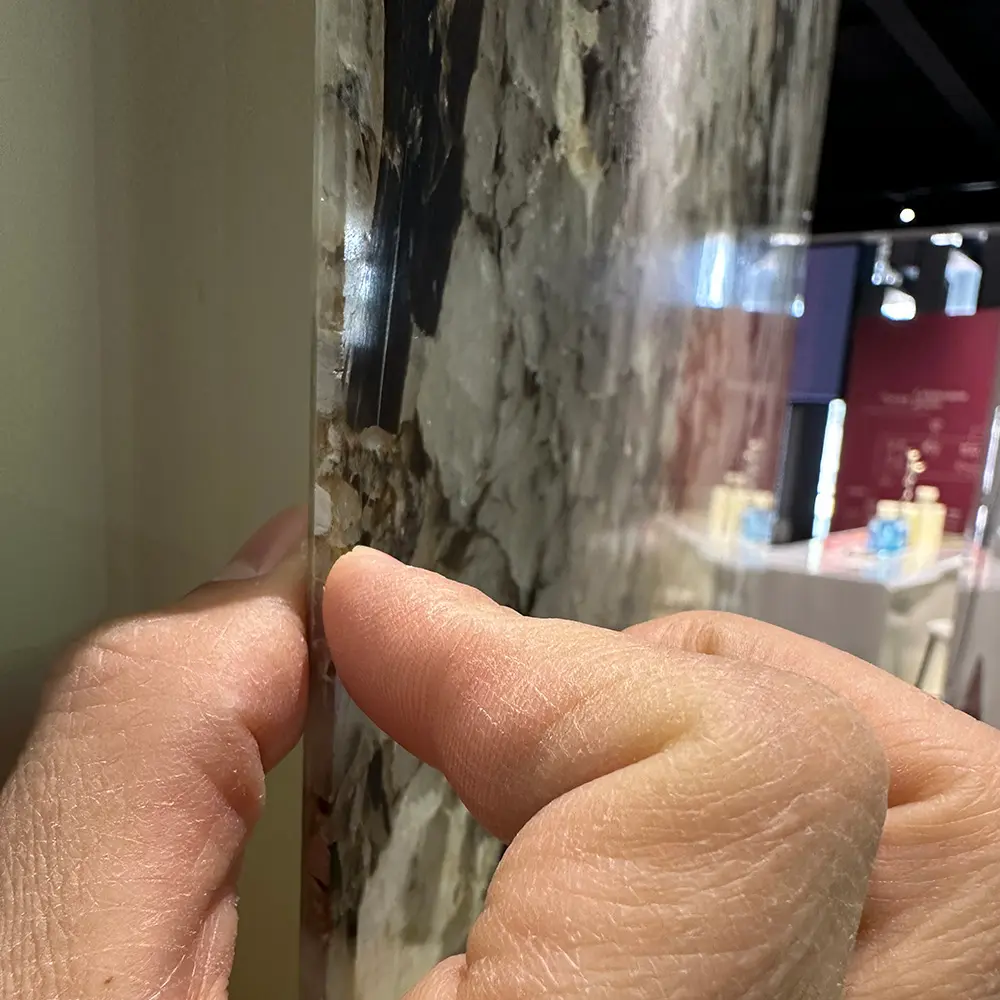
Edge Concealment Profiles: Because the side profile reveals both the stone layer and the translucent backing, exposed edges must be planned for. We recommend utilizing sleek architectural metal trims (such as brushed brass or matte black U-channels) to frame the panels, or utilizing factory-mitered returns for outer corners.
הפניות טכניות וגיאולוגיות
For interior architects specifying ultra-thin stone veneer technology for commercial and marine applications, we recommend consulting these resources:
- Understand the unique geological formation of pegmatitic quartz and tourmaline found in Patagonia Quartzite on Wikipedia.
- Review global standards for lightweight stone composite panels and backlit interior cladding at the מכון האבן הטבעית (NSI).
שאלות נפוצות
It is 100% genuine natural Patagonia Quartzite. We slice a physical 2mm-5mm micro-veneer directly from a raw quarry block, retaining the authentic texture, temperature, and depth of the natural stone.2. Why use this ultra-thin panel instead of a solid 2cm slab for backlighting?
Solid 2cm slabs are incredibly heavy (around 60 kg/m²), difficult to rig vertically, and block a significant amount of light. Our ultra-thin panels reduce weight by 80% and drastically improve the uniformity and intensity of light transmission.3. Will the heat from the LED lights damage the composite panel?
No. Natural quartzite is highly heat resistant, and our aerospace-grade fiberglass resins are thermally stable. However, using high-quality, low-heat LED panels ensures the longevity of your entire lighting system.4. Can I use these panels for a kitchen countertop?
No. Ultra-thin composite panels are engineered strictly for vertical or ceiling applications (cladding, walls, cabinet fronts, bar fascias). They do not have the heavy impact resistance required for horizontal kitchen countertops.
5. What is the maximum size of a single Patagonia panel?
Standard maximum sizes are typically 2400mm x 1200mm (8ft x 4ft), though this is ultimately limited by the dimensions of the raw natural stone block we extract the veneer from.
6. Are these panels suitable for yacht or aircraft interiors?
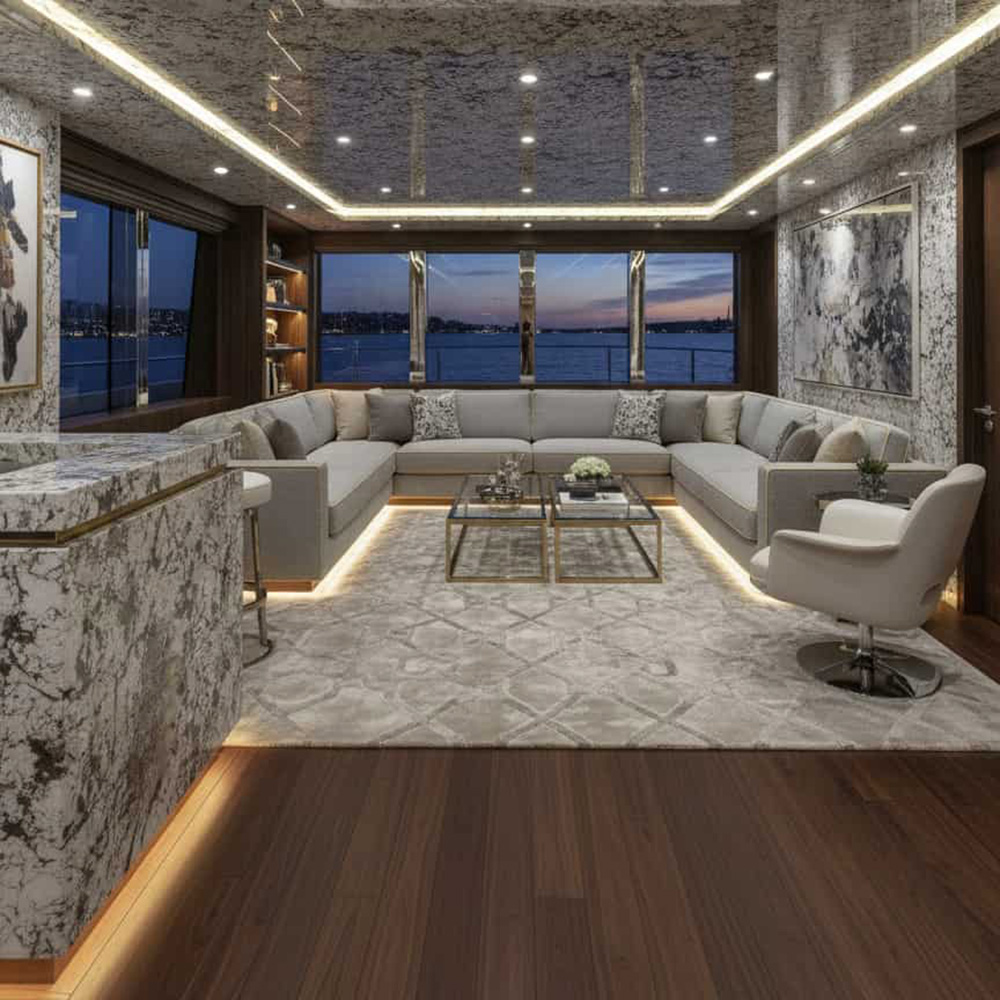
Absolutely. The ultra-lightweight and shatter-resistant properties of the fiberglass composite make these panels the premier choice for luxury marine, RV, and aerospace interiors where strict weight limits apply.
7. Does the stone surface need to be sealed?
Yes, because the face is real natural stone, it retains its natural porosity. It should be treated with a high-quality penetrating stone sealer post-installation to protect against dust and fingerprints.
8. How are the panels attached to the wall?
They are typically installed using architectural Z-clip framing systems or bonded using transparent structural silicones/VHB tapes directly over a light guide panel.
9. Can the panels be curved?
Depending on the specific backing and thickness chosen, some of our ultra-thin panels have mild flexural capacity and can be applied to gently curved surfaces. (See our Flexible Stone product line for sharp curves).
10. How do you package these fragile panels for international shipping?
The panels are packed perfectly flat, face-to-face, with protective foam layers inside heavily reinforced, fumigated wooden crates to ensure zero flex and 0% breakage during sea freight.