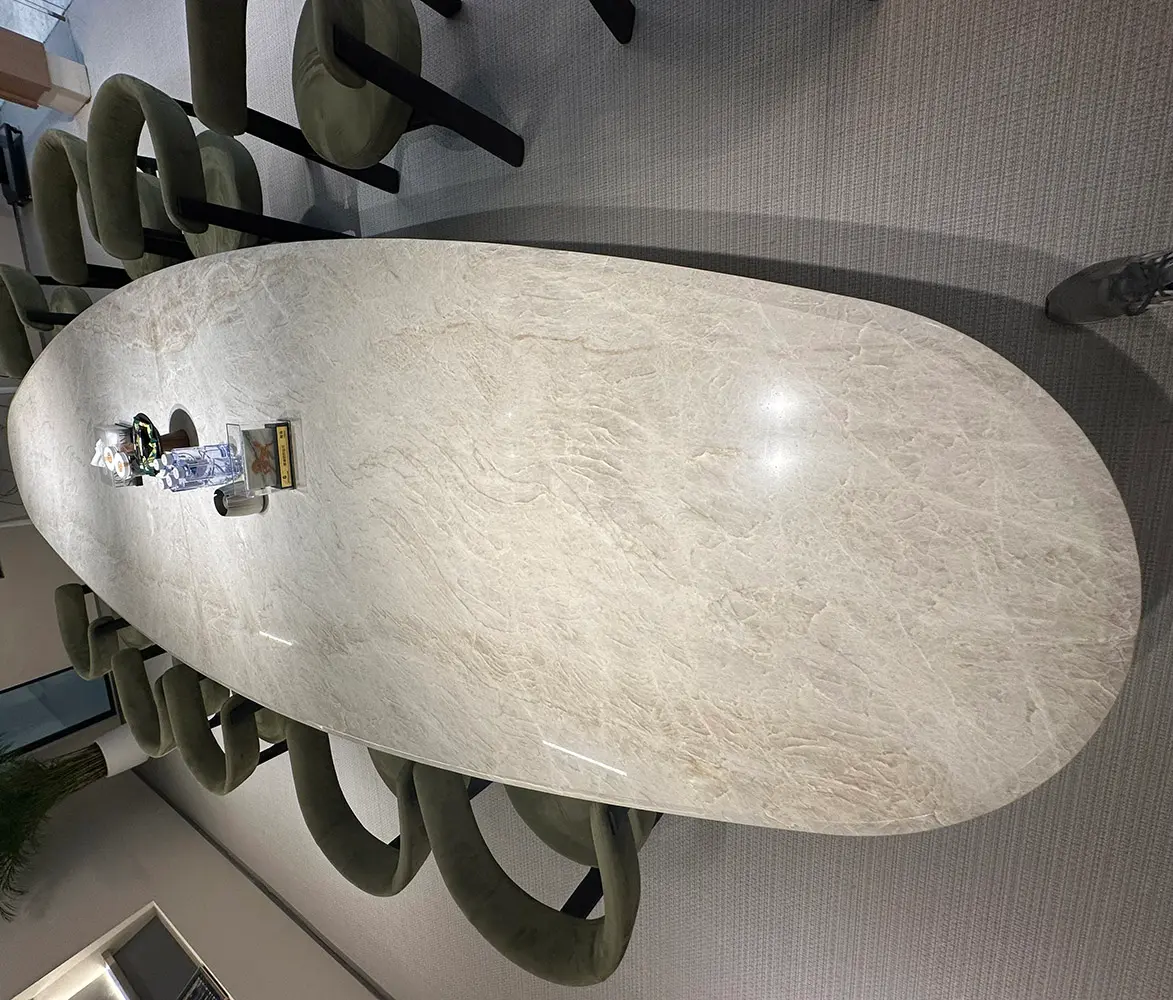






When a Slab Sample Changes the Whole Room
“I thought I wanted white marble,” the client said, holding one sample against the cabinet door and then another against the floor tile. “But now the room feels colder. Why?”
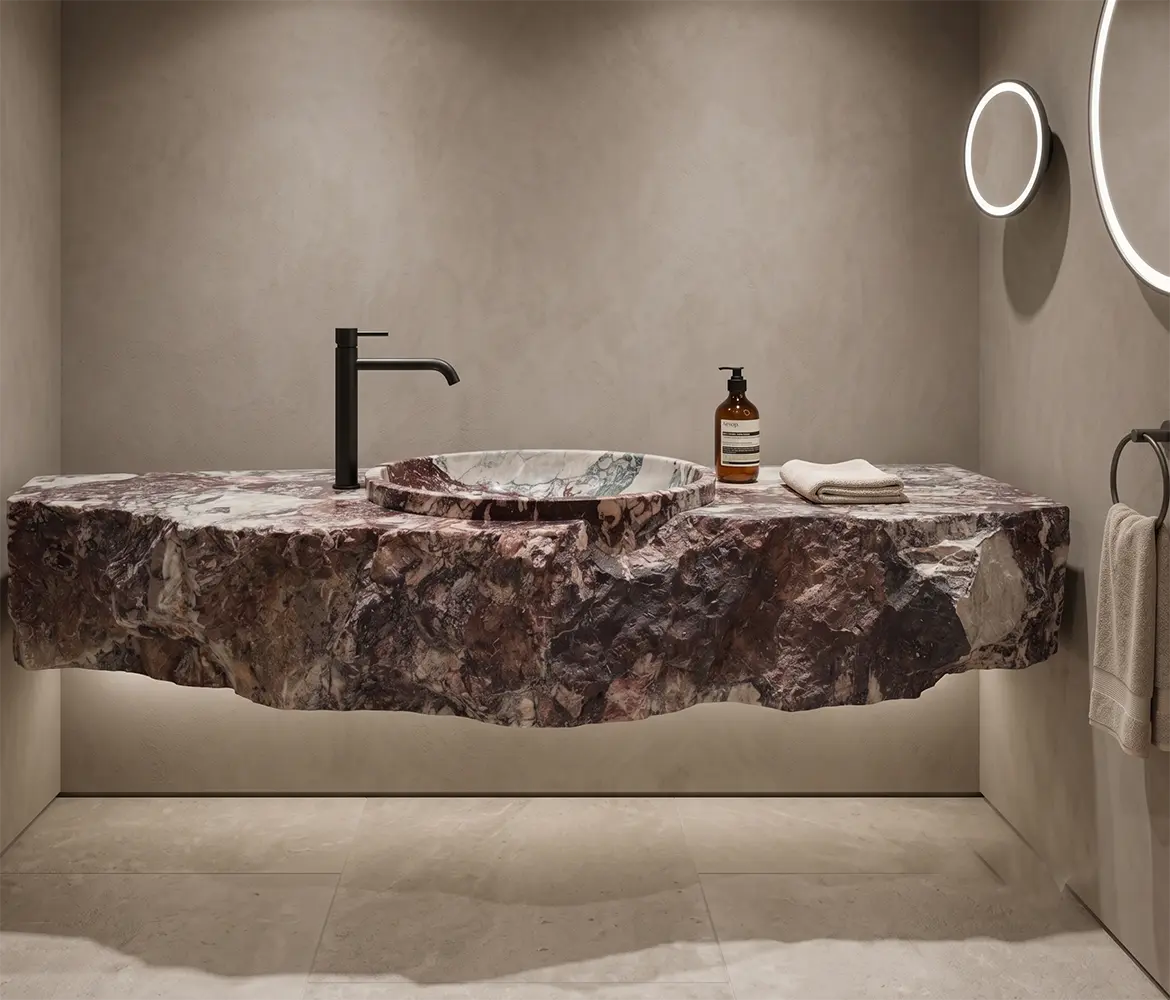
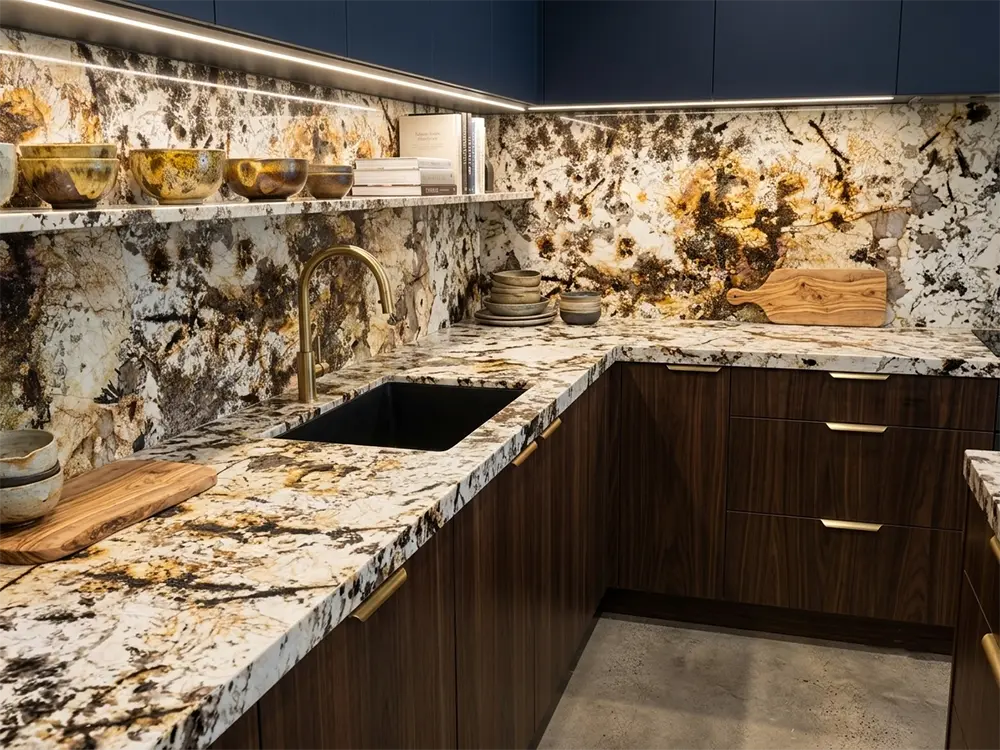
That question shows up in real projects more often than people admit. Buyers usually think they are choosing a stone. In reality, they are choosing mood, brightness, visual weight, contrast, rhythm, and even how large or intimate a room feels once everything is installed. Marble color is never just surface decoration. It changes how light travels, how materials relate to each other, and how expensive, calm, dramatic, or welcoming a space ultimately feels.
That is one reason a supplier’s perspective matters. Caronstone presents itself as a one-stop provider for global high-end stone applications, integrating import-export, production and processing, decoration engineering, and luxury stone sales. For buyers, that matters because marble color decisions are rarely isolated; they sit inside fabrication, detailing, scale, finish, and project coordination.
The practical test is simple: if the marble color works only on a hand sample but fails once it meets wood veneer, brass trim, daylight, and wall paint, it was never the right choice. Color has to survive real architecture. That is also why early specification conversations are more useful than late-stage regret. If a project is already balancing lighting plans, slab matching, and room mood, the smartest move is usually to contact the Caronstone team before the design freezes, not after the wrong tone has already been priced into the job.

Marble Color Is Not Decoration, It Is Spatial Strategy
In interior design, color affects more than taste. It affects perceived order, spaciousness, emotional tone, and how people read the room. A 2023 study on color and space perception found that cream-toned interiors were more often perceived as spacious, simple, and well-organized, while stronger cool or saturated schemes could feel narrower or more complex. Another experimental study on interior space perception confirmed that color and surface treatment influence how people judge openness, visual weight, and ambience. That helps explain why the right piastrelle e lastre di marmo can make a compact bathroom feel lighter, or why the wrong marble color can make a luxury lobby feel heavy before the furniture even arrives.
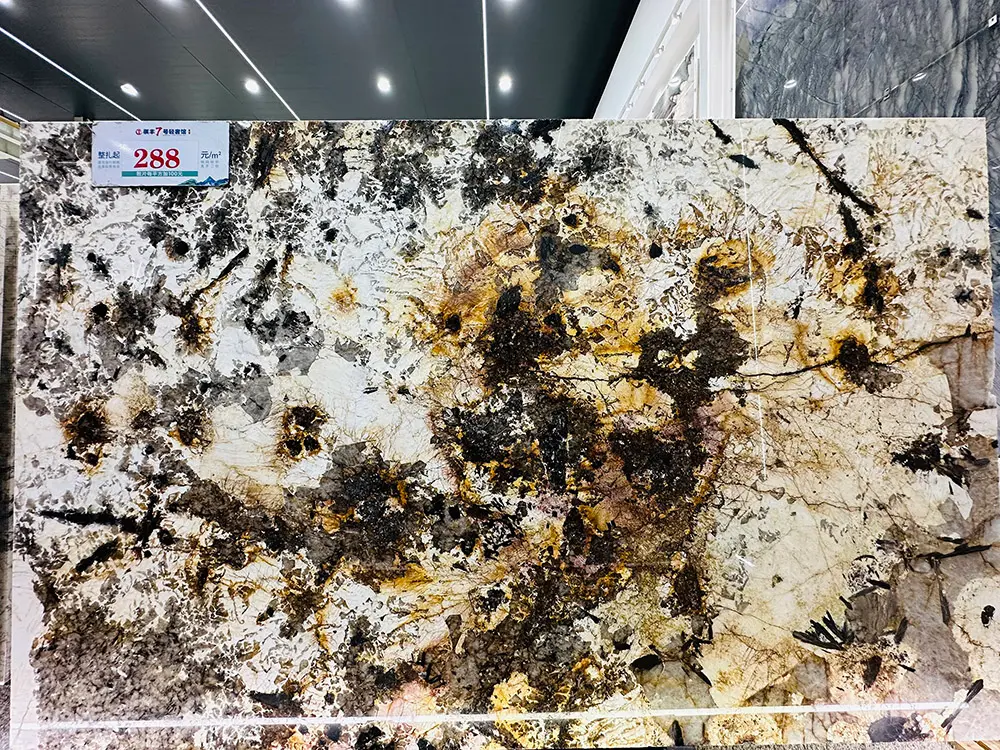
Caronstone’s own product positioning gives a useful case-level example. A bookmatched white slab is not simply “white marble”; it is a visual system. On the page for Panda White marble bookmatch slab, the product is presented for wall, shower, and flooring applications, which immediately tells you its black-on-white movement is meant to be seen at scale, not just on a countertop sample. This is where color becomes narrative. A strongly veined white marble can create a gallery effect in a shower wall, a dramatic focal plane behind a bathtub, or a controlled sense of movement in a feature wall without needing extra ornament.
Why Marmo bianco Still Leads, but Not in the Same Old Way
White marble remains dominant because it does three difficult things at once: it reflects light, supports layering, and keeps a room open to other materials. But modern buyers are no longer chasing flat, sterile white. They want white with character, movement, and emotional warmth. That is why Oriental Calacatta White Chinese marble fits current demand so well. Caronstone describes it as having a pure white background with bold, dramatic veining, which places it in the design zone where luxury comes from contrast and rhythm rather than plain brightness.
The shift away from cold minimalism is visible in broader design data too. Is 2025 trends coverage noted strong movement toward warm off-whites, creams, tans, and organic palettes, while its 2026 trends report highlighted subtly veined marble paired with warm wood tones, deep greens, and muted earth colors. In practice, that means the smartest way to use a white marble collection today is not to make the room look colder and brighter. It is to let white marble become a luminous anchor for wood cabinetry, soft metals, and warmer natural finishes. White still wins—but now it wins by being nuanced.
Grey Marble Is the Quiet Operator in Modern Projects
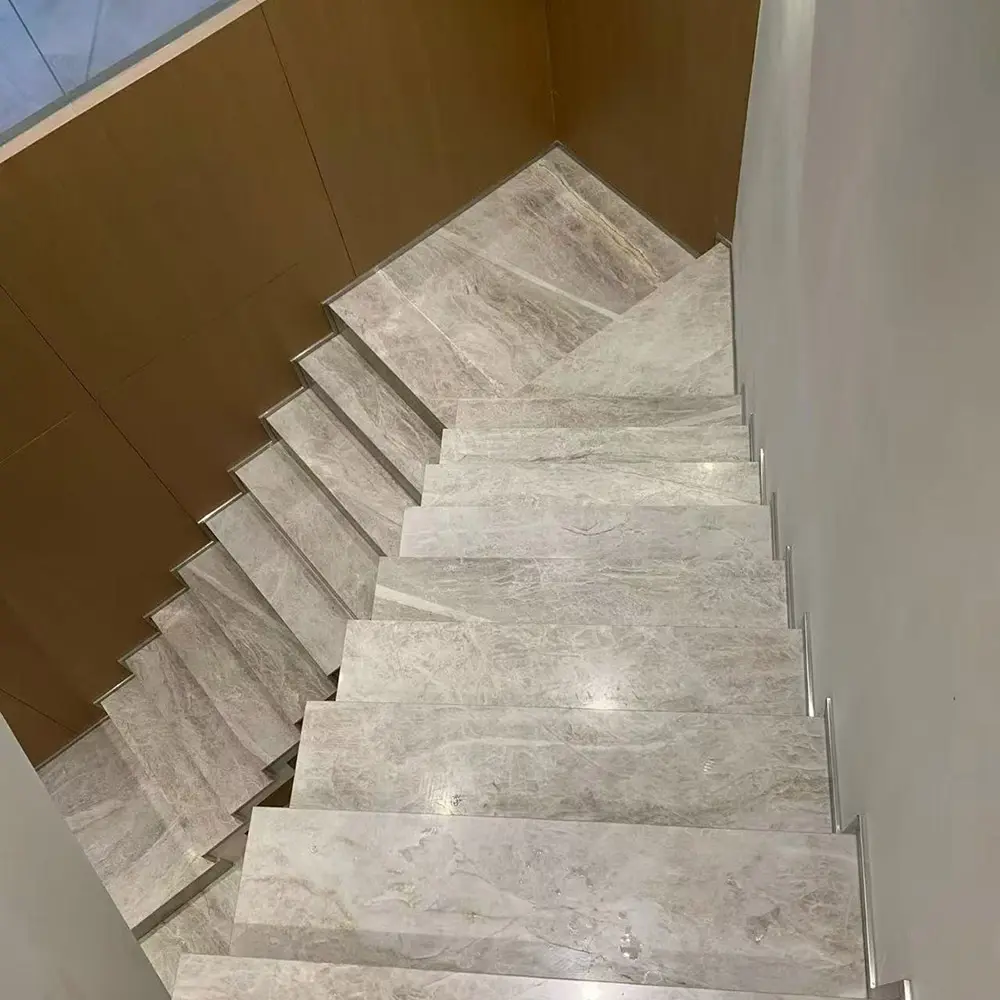
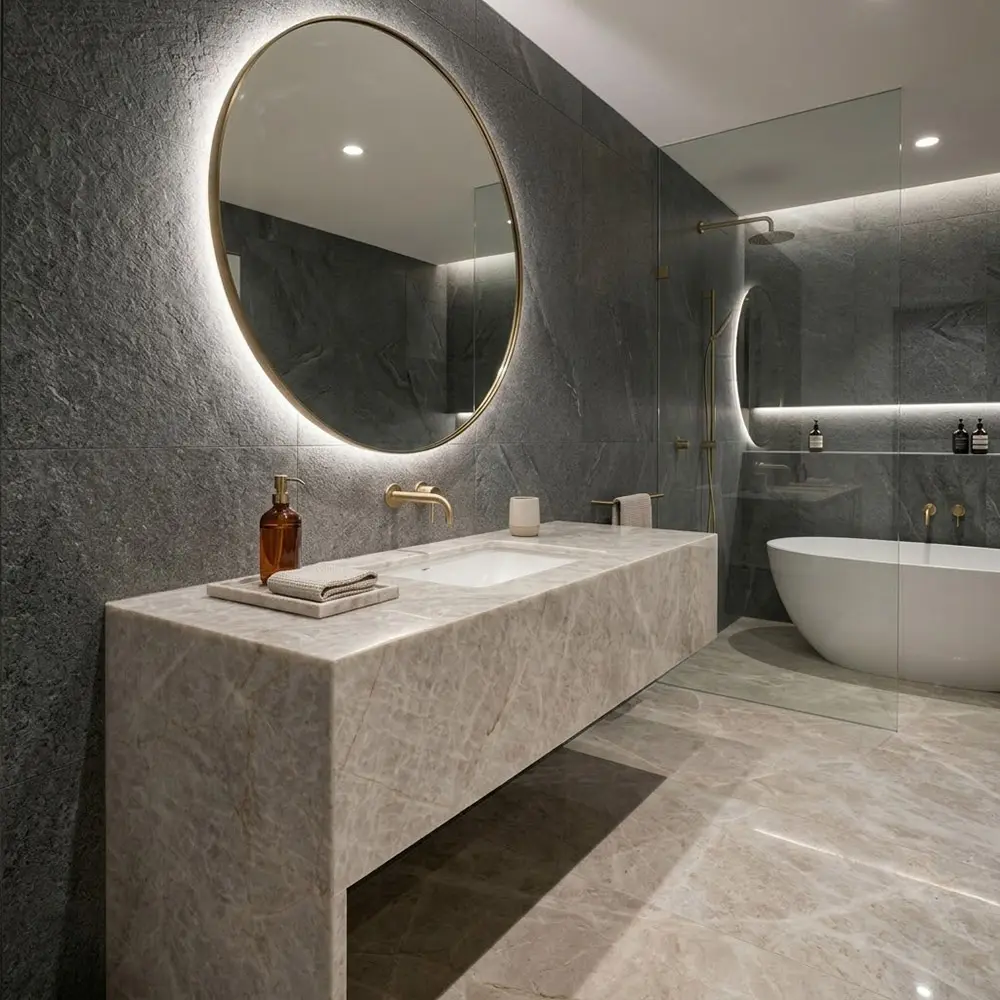
Grey marble is often underestimated because it is quieter than white and less theatrical than black. But in real interiors, grey is frequently the color that holds the scheme together. It softens contrast, supports mixed materials, and gives designers more freedom with lighting temperature, wall colors, and furniture tones. Used well, marmo grigio collezione selections can bridge minimalism and warmth in a way that bright white marble sometimes cannot.
This matters even more in current design language.Is 2026 report describes a market where natural stone with soft veining in green, brown, red, and gold is being used to create “quiet elegance rather than bold contrast,” and where medium-toned woods, creams, and warm grays form a more approachable version of luxury. Grey marble fits that shift perfectly. It is especially strong in flooring, bathroom vanities, and hospitality walls where the room needs texture and sophistication without visual aggression. In other words, grey marble often does not shout—but it makes everyone else in the room look smarter.
Black Marble Turns Contrast into Architecture
Black marble changes the rules immediately. It does not merely decorate a room; it edits it. It sharpens outlines, deepens shadows, and turns light-colored surroundings into deliberate contrast. That is why a curated black marble collezione is so powerful in fireplaces, powder rooms, statement walls, luxury retail, and moody hospitality interiors.
Caronstone’s own article on Chinese black marble describes the material in terms of deep black tones, subtle veining, and sophisticated use in countertops, flooring, and high-end spaces. That framing is accurate from a design standpoint. Black marble is most successful when the project wants confidence, not neutrality. It can make white joinery cleaner, brass richer, and warm timber more architectural. But it also asks for discipline: too much black with weak lighting can flatten the room, while a controlled placement can make the whole interior feel tailored.
A Practical Comparison of Marble Colors in Real Interiors
| Marble color direction | Emotional effect | Best-fit spaces | What it pairs with best | Common mistake |
|---|---|---|---|---|
| Marmo bianco | Bright, open, refined, luxurious | Kitchens, bathrooms, feature walls, lobbies | Warm woods, brass, creamy paint, soft greige textiles | Making it too cold with blue-white lighting and hard grey finishes |
| Grey marble | Calm, balanced, modern, grounded | Flooring, vanities, hospitality spaces, staircases | Oak, black metal, taupe walls, linen textures | Choosing a flat grey that kills material depth |
| Marmo nero | Dramatic, formal, sculptural, high-contrast | Fireplaces, powder rooms, feature walls, bars, boutique retail | Bronze, walnut, off-white plaster, moody lighting | Overusing it in dark rooms with insufficient light |
| Green or warm-toned marble | Organic, character-rich, trend-forward | Bathrooms, islands, accent walls, luxury residential | Wood, leather, antique brass, soft neutrals | Treating it as a novelty instead of building a full palette around it |
The point of this table is brutally simple: there is no universally “best” marble color. There is only a color that matches the room’s job, light quality, and emotional target better than the alternatives.
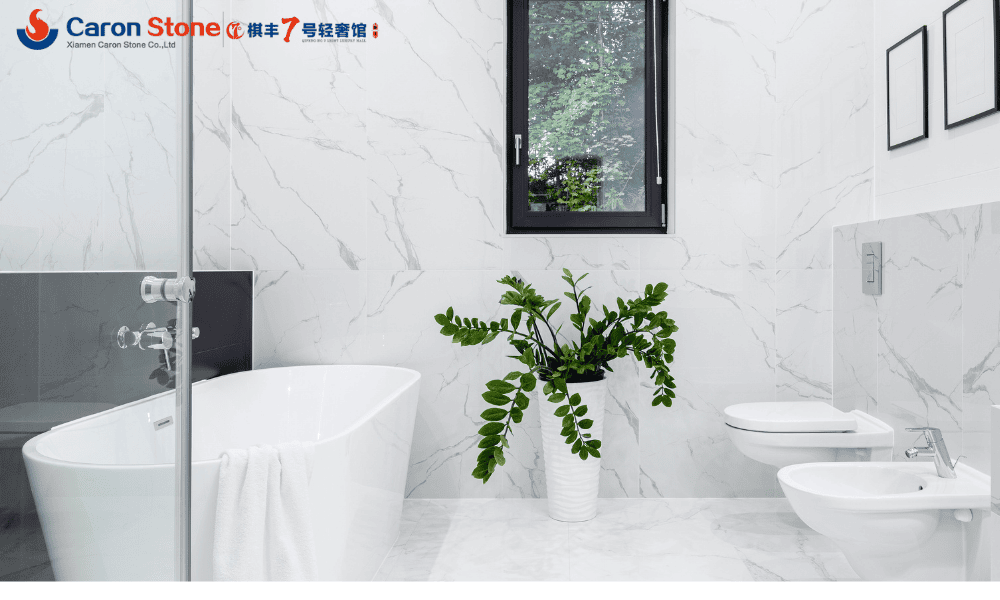 Bathroom white marble tiles | 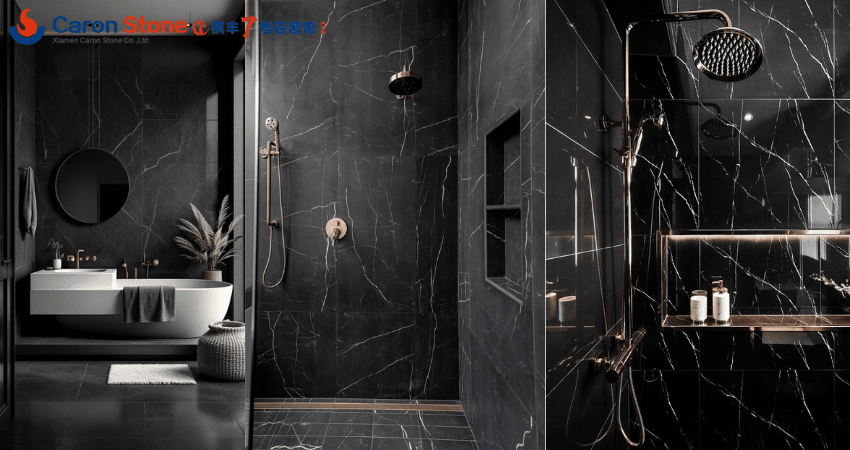 Chinese Black Marble Bathroom Wall |
What the Market Is Saying About Marble Color Right Now
The market is not asking for less personality. It is asking for more controlled personality. Caronstone’s own roundup of top marble colors trending in 2025 points to a trend range that includes more expressive green-led and character-driven stones. Outside the brand’s own content, the pattern is consistent: NKBA’s 2025 kitchen trends report found that 71% of respondents preferred colorful kitchens over an all-classic white kitchen, and 76% selected green as the top shade for 2025. Has also documented the broader move toward warmth, organic modern styling, earthy palettes, and statement natural stone that feels inviting rather than overdone.
That is important for marble buyers because it changes how color should be specified. Five years ago, “safe” often meant white or light grey. Today, safe can also mean sage-veined marble, warm brown movement, or a restrained black statement used in the right place. The new rule is not “avoid bold color.” The new rule is “use bold color with architectural logic.” That is where experienced suppliers and designers separate elegant drama from expensive confusion.
Marble Color Does Not Stay Static Forever
One of the most overlooked parts of marble color selection is time. Buyers compare fresh samples, but installed stone lives with heat cycles, moisture, airborne pollutants, cleaning methods, and sunlight. Caronstone’s article on the scientific exploration of the color changes of marble is useful because it pushes the conversation beyond beauty and into aging.
That concern is backed by broader research. Studies on thermal deterioration show that marble can experience measurable changes in gloss and color parameters under thermal shock and aging cycles. Heritage science research has also documented that discoloration on white marble may result from oxidation of iron-bearing minerals, while USGS explains that acid precipitation can dissolve calcite, roughen exposed surfaces, and create black gypsum crusts in sheltered zones. So when buyers ask whether marble color “changes,” the honest answer is yes—but the cause depends on mineral content, environment, and maintenance conditions. Good interior design is not just picking a beautiful color; it is choosing a beautiful color with a realistic aging path.
Cultural Context Changes the Right Color Choice
Color does not mean the same thing in every design culture. A marble tone that feels understated and luxurious in one project can feel misplaced in another. That is why Caronstone’s article on colored marble in traditional Chinese interior design is more relevant than it first appears. The search summary emphasizes that colored marble should often be used as a finishing touch rather than the dominant base color in Chinese-inspired spaces, which aligns with a broader truth in culturally rooted interiors: stone color should serve the architectural language, not compete with it.
This is equally true in global hospitality and residential work. If the design language is Asian-minimal, a soft white or refined grey may carry more authority than a loud multicolor slab. If the mood is Art Deco or boutique luxury, then black, green, oxblood, and gold movement may be exactly right. Is 2026 trends report even notes a renewed appetite for jewel tones, earthy hues, and marble paired with metallic accents, showing how style context can radically change the right color answer. The stone is the same category; the emotional reading is completely different.
The Science Behind the Palette
People often talk about marble color as if it were just an aesthetic accident. Geologically, it is not. Caronstone’s educational piece on why natural marble comes in so many colors points buyers toward mineral science, and that direction is correct. Britannica explains that accessory minerals introduced during metamorphism can color marble: green may come from pyroxenes or amphiboles, brown from garnet-related minerals, yellow from epidote-family minerals, and black or gray from fine graphite. The University of Auckland similarly notes that marble’s wide color range comes from small amounts of impurities incorporated during metamorphism, while pure marble is fundamentally white.
That matters for design because marble color is not paint. It is geological history made visible. Veining, clouding, tonal depth, and mineral variation are precisely why natural marble feels more spatially alive than flat synthetic color blocks. Designers are not only choosing a shade. They are choosing how nature writes movement into the surface. Once you see marble that way, color selection becomes less about fashion and more about what kind of geological energy you want the room to carry.
The Best Marble Color Is the One That Makes the Room Smarter
So what should a buyer actually do with all this?
- Start with the room’s emotional goal, not the slab photo.
Decide whether the space should feel brighter, warmer, calmer, richer, more dramatic, or more grounded. - Check light before you check trend.
North-facing rooms, warm LEDs, glossy cabinetry, and natural daylight will all change how marble color reads. - Use contrast intentionally.
White marble opens the room, grey organizes it, black focuses it, and green or warmer tones humanize it. - Think about age and maintenance.
A beautiful white stone in a harsh environment may need a different specification strategy than a moody marble in a protected powder room. - Match color to architecture.
The slab should reinforce the room’s structure, not fight it.
This is exactly why Caronstone’s content ecosystem around trends, color science, and material collections is useful. The brand is not just selling slabs; it is building a more informed buying context, which is what serious stone selection actually needs.
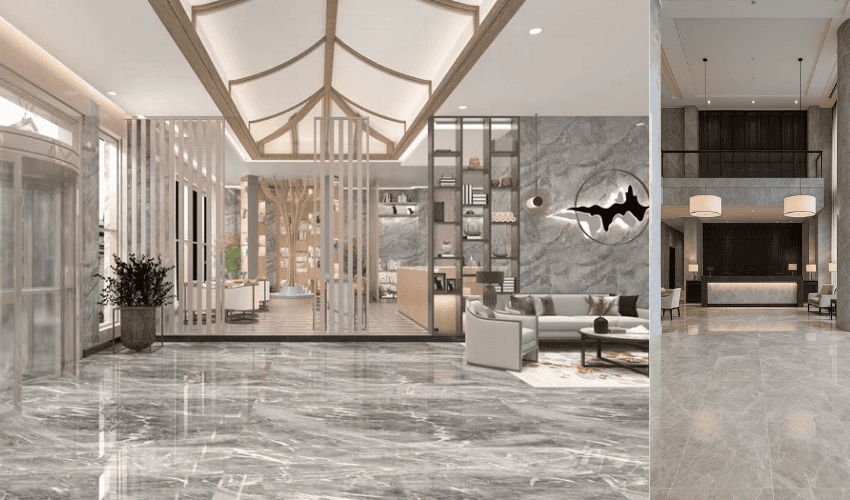 Lobby dell'hotel in marmo grigio | 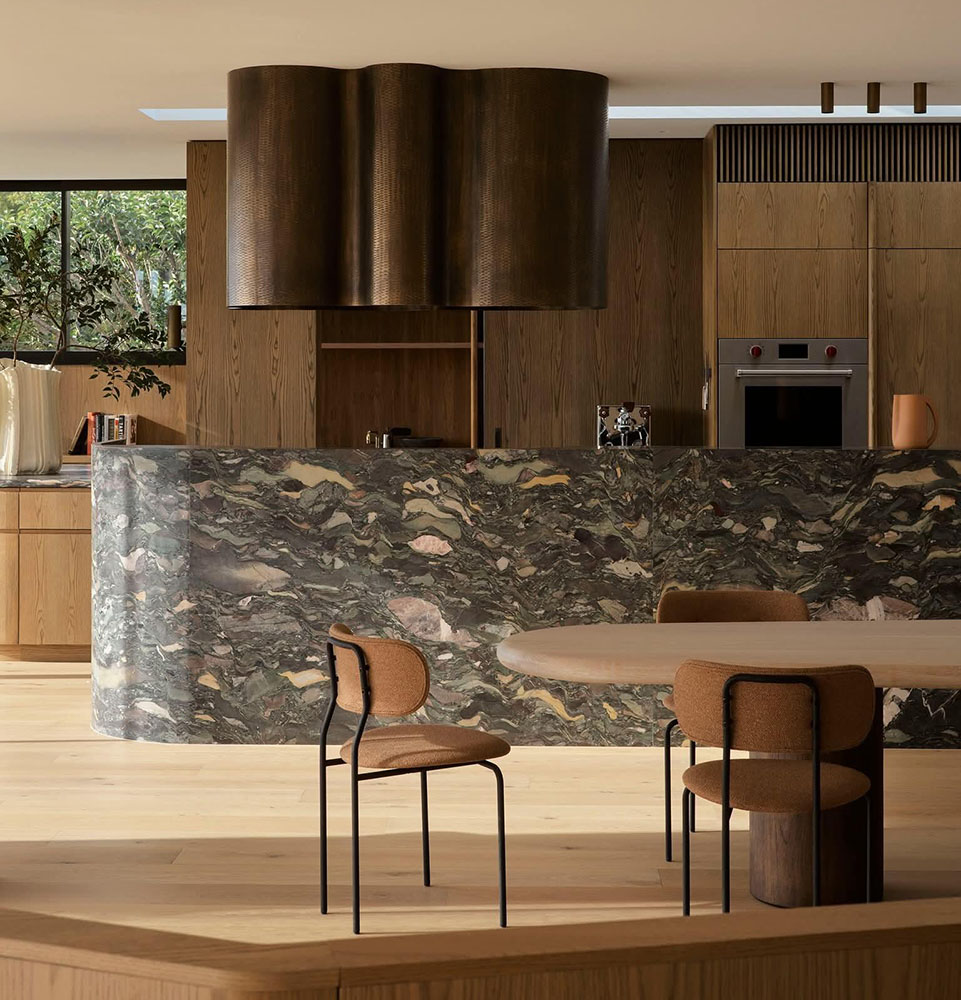 four season green marble kitchen island |
Domande frequenti
What marble color makes a room look bigger?
Light-toned marble usually helps a room feel more spacious because it reflects more light and visually reduces heaviness. Research on color and space perception found that cream-toned interiors were more often associated with spaciousness, simplicity, and order. In practice, white and warm off-white marbles tend to work especially well in smaller bathrooms, compact kitchens, and narrow transition areas. Grey can also help, but it needs enough natural or artificial light to avoid making the room feel visually compressed.
Is white marble always the safest choice in interior design?
Not always. White marble is versatile, but “safe” depends on the project. If the room already has cool lighting, stark cabinetry, and hard finishes, a bright white marble can make the scheme feel colder than intended. Current trend signals indicate that designers and homeowners are favoring warm, natural color palettes over purely white environments. A warmer white or lightly veined Calacatta-type marble often works better than a flat icy white in today’s interiors.
Why is grey marble so popular in modern interiors?
Grey marble works because it balances contrast without demanding too much attention. It pairs easily with wood, black metal, brushed brass, plaster, and taupe or off-white wall colors. In current design language, it supports the move toward quiet luxury and organic modern interiors. It also ages gracefully from a style standpoint, because it is less trend-sensitive than many statement stones while still carrying natural texture and visual depth.
Does black marble make a room feel smaller?
It can—but only when used without enough light, reflective balance, or material contrast. Black marble is best thought of as a focal instrument. Used on a fireplace wall, vanity backdrop, or statement feature, it can add depth and drama rather than shrink the room. Caronstone’s black marble content positions it as a high-end option for sophisticated spaces, which is exactly where it performs best: controlled placement, strong lighting, and clear contrast.
Why does marble change color over time?
Marble color can shift because of mineral oxidation, moisture cycles, air pollution, heat exposure, cleaning chemistry, and surface wear. Scientific studies have documented color and gloss changes under thermal aging, while USGS explains how acid precipitation can dissolve calcite and create dark crusting on sheltered stone surfaces. This does not mean marble is unstable; it means stone is a natural material that interacts with its environment. Good specification and maintenance reduce the risk substantially.
The Color Choice That Decides Whether a Room Feels Finished
Back to that first conversation: “I thought I wanted white marble, but now the room feels colder.”
That sentence captures the whole issue. Marble color is not a final styling choice. It is a structural design decision hiding in plain sight. It decides whether the room feels open or compressed, warm or remote, timeless or trend-chasing, calm or overstimulated. White marble can clarify. Grey marble can stabilize. Black marble can intensify. Green and warmer marbles can reconnect the room to nature, craft, and emotional depth.
The impact of Colore marmo on interior design is so powerful because stone color is never flat. It comes with mineral history, veining movement, reflected light, cultural meaning, and long-term aging behavior. That is why experienced buyers do not ask only, “Is this slab beautiful?” They ask, “What will this color do to the room six months after installation, at 4 p.m., when the lights are warm and the furniture is in?” That is the real design question—and the right marble color answers it before anyone has to say a word.
Riferimenti
- Caronstone, Top Marble Colors Trending in 2025.
- NKBA, KBIS Kitchen Trends Summit Highlights 2025 Kitchen Trends Report.
- Houzz, 34 Home Design Trends That Will Define 2025.
- Houzz, 25 Home Design Trends Defining How We’ll Live in 2026.
- Encyclopaedia Britannica, Marble: Definition, Types, Uses, & Facts.
- University of Auckland, Geology – Marble.
- Alkhanjari, I., & Sanad, R., A Study of Color Impact on Space Perception, Journal of Engineering and Architecture, 2023.
- Zejnilovic, E. et al., Perception and Evaluation of Interior Space: Experimental Study on Color and Pattern, IDA: International Design and Art Journal, 2023.
- Sarıcı, D.E. et al., Thermal Deterioration of Marbles: Gloss, Color Changes, Construction and Building Materials, 2016.
- U.S. Geological Survey, How Does Acid Precipitation Affect Marble and Limestone Buildings?