





De wereldwijde bouwindustrie wordt gekenmerkt door de constante spanning tussen architectonische visie en budgetrealiteit. Voor hoofdaannemers, interieurarchitecten en projectmanagers is het specificeren van oppervlaktematerialen een van de meest ingrijpende beslissingen in de levenscyclus van een gebouw. Het debat tussen het gebruik van organische, uit de aarde gewonnen materialen versus engineered composieten gaat niet langer alleen om visuele voorkeur; het is een complexe afweging die supply chain-logistiek, installatietijdschema’s, levenscyclusonderhoud en strenge milieuwetgeving omvat.
Deze uitgebreide technische analyse gaat verder dan het oppervlak om de werkelijke operationele kosten en mechanische eigenschappen van deze twee dominante materialen te ontrafelen. Door fysieke gegevens, factoren voor installatieafval en commerciële schaalvereisten te onderzoeken, kunnen aannemers data-gedreven beslissingen nemen die hun winstmarges beschermen en tegelijkertijd onverminderde kwaliteit aan de eindgebruiker leveren.
Materiaalsamenstelling: de wetenschappelijke kloof
Om te begrijpen hoe deze materialen presteren op een bouwplaats, moet men eerst kijken naar hun moleculaire en structurele samenstelling. De verschillen in hoe ze worden gevormd bepalen alles, van hun treksterkte tot hun weerstand tegen milieudegradatie.
Natuurlijk marmer is a metamorphic rock formed over millions of years. It begins as limestone, which is subjected to immense geothermal heat and tectonic pressure deep within the earth’s crust. This process causes the calcium carbonate to recrystallize, locking in trace minerals like iron oxides and silicates that form the stone’s iconic, unpredictable veining. For projects requiring absolute historical authenticity, sourcing premium natuursteen blijft de gouden standaard, omdat het een directe, onveranderde verbinding biedt met de geologische geschiedenis van de aarde.
Conversely, Artificial Marble (often referred to as engineered stone) is a highly controlled composite material manufactured in advanced industrial facilities. It is typically composed of 90% to 93% crushed organic stone dust and aggregates, combined with 7% to 10% high-performance polymer resins, binding agents, and mineral pigments. This mixture is subjected to intense vacuum vibro-compaction and high-temperature curing. The result is a dense, homogenous slab that eliminates the microscopic fault lines inherent in mined rock.
Vergelijkingstabel van wetenschappelijke parameters
Visuele authenticiteit: kunt u het verschil zien?
Historisch gezien was het belangrijkste argument tegen engineered oppervlakken hun repetitieve, enigszins synthetische uiterlijk. Echter, technologische vooruitgang in 2026 heeft deze esthetische kloof vrijwel weggenomen, waardoor de beslissing voor ontwerpers ingewikkelder is geworden.
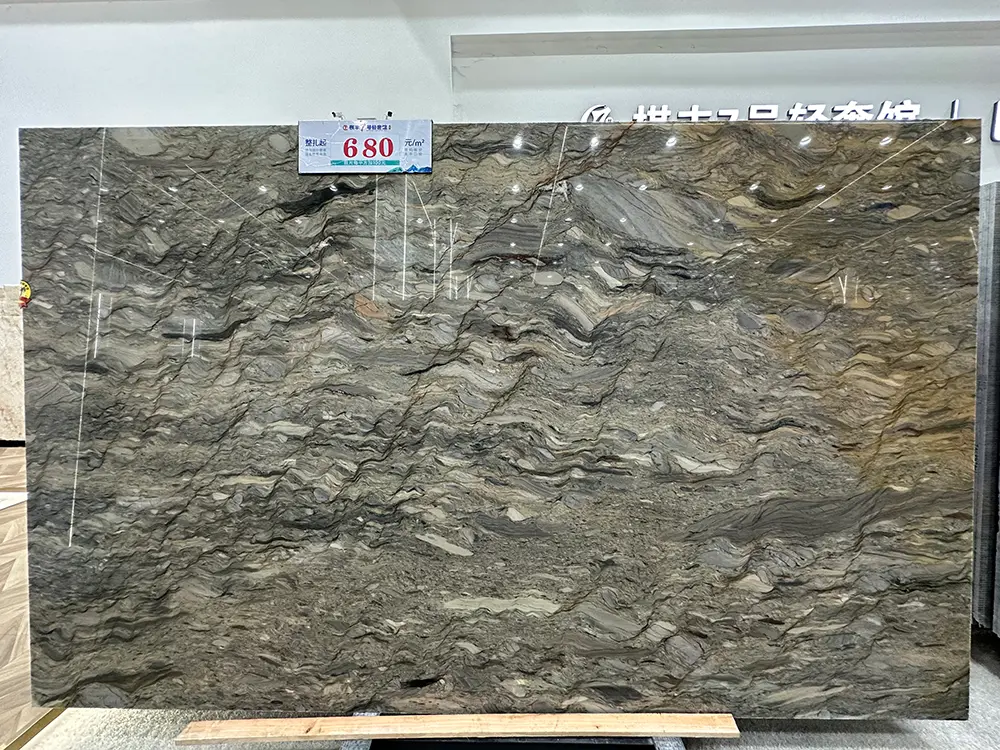
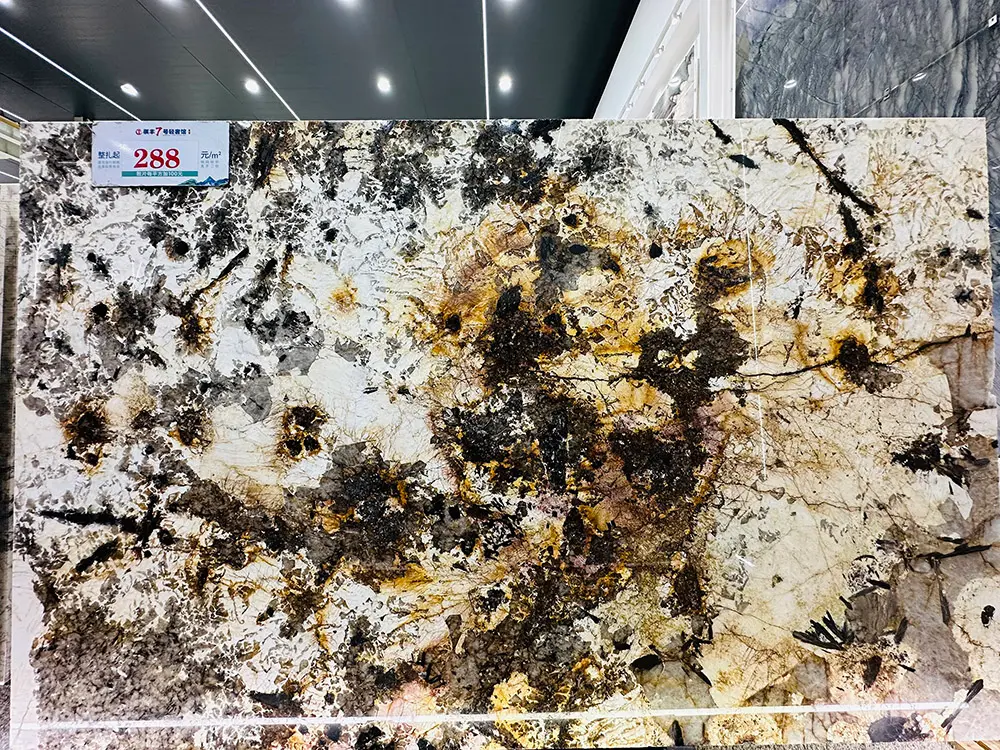
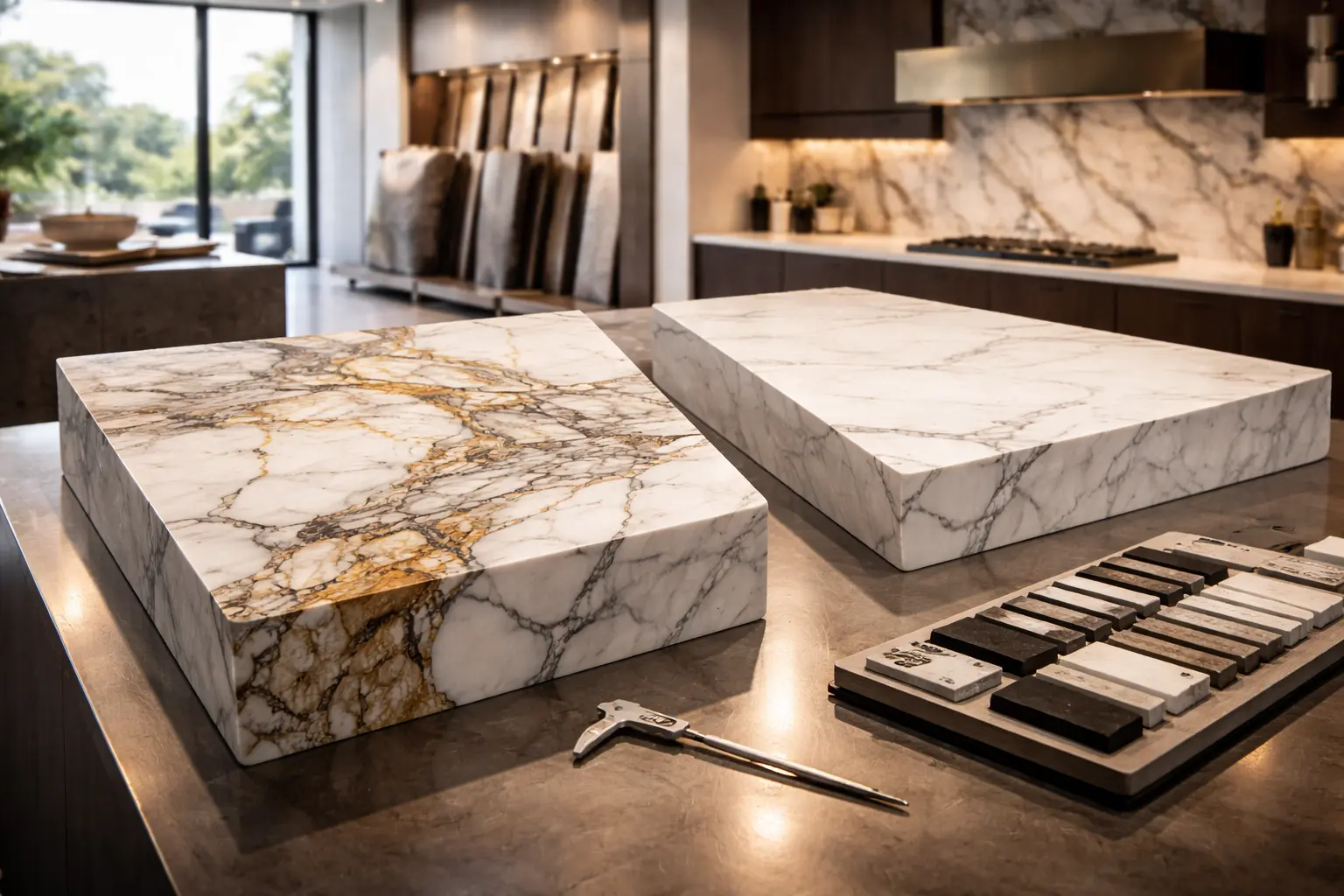
Het kenmerkende van organische steen is zijn onvoorspelbare, chaotische schoonheid. Geen twee platen zijn identiek. De kristallijne structuur interacteert met licht op een manier die het oppervlak een diepe indruk van diepte geeft. In high-end residentiële projecten of exclusieve boetiekhotels is deze exclusiviteit van het grootste belang. Moderne winning- en freestechnieken hebben ook innovatieve formaten geïntroduceerd, zoals de ultradunne natuurmarmer steenfineercollectie, die aannemers in staat stelt de authentieke schoonheid van gedolven steen toe te passen in gewicht-beperkte omgevingen zoals liftcabines en jachtinterieurs zonder de enorme structurele belasting van een standaard 2cm plaat.
Bovendien heeft de vraag naar organische architecturale rondingen innovatie aangemoedigd. Het gebruik van materialen zoals a natuurlijke dunne rode travertijn fineer stelt installateurs in staat om kolommen en gebogen receptiebalies te bekleden met echte steen, een toepassing die eerder onmogelijk was zonder enorm dure maatwerkbeitelwerk.
On the engineered side, manufacturers now utilize high-definition 3D inkjet printing and full-body veining technology. Instead of the pattern just sitting on the surface, the veining penetrates the entire thickness of the composite slab. This means that when the edge is profiled (e.g., an ogee or bullnose edge), the vein continues naturally, mimicking the organic flow of quarried rock so closely that even experienced architects struggle to spot the difference without a microscopic analysis.
Porosity and Stain Resistance: Why Engineered Stone Wins in Projects
While aesthetics drive the initial selection, long-term durability determines the lifecycle cost of the installation. This is where the structural density of the materials plays a critical role.
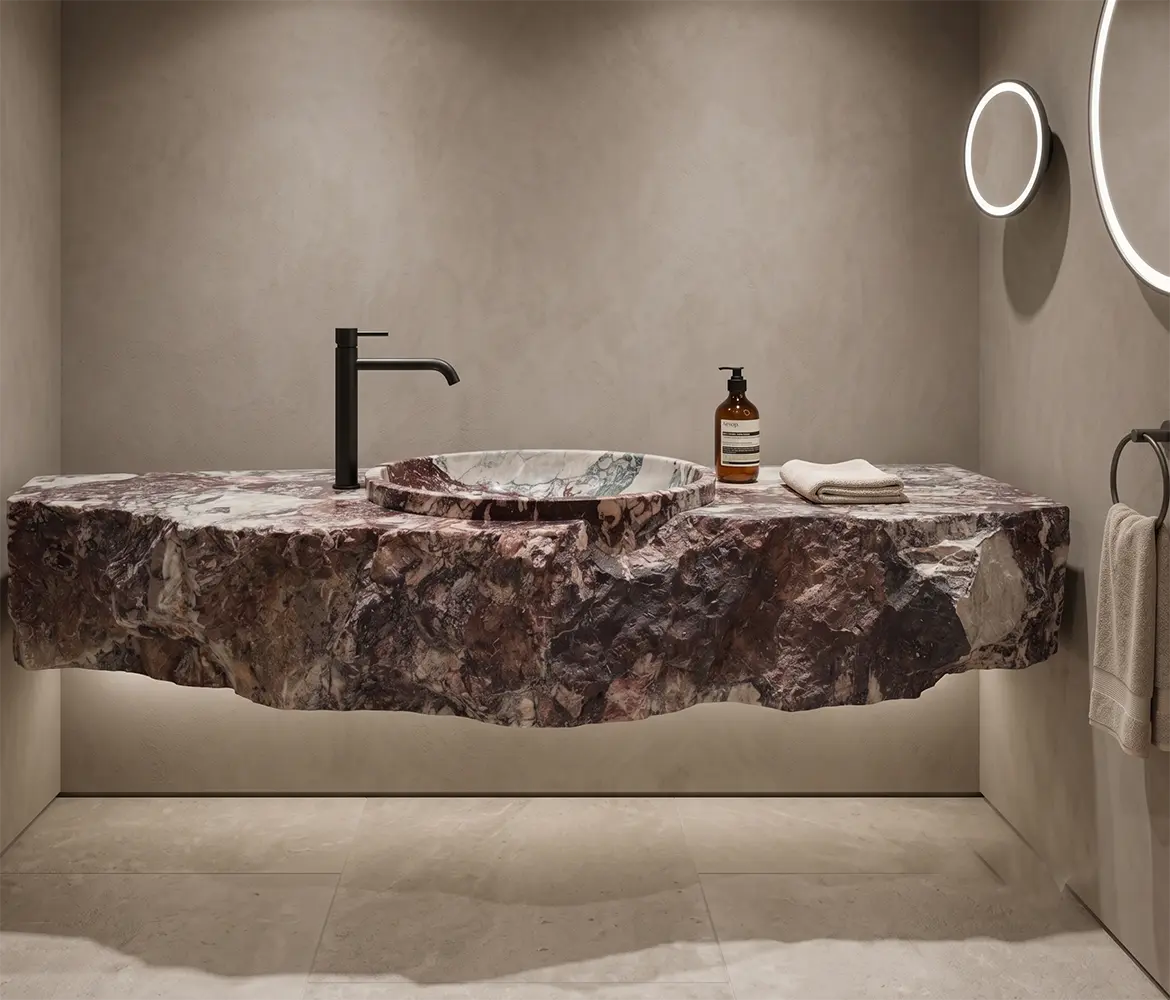
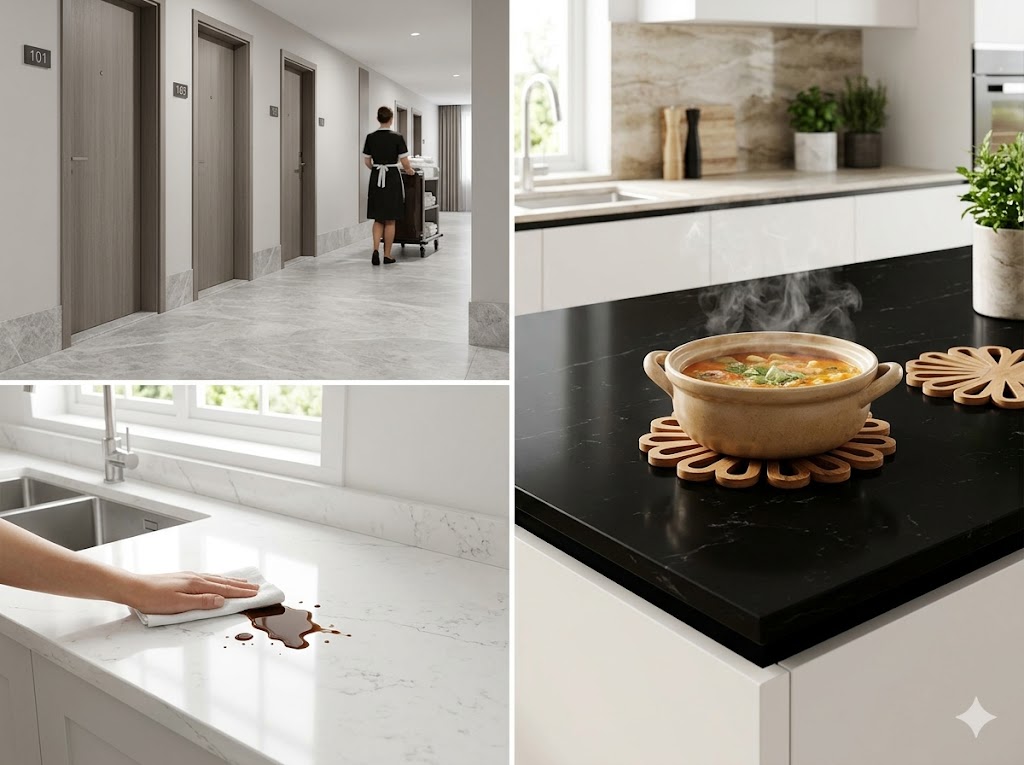
Because organic marble is primarily composed of calcium carbonate, it is highly reactive and inherently porous. In a luxury hotel environment, this presents significant operational challenges. Spills containing citric acid (lemon juice), acetic acid (vinegar), or tannins (red wine) will not only stain the stone but cause a chemical reaction known as “etching.” Etching literally dissolves the top layer of the polish, leaving a dull, rough mark. If a client insists on organic materials for wet areas, project managers must thoroughly educate themselves on maintenance protocols by reviewing resources on natural stone bathtubs to understand the rigorous sealing schedules required to prevent water damage and mineral buildup.
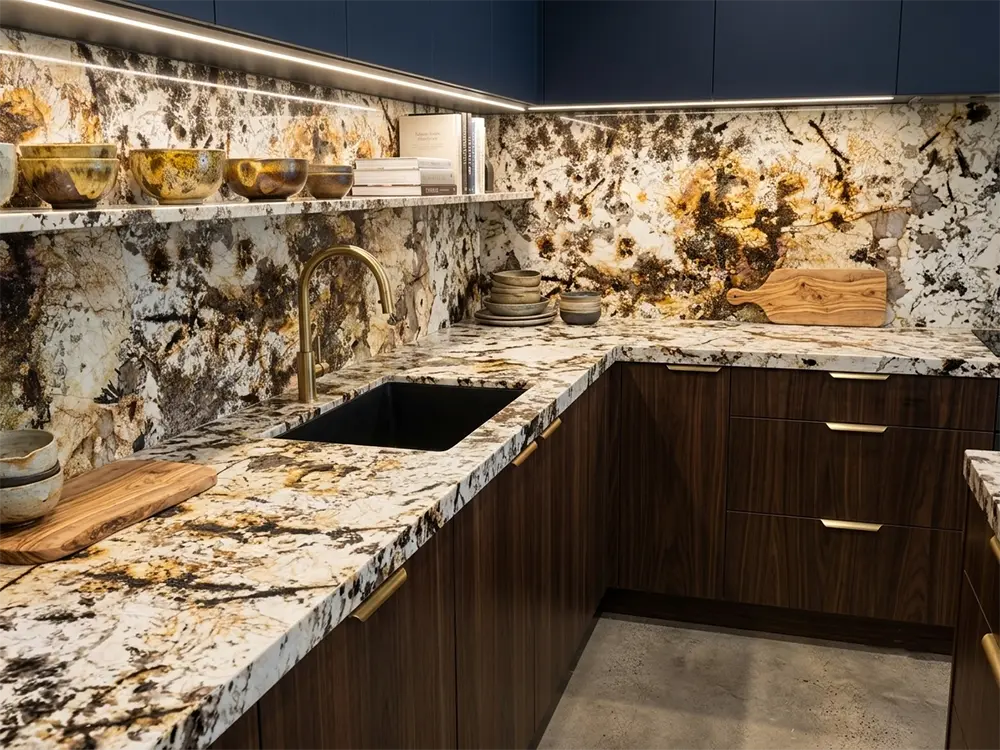
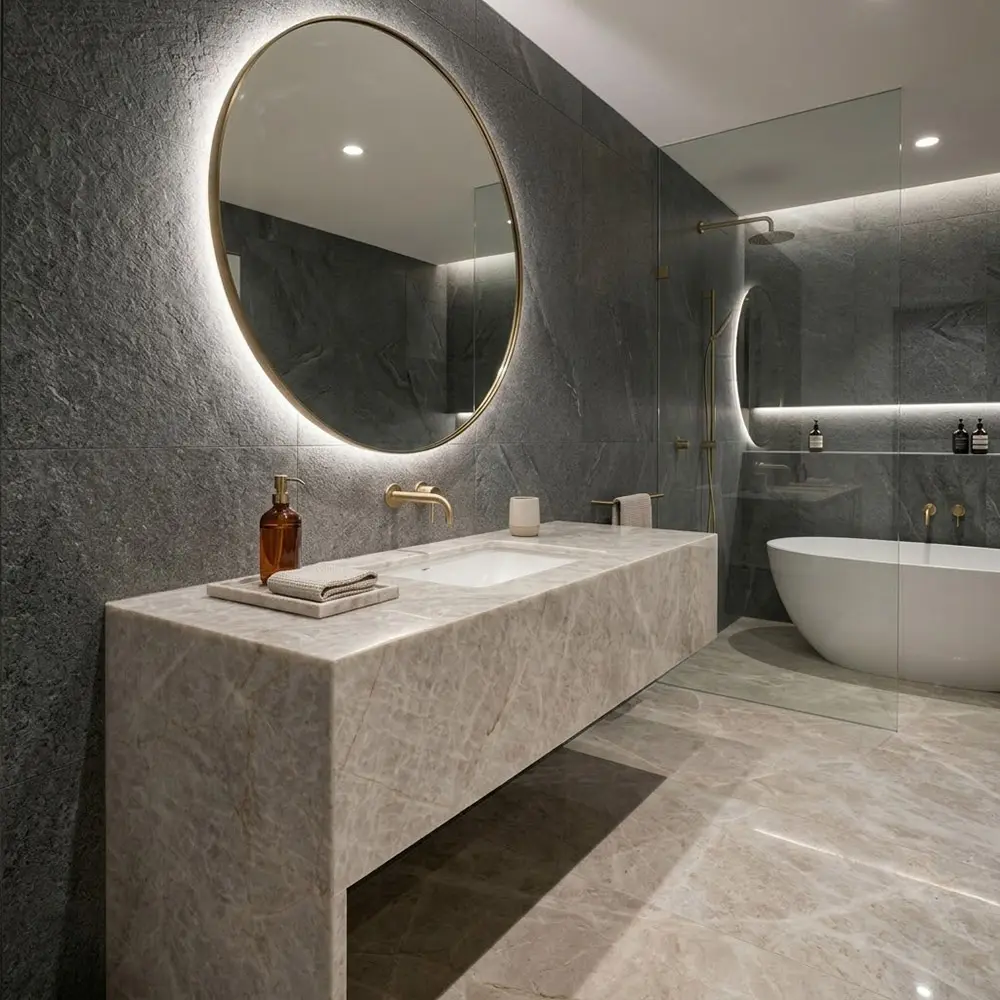
Engineered composites eliminate this vulnerability entirely. The polymer resins act as a permanent, non-porous shield. Because the water absorption rate is practically zero, bacteria, mold, and liquids cannot penetrate the surface. This makes it an exceptionally hygienic choice for high-traffic commercial environments. For large-scale hospitality projects, purchasing directors consistently specify the best-selling artificial stone bathtubs and vanity tops because they require no annual sealing and can be cleaned with standard commercial disinfectants without fear of chemical etching.
Marble supplier
Kosten per vierkante voet en vergelijking van installatieafval
For general contractors bidding on massive commercial developments, the raw material cost is only one part of the financial equation. The hidden costs lie in fabrication challenges and installation waste.
The procurement cost of organic stone is highly volatile, driven by the rarity of the quarry, international shipping freight, and block yield. Standard varieties may start around $40 per square foot, but premium Italian grades can easily exceed $150 per square foot. In contrast, engineered slabs offer extreme price stability, typically ranging from $15 to $40 per square foot, depending on the complexity of the printed veining.
However, the most significant financial differentiator is the “Breakage and Off-cut Rate.” Organic slabs contain natural fissures and fault lines. During the fabrication process—especially when cutting precise sink cutouts or long, narrow pieces—the stone can unpredictably fracture. Contractors typically factor in a 15% to 20% waste margin for organic stone.
Engineered stone, boasting a flexural strength up to three times higher than organic rock, is incredibly resilient during fabrication. The homogenous structure means there are no hidden weak points. When fabricating thousands of linear feet of secondary components, such as vensterbanken van kunststeen, the cutting waste drops to less than 5%. This massive reduction in material loss directly increases the contractor’s bottom-line profit.
Batchconsistentie: eliminatie van kleurvariaties in grote projecten
Scaling a design from a single residential kitchen to a 500-room luxury resort introduces a terrifying variable for procurement teams: batch consistency.
When dealing with organic materials, no two blocks are the same. If a commercial project requires 10,000 square feet of flooring, the supplier will likely need to source slabs from multiple different blocks or even different areas of the quarry. This results in severe “Color Shading.” To prevent disjointed, patchwork floors, installers must engage in a labor-intensive process called “dry-laying.” This involves spreading hundreds of tiles across a massive warehouse floor to manually sequence the veining and color transitions before installation—adding thousands of dollars in labor costs and delaying project timelines.
Engineered materials solve this logistical nightmare through industrial standardization. When purchasing massive volumes of artificial stone tiles, the factory can guarantee that the first tile pulled from the crate will perfectly match the ten-thousandth tile. The base color, the vein placement, and the surface finish are digitally controlled. This absolute predictability allows contractors to skip the dry-laying process entirely, accelerating installation schedules and ensuring that the final architectural result matches the initial rendering with 100% accuracy.
Regelgeving naleving en milieu-impact
In the 2026 construction landscape, environmental impact and occupational safety are heavily regulated. Contractors must navigate stringent compliance codes that heavily influence material selection.
On the environmental front, commercial developers are increasingly targeting LEED (Leadership in Energy and Environmental Design) certification. Modern engineered composites contribute positively to these goals. Many leading manufacturers utilize up to 50% recycled industrial stone waste and glass in their mixtures, diverting thousands of tons of material from landfills. Additionally, premium engineered products are Greenguard Gold certified, meaning they emit virtually zero Volatile Organic Compounds (VOCs), ensuring superior indoor air quality for the building’s occupants.
From a labor safety perspective, OSHA (Occupational Safety and Health Administration) has implemented incredibly strict regulations regarding Respirable Crystalline Silica (RCS) dust. Cutting any stone dry generates hazardous dust, but specific protocols must be followed. When selecting an kunststeen provider, contractors must ensure the fabrication facility uses state-of-the-art CNC wet-cutting machinery and advanced air filtration systems to protect workers from silicosis. Partnering with compliant, forward-thinking manufacturers mitigates legal liability and ensures an ethical supply chain.
Ultimately, the choice between these two exceptional materials comes down to the specific parameters of your project. If you are building a bespoke luxury residence where historical authenticity and organic uniqueness are the primary goals, nothing will ever replace the prestige of quarried rock. However, if you are managing a large-scale commercial development, a multi-unit residential tower, or a high-traffic hospitality venue, the durability, cost-efficiency, and batch consistency of engineered composites make them the undisputed operational champion.
Navigating global procurement requires a trusted partner with deep expertise in both organic and engineered surface manufacturing. To explore how our advanced fabrication capabilities and wholesale supply chains can drastically reduce your project costs while elevating your architectural finishes, we encourage you to contact met ons opnemen today for a comprehensive project consultation and material sampling.
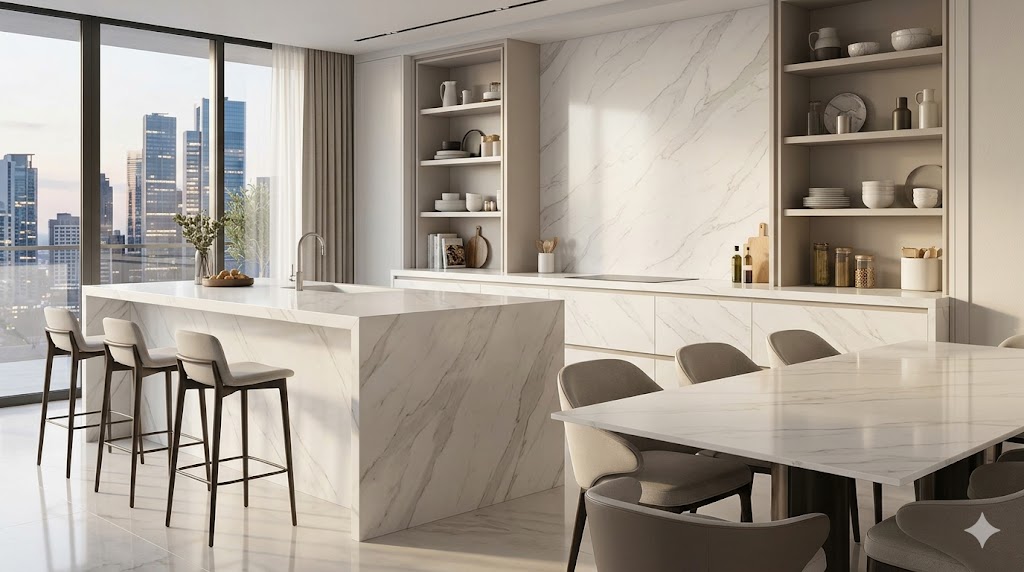 Artificial Marble Slabs for Kitchens | 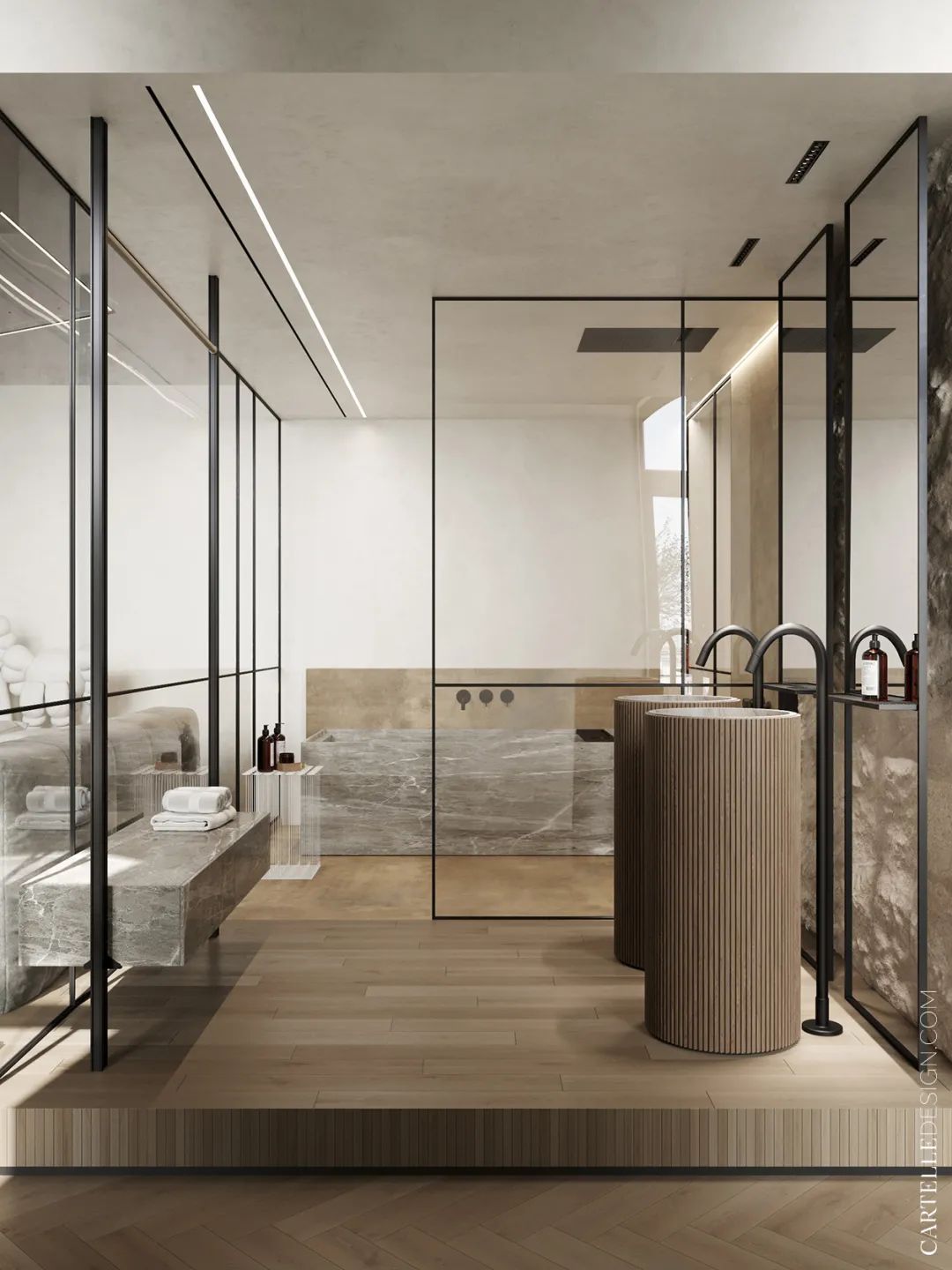 Natural marble bathroom |
FAQ
1. Kan u kunstmarmer gebruiken voor buitenprojecten?
Over het algemeen wordt standaard kunstmarmer niet aanbevolen voor buitentoepassingen die worden blootgesteld aan direct zonlicht. De polymeerharsen die worden gebruikt om de gebroken steengroeven te binden, zijn gevoelig voor langdurige ultraviolette (UV) straling. Na verloop van tijd kan constante UV-blootstelling ertoe leiden dat de harsen geel worden, vervagen of bros worden. Voor buitengevels, terrassen of buitenkeukenwerkbladen zijn natuurstenen zoals graniet of gesinterde stenen met speciale UV-bestendigheid de structureel solide keuze.
2. Is kunstmarmer hittebestendig vergeleken met natuurmarmer?
Natuurmarmer is zeer hittebestendig vanwege de geologische vorming onder extreme ondergrondse temperaturen, waardoor het hete potten rechtstreeks op het oppervlak kan weerstaan. Kunstmarmer daarentegen bevat polymeerharsen die kunnen verschroeien, smelten of een permanente witte vlek achterlaten als ze worden blootgesteld aan temperaturen boven 150°C (300°F). Daarom wordt ten strengste aangeraden om onderzetters of warmtebeschermers te gebruiken in keukens met werkbladen van kunstmatige steen.
3. Hoe repareert u krassen op natuurlijk versus kunstmarmer?
Krasjes in natuurlijk marmer kunnen doorgaans ter plaatse worden hersteld door een professional in steenrestauratie, die achtereenvolgens steeds fijnere diamantpolijstpads gebruikt om de kras weg te slijpen, gevolgd door een chemisch polijstpoeier om de glans te herstellen. Kleine krasjes in kunstmarmer kunnen eveneens worden weggepolijst met behulp van gespecialiseerde polijstmiddelen. Diepeinkepingen in samengestelde steen zijn echter moeilijker onzichtbaar te herstellen, omdat de harsformulering speciale kleurmatchende epoxyvullers vereist die zorgvuldig moeten worden gemengd en uitgehard.
4. Wat is beter voor hotelprojecten: kunstmarmer of natuurmarmer?
Voor grootschalige hotelprojecten is kunstmarmer vanuit operationeel oogpunt verreweg superior. Hotels hebben materialen nodig die bestand zijn tegen hoge doorlooptijden, regelmatig schoonmaken en intensief gebruik. Engineered stone kent een bijna nulporositeit, wat betekent dat gemorste wijn, cosmetica of agressieve commerciële reinigingsmiddelen de oppervlakte niet bevlekken of aantasten. Bovendien garandeert de absolute batchconsistentie dat kamer 101 er precies hetzelfde uitziet als kamer 501, waardoor het kostbare droogleggen en sorteren dat bij natuursteen nodig is, overbodig wordt.
5. Valt kunstmarmer gemakkelijk in vlekken?
Nee, kunstmarmer is speciaal ontwikkeld om zeer vlekbestendig te zijn. Omdat bij het productieproces vacuüm-vibroverdichting en polymeerharsen worden gebruikt, worden alle microscopische poriën en scheurtjes in het steenstof volledig afgesloten. Hierdoor bedraagt de waterabsorptiesnelheid minder dan 0,051 TP3T. In tegenstelling tot natuurlijk calciumcarbonaat, dat als een spons voor donkere vloeistoffen werkt, stoot kunststeen koffie, wijn en oliën af, zodat deze gemakkelijk kunnen worden weggeveegd zonder een blijvend spoor achter te laten.
Referenties
-
“Mechanical Properties and Flexural Strength of Engineered Polymer Composites.” Dr. H. Schmidt, Journal of Construction Materials Engineering.
-
“ISO 10545-3: Determination of Water Absorption and Porosity in Stone and Ceramics.” International Organization for Standardization.
-
“The Mechanics of Calcium Carbonate Etching in Commercial Environments.” Journal of Surface Engineering.
-
“Respirable Crystalline Silica Standard for Construction.” Occupational Safety and Health Administration (OSHA).
-
“Life Cycle Cost Analysis: Natural Stone vs. Engineered Surfaces in Hospitality.” International Facility Management Association (IFMA).
-
“LEED v4 Building Design and Construction Guidelines.” U.S. Green Building Council (USGBC).
-
“Advancements in 3D Full-Body Inkjet Printing for Composite Stones.” Materials Science and Engineering Quarterly.
-
“Installation Waste Metrics and Nesting Efficiency in Commercial Masonry.” Stone Industry Technical Journal.
Choosing between artificial marble and natural marble is no longer just a design preference. In modern construction, it is a strategic decision involving material science, maintenance planning, installation efficiency, compliance requirements, and long-term operating cost. For developers, contractors, and architects, the right specification depends less on appearance alone and more on where the material will be used, how much abuse it will face, and how predictable the final result must be at scale.
Waarom engineered steen vaak wordt geprefereerd in commerciële interieurs
Artificial marble delivers the kind of consistency that large hospitality and multi-unit projects demand. Its low water absorption, high stain resistance, and uniform color output reduce installation risk and simplify maintenance protocols. In hotels, serviced apartments, retail washrooms, and indoor commercial countertops, this predictability helps owners control cleaning costs, reduce replacement rates, and keep visual standards consistent from one room or zone to another.
Hoe natuurmarmer zijn voordeel behoudt in toepassingen met hoge hitte en buitentoepassingen
Natural marble still holds a clear structural and performance advantage in environments where heat load, UV exposure, and long-term material aging matter more than perfect batch matching. Because it contains no polymer resin binder, it is not vulnerable to yellowing or thermal deformation in the same way engineered composites can be. This makes natural marble the more dependable option for outdoor facades, sun-exposed architectural cladding, fireplace zones, and premium kitchens where hot cookware contact is a realistic daily risk.
Welke projectteams moeten evalueren voordat ze een definitieve specificatie maken
Project teams should assess five core variables before selecting either surface: exposure to UV and heat, cleaning intensity, staining risk, required quantity consistency, and expected maintenance budget over time. If the project prioritizes fast installation, low waste, repeatable visual output, and easy sanitation, artificial marble is usually the operational winner. If the project prioritizes long-term material authenticity, outdoor stability, repairable surface wear, and thermal resilience, natural marble remains the better investment.
Optieanalyse voor verschillende realistische scenario’s
For luxury hotel bathrooms, indoor reception desks, vanity tops, and large commercial flooring programs, artificial marble offers strong economic logic because it minimizes sealing requirements, reduces color variation issues, and shortens installation preparation time.
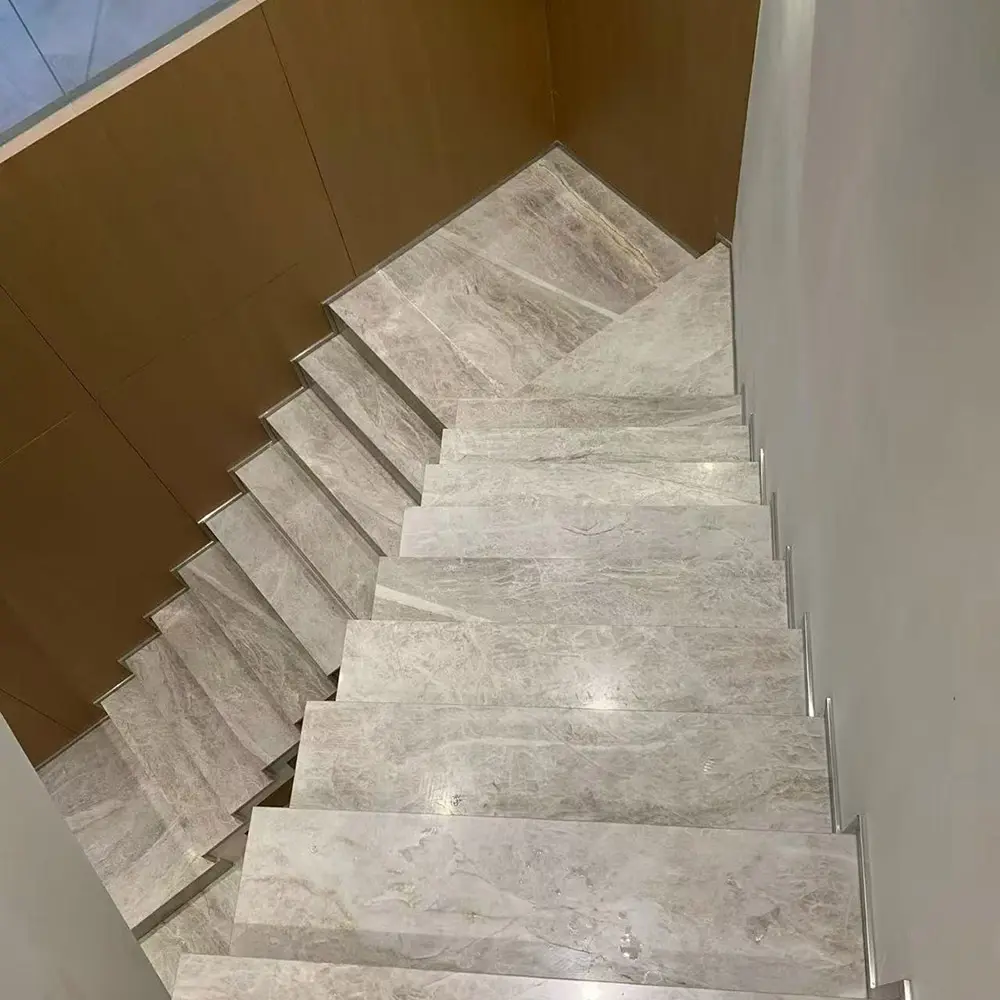
For bespoke villas, heritage-style interiors, statement staircases, and architecturally expressive surfaces where organic veining and geological authenticity carry design value, natural marble delivers a level of uniqueness that engineered materials still imitate rather than truly replicate.
For outdoor kitchens, terraces, and sun-facing façade systems, specifiers should move away from standard resin-based artificial marble and instead consider natural marble, granite, quartzite, or UV-resistant sintered stone depending on structural and climatic requirements.
Belangrijke technische overwegingen die de levenscycluskosten beïnvloeden
Lifecycle cost is shaped by far more than slab price. It includes fabrication waste, transport damage, sealing schedules, stain repair frequency, replacement risk, cleaning chemistry compatibility, and downtime during refurbishment. Artificial marble usually lowers the operational burden in indoor commercial environments because its non-porous structure resists routine spills and harsh maintenance cycles.
Natural marble, however, can recover value through reparability. Surface wear, etching, and minor scratches can often be repolished by restoration professionals, which can be more sustainable than replacing a damaged engineered slab that cannot be invisibly repaired once deeply gouged or heat-marked.
Hoe regelgeving en duurzaamheidstrends de aankoopbeslissingen beïnvloeden
By 2026, material selection is increasingly influenced by indoor air quality targets, recycled content strategies, silica dust control, and commercial green building certification systems. Engineered products with low VOC emissions and recycled mineral content are gaining traction in large developments, while stone processors are also under pressure to prove wet-cutting compliance and responsible fabrication standards. This means buyers are no longer choosing only by color and price; they are choosing by documentation, safety processes, and total project accountability.
Laatste marktinzicht
Artificial marble is not a universal replacement for natural marble, and natural marble is not always the smartest commercial choice. The real answer depends on application logic. For indoor, standardized, high-volume commercial projects, engineered surfaces offer superior control, efficiency, and stain performance. For premium architectural environments exposed to heat, weather, or design expectations tied to natural authenticity, genuine marble still commands the stronger technical and emotional position. The most successful buyers are the ones who specify materials by performance context, not by trend alone.