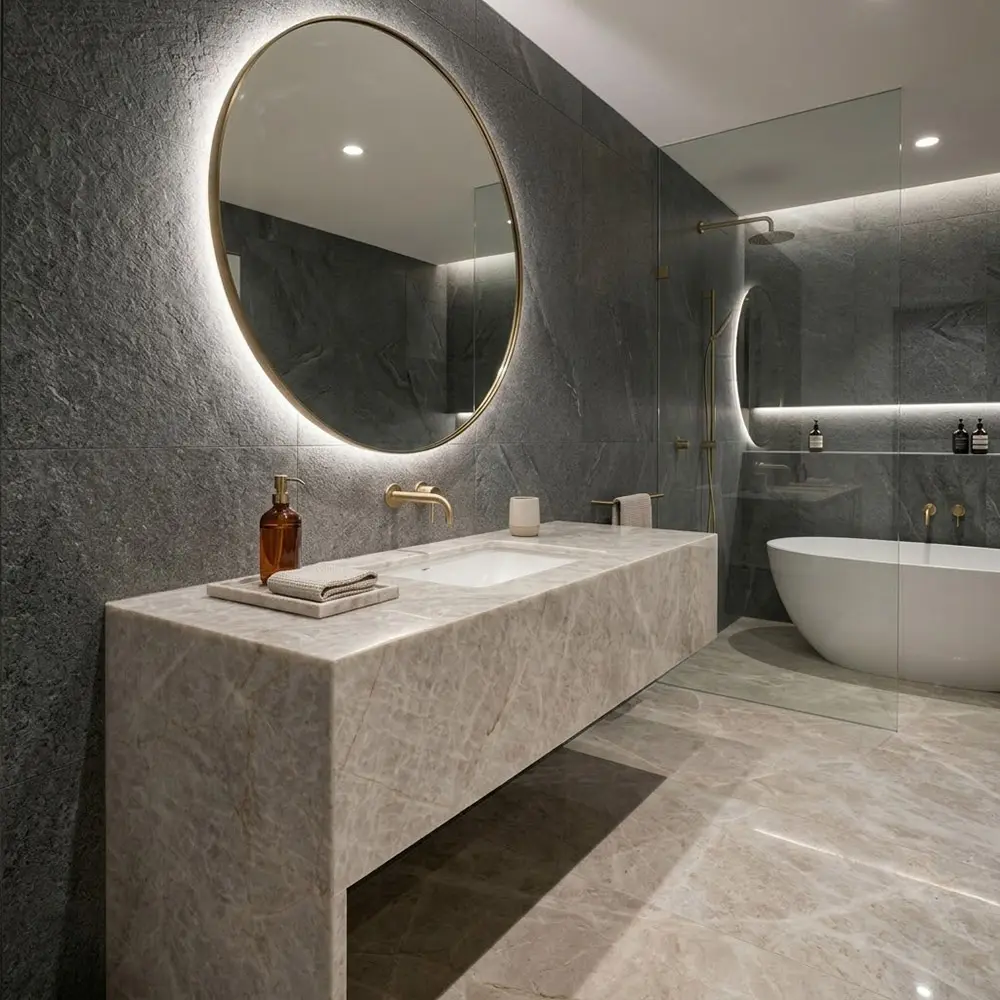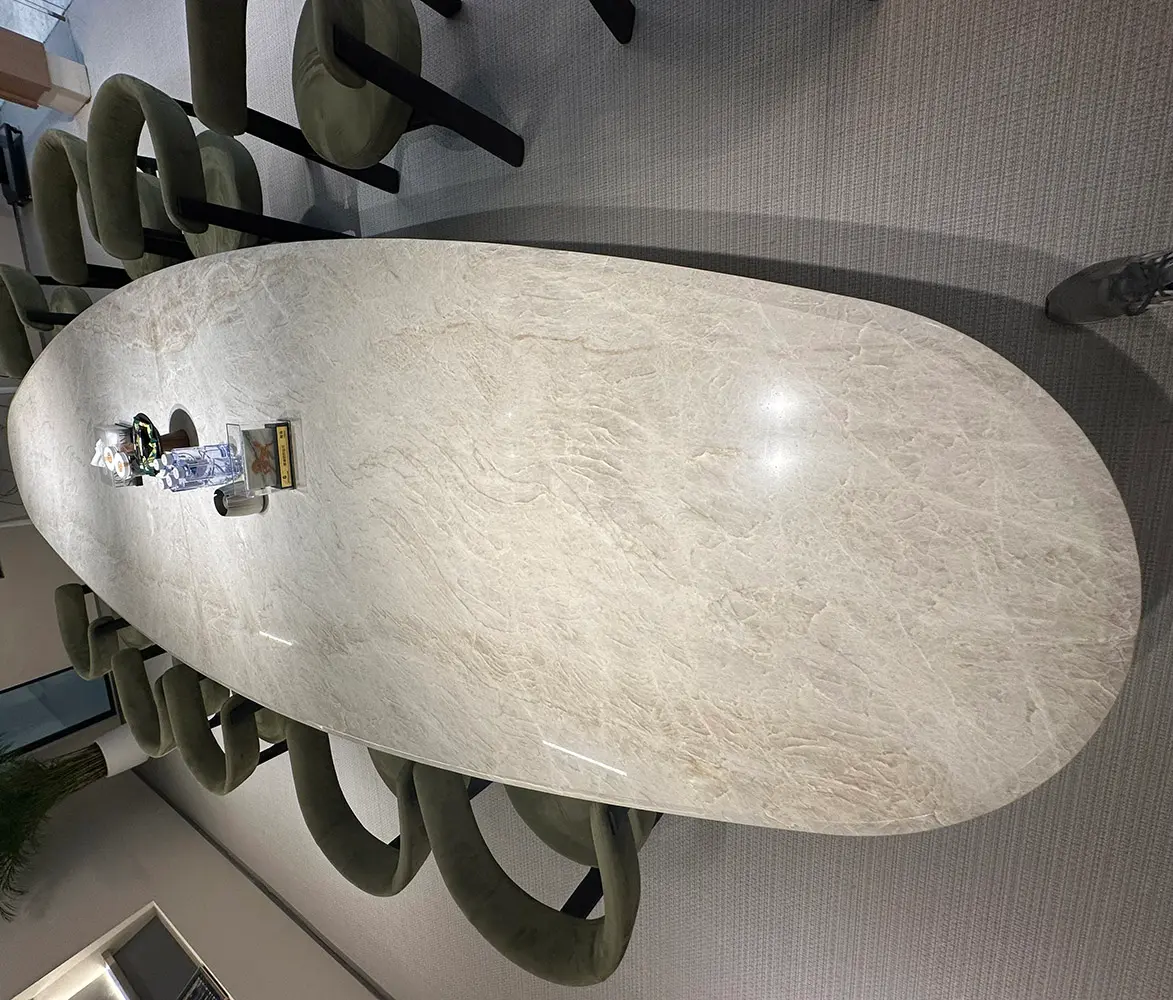






The global construction industry is defined by the constant tension between architectural vision and budget reality. For general contractors, interior architects, and project managers, specifying surface materials is one of the most consequential decisions in a building’s lifecycle. The debate between utilizing organic earth-mined materials versus engineered composites is no longer just about visual preference; it is a complex calculus involving supply chain logistics, installation timelines, lifecycle maintenance, and rigorous environmental regulations.
This comprehensive engineering analysis goes beyond the surface to dissect the true operational costs and mechanical properties of these two dominant materials. By examining physical data, installation waste factors, and commercial scaling requirements, contractors can make data-driven decisions that protect their profit margins while delivering uncompromising quality to the end-user.
Material Composition: The Scientific Divide
To understand how these materials perform on a job site, one must first look at their molecular and structural composition. The differences in how they are formed dictate everything from their tensile strength to their resistance to environmental degradation.
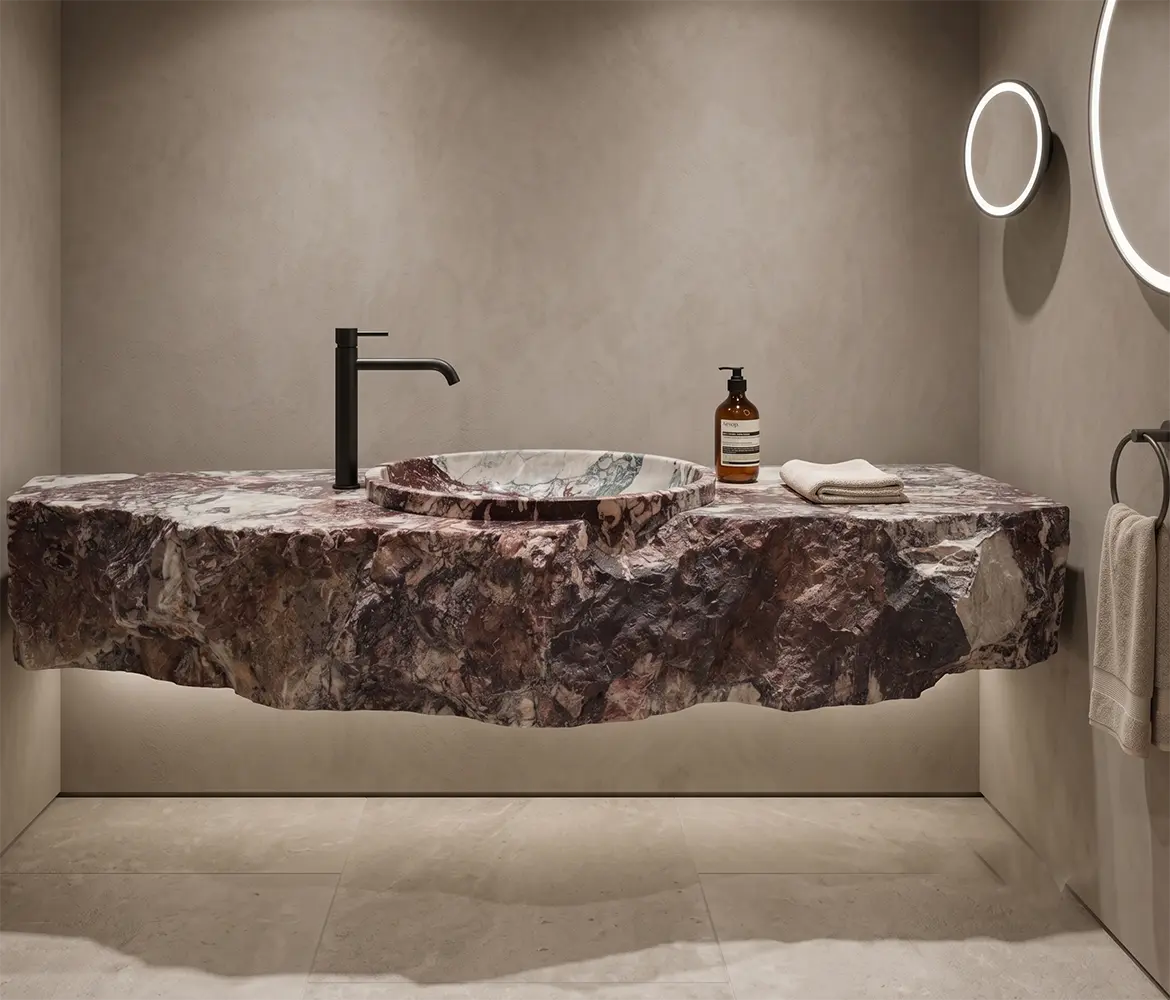
Marmo naturale is a metamorphic rock formed over millions of years. It begins as limestone, which is subjected to immense geothermal heat and tectonic pressure deep within the earth’s crust. This process causes the calcium carbonate to recrystallize, locking in trace minerals like iron oxides and silicates that form the stone’s iconic, unpredictable veining. For projects requiring absolute historical authenticity, sourcing premium pietra naturale remains the gold standard, offering a direct, unaltered connection to the earth’s geological history.
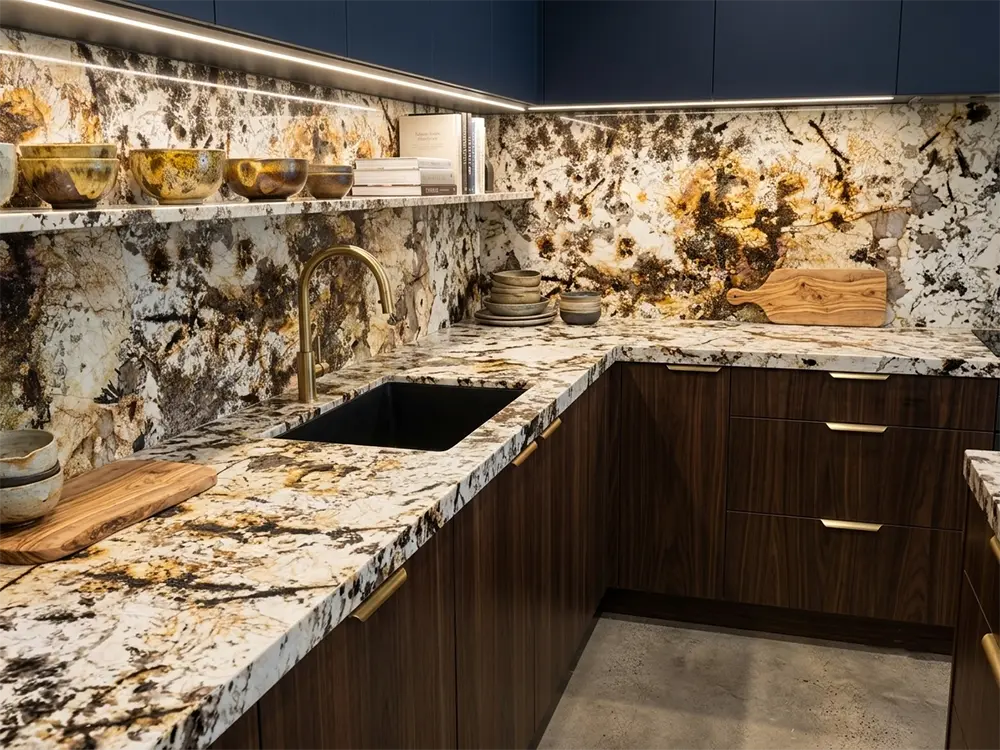
Conversely, Artificial Marble (often referred to as engineered stone) is a highly controlled composite material manufactured in advanced industrial facilities. It is typically composed of 90% to 93% crushed organic stone dust and aggregates, combined with 7% to 10% high-performance polymer resins, binding agents, and mineral pigments. This mixture is subjected to intense vacuum vibro-compaction and high-temperature curing. The result is a dense, homogenous slab that eliminates the microscopic fault lines inherent in mined rock.
Scientific Parameters Comparison Table
Visual Authenticity: Can You Tell the Difference?
Historically, the primary argument against engineered surfaces was their repetitive, somewhat synthetic appearance. However, technological advancements in 2026 have nearly erased this aesthetic divide, complicating the decision for designers.
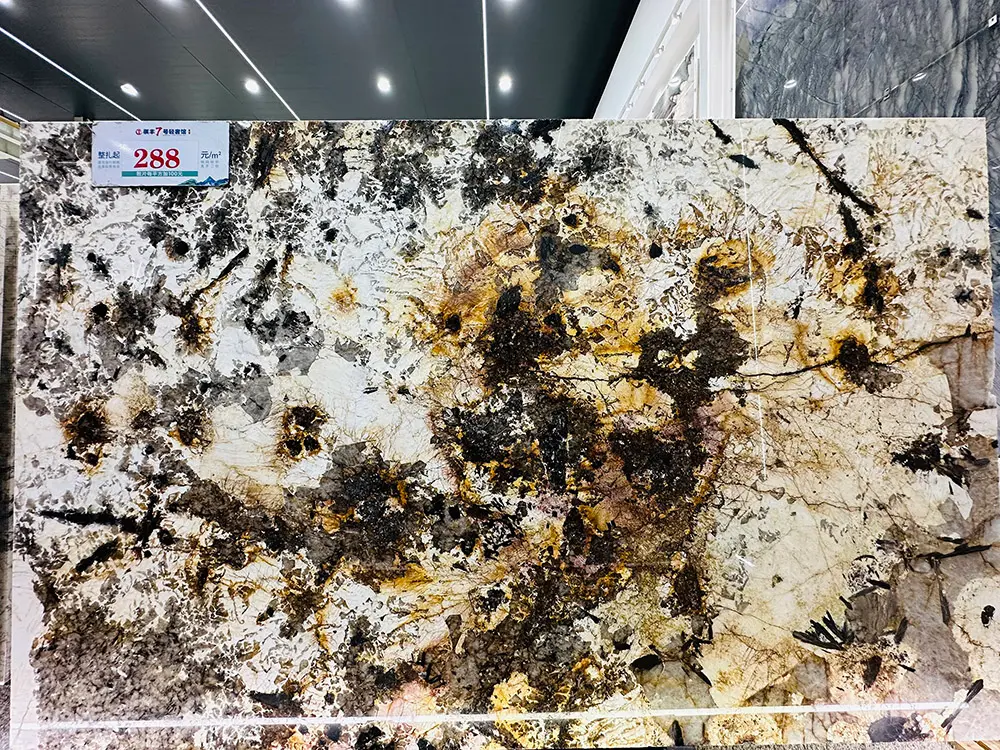
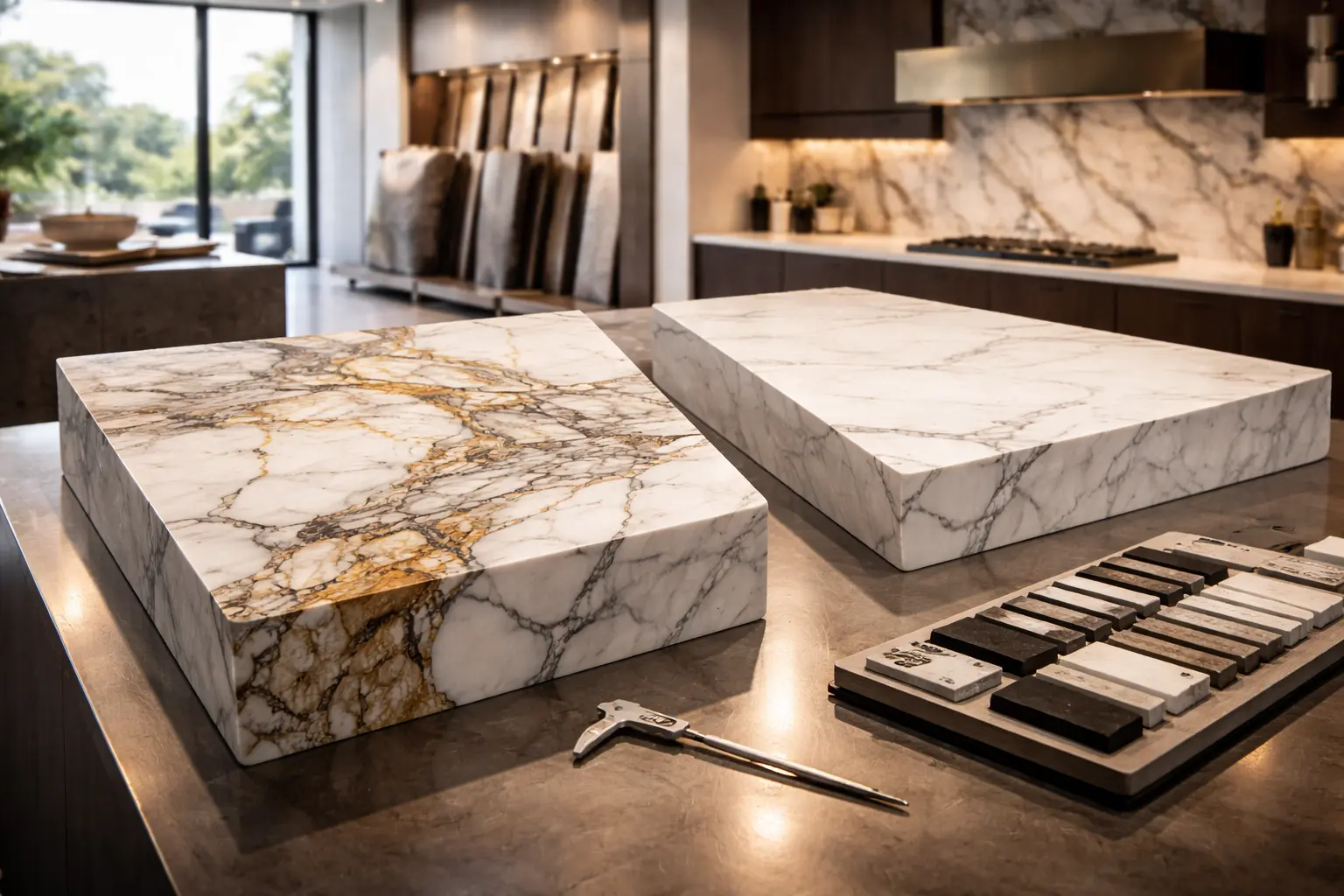
The defining characteristic of organic stone is its unpredictable, chaotic beauty. No two slabs are identical. The crystalline structure interacts with light in a way that gives the surface a profound sense of depth. In high-end residential projects or exclusive boutique hotels, this exclusivity is paramount. Modern extraction and milling techniques have also introduced innovative formats, such as the ultra-thin natural marble stone veneer collection, which allows contractors to apply the authentic beauty of quarried stone to weight-restricted environments like elevator cabs and yacht interiors without the massive structural load of a standard 2cm slab.
Furthermore, the demand for organic architectural curves has driven innovation. Utilizing materials like a natural thin red travertine veneer allows installers to wrap columns and curved reception desks with genuine stone, an application that was previously impossible without immensely expensive custom carving.
On the engineered side, manufacturers now utilize high-definition 3D inkjet printing and full-body veining technology. Instead of the pattern just sitting on the surface, the veining penetrates the entire thickness of the composite slab. This means that when the edge is profiled (e.g., an ogee or bullnose edge), the vein continues naturally, mimicking the organic flow of quarried rock so closely that even experienced architects struggle to spot the difference without a microscopic analysis.
Porosity and Stain Resistance: Why Engineered Stone Wins in Projects
While aesthetics drive the initial selection, long-term durability determines the lifecycle cost of the installation. This is where the structural density of the materials plays a critical role.
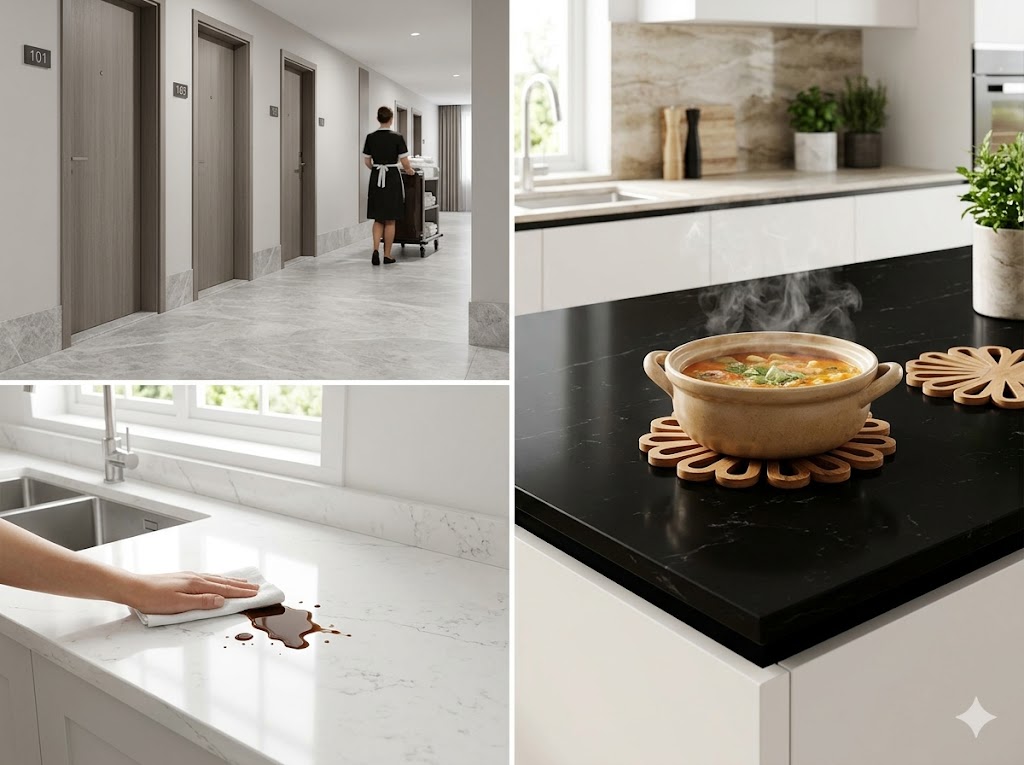
Because organic marble is primarily composed of calcium carbonate, it is highly reactive and inherently porous. In a luxury hotel environment, this presents significant operational challenges. Spills containing citric acid (lemon juice), acetic acid (vinegar), or tannins (red wine) will not only stain the stone but cause a chemical reaction known as “etching.” Etching literally dissolves the top layer of the polish, leaving a dull, rough mark. If a client insists on organic materials for wet areas, project managers must thoroughly educate themselves on maintenance protocols by reviewing resources on natural stone bathtubs to understand the rigorous sealing schedules required to prevent water damage and mineral buildup.
Engineered composites eliminate this vulnerability entirely. The polymer resins act as a permanent, non-porous shield. Because the water absorption rate is practically zero, bacteria, mold, and liquids cannot penetrate the surface. This makes it an exceptionally hygienic choice for high-traffic commercial environments. For large-scale hospitality projects, purchasing directors consistently specify the best-selling artificial stone bathtubs and vanity tops because they require no annual sealing and can be cleaned with standard commercial disinfectants without fear of chemical etching.
Marble supplier
Cost per Square Foot and Installation Waste Comparison
For general contractors bidding on massive commercial developments, the raw material cost is only one part of the financial equation. The hidden costs lie in fabrication challenges and installation waste.
The procurement cost of organic stone is highly volatile, driven by the rarity of the quarry, international shipping freight, and block yield. Standard varieties may start around $40 per square foot, but premium Italian grades can easily exceed $150 per square foot. In contrast, engineered slabs offer extreme price stability, typically ranging from $15 to $40 per square foot, depending on the complexity of the printed veining.
However, the most significant financial differentiator is the “Breakage and Off-cut Rate.” Organic slabs contain natural fissures and fault lines. During the fabrication process—especially when cutting precise sink cutouts or long, narrow pieces—the stone can unpredictably fracture. Contractors typically factor in a 15% to 20% waste margin for organic stone.
Engineered stone, boasting a flexural strength up to three times higher than organic rock, is incredibly resilient during fabrication. The homogenous structure means there are no hidden weak points. When fabricating thousands of linear feet of secondary components, such as artificial stone window sills, the cutting waste drops to less than 5%. This massive reduction in material loss directly increases the contractor’s bottom-line profit.
Batch Consistency: Eliminating Color Variations in Large Projects
Scaling a design from a single residential kitchen to a 500-room luxury resort introduces a terrifying variable for procurement teams: batch consistency.
When dealing with organic materials, no two blocks are the same. If a commercial project requires 10,000 square feet of flooring, the supplier will likely need to source slabs from multiple different blocks or even different areas of the quarry. This results in severe “Color Shading.” To prevent disjointed, patchwork floors, installers must engage in a labor-intensive process called “dry-laying.” This involves spreading hundreds of tiles across a massive warehouse floor to manually sequence the veining and color transitions before installation—adding thousands of dollars in labor costs and delaying project timelines.
Engineered materials solve this logistical nightmare through industrial standardization. When purchasing massive volumes of artificial stone tiles, the factory can guarantee that the first tile pulled from the crate will perfectly match the ten-thousandth tile. The base color, the vein placement, and the surface finish are digitally controlled. This absolute predictability allows contractors to skip the dry-laying process entirely, accelerating installation schedules and ensuring that the final architectural result matches the initial rendering with 100% accuracy.
Regulatory Compliance and Environmental Impact
In the 2026 construction landscape, environmental impact and occupational safety are heavily regulated. Contractors must navigate stringent compliance codes that heavily influence material selection.
On the environmental front, commercial developers are increasingly targeting LEED (Leadership in Energy and Environmental Design) certification. Modern engineered composites contribute positively to these goals. Many leading manufacturers utilize up to 50% recycled industrial stone waste and glass in their mixtures, diverting thousands of tons of material from landfills. Additionally, premium engineered products are Greenguard Gold certified, meaning they emit virtually zero Volatile Organic Compounds (VOCs), ensuring superior indoor air quality for the building’s occupants.
From a labor safety perspective, OSHA (Occupational Safety and Health Administration) has implemented incredibly strict regulations regarding Respirable Crystalline Silica (RCS) dust. Cutting any stone dry generates hazardous dust, but specific protocols must be followed. When selecting an pietra artificiale provider, contractors must ensure the fabrication facility uses state-of-the-art CNC wet-cutting machinery and advanced air filtration systems to protect workers from silicosis. Partnering with compliant, forward-thinking manufacturers mitigates legal liability and ensures an ethical supply chain.
Ultimately, the choice between these two exceptional materials comes down to the specific parameters of your project. If you are building a bespoke luxury residence where historical authenticity and organic uniqueness are the primary goals, nothing will ever replace the prestige of quarried rock. However, if you are managing a large-scale commercial development, a multi-unit residential tower, or a high-traffic hospitality venue, the durability, cost-efficiency, and batch consistency of engineered composites make them the undisputed operational champion.
Navigating global procurement requires a trusted partner with deep expertise in both organic and engineered surface manufacturing. To explore how our advanced fabrication capabilities and wholesale supply chains can drastically reduce your project costs while elevating your architectural finishes, we encourage you to contattateci today for a comprehensive project consultation and material sampling.
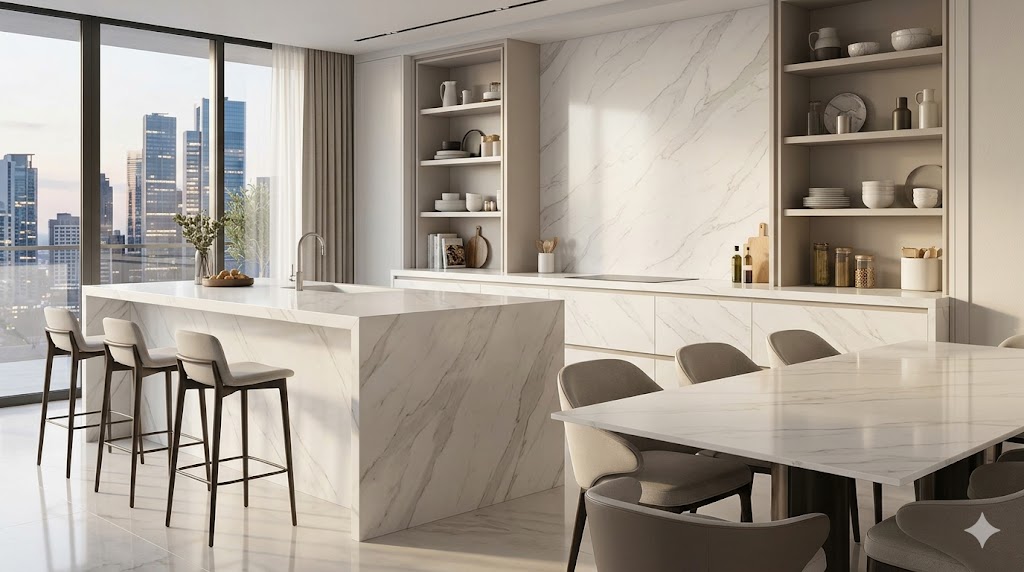 Lastre di marmo artificiale per cucine | 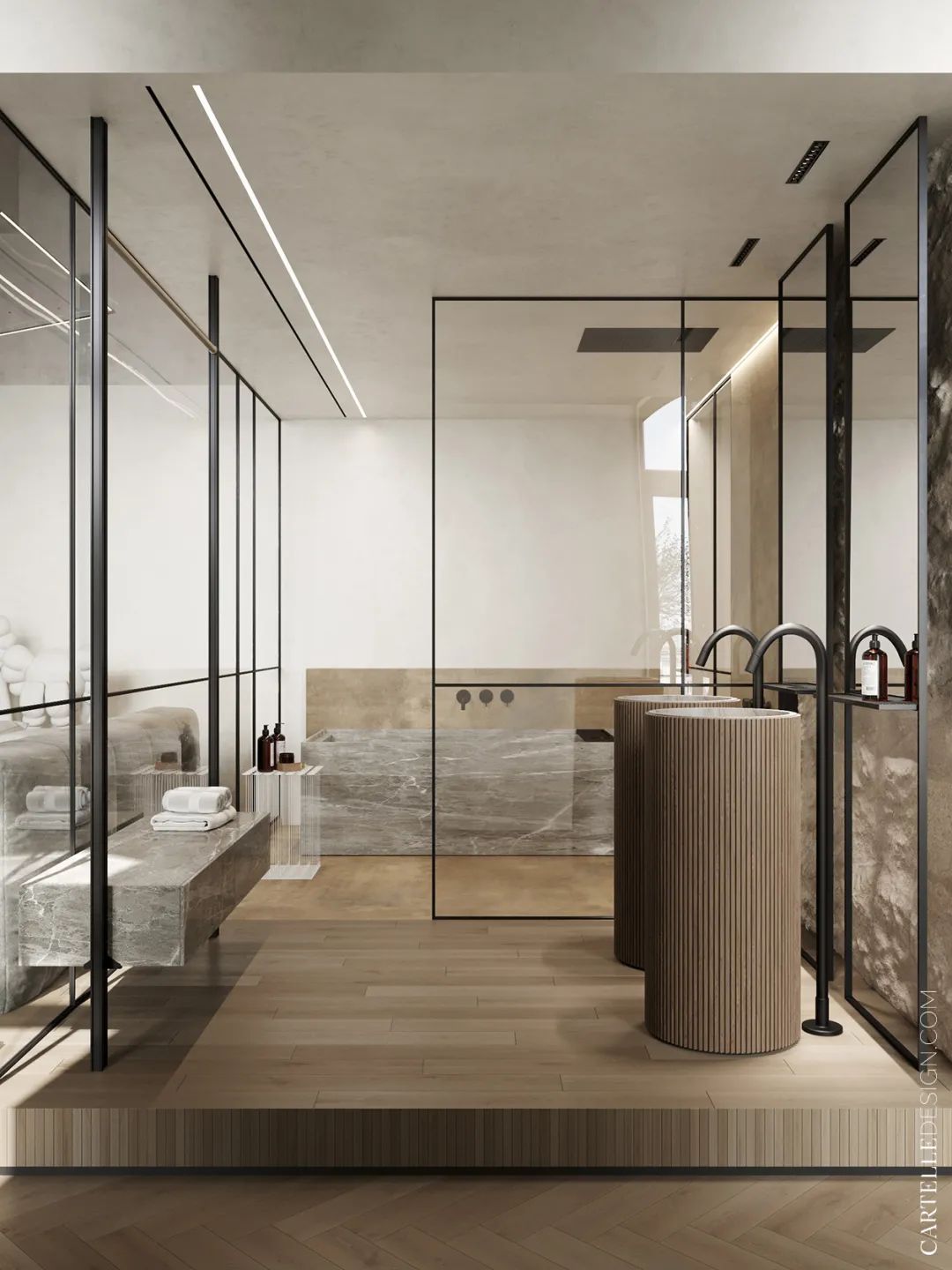 Natural marble bathroom |
FAQ
1. Can you use artificial marble for outdoor projects?
Generally, standard artificial marble is not recommended for outdoor applications exposed to direct sunlight. The polymer resins used to bind the crushed stone aggregates are sensitive to prolonged ultraviolet (UV) radiation. Over time, constant UV exposure can cause the resins to yellow, fade, or become brittle. For outdoor facades, patios, or alfresco kitchen countertops, natural stones like granite or specialized UV-resistant sintered stones are the structurally sound choice.
2. Is artificial marble heat resistant compared to natural marble?
Natural marble is highly heat resistant due to its geological formation under extreme subterranean temperatures, allowing it to withstand hot pots directly on its surface. Artificial marble, however, contains polymer resins that can scorch, melt, or leave a permanent white mark if exposed to temperatures exceeding 150°C (300°F). Therefore, it is strictly advised to use trivets or heat pads in kitchens utilizing engineered stone countertops.
3. How do you repair scratches on natural vs artificial marble?
Scratches on natural marble can typically be repaired on-site by a stone restoration professional using progressively finer diamond polishing pads to grind down the scratch, followed by a chemical polishing powder to restore the gloss. Minor scratches on artificial marble can also be buffed out using specialized polishing compounds. However, deep gouges in engineered stone are more difficult to repair invisibly, as the resin composition requires specialized color-matching epoxy fillers that must be meticulously blended and cured.
4. Which is better for hotel projects: artificial or natural marble?
For large-scale hotel projects, artificial marble is vastly superior from an operational standpoint. Hotels require materials that can withstand high turnover, constant cleaning, and abuse. Engineered stone offers near-zero porosity, meaning spilled wine, cosmetics, or harsh commercial cleaners will not stain or etch the surface. Furthermore, the absolute batch consistency guarantees that room 101 looks exactly like room 501, eliminating the costly dry-laying sorting process required for natural stone.
5. Does artificial marble stain easily?
No, artificial marble is specifically engineered to be highly stain-resistant. Because the manufacturing process utilizes vacuum vibro-compaction and polymer resins, all microscopic pores and fissures in the stone dust are completely sealed. This results in a water absorption rate of less than 0.05%. Unlike natural calcium carbonate, which acts like a sponge for dark liquids, engineered stone repels coffee, wine, and oils, allowing them to be wiped away easily without leaving a permanent mark.
Riferimenti
-
“Mechanical Properties and Flexural Strength of Engineered Polymer Composites.” Dr. H. Schmidt, Journal of Construction Materials Engineering.
-
“ISO 10545-3: Determination of Water Absorption and Porosity in Stone and Ceramics.” International Organization for Standardization.
-
“The Mechanics of Calcium Carbonate Etching in Commercial Environments.” Journal of Surface Engineering.
-
“Respirable Crystalline Silica Standard for Construction.” Occupational Safety and Health Administration (OSHA).
-
“Life Cycle Cost Analysis: Natural Stone vs. Engineered Surfaces in Hospitality.” International Facility Management Association (IFMA).
-
“LEED v4 Building Design and Construction Guidelines.” U.S. Green Building Council (USGBC).
-
“Advancements in 3D Full-Body Inkjet Printing for Composite Stones.” Materials Science and Engineering Quarterly.
-
“Installation Waste Metrics and Nesting Efficiency in Commercial Masonry.” Stone Industry Technical Journal.
Choosing between artificial marble and natural marble is no longer just a design preference. In modern construction, it is a strategic decision involving material science, maintenance planning, installation efficiency, compliance requirements, and long-term operating cost. For developers, contractors, and architects, the right specification depends less on appearance alone and more on where the material will be used, how much abuse it will face, and how predictable the final result must be at scale.
Why engineered stone is often preferred in commercial interiors
Artificial marble delivers the kind of consistency that large hospitality and multi-unit projects demand. Its low water absorption, high stain resistance, and uniform color output reduce installation risk and simplify maintenance protocols. In hotels, serviced apartments, retail washrooms, and indoor commercial countertops, this predictability helps owners control cleaning costs, reduce replacement rates, and keep visual standards consistent from one room or zone to another.
How natural marble keeps its advantage in high-heat and exterior applications
Natural marble still holds a clear structural and performance advantage in environments where heat load, UV exposure, and long-term material aging matter more than perfect batch matching. Because it contains no polymer resin binder, it is not vulnerable to yellowing or thermal deformation in the same way engineered composites can be. This makes natural marble the more dependable option for outdoor facades, sun-exposed architectural cladding, fireplace zones, and premium kitchens where hot cookware contact is a realistic daily risk.
What project teams should evaluate before making a final specification
Project teams should assess five core variables before selecting either surface: exposure to UV and heat, cleaning intensity, staining risk, required quantity consistency, and expected maintenance budget over time. If the project prioritizes fast installation, low waste, repeatable visual output, and easy sanitation, artificial marble is usually the operational winner. If the project prioritizes long-term material authenticity, outdoor stability, repairable surface wear, and thermal resilience, natural marble remains the better investment.
Option analysis for different real-world scenarios
For luxury hotel bathrooms, indoor reception desks, vanity tops, and large commercial flooring programs, artificial marble offers strong economic logic because it minimizes sealing requirements, reduces color variation issues, and shortens installation preparation time.
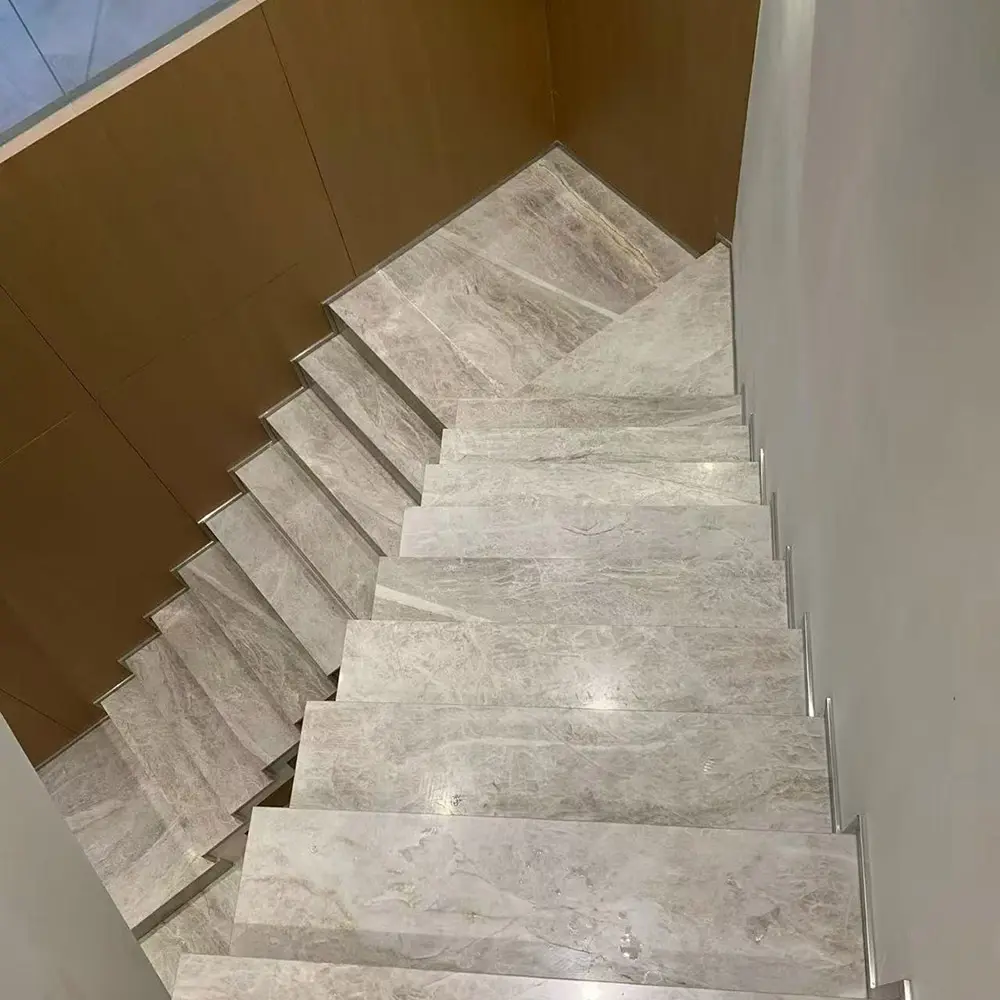
For bespoke villas, heritage-style interiors, statement staircases, and architecturally expressive surfaces where organic veining and geological authenticity carry design value, natural marble delivers a level of uniqueness that engineered materials still imitate rather than truly replicate.
For outdoor kitchens, terraces, and sun-facing façade systems, specifiers should move away from standard resin-based artificial marble and instead consider natural marble, granite, quartzite, or UV-resistant sintered stone depending on structural and climatic requirements.
Important technical considerations that affect lifecycle cost
Lifecycle cost is shaped by far more than slab price. It includes fabrication waste, transport damage, sealing schedules, stain repair frequency, replacement risk, cleaning chemistry compatibility, and downtime during refurbishment. Artificial marble usually lowers the operational burden in indoor commercial environments because its non-porous structure resists routine spills and harsh maintenance cycles.
Natural marble, however, can recover value through reparability. Surface wear, etching, and minor scratches can often be repolished by restoration professionals, which can be more sustainable than replacing a damaged engineered slab that cannot be invisibly repaired once deeply gouged or heat-marked.
How regulations and sustainability trends are influencing buying decisions
By 2026, material selection is increasingly influenced by indoor air quality targets, recycled content strategies, silica dust control, and commercial green building certification systems. Engineered products with low VOC emissions and recycled mineral content are gaining traction in large developments, while stone processors are also under pressure to prove wet-cutting compliance and responsible fabrication standards. This means buyers are no longer choosing only by color and price; they are choosing by documentation, safety processes, and total project accountability.
Final market insight
Artificial marble is not a universal replacement for natural marble, and natural marble is not always the smartest commercial choice. The real answer depends on application logic. For indoor, standardized, high-volume commercial projects, engineered surfaces offer superior control, efficiency, and stain performance. For premium architectural environments exposed to heat, weather, or design expectations tied to natural authenticity, genuine marble still commands the stronger technical and emotional position. The most successful buyers are the ones who specify materials by performance context, not by trend alone.