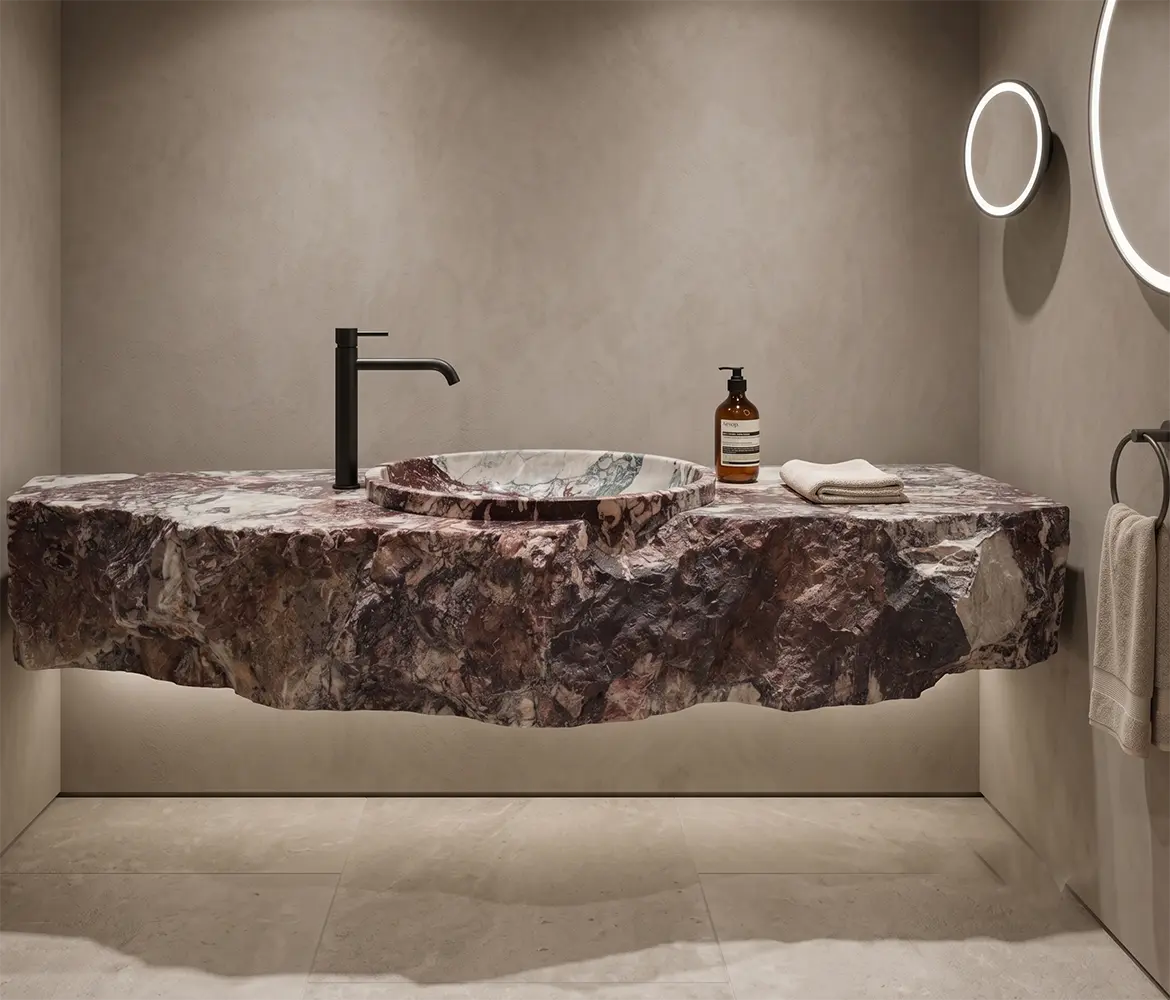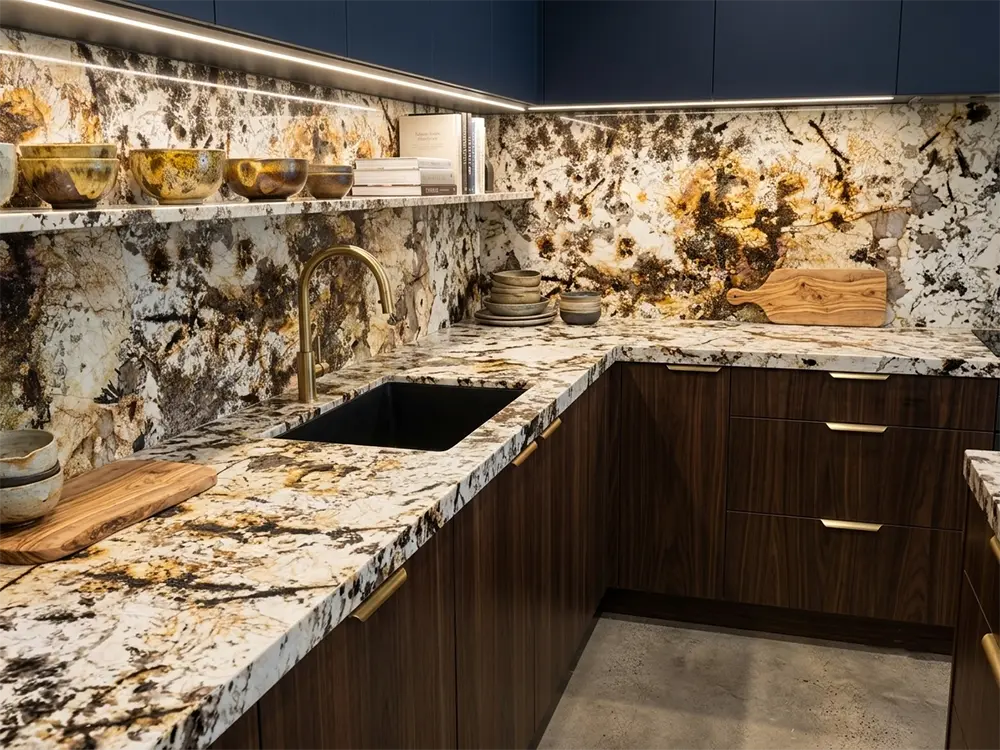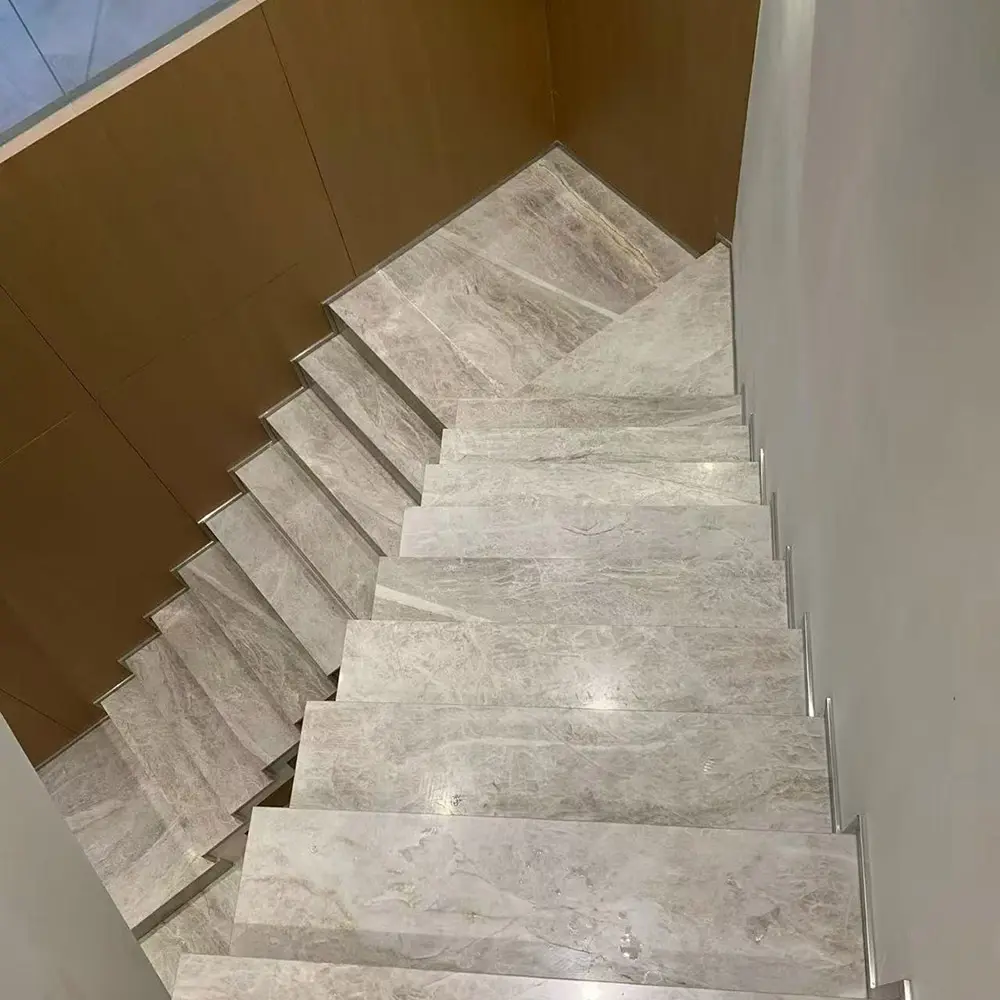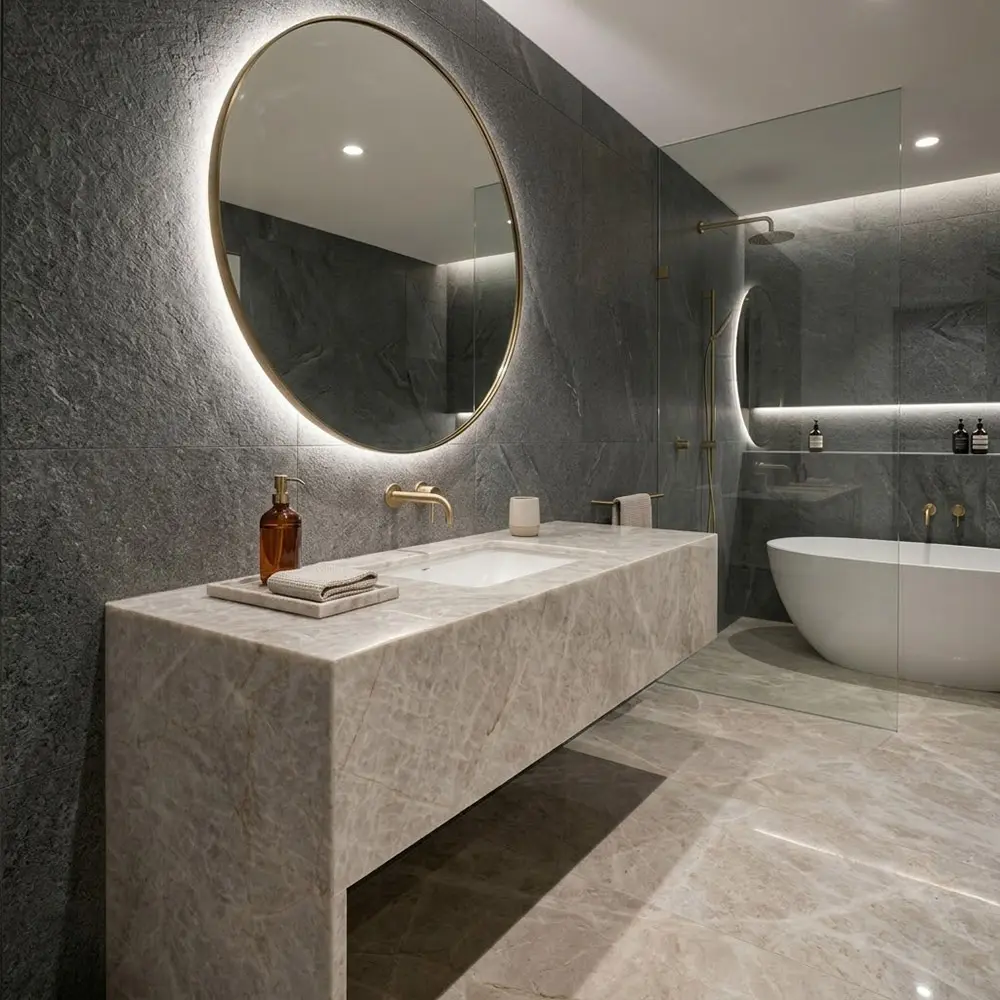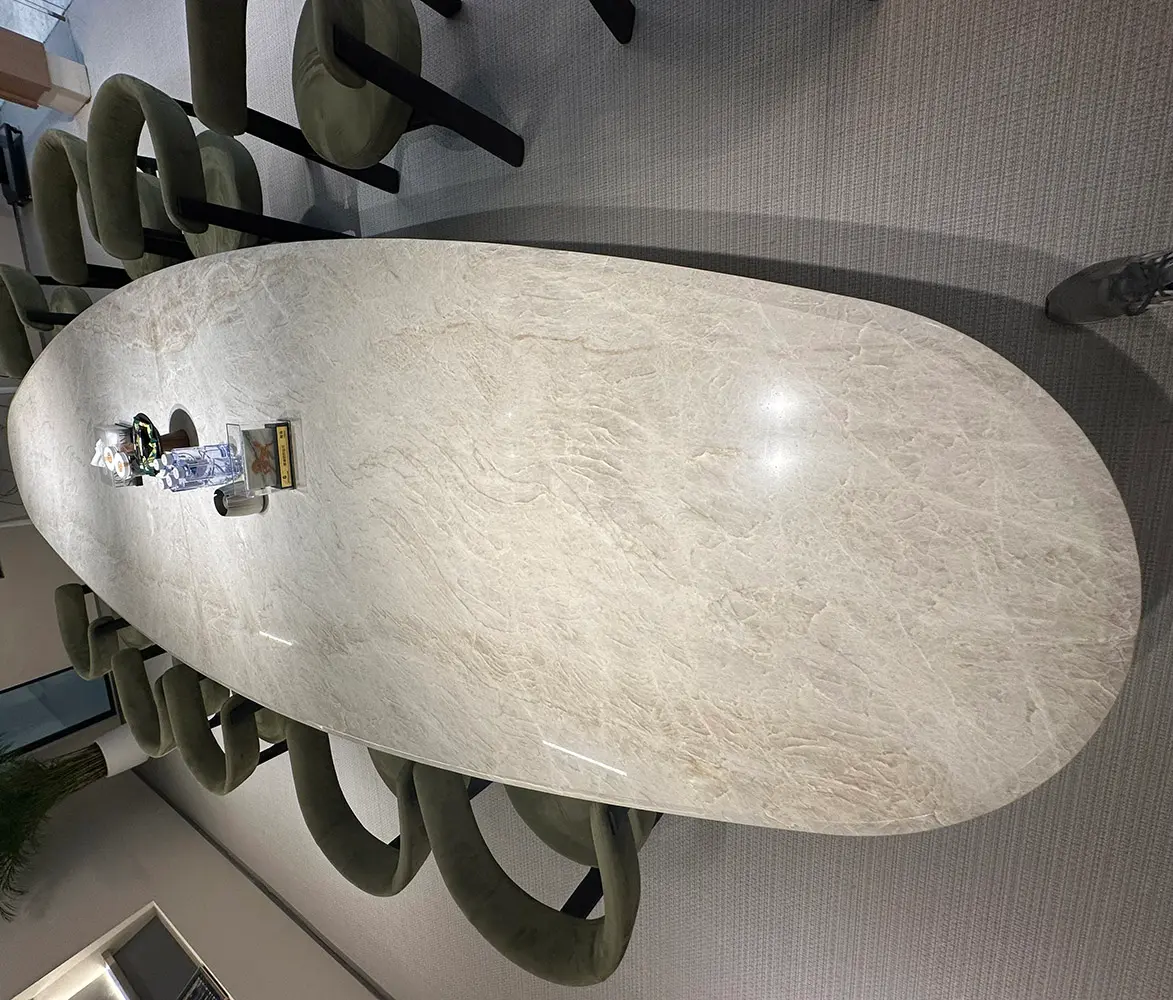






Tóm tắt nhanh: Gạch mosaic are moving beyond flat decorative grids into 3D texture, sculptural relief, tumbled finishes, and split-face stone surfaces that create depth through light and shadow. For hotels, spas, villas, restaurants, and luxury bathrooms, the best choice depends on finish, material, relief depth, lighting angle, sealing, cleaning requirements, and supplier customization capability.
A hotel designer wants a reception wall that feels handcrafted rather than printed. A spa developer needs a stone surface that works beautifully under warm lighting. A villa owner wants a bathroom feature wall with quiet luxury. A restaurant designer wants a wall that changes mood as the light shifts from afternoon to evening. These are the projects where Gạch mosaic are no longer just small decorative pieces. They become architectural surfaces.
For years, many buyers treated mosaic as a flat grid: small chips, repeated pattern, simple wall decoration. That is changing. New Gạch khảm 3D, gạch mosaic điêu khắc, tumbled stone mosaics, split-face mosaics, carved relief panels, and textured wall cladding are giving designers more depth, shadow, and tactile value. The surface is no longer only seen; it is felt.
This shift also changes the way buyers should source mosaic products. A flat backsplash tile and a sculptural stone feature wall do not have the same installation logic, cleaning difficulty, lighting requirement, or supplier risk. For buyers comparing project experience and production background, the Mosaic Tiles manufacturer profile is a useful starting point for understanding factory capability, natural stone processing, and custom project support.
This guide explains how 3D texture and sculptural Mosaic Tiles are being used in modern interiors, how tumbled and split-face finishes differ, how lighting affects relief surfaces, what a realistic limestone Tường trang trí khảm project looks like, and how buyers should avoid common specification mistakes.
Mosaic Tiles Supplier
What Are 3D and Sculptural Mosaic Tiles?
From Flat Decoration to Architectural Surface
Traditional Mosaic Tiles are often flat, regular, and decorative. They work well for bathrooms, backsplashes, floors, borders, and patterned wall surfaces. But 3D and sculptural mosaics add another layer: physical depth. Instead of only using color and pattern, they use raised and recessed surfaces, uneven stone faces, carved forms, irregular chip thickness, and shadow movement.
This makes them closer to architectural wall cladding than ordinary tile decoration. A 3D mosaic wall can become the main visual anchor in a lobby, spa, restaurant, bathroom, fireplace wall, villa corridor, or retail space. The goal is not only to cover a surface. The goal is to create atmosphere.
Why Designers Are Choosing Textured Mosaics
Interior design is becoming more tactile. Minimalist spaces need texture to avoid feeling cold. Hospitality spaces need surfaces that feel memorable. Wellness interiors need natural, calming materials. Sculptural mosaics answer these needs because they add depth without relying on loud color.
Natural stone is especially effective here. Marble, limestone, travertine, slate, basalt, and mixed stone mosaics create natural variation that printed materials often struggle to reproduce. For broader project guidance, this 2026 Mosaic Tiles trends guide gives buyers a useful overview of materials, design applications, and trend directions before choosing a final product.
| Mosaic Type | Surface Character | Best Use | Buyer Consideration |
|---|---|---|---|
| Flat Mosaic Tiles | Smooth and regular | Bathrooms, backsplashes, floors | Easier cleaning |
| 3D Relief Mosaics | Raised and recessed pattern | Feature walls, lobbies, spas | Lighting and dust control |
| Split-Face Mosaics | Rough natural texture | Accent walls, fireplaces, restaurants | Not ideal for heavy splash zones |
| Tumbled Mosaics | Soft aged edges | Spas, bathrooms, villas | Usually needs sealing |
The Sensory Appeal of Tumbled and Split-Face Finishes
Why Texture Matters in Modern Interiors
Texture is one of the easiest ways to make a clean interior feel expensive. A plain wall may look tidy, but it can also feel flat. A textured mosaic wall catches light, creates shadow, and gives the eye something to follow. That is why gạch mosaic có vân bề mặt are increasingly used in hotels, spas, villas, boutique restaurants, wellness rooms, and high-end bathrooms.
The important point is choosing the right texture. Not every rough surface belongs in every room. Some finishes are beautiful but harder to clean. Some are excellent for feature walls but risky for wet floors. Some look calm in small samples but too busy on a full wall. Tiny samples are polite little liars; full mockups tell the truth.
Tumbled Mosaic Tiles
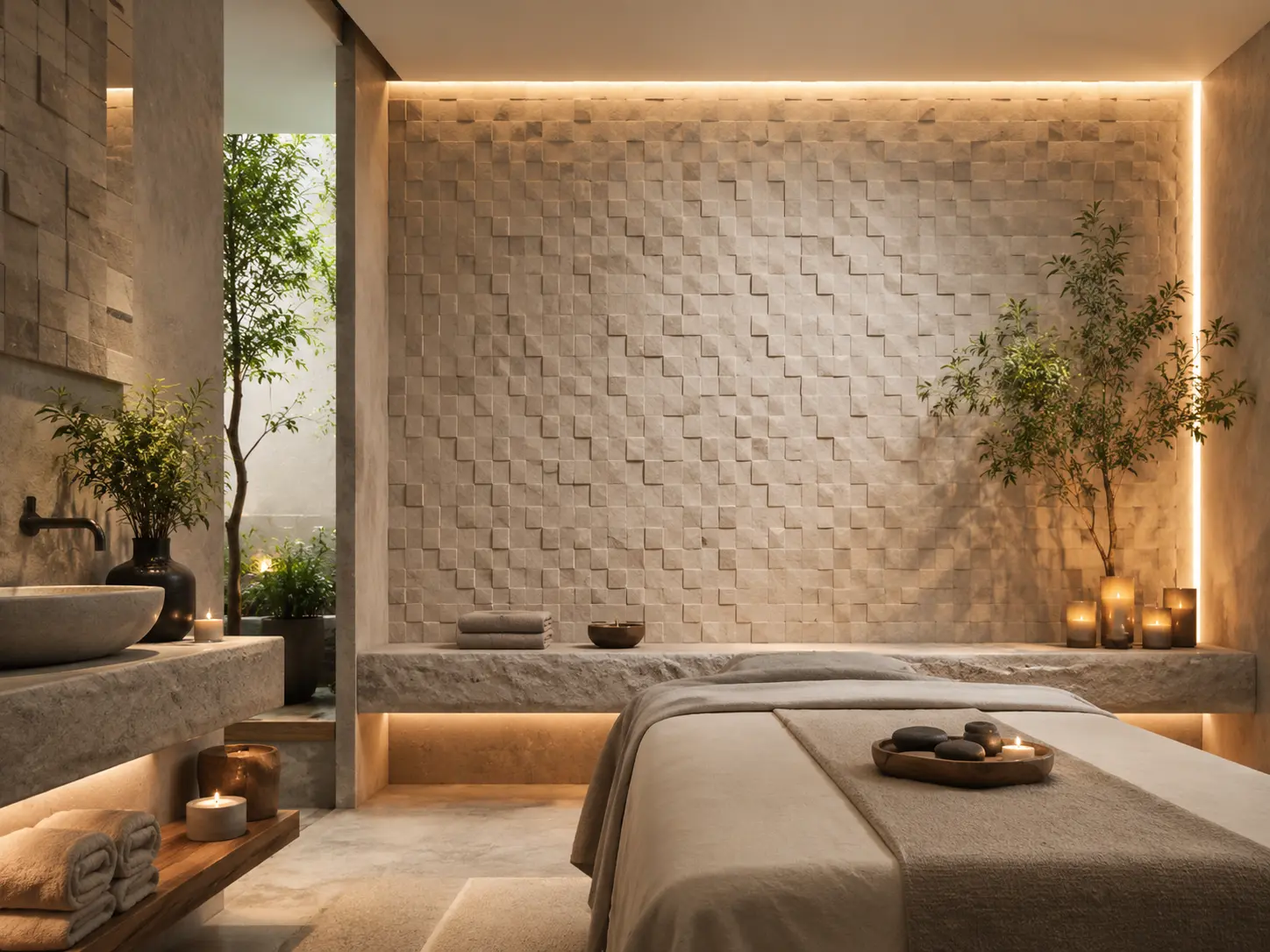
Tumbled Mosaic Tiles have softened edges and an aged surface. They create a relaxed, natural, slightly handcrafted look. Tumbled limestone, marble, and travertine mosaics are especially suitable for spa interiors, villa bathrooms, Mediterranean-style walls, warm hospitality corridors, and wellness environments. The finish feels softer than split-face and less formal than polished stone.
For buyers who want warm, textured, natural wall surfaces, rustic tumbled mixed limegạch mosaic đá show how cream and red tones, split-face texture, and natural stone variation can create a warmer architectural wall effect.
Split-Face Mosaic Tiles
Split-face mosaics have a rough, uneven stone surface. They create stronger shadow and a more dramatic natural look. They work well for fireplaces, hotel lobbies, restaurant walls, bar fronts, exterior covered walls, villa foyers, and commercial accent walls.
The risk is maintenance. Split-face surfaces can collect dust more easily than honed or polished surfaces. They are usually not the best option for shower walls, kitchen splash zones, or areas requiring frequent wipe-down cleaning. If cleaning access is limited, choose a softer tumbled or honed finish instead.
| Finish Type | Visual Effect | Ứng dụng tốt nhất | Cleaning Level | Buyer Risk |
|---|---|---|---|---|
| Tumbled | Soft, aged, organic | Bathrooms, spas, villas | Trung bình | Needs sealing |
| Split-Face | Rough, dramatic, natural | Feature walls, fireplaces | Higher | Dust and cleaning difficulty |
| Honed | Smooth matte | Bathrooms, floors, walls | Lower | Less dramatic texture |
| Carved / Relief | Sculptural depth | Hotels, lobbies, luxury walls | Medium-high | Installation precision needed |
Using Light and Shadow: Designing with 3D Relief Mosaics
Why Light Is Part of the Material
With 3D relief mosaics, lighting is not decoration after installation. Lighting is part of the material performance. A sculptural mosaic wall can look quiet under flat lighting and dramatic under side lighting. Grazing light can make the relief depth appear stronger. Wall washing can create soft even illumination. Warm downlights can make limestone and travertine feel calmer. Cool lighting can make grey marble and basalt look more architectural.
If a designer specifies a 3D mosaic wall but ignores lighting, half the design value may disappear. That is the little tragedy of textured surfaces: they need light to speak.
Best Lighting Techniques
Grazing light is one of the most effective techniques for 3D Mosaic Tiles because it casts shadows across raised and recessed areas. Wall washing works better when the design wants a softer and more even effect. Linear LED can be used for niches, bar fronts, and reception walls. Spotlighting can highlight sculptural panels, but it must avoid overly harsh shadows.
For designers exploring more decorative and refined stone mosaic options, gray marble long octagon mosaic tiles show how geometric patterning and gold accent details can create a more polished luxury effect for walls, bathrooms, and decorative surfaces.
| Lighting Method | Best Use | Effect on 3D Mosaic Tiles | Kiểm tra của người mua |
|---|---|---|---|
| Grazing Light | Relief walls | Strong shadow depth | Wall flatness must be good |
| Wall Washing | Large feature walls | Even soft illumination | Avoid glare |
| Linear LED | Niches, bars, counters | Modern visual rhythm | Heat and access planning |
| Warm Downlight | Spas, bathrooms | Softens stone texture | Check color shift |
3D Mosaic Tiles for Spa and Wellness Interiors
Where 3D Mosaic Tiles Work Best
Hotel Lobbies and Reception Walls
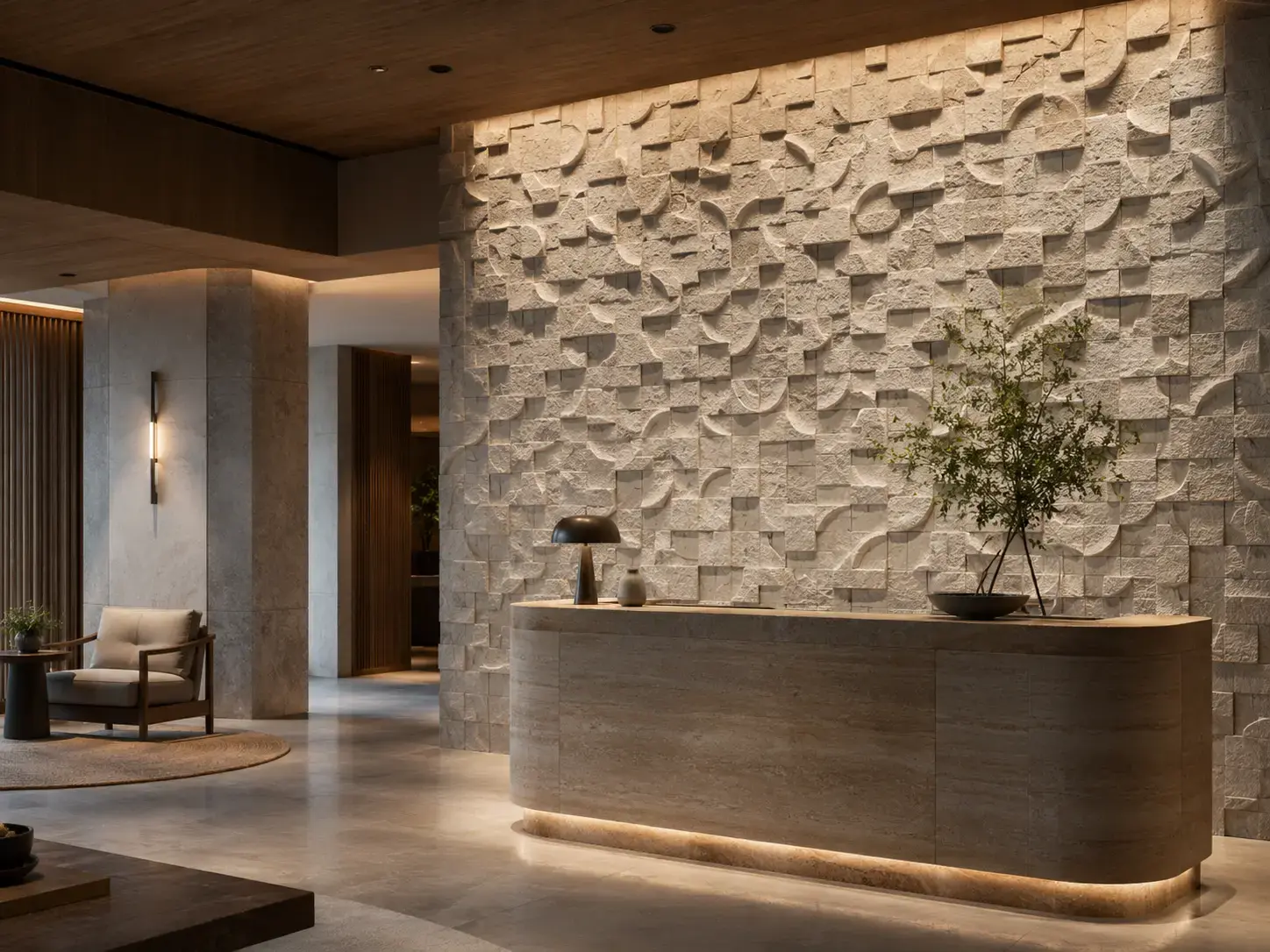
Hotel lobbies are ideal for 3D and sculptural Mosaic Tiles because lighting is controlled, the wall is usually decorative, and the surface can create a strong first impression. Behind a reception desk, a sculptural mosaic wall can communicate craft, luxury, and permanence without needing bright color.
Spa and Wellness Interiors
Spa interiors benefit from tumbled limestone, honed marble, and textured natural stone mosaics because they create a calm sensory environment. Rough split-face surfaces should be used carefully in wet zones, but they can work beautifully in dry treatment rooms, corridors, and relaxation areas.
Luxury Bathrooms
In luxury bathrooms, Mosaic Tiles can be used for vanity walls, niches, bathtub surrounds, and feature shower walls. For wet areas, smoother textures, proper waterproofing, sealing, and grout quality are essential. A beautiful wall that becomes hard to clean is not luxury; it is a maintenance trap wearing nice shoes.
Restaurants, Bars, and Retail Spaces
Restaurants and bars often use dimmer lighting, which makes 3D Mosaic Tiles especially powerful. Textured walls, bar fronts, and display areas can create atmosphere and brand personality. Retail spaces can use sculptural mosaics behind display tables or feature zones to make products feel more premium.
| Project Type | Recommended Mosaic Style | Best Location | Rủi ro chính |
|---|---|---|---|
| Hotel Lobby | 3D relief / split-face | Reception wall | Installation alignment |
| Spa Interior | Tumbled stone mosaic | Treatment rooms, feature walls | Moisture and sealing |
| Luxury Bathroom | Honed / tumbled / relief | Vanity wall, niche | Cleaning and waterproofing |
| Restaurant | Split-face / sculptural | Dining wall, bar front | Dust and cleaning |
Case Study: A 3D Limestone Mosaic Feature Wall
Project Background
Imagine a boutique hotel lobby with a six-meter-wide reception wall. The original design used a flat painted wall, but the result felt too plain for the property’s positioning. The designer wanted natural texture, a handcrafted feeling, and stronger light-shadow movement, but did not want the wall to become visually loud. Large slabs felt too formal, wallpaper felt too temporary, and painted texture did not provide enough material value.
Design Problem
The project needed a wall surface that could create depth without heavy color. It also needed to work under warm grazing light, maintain a calm hospitality mood, and avoid the overly regular “grid” look that some small mosaics can create. The buyer also needed a product that could be shipped, installed, and maintained without turning the lobby into a construction soap opera.
Solution
The design team selected 3D limestone Mosaic Tiles with a soft neutral tone and varied relief depth. The modular mosaic sheets helped control installation speed, while the natural stone texture provided the handcrafted effect. Warm grazing light was placed along the wall to enhance shadows. A sealer was specified to reduce moisture and staining risk. Grout color was selected close to the stone tone to reduce visible grid lines.
For buyers planning hotel or large-scale commercial projects, this article on large-scale custom Mosaic Tiles for hotel tenders explains how production control, sample approval, color consistency, and project-scale customization affect high-end mosaic supply.
Results
The wall became the main visual anchor of the lobby. The limestone tone kept the space calm, while the relief texture created movement under lighting. The modular format reduced fabrication complexity compared with carved single-piece panels. The maintenance plan also helped the owner understand cleaning and sealing requirements before the wall was installed.
| Yếu tố dự án | Before | After 3D Limestone Mosaic |
|---|---|---|
| Wall Appearance | Flat and plain | Textured and architectural |
| Lighting Effect | Limited depth | Strong shadow movement |
| Design Mood | Generic | Natural luxury |
| Thi công | Simple paint wall | Modular mosaic system |
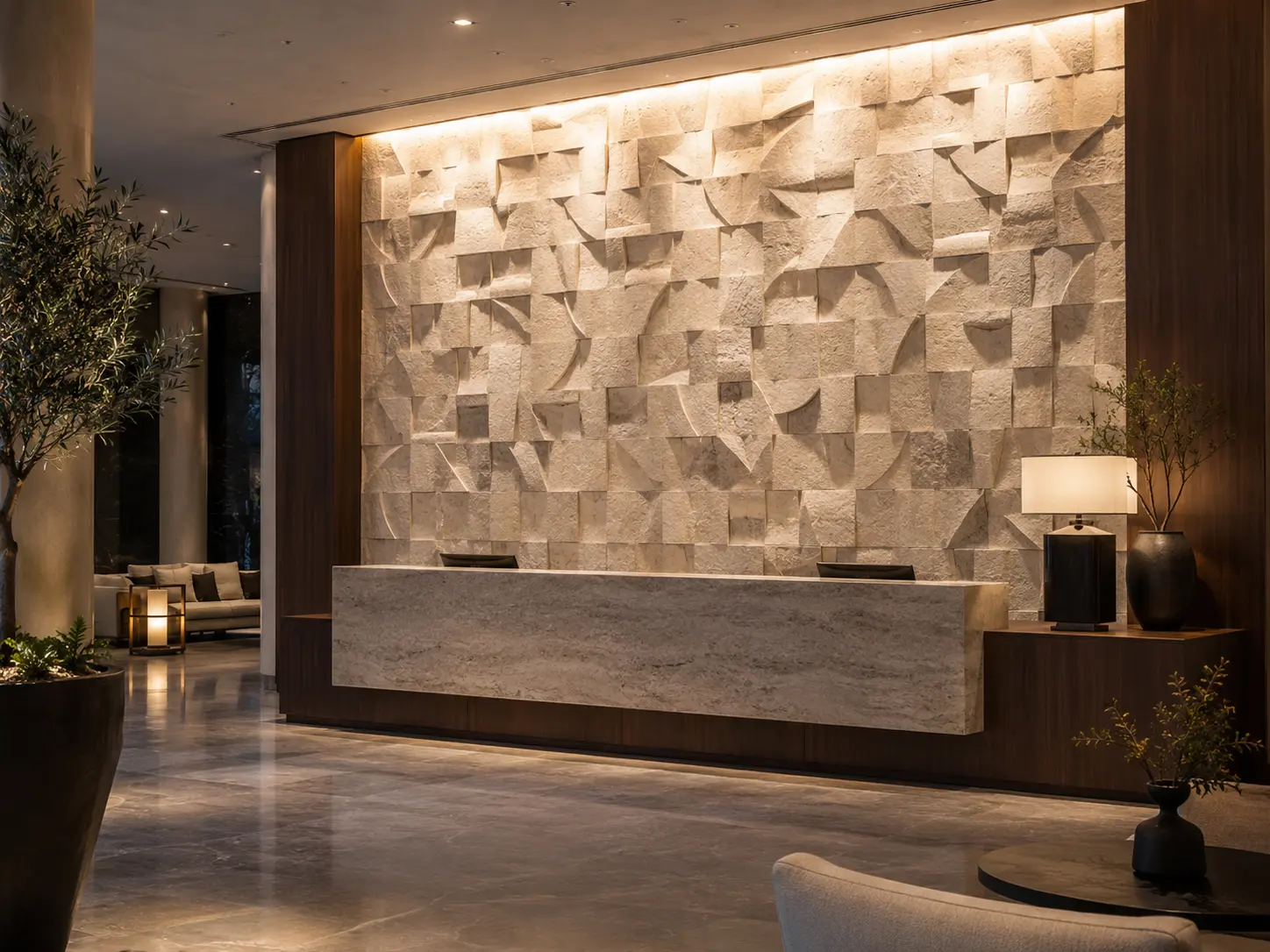
3D Mosaic Tile Accent Wall
3D Mosaic Tiles vs Flat Mosaic Tiles
Visual Performance
Flat Mosaic Tiles are cleaner, easier to maintain, and better for wet floors, backsplashes, compact bathrooms, and cleaning-heavy areas. 3D mosaics create stronger visual depth and are better suited for feature walls, brand spaces, lobbies, spas, restaurants, and villas.
Maintenance Difference
3D texture can collect dust more easily than flat surfaces. Split-face mosaics require more cleaning attention than honed or polished mosaics. Tumbled finishes are often easier to live with than aggressive rough surfaces. Natural stone mosaics usually need sealing, especially in wet or stain-prone areas.
Buyer Decision Logic
If the area needs easy cleaning, choose flat or honed mosaics. If the wall is decorative, choose 3D relief or split-face. If lighting can be controlled, 3D mosaics perform better. If the area is wet, check finish, grout, sealant, waterproofing, and slip resistance.
| Criteria | Flat Mosaic Tiles | 3D / Sculptural Mosaic Tiles |
|---|---|---|
| Độ sâu thị giác | Từ thấp đến trung bình | Cao |
| Vệ sinh | Easier | Needs more careful cleaning |
| Best Use | Bathrooms, backsplashes, floors | Feature walls, lobbies, spas |
| Lighting Effect | Trung bình | Mạnh mẽ |
| Thi công | Easier | Requires better alignment |
Material Choices for Sculptural Mosaic Tiles
Marble Mosaic Tiles
Marble Mosaic Tiles provide elegance, refinement, and natural veining. They work well in bathrooms, hotel walls, fireplace surrounds, furniture surfaces, and decorative accents. Marble can be polished, honed, tumbled, or carved, but it should be sealed and cleaned with pH-neutral products.
For a modern neutral stone direction, natural grey marble stone mosaic tiles can support bathrooms, feature walls, and luxury interiors where designers want natural texture with a calmer color palette.
Limestone Mosaic Tiles
Limestone creates a softer and warmer mood. It is excellent for spas, hotels, villas, and calm feature walls. Limestone is more porous than some other stones, so sealing and application matching are important. It is often a strong choice when the project wants warmth without dramatic veining.
Travertine Mosaic Tiles
Travertine has natural holes, warm tones, and strong texture. It works beautifully in Mediterranean interiors, restaurants, villas, spas, and hospitality walls. Depending on application, buyers may need filled or unfilled travertine, plus proper sealing.
Slate and Basalt Mosaic Tiles
Slate and basalt offer darker, stronger, more architectural effects. They can be powerful in modern commercial interiors, bars, exterior covered walls, and dramatic accent areas. The risk is visual heaviness, especially in small rooms or spaces with poor lighting.
| Chất liệu | Design Mood | Best Use | Buyer Consideration |
|---|---|---|---|
| Đá cẩm thạch | Elegant, refined | Bathrooms, luxury walls | Etching and sealing |
| Đá vôi | Soft, calm, natural | Spas, hotels, feature walls | Độ xốp |
| Đá travertine | Warm, textured | Villas, restaurants | Filling and sealing |
| Đá phiến | Rustic, dramatic | Accent walls | Layering and dust |
Technical Parameters Buyers Should Check
Dimensional and Surface Details
Buyers should check mosaic chip size, sheet size, thickness, relief depth, surface finish, material type, mesh backing, adhesive compatibility, grout joint width, edge tolerance, color variation, water absorption, sealing requirement, and slip resistance if the product is used on floors.
Relief depth is especially important. A shallow relief may look too flat under normal lighting, while excessive depth can create dust, cleaning, and edge issues. Sheet size affects installation speed. Mesh backing affects stability. Grout color affects whether the wall looks seamless or grid-like.
Project Documents to Request
Before ordering, buyers should request product photos, close-up texture photos, side-view depth photos, sample boards, installation mockups, packing photos, batch photos, test reports if available, maintenance guides, and installation recommendations.
For buyers comparing technical selection logic, installation conditions, and project suitability, this Mosaic Tiles buyer guide can help clarify how to choose material, finish, size, application, and supplier support before purchasing.
| Thông số | Tại sao điều này quan trọng | Buyer Decision |
|---|---|---|
| Chip Size | Controls visual rhythm | Match room scale |
| Sheet Size | Affects installation speed | Check layout and labor |
| Độ dày | Impacts wall build-up | Coordinate with substrate |
| Relief Depth | Controls shadow effect | Match lighting design |
| Hấp thụ nước | Staining and wet-area risk | Confirm sealing |
Installation and Maintenance Considerations
Substrate Preparation
Wall flatness matters. 3D Mosaic Tiles reveal uneven installation more easily than flat tiles because the shadow line changes across the surface. Substrate preparation, adhesive selection, and installation alignment are critical. Wet areas need waterproofing behind the tile, not just beautiful stone in front of it.
Grout and Joint Planning
Grout color can make or break the finished surface. If the grout contrasts too strongly, the wall may look like a grid instead of a sculptural surface. For many stone mosaics, grout color should be close to the stone tone. Joint width should be controlled, and installers should avoid excessive grout residue on rough surfaces.
Sealing and Cleaning
Natural stone mosaics usually need sealing, especially marble, limestone, and travertine. Use pH-neutral cleaners and avoid acidic cleaners. Rough split-face surfaces need dust control. Commercial projects should have a maintenance plan before installation, not after the first complaint.
Common Buyer Mistakes When Choosing 3D Mosaic Tiles
Using Rough Split-Face Tiles in Hard-to-Clean Wet Areas
Rough split-face stone can look excellent on feature walls, but it may be difficult to clean in shower walls, kitchen splash zones, or humid areas with frequent residue. Choose smoother or sealed finishes for cleaning-sensitive spaces.
Ignoring Lighting
Without proper lighting, 3D texture may look flat. With harsh lighting, it may look messy. Lighting should be tested with actual samples or mockups.
Choosing Small Samples Only
Small samples do not show how the pattern repeats across a full wall. Always request sample boards, batch photos, and installation mockups for large projects.
Not Checking Relief Depth
Relief depth affects wall build-up, edge treatment, shadow effect, cleaning, and installation alignment. It should be specified, not guessed.
Treating Sculptural Mosaics Like Ordinary Flat Tiles
3D mosaics need better substrate preparation, more careful alignment, and more thoughtful lighting. Treating them like basic flat tiles often leads to visible grid lines and uneven shadow patterns.
Skipping Sealing
Skipping sealing can lead to staining, moisture absorption, and long-term maintenance problems, especially for limestone, marble, and travertine mosaics.

Gạch mosaic đá vôi màu be mài nhẵn kết hợp họa tiết 3D
How to Choose a Mosaic Tiles Supplier
What a Reliable Supplier Should Provide
A reliable supplier should provide material options, 3D texture samples, sample boards, chip size options, finish options, sheet size data, relief depth data, mesh backing information, batch photos, packing photos, installation suggestions, sealing guidance, custom design support, project experience, and export documentation.
For project discussion, custom samples, hotel tender support, or product selection, buyers can contact a Mosaic Tiles supplier to confirm application, finish, thickness, relief depth, packing, and delivery details before placing a bulk order.
| Evaluation Factor | Trọng lượng | What to Check |
|---|---|---|
| Texture Quality | 20% | Relief depth and surface consistency |
| Material Selection | 15% | Marble, limestone, travertine, slate |
| Sample Support | 15% | Boards, photos, mockups |
| Installation Guidance | 15% | Adhesive, grout, substrate advice |
| Customization Ability | 10% | Shapes, patterns, finishes |
Practical Recommendation: When Should You Use Sculptural Mosaic Tiles?
Choose 3D Mosaic Tiles If
Choose 3D Mosaic Tiles if the wall needs visual depth, lighting can be controlled, the project needs a handcrafted feeling, the space is a hotel, spa, villa, restaurant, or boutique store, and the surface is mainly decorative.
Use Flat Mosaic Tiles If
Use flat Mosaic Tiles if the surface needs frequent cleaning, the area is a shower floor, the project needs a simple backsplash, the room is very small, or the client wants low maintenance.
Choose Tumbled Finish If
Choose tumbled finish if the space needs softness, the design is spa-like, the client likes aged texture, and the wall should feel natural but not overly rough.
Choose Split-Face Finish If
Choose split-face finish if the project needs dramatic texture, the surface is mainly decorative, lighting can highlight the relief, and maintenance access is acceptable.
For final decision support, buyers can revisit this right Mosaic Tiles for your project guide to compare format, material, finish, application, cleaning requirements, and sourcing risks before confirming the order.
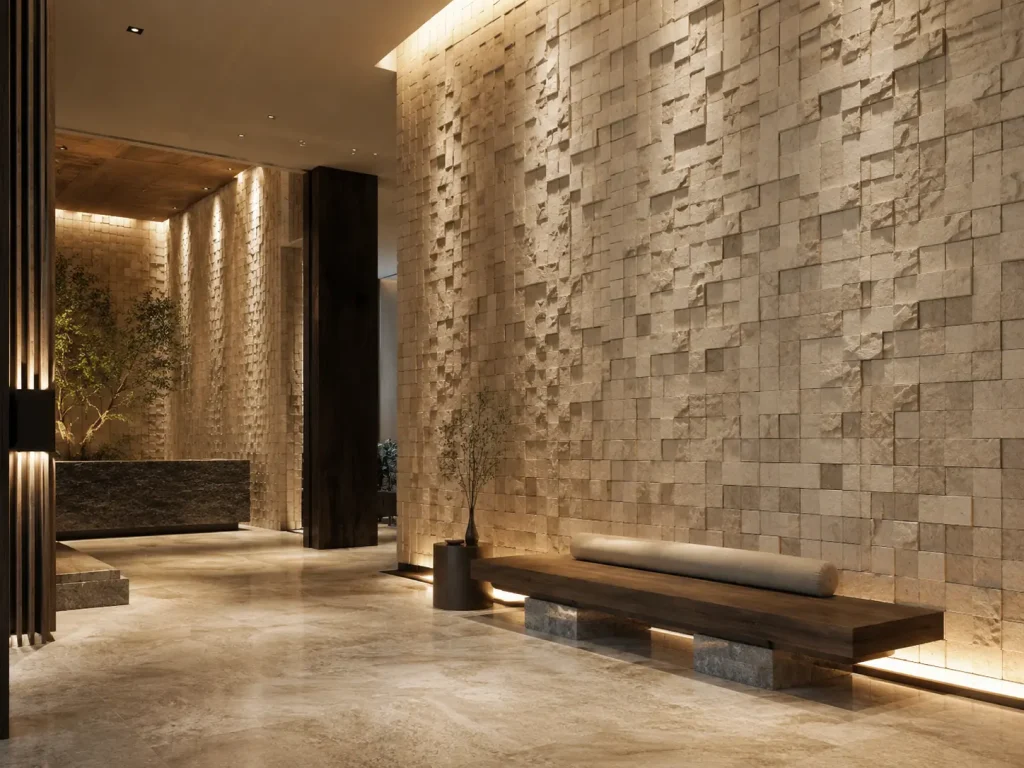
Texture Turns Mosaic Tiles Into Architecture
Final Design Insight: Texture Turns Mosaic Tiles Into Architecture
The rise of 3D texture and sculptural Mosaic Tiles is not just a decorative trend. It reflects a broader movement toward tactile interiors, handcrafted surfaces, natural materials, and lighting-driven design. In the right space, a textured mosaic wall can do what paint, wallpaper, and flat tile cannot: create depth, shadow, touch, and atmosphere.
The best result comes from matching the finish to the application. Use tumbled mosaics for soft spa-like calm. Use split-face mosaics for dramatic dry feature walls. Use honed or flat mosaics for cleaning-sensitive areas. Use relief mosaics where lighting can enhance shadow. Confirm samples, relief depth, substrate, grout, sealing, cleaning, packing, and supplier support before ordering. That is how Mosaic Tiles move from decoration to architectural storytelling.
FAQ About 3D Texture and Sculptural Mosaic Tiles
1. Gạch khảm 3D là gì?
Gạch mosaic 3D là những bề mặt mosaic với các họa tiết nổi chìm, tạo khối điêu khắc, bề mặt đá không đều hoặc độ sâu mảnh ghép đa dạng, nhờ đó tạo nên chuyển động thị giác qua ánh sáng và bóng đổ. Khác với gạch mosaic phẳng, gạch mosaic 3D hoạt động giống như lớp ốp tường kiến trúc hơn. Chúng thường được sử dụng cho các bức tường nhấn nhá, sảnh khách sạn, spa, phòng tắm, nhà hàng, lò sưởi, biệt thự và các không gian nội thất thương mại boutique, nơi các nhà thiết kế mong muốn mang lại chiều sâu, kết cấu và nét đặc trưng thủ công.
2. Gạch Mosaic có vân sần có khó vệ sinh không?
Gạch mosaic có bề mặt sần sùi có thể khó vệ sinh hơn so với gạch phẳng, đặc biệt là các loại đá chẻ thô hoặc bề mặt chạm khắc sâu, vốn dễ bám bụi, cặn xà phòng hoặc hơi ẩm. Chúng thường phù hợp hơn cho các bức tường trang trí, những khu vực trang trí khô, sảnh khách sạn, lò sưởi và nhà hàng, thay vì các khu vực chịu nhiều văng bắn nước. Đối với phòng tắm hoặc các khu vực ẩm ướt, người mua nên lựa chọn loại gạch có bề mặt nhẵn hơn, thực hiện việc chống thấm kỹ lưỡng, sử dụng keo chà ron phù hợp, áp dụng biện pháp chống thấm hiệu quả và xây dựng một kế hoạch bảo trì hợp lý.
3. Gạch mosaic điêu khắc có thể được sử dụng ở đâu?
Gạch mosaic điêu khắc có thể được sử dụng cho tường lễ tân khách sạn, sảnh thang máy, phòng trị liệu spa, tường tủ lavabo trong phòng tắm, viền bồn tắm, tường trang trí nhà hàng, mặt tiền quầy bar, tường trưng bày bán lẻ, viền lò sưởi, sảnh vào biệt thự và nội thất thương mại phong cách boutique. Sản phẩm phát huy hiệu quả tốt nhất khi ánh sáng có thể được điều chỉnh và bức tường được thiết kế để trở thành điểm nhấn thị giác. Đối với sàn hoặc các khu vực cần vệ sinh thường xuyên, các lựa chọn mosaic phẳng hơn hoặc được mài nhẵn có thể phù hợp hơn.
4. Sự khác biệt giữa bề mặt mài nhẵn và bề mặt chẻ là gì?
Gạch mosaic mài mòn có các cạnh bo tròn và bề mặt tự nhiên, nhẵn mịn mang vẻ cổ kính, phù hợp cho spa, phòng tắm, biệt thự và những không gian nội thất yên tĩnh. Gạch mosaic mặt tách có bề mặt đá thô ráp, không đồng đều hơn, tạo nên bóng đổ mạnh mẽ và kết cấu ấn tượng. Các loại hoàn thiện mặt tách thích hợp hơn cho những bức tường trang trí khô, lò sưởi, tường nhà hàng và các điểm nhấn ở sảnh, tuy nhiên chúng có thể đòi hỏi việc vệ sinh thường xuyên hơn và không phải lúc nào cũng lý tưởng cho các khu vực ẩm ướt hoặc dễ bám cặn.
5. Làm thế nào để chọn một nhà cung cấp gạch mosaic đáng tin cậy?
Để lựa chọn một nhà cung cấp gạch mosaic đáng tin cậy, hãy kiểm tra xem nhà cung cấp có thể cung cấp các lựa chọn vật liệu, bảng mẫu, ảnh chi tiết kết cấu, ảnh chụp chiều sâu từ góc nhìn bên, dữ liệu kích thước mảnh gạch, dữ liệu kích thước tấm, các tùy chọn bề mặt hoàn thiện, thông tin về độ sâu nổi, chi tiết về lớp đế lưới, ảnh lô hàng, ảnh đóng gói, hướng dẫn thi công, lời khuyên về việc bịt kín, hỗ trợ thiết kế hoa văn theo yêu cầu, chứng từ xuất khẩu và khả năng trao đổi thông tin trong quá trình thực hiện dự án hay không. Đối với khách sạn hoặc các dự án quy mô lớn, việc phê duyệt mẫu và đảm bảo tính đồng nhất giữa các lô hàng đặc biệt quan trọng.
References
1. Dimension Stone Design Manual, Natural Stone Institute, Natural Stone Technical Reference.
2. Natural Stone Maintenance Guide, Natural Stone Institute, Stone Care and Maintenance Publication.
3. TCNA Handbook for Ceramic, Glass, and Stone Tile Installation, Tile Council of North America, Installation Standard Reference.
4. ANSI A108/A118/A136 American National Specifications for Tile Installation, ANSI, Tile Installation Standard.
5. ANSI A326.3 Test Method for Measuring Dynamic Coefficient of Friction, Tile Council of North America, Flooring Safety Reference.
6. Interior Design Materials and Specifications, Lisa Godsey, Fairchild Books.
7. Time-Saver Standards for Interior Design and Space Planning, Joseph DeChiara, Julius Panero, and Martin Zelnik, McGraw-Hill.
8. Architectural Graphic Standards, American Institute of Architects, Wiley.
Strategic Insight: How Buyers Should Specify 3D Mosaic Tiles
What makes 3D Mosaic Tiles different?
3D Mosaic Tiles use raised surfaces, recessed patterns, uneven stone faces, tumbled edges, split-face texture, or carved relief to create depth and shadow. They behave more like architectural wall cladding than simple decorative tiles.
Why does lighting matter?
Textured mosaics need lighting to reveal their value. Grazing light strengthens shadow depth, wall washing creates softer illumination, warm downlights enhance spa-like stone texture, and linear LEDs can make bar fronts or niches feel more architectural.
How should buyers choose by application?
Use tumbled stone mosaics for spas, bathrooms, and villas where softness matters. Use split-face mosaics for dry feature walls, fireplaces, restaurants, and lobby accents. Use flat or honed mosaics when easy cleaning, wet-area safety, or low maintenance is more important.
What risks should buyers avoid?
Avoid rough split-face tiles in hard-to-clean wet zones, choosing from small samples only, ignoring relief depth, skipping sealing, using the wrong grout color, or treating sculptural mosaics like ordinary flat tiles.
Buyer consideration: A reliable supplier should provide sample boards, close-up texture photos, side-view depth photos, material options, mesh backing details, installation guidance, sealing advice, packing photos, batch photos, and custom design support. The right Mosaic Tiles decision is not only visual; it is technical, practical, and project-specific.