





Quick Overview: Mastering Commercial Tile Procurement
In the competitive landscape of commercial architecture and luxury real estate development, interior finishes are evaluated not just on their visual impact, but on their long-term structural resilience. When developing high-end resort pools, bustling hotel lobbies, or premium multi-family residential bathrooms, the specification of flooring and wall cladding is a high-stakes decision. A single failure in material selection or installation logic can lead to catastrophic water damage, slip-and-fall liabilities, or multi-million dollar remediation costs.
For decades, small-format tesserae have been utilized to negotiate complex curves, provide natural slip resistance, and deliver unmatched decorative luxury. However, many procurement officers and interior designers lack the deep technical knowledge required to navigate the complexities of this highly specialized material. To make informed, data-driven decisions that protect project budgets and timelines, buyers must first understand exactly what are mosaic tiles made of and how the underlying petrology or glass chemistry dictates their appropriate environmental application. This guide breaks down the engineering behind these surfaces, helping B2B buyers transition from aesthetic guesswork to strategic, risk-averse procurement.
Mosaic Tiles
Understanding Material Specifications: A Technical Breakdown
The foundation of a successful commercial installation lies in matching the physical properties of the material to the environmental stress it will face.
Glass for Pools and Wet Areas
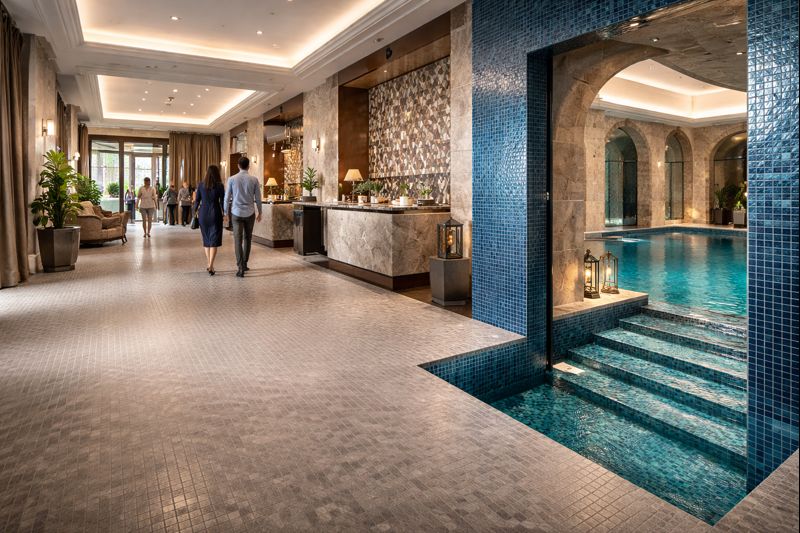
Glass is the absolute gold standard for fully submerged environments. Because glass is functionally impervious to moisture, boasting a water absorption rate of less than 0.1%, it will not expand, contract, or suffer from freeze-thaw damage when installed in exterior resort pools. Furthermore, its natural translucency reflects UV light, ensuring the color remains vibrant even after decades of intense sun exposure.
Porcelain and Ceramic for High-Traffic Zones
For commercial lobbies and restaurant floors, architects frequently specify high-density porcelain. These materials are fired at extreme temperatures, resulting in a robust matrix capable of handling heavy dynamic loads. When choosing these products, always check the PEI (Porcelain Enamel Institute) rating; a PEI 4 or 5 is mandatory for commercial floor applications to resist severe abrasion.
Natural Stone for Luxury Architectural Features
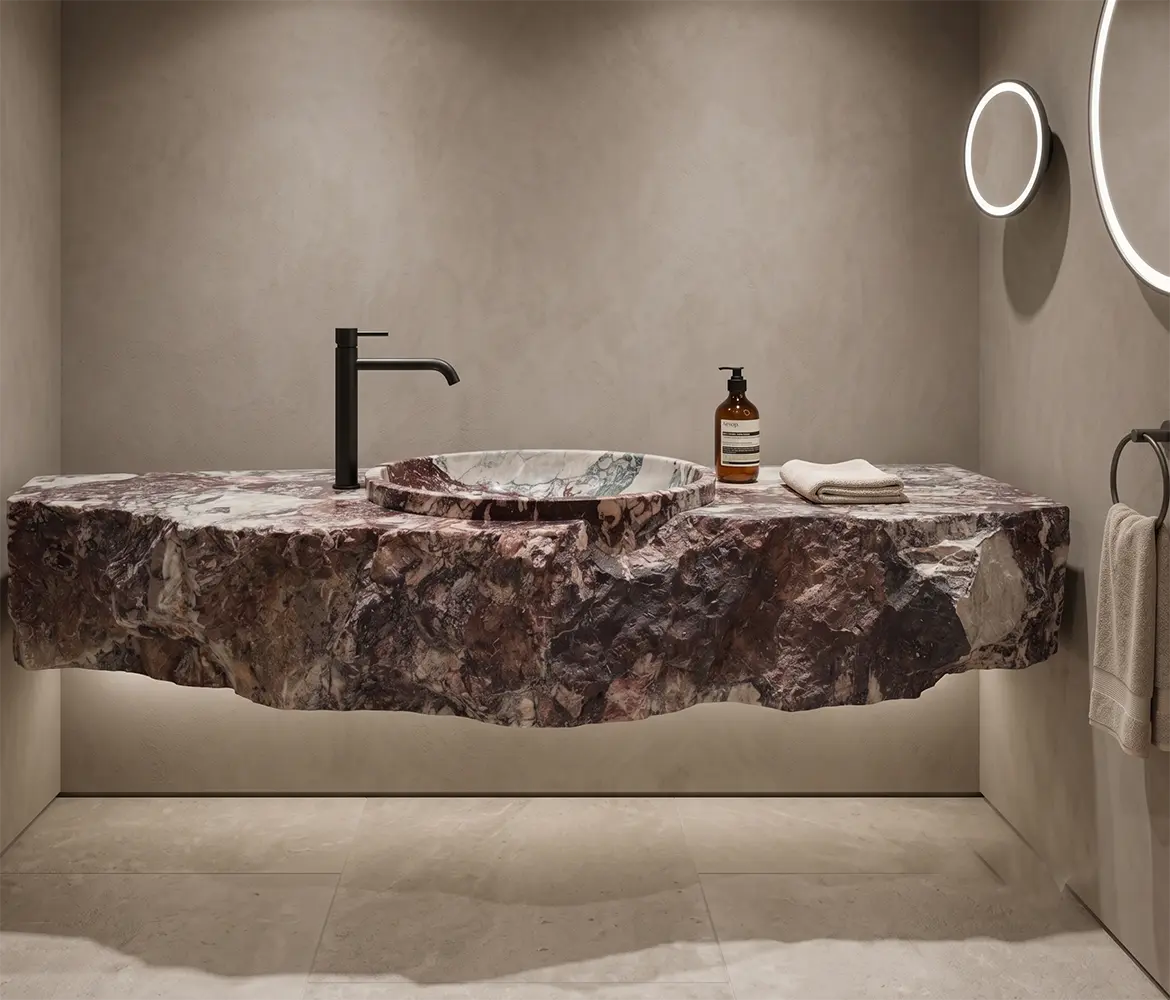
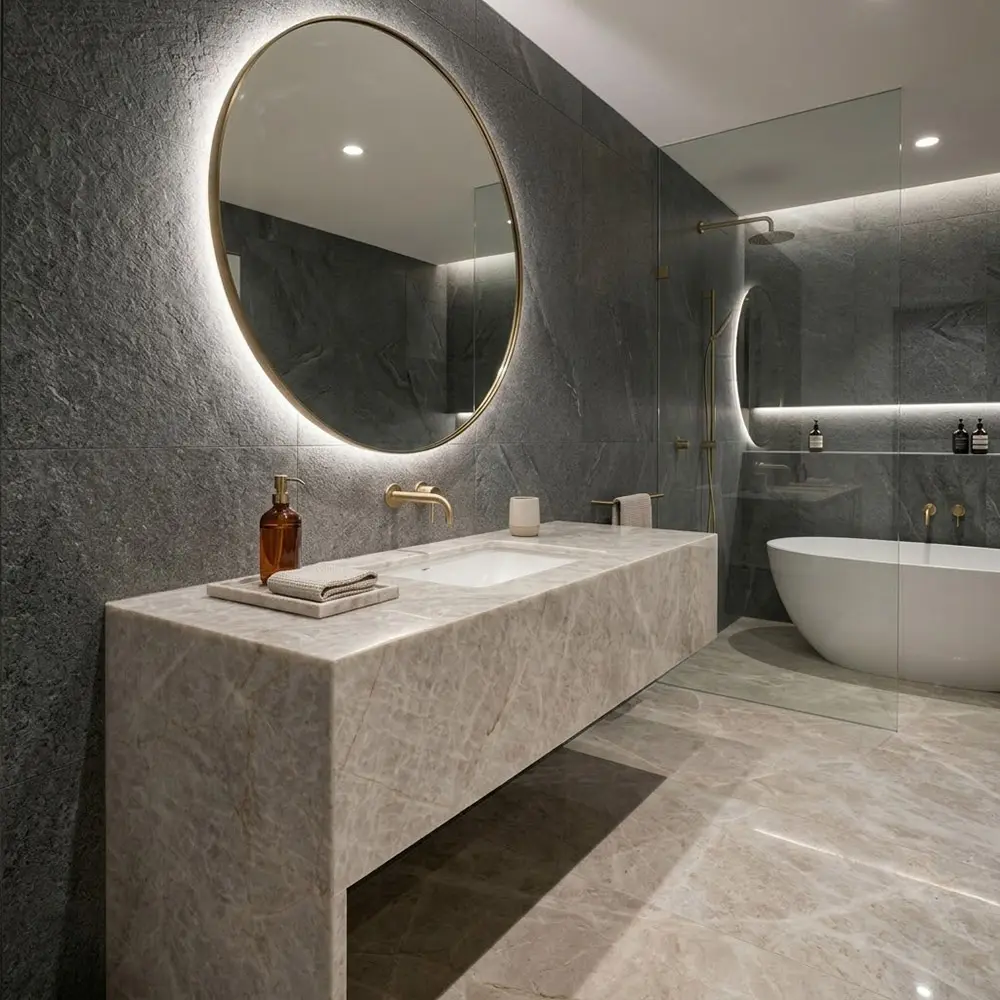
When the design intent calls for unapologetic opulence, natural stone mosaic tiles crafted from dolomitic marble, travertine, or basalt provide an organic, tactile richness that synthetic materials cannot replicate. However, because natural stone is inherently porous and contains calcium carbonate, it is vulnerable to acidic etching from commercial cleaning chemicals or citrus spills in hospitality environments. To protect this investment, developers must strictly follow a guide to sealing marble mosaics using professional-grade, penetrating fluoropolymer sealers prior to the grouting phase.
Comparative Analysis: Material Specs and Performance
Procurement decisions should be rooted in quantitative data. The following matrix compares the three primary materials across critical B2B performance metrics, providing a clear framework for architectural specification.
| Material Type | Water Absorption | Mohs Hardness | Optimal Application | Maintenance Level |
| Glass | < 0.1% (Impervious) | 5.0 – 6.0 | Submerged pools, showers, spas | Low (Soap & Water) |
| Porcelain | ≤ 0.5% (Impervious) | 7.0 – 8.0 | High-traffic commercial floors | Low |
| Natural Stone | 0.2% – 1.0% (Porous) | 3.0 – 4.0 | Luxury lobbies, feature walls | High (Annual Sealing) |
Evaluating Slip Resistance and ADA Safety Regulations
The most significant liability in commercial flooring is the risk of slips and falls. In wet environments such as locker rooms, spa surrounds, and entry vestibules, smooth large-format tiles become extremely hazardous.
Safety compliance hinges on the Dynamic Coefficient of Friction (DCOF). The ANSI A137.1 standard mandates a minimum DCOF of 0.42 for level interior spaces that will be walked on when wet. The architectural brilliance of small-format tiles lies in the grout joints. By utilizing 1×1 inch or 2×2 inch tesserae, the density of the intersecting grout lines dramatically increases the surface traction, naturally elevating the DCOF far beyond ADA minimums. This anatomical advantage allows contractors to easily install mosaic marble floor tiles in high-risk zones, such as sloping shower pans, while maintaining both safety and high-end aesthetics.
The Hidden Variable: Mesh-Backed vs. Paper-Faced
Perhaps the most expensive misconception in the industry revolves around how the small tesserae are mounted together into sheets. Choosing the wrong backing material is the number one cause of submerged tile failure.
Mesh-Backed Systems: Many products are glued to a fiberglass mesh on the back. While excellent for dry interior walls or kitchen backsplashes, mesh is catastrophic in swimming pools. The mesh and water-soluble glue compromise the mortar’s bond to the actual tile, eventually leading to thousands of tiles detaching underwater.
Paper-Faced or Film-Faced Systems: For wet environments, industry bodies like the TCNA (Tile Council of North America) strictly mandate front-mounted systems. The paper or plastic film is applied to the front of the tile. Once the tile is set into the mortar and cured, the front paper is washed away, ensuring 100% direct contact between the tile back and the epoxy mortar. Understanding this distinction, along with the proper cutting technique for marble mosaic tiles, ensures a flawless, permanent installation that will not require multi-million dollar pool remediation.
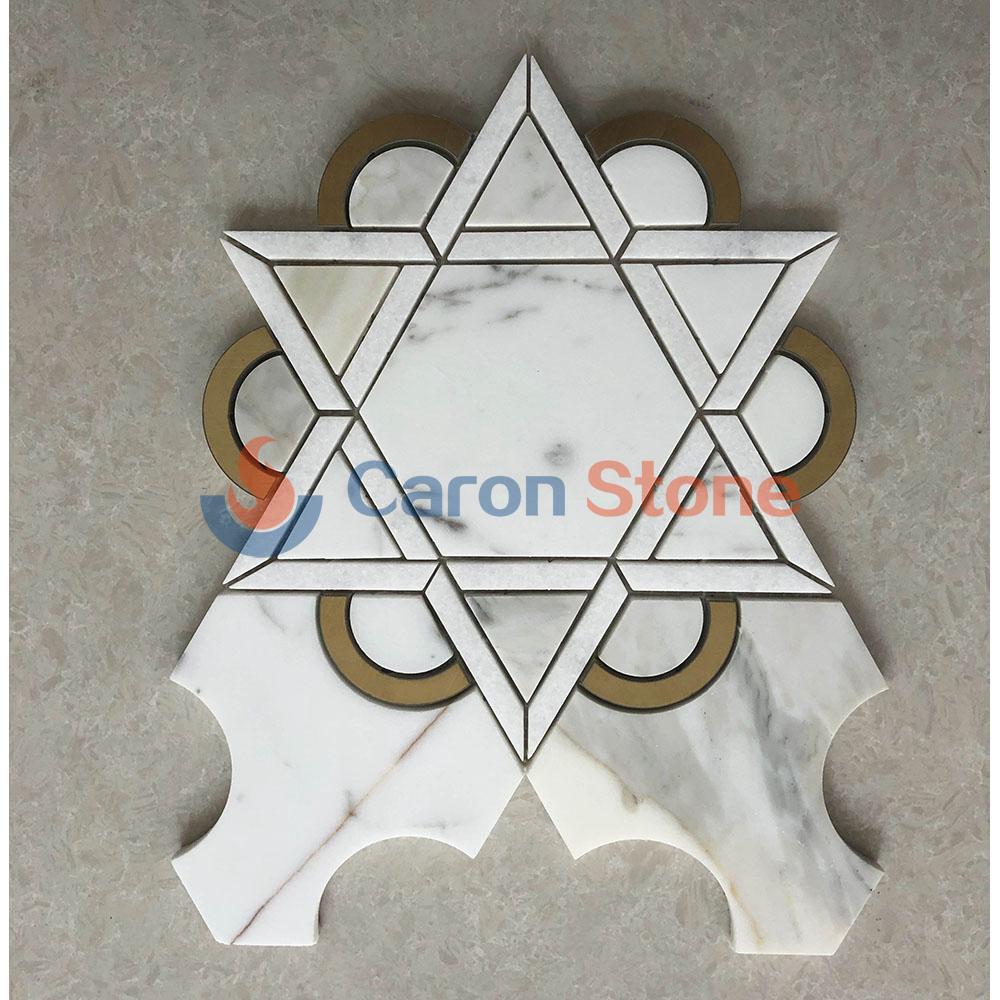
Carrara white marble mosaic inlay brass pentagon design
Sourcing Strategy: Batch Consistency and Grout Alignment
A beautiful design concept can quickly turn into an aesthetic disaster if the material is poorly manufactured. When thousands of square meters are required for a luxury high-rise, “batch consistency” becomes the most critical procurement metric.
If you specify a geometric pattern, such as a Carrara white marble triangle mosaic tile for backsplash in a 300-unit apartment complex, the sheets must be perfectly calibrated. Poorly aligned chips on a sheet will result in uneven grout joints, causing the individual 12×12 inch sheets to look like a disjointed patchwork grid rather than a seamless architectural surface. To prevent this, interior designers should demand a creative paving guide for marble mosaic from their supplier to verify installation tolerances. B2B buyers must mitigate this risk by bypassing third-party distributors and working directly with a technologically advanced custom mosaic tile manufacturer who utilizes digital calibration and robotic assembly to guarantee exact joint spacing across massive production runs.
Strategic Decision Logic: The Professional’s Checklist
To eliminate operational friction and maximize your procurement ROI, utilize this strict “If-Then” decision logic matrix when specifying materials:
-
IF you are designing a high-traffic restaurant bar or commercial kitchen…
-
→ CHOOSE a high-density, PEI 4 porcelain with epoxy grout to resist deep grease staining and heavy mechanical abrasion.
-
-
IF the project is a luxury boutique hotel lobby demanding a historic, organic feel…
-
→ CHOOSE a waterjet-cut natural stone pattern, but strictly enforce a step-by-step guide to sealing marble mosaics using a premium penetrating sealer before the space opens to public foot traffic.
-
-
IF you are outfitting the exterior features of an expansive luxury villa…
-
→ CHOOSE to source high-grade wholesale natural stone mosaic tiles with an unpolished, tumbled finish to ensure maximum slip resistance while blending seamlessly into the natural landscape.
-
Securing Your Commercial Supply Chain
Transitioning from standard large-format tiles to intricate, small-format surfaces is not merely a design upgrade; it is a calculated risk-mitigation strategy for wet environments and a powerful tool for elevating property valuation. By understanding the critical differences in material porosity, mounting methods, and slip-resistance metrics, commercial developers can confidently specify materials that offer a lifetime of flawless performance.
Stop accepting the hidden costs of budget overruns, submerged tile failures, and inconsistent batching. If your upcoming architectural project requires uncompromising quality, scalable production, and direct factory oversight, do not hesitate to contact our mosaic tile specialists. We are fully equipped to provide technical data sheets, compliance documentation, and the precise logistical support necessary to execute your vision flawlessly.
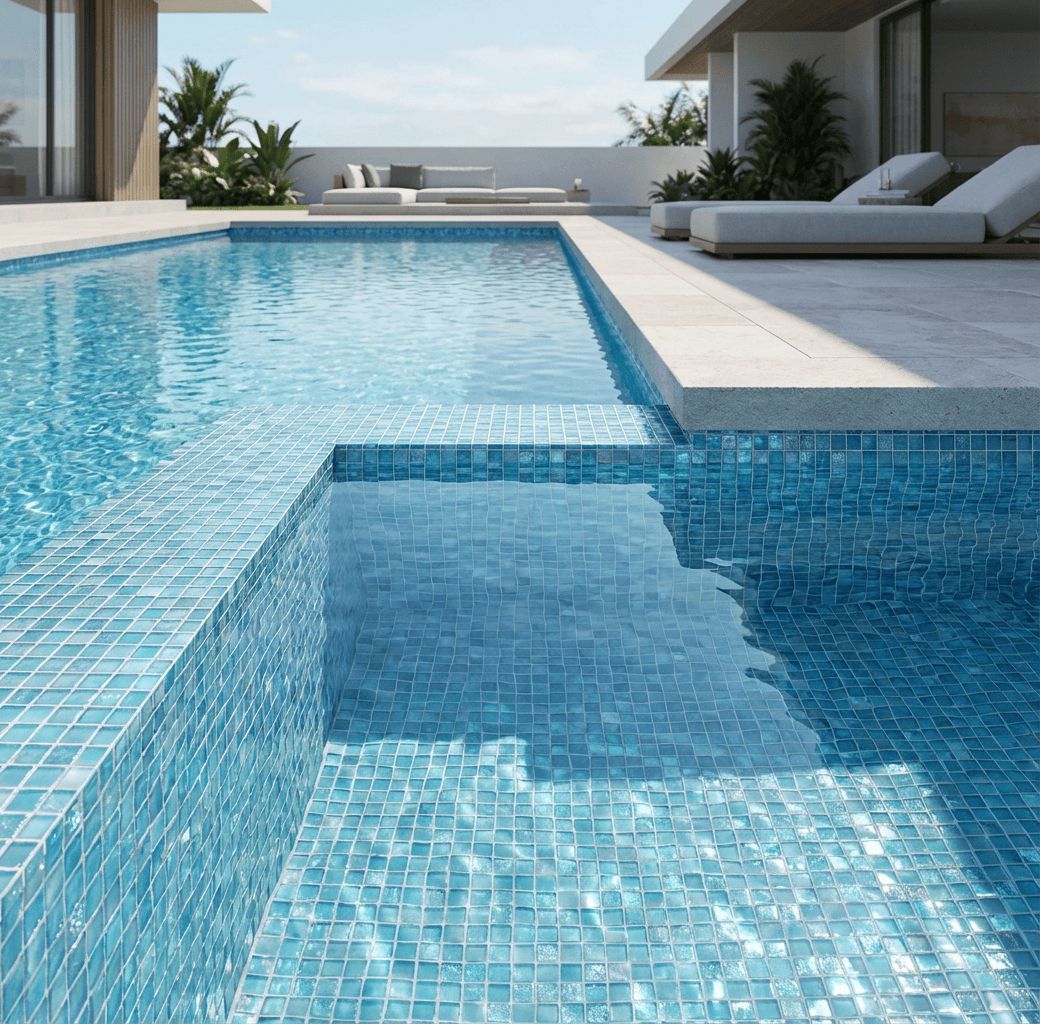
mosaic tile for a commercial swimming pool
FAQ
1. What is the best mosaic tile for a commercial swimming pool?
The optimal choice for a commercial swimming pool is paper-faced or film-faced glass mosaic. Glass has a water absorption rate of less than 0.1%, making it impervious to freeze-thaw damage and pool chemicals. Crucially, the front-facing mounting system (paper or film) allows the back of the tile to make 100% direct contact with the epoxy thin-set mortar, preventing the tile detachment issues commonly associated with mesh-backed products in submerged environments.
2. How do I clean and maintain natural stone mosaic tiles?
Natural stone, such as marble or travertine, requires a specialized maintenance protocol because it contains calcium carbonate, which reacts violently to acids. You must only use pH-neutral, non-abrasive stone cleaners. Never use vinegar, lemon juice, or bleach, as these will cause chemical burns (etching) on the surface. Additionally, natural stone must be professionally re-sealed every 12 to 24 months with a penetrating fluoropolymer sealer to protect its porous matrix from organic stains.
3. Can glass mosaic tiles be used on floors?
Yes, but with strict caveats. Glass can be used on floors if the individual tile chips are small enough (typically 1×1 inch or smaller). The high density of the surrounding grout joints provides the necessary slip resistance (DCOF) for safe foot traffic. However, glass is prone to scratching, so it should only be used in low-traffic or barefoot zones like residential bathroom floors or spa surrounds, rather than heavy-duty commercial lobbies.
4. Why do mosaic tiles fall off in swimming pools?
Tile detachment in pools is almost exclusively caused by using mesh-backed tiles. The fiberglass mesh is attached to the back of the tile using a water-soluble adhesive. When submerged, the pool water eventually permeates the grout, breaking down the adhesive on the mesh. This compromises the bond between the tile and the mortar bed, causing the tiles to pop off. Always specify front-mounted (paper-faced) tiles for pools.
5. What type of grout should be used with glass mosaics?
For commercial and wet applications, high-performance Epoxy grout is strongly recommended over standard cementitious grout. Epoxy grout is non-porous, highly resistant to pool chemicals and acidic cleaners, and does not require periodic sealing. Furthermore, because glass is somewhat translucent, using a bright white epoxy grout or a specially formulated translucent glass grout will enhance the luminosity and color depth of the installation.
References
-
“TCNA Handbook for Ceramic, Glass, and Stone Tile Installation,” Tile Council of North America.
-
“Standard Specifications for Glass Tile (ANSI A137.2),” American National Standards Institute.
-
“Dynamic Coefficient of Friction (DCOF) AcuTest,” National Tile Contractors Association (NTCA).
-
“Submerged Tile Installations: Best Practices and Mortar Selection,” Journal of Architectural Ceramic Engineering.
-
“Mineralogical Composition and Etching Resistance in Dolomitic Marble,” Global Stone Institute.
-
“Epoxy vs. Cementitious Grouts in Commercial Environments,” Construction Specifier Magazine.
-
“Slip and Fall Liability in Hospitality Flooring,” Occupational Safety & Health Administration (OSHA) Guidelines.
-
“Sealing Protocols for Calcareous Natural Stones,” Stone Fabricators Alliance Technical Bulletin.
Deep Synthesis of Commercial Mosaic Procurement
For expansive commercial resort pools, buyers must specify Paper-Faced Glass Mosaics (<0.1% WA) to ensure 100% mortar contact. For high-traffic corporate atriums, PEI 4/5 Porcelain is required to withstand extreme mechanical abrasion. For luxury focal points, Dolomitic Marble provides organic depth but strictly necessitates the integration of penetrating fluoropolymer sealers to prevent acidic etching from daily maintenance.
The most catastrophic failure point in commercial installation is utilizing Mesh-Backed Mosaics in submerged environments. The water-soluble glue on the mesh breaks down over time, causing mass tile delamination. Furthermore, procurement directors must aggressively audit their factory partners for digital calibration capabilities to ensure tight batch consistency and prevent visible grid seams in large-scale wall cladding.
📈 2026 Industry Outlook & Compliance (Trend): Global hospitality standards are rapidly pivoting toward stringent ADA and slip-and-fall compliance. Sourcing properly calibrated, DCOF-tested materials is now a mandatory prerequisite for passing commercial safety inspections. Developers utilizing chemically resistant epoxy grouts in conjunction with these surfaces are drastically lowering facility OPEX and securing a definitive competitive edge in property valuation.