





2026 Comprehensive Guide to Selecting Natural Marble Slabs for Commercial Procurement
Quick Summary:
Selection Logic for 2026: This technical guide outlines the professional procurement of natural marble slabs for commercial projects. It details the transition toward a data-driven selection process involving ASTM standard verification, 365nm UV structural audits, and strategic supply chain alignment with a natural marble slab manufacturer operating in Southeast Asian fabrication hubs to ensure 2026 trade compliance and maximum material yield.
The landscape of the global stone industry in 2026 has evolved from a focus on sheer aesthetics to a rigorous demand for structural reliability and supply chain transparency. For architects, developers, and procurement managers, selecting natural marble slabs is no longer just an artistic choice but a technical undertaking that involves complex engineering parameters and geopolitical strategy. As projects become more ambitious and lead times more volatile, the need to partner with a reliable natural marble slab manufacturer that understands both petrological science and international trade compliance has never been greater.
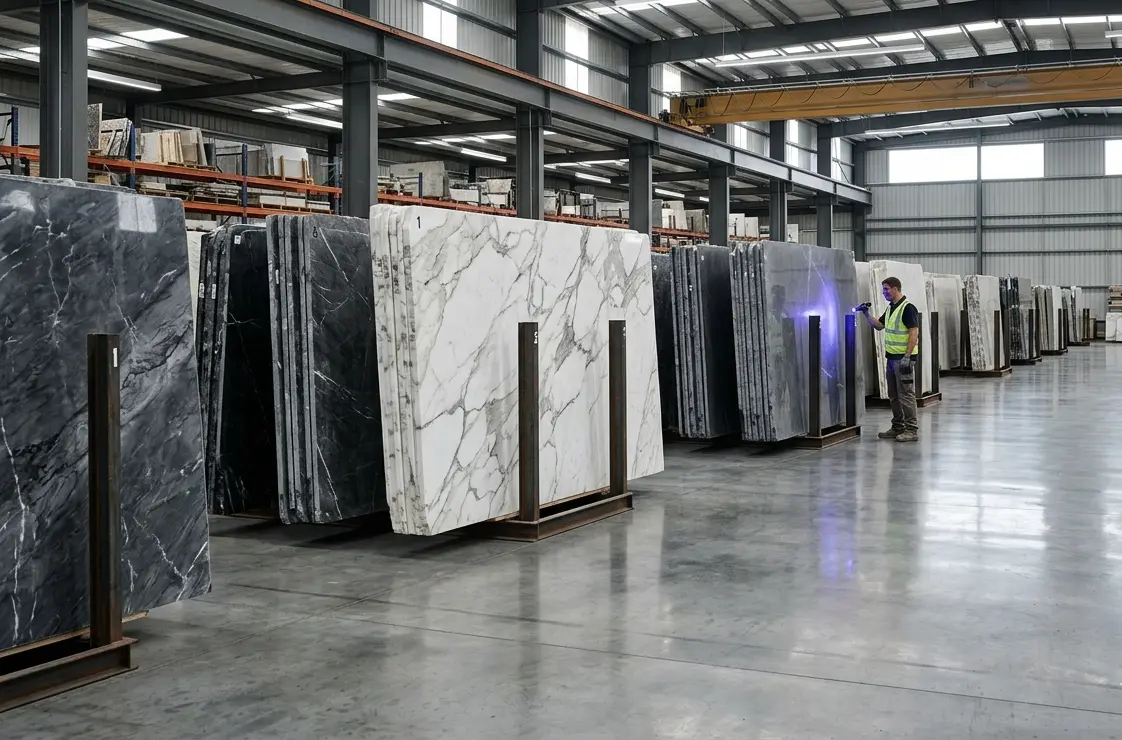
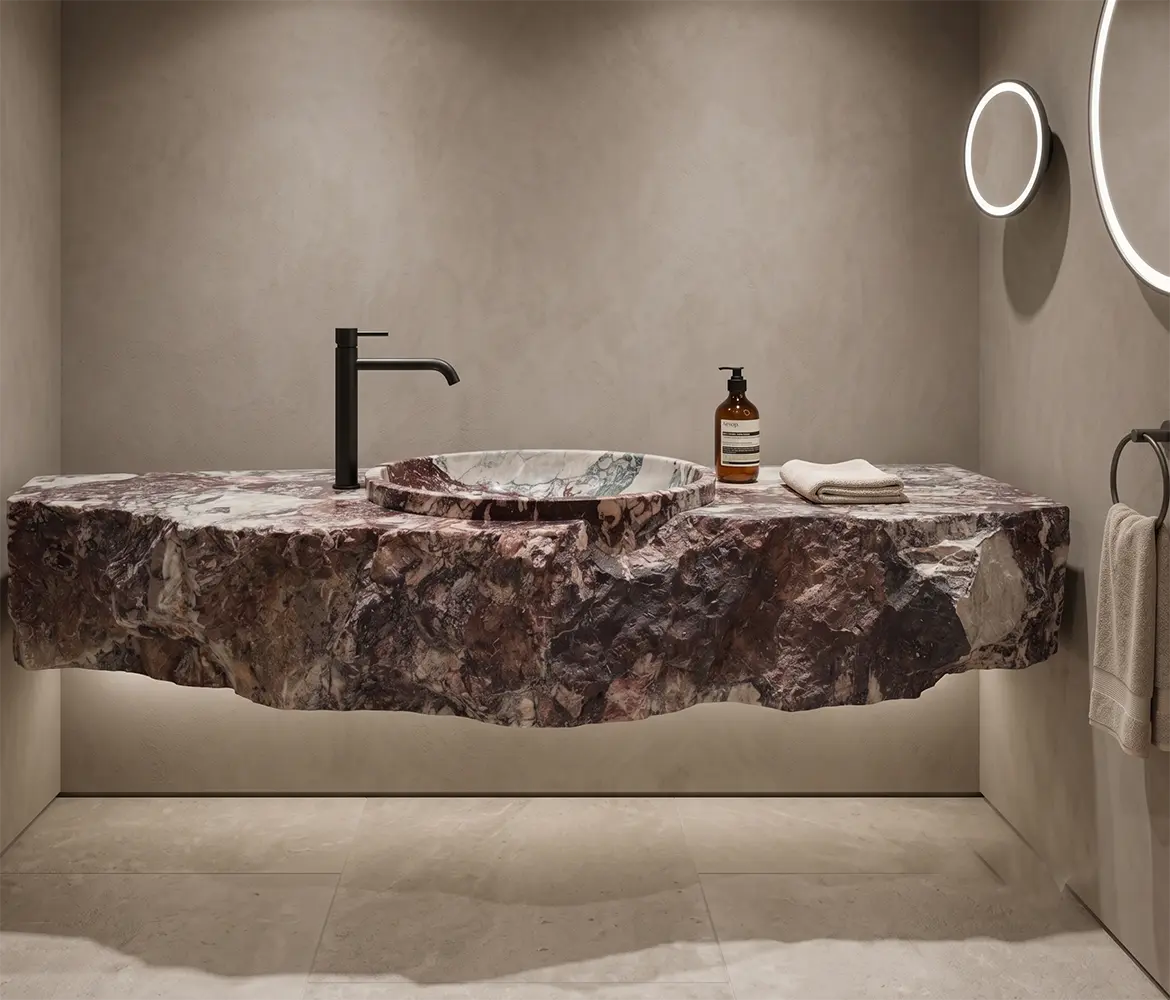
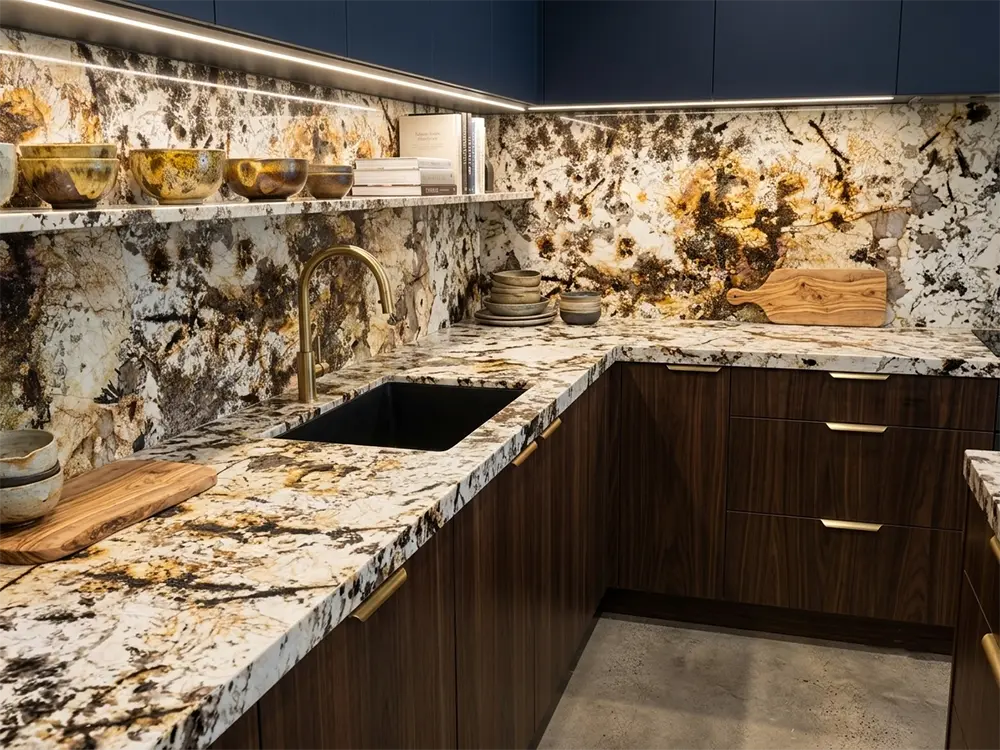
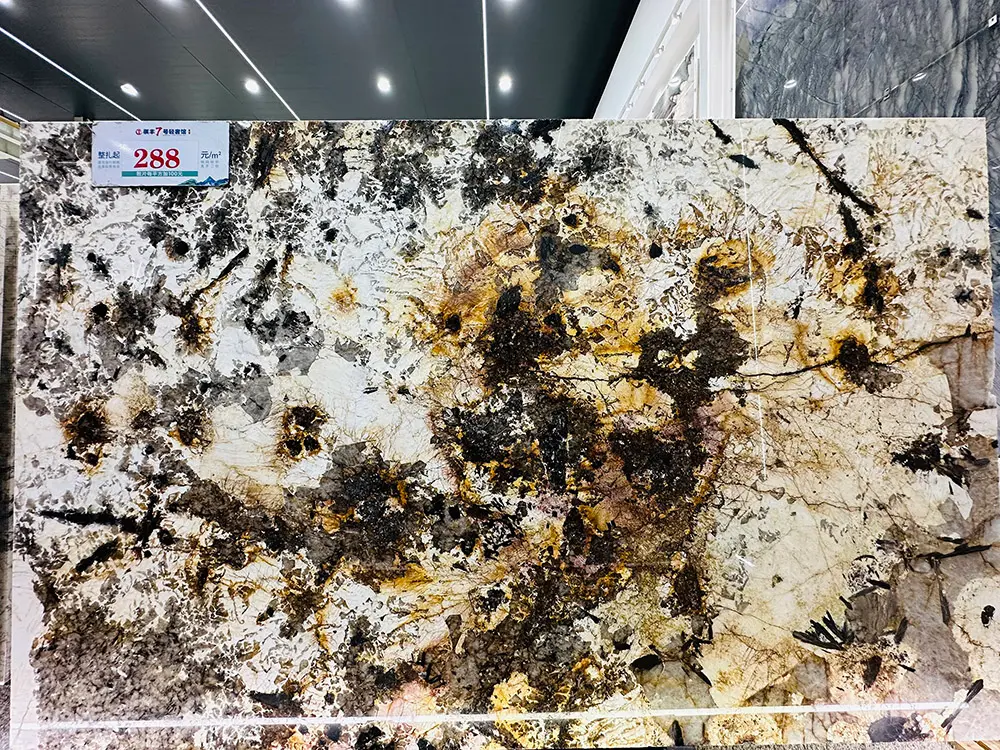
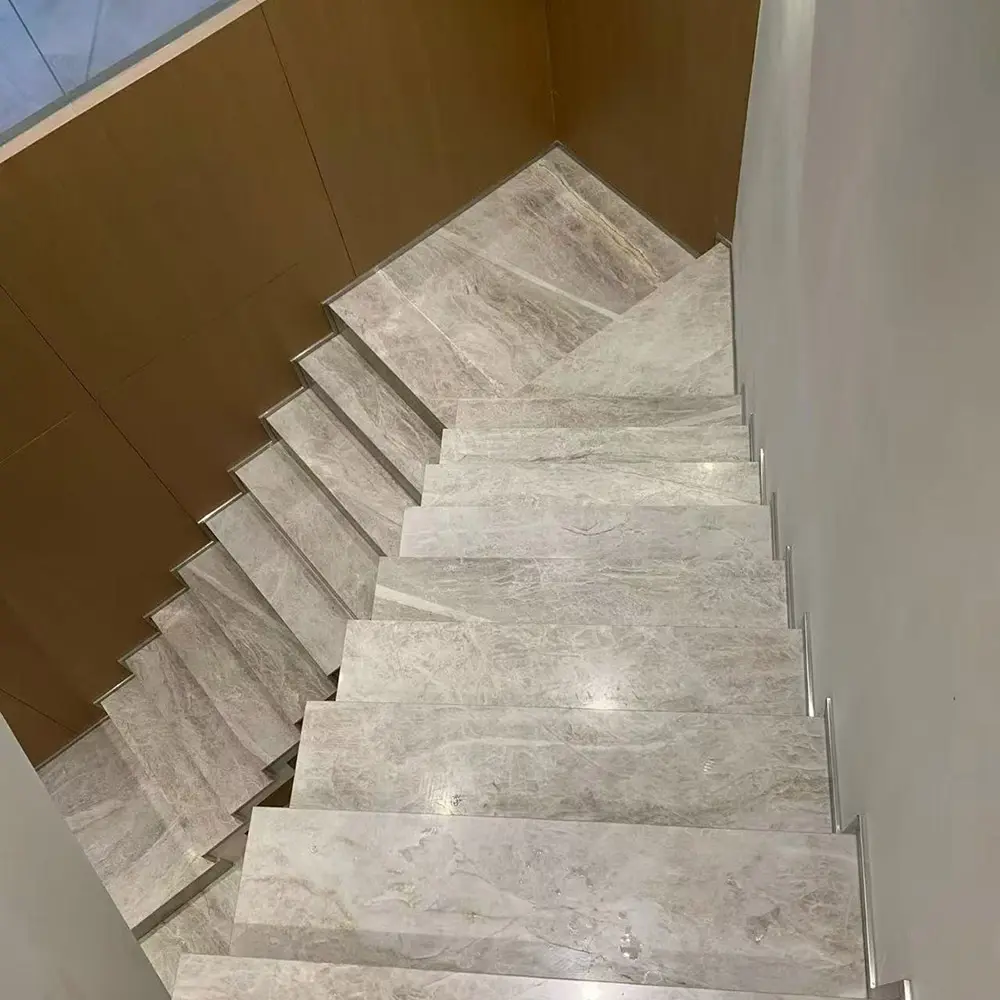
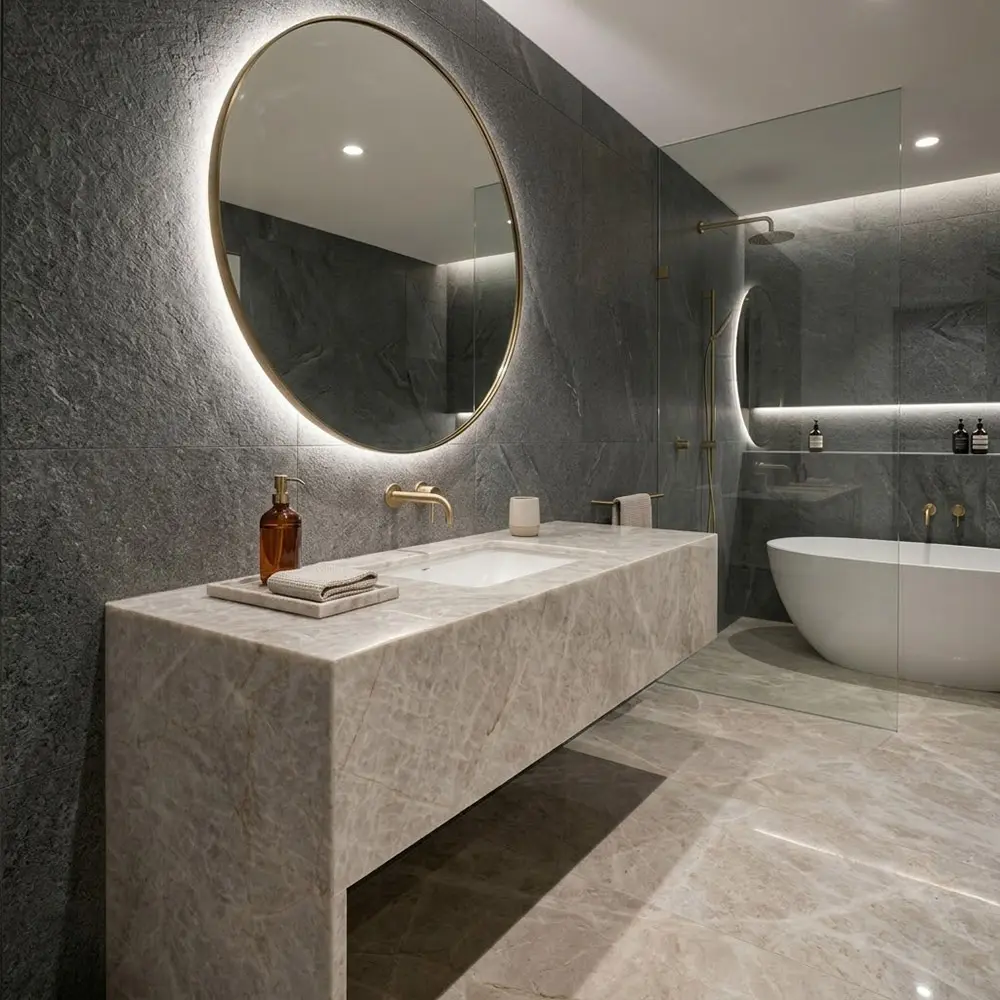
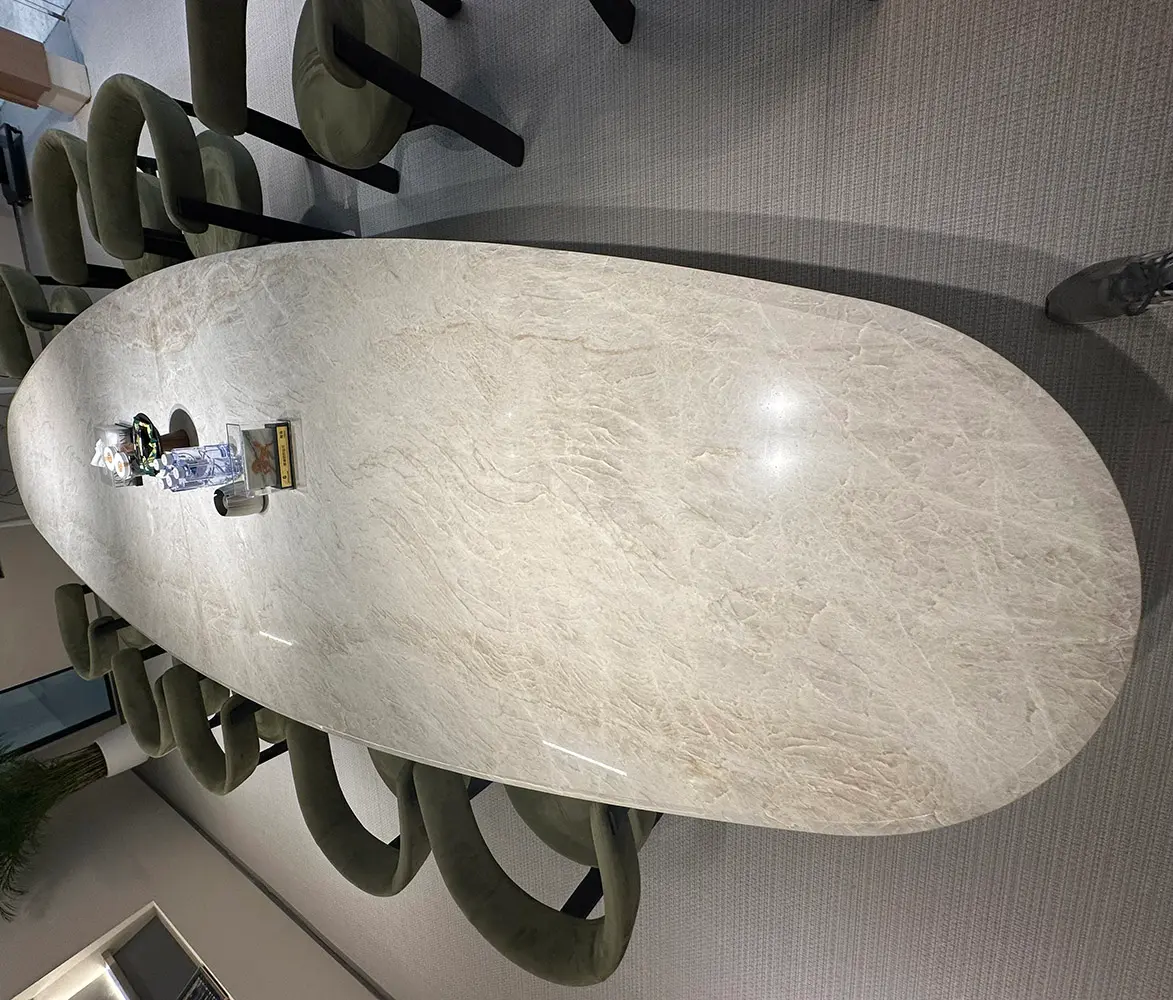
2026 Commercial Marble & Granite Collection: Data-Driven Selection and Global Compliance.
Understanding Material Parameters and ASTM Standards
In the professional B2B sector, “Grade A” is an insufficient descriptor. Technical experts now rely on American Society for Testing and Materials (ASTM) benchmarks to quantify the performance of premium marble slabs. These metrics allow for a standardized comparison across different quarries and batches, ensuring that the stone specified is actually fit for the intended environment.
Water absorption is the primary indicator of how a marble slab will behave over time. Under ASTM C97, the water absorption rate for high-quality natural marble slabs should ideally be $\le 0.20\%$. Slabs with higher porosity are susceptible to efflorescence, where moisture carries alkaline salts to the surface, resulting in permanent white staining that is nearly impossible to remediate without damaging the stone’s finish. Furthermore, in exterior or wet environments, high porosity increases the risk of freeze-thaw cracking and chemical erosion from acid rain or cleaning agents.
The modulus of rupture (ASTM C99) is equally critical, especially for slabs intended for large-format wall cladding or cantilevered applications. This value measures the stone’s ultimate strength in bending. A benchmark of $\ge 7\text{ MPa}$ ($1,000\text{ psi}$) is generally required for commercial safety. When sourcing wholesale marble slabs, procurement managers must verify that the slab can withstand not just its own weight, but the mechanical stresses of high-speed CNC fabrication and the wind loads associated with high-rise installations.
Quantitative Data: Marble Performance Tables
To assist in technical decision-making, the following table summarizes the minimum performance benchmarks for commercial marble procurement across various application types.
| Parameter | ASTM Method | Flooring (High Traffic) | Wall Cladding (Interior) | Exterior Cladding |
| Water Absorption (%) | C97 | $\le 0.15$ | $\le 0.20$ | $\le 0.10$ |
| Compressive Strength | C170 | $\ge 60\text{ MPa}$ | $\ge 50\text{ MPa}$ | $\ge 80\text{ MPa}$ |
| Modulus of Rupture | C99 | $\ge 8\text{ MPa}$ | $\ge 7\text{ MPa}$ | $\ge 10\text{ MPa}$ |
| Mohs Hardness | N/A | $\ge 4$ | $\ge 3$ | $\ge 4.5$ |
In addition to these physical properties, the mineralogical composition is analyzed via ASTM C295 Petrographic Analysis. This is the only way to effectively detect the presence of iron sulfides, such as pyrite. In the context of white natural marble slabs, even a trace amount of pyrite can lead to significant yellowing or “rusting” when exposed to oxygen and humidity. Professional buyers now mandate this analysis to ensure that their investment in white marble does not degrade into a series of oxidized yellow patches within the first year of installation.
The 2026 Supply Chain Strategy: Manufacturers and Factories
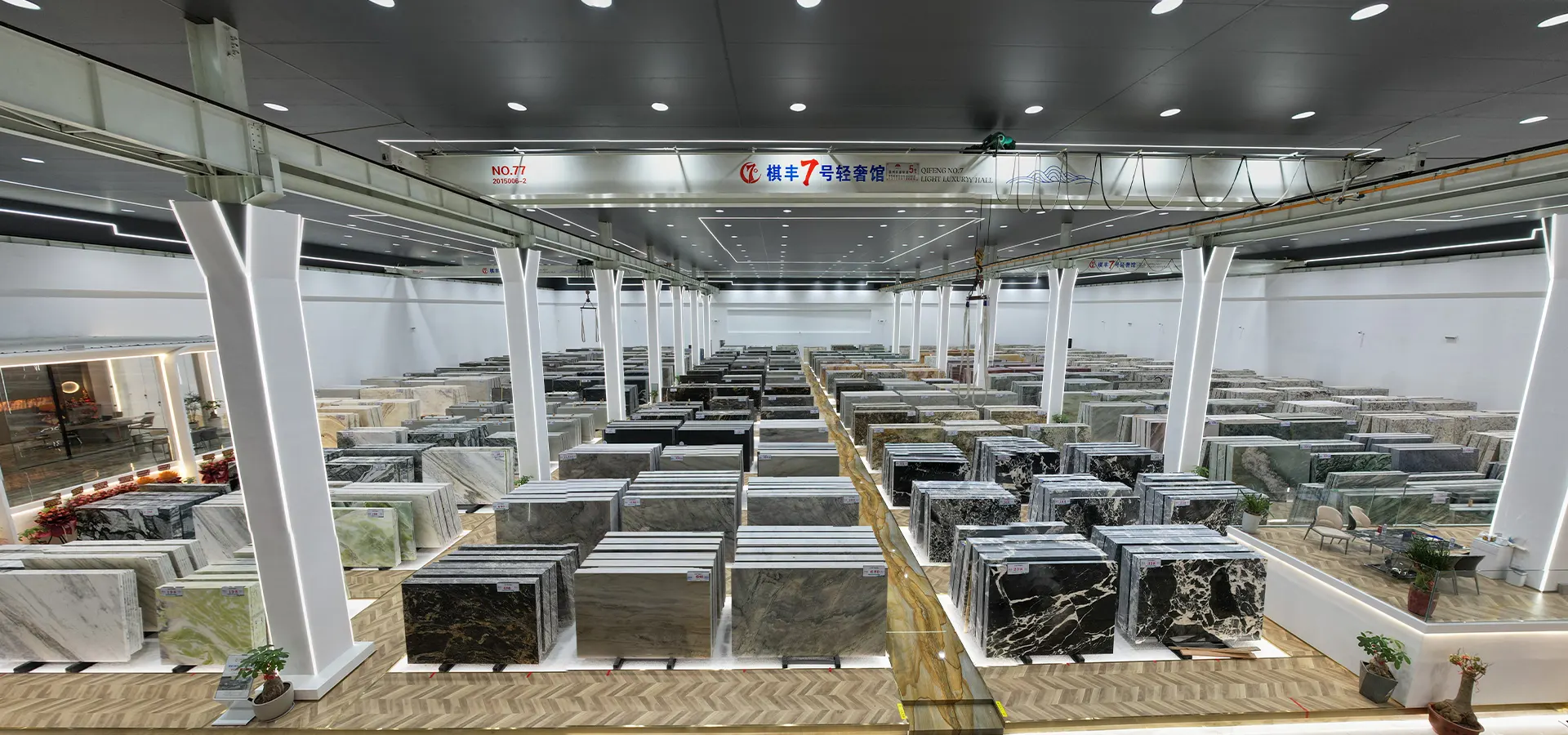 | 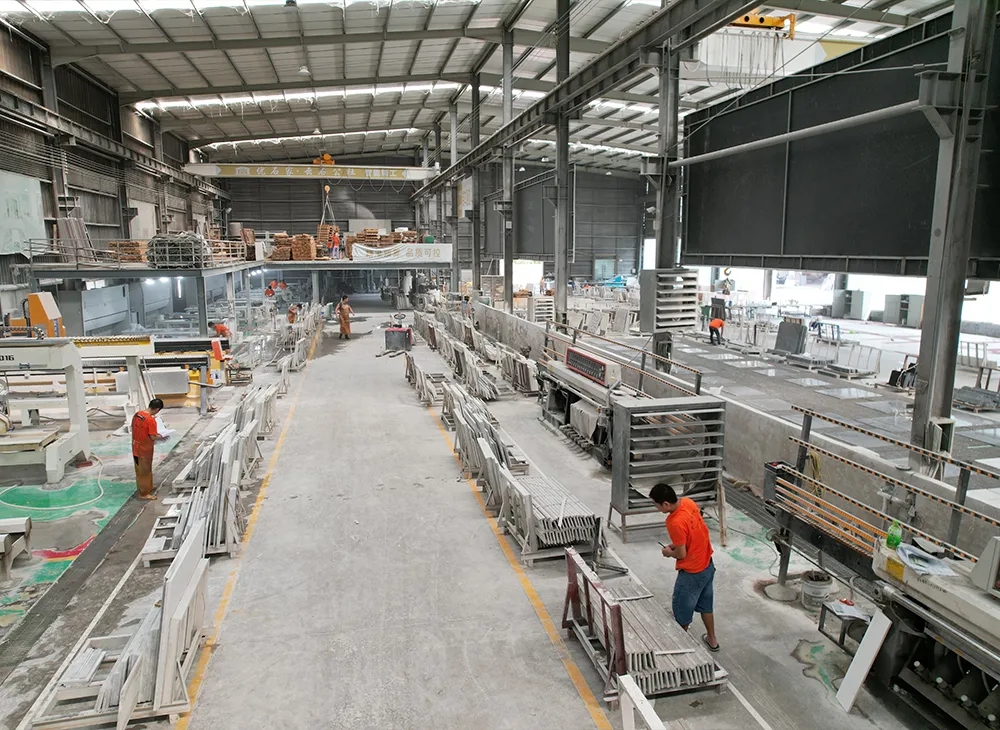 |
The geopolitical environment of 2026 has significantly altered the logistics of the stone trade. For US-based projects, sourcing directly from a marble slab factory located within mainland China may incur substantial tariffs. However, the most successful natural marble slab manufacturers have adapted by establishing secondary fabrication hubs in Southeast Asian nations like Vietnam or Thailand.
This “China-Plus-One” strategy allows buyers to leverage the world-class machinery and technical expertise of Chinese stone engineers while utilizing a Southeast Asian “Country of Origin” for final fabrication. This process—known as “Substantial Transformation”—involves taking raw blocks from global quarries (Italy, Turkey, or Greece) and performing the labor-intensive cutting, resin-treating, and polishing in these Southeast Asian facilities. The result is a high-precision product that complies with international trade regulations while maintaining the cost-efficiency of wholesale marble slabs.
Choosing a natural marble slab manufacturer with this infrastructure is a strategic risk mitigation move. It ensures that the project is not derailed by sudden trade barriers or port-of-entry delays. Furthermore, these advanced factories utilize 14-head continuous polishing lines and automated calibration systems to ensure that thickness tolerances are kept within a strict $\pm 1\text{mm}$, a vital requirement for large-scale dry-lay projects where even a slight variance can cause significant lippage issues.
Real-World Scenarios in Commercial Marble Procurement
Consider a high-end hotel project in New York requiring 50,000 square feet of book-matched Calacatta slabs. In this scenario, the primary challenge is not just the aesthetic match, but the consistency of the structural integrity across multiple blocks.
A sophisticated marble slab factory will utilize digital twin technology. Before a single cut is made, the raw blocks are scanned, and the veining is mapped in a 3D environment. This allows the architect to see a virtual “dry-lay” of the entire floor or wall. If the mapping reveals a structural fracture that crosses a critical vein, the layout can be adjusted digitally to ensure that the final natural marble slabs are both beautiful and structurally sound.
Furthermore, the use of 365nm UV light during the quality control phase has become standard. Most premium marble slabs undergo a resin treatment to fill micro-fissures. While this is a standard industry practice, excessive resin or poorly cured epoxy can lead to delamination. Under 365nm UV light, these resins fluoresce, allowing inspectors to see exactly how much “repair” has been done to a slab. A slab that glows extensively under UV light is often flagged as a lower grade, as it relies too heavily on chemical bonding for its structural integrity.
Avoiding Common Risks and Procurement Pitfalls
The most common mistake in commercial marble procurement is prioritizing the lowest ex-factory price over the “Net Yield.” A slab that is $15\%$ cheaper but has a $20\%$ higher breakage rate during fabrication is actually more expensive.
Buyers should be wary of slabs that have not been properly calibrated. When wholesale marble slabs arrive on-site with uneven thicknesses, the installation team must compensate with thicker layers of adhesive, which increases both material costs and labor time. In some cases, it can even compromise the floor’s finished height, leading to conflicts with door thresholds and other architectural transitions.
Another significant risk is the “sample-to-shipment” drift. Because marble is a natural product, the appearance can change as the quarrying depth increases. To mitigate this, professional buyers avoid purchasing based on a small physical sample. Instead, they require a block-level photo of the current stock and, for high-value orders, a live-streamed inspection of the specific slabs being crated. A reputable natural marble slab manufacturer will provide this level of transparency as part of their standard B2B service.
Global Regulatory Compliance and Sustainability
As we move through 2026, Environmental, Social, and Governance (ESG) criteria have become a non-negotiable part of commercial marble procurement. Large developers are now required to provide Environmental Product Declarations (EPDs) for the materials used in their buildings.
A forward-thinking marble slab factory now implements closed-loop water filtration systems and solar-powered cutting lines to reduce the carbon footprint of production. Sourcing natural marble slabs from a manufacturer that prioritizes sustainability is no longer just a “green” choice; it is a compliance necessity for projects aiming for LEED or BREEAM certifications. Buyers should request documentation regarding the quarry’s rehabilitation plans and the factory’s waste management protocols to ensure they are not exposing themselves to reputational risk.
The Future of Marble: AI Integration in Quality Control
The integration of Artificial Intelligence in natural marble slab manufacturing has revolutionized quality assurance. AI algorithms are now trained to recognize structural patterns that indicate a high probability of failure during the high-pressure waterjet cutting process. By analyzing the “Digital Twin” of a slab, the software can suggest optimal cutting paths that avoid internal tension points, thereby maximizing the yield of premium marble slabs.
This technological leap also extends to the “Digital Dry-Lay.” Architects can now use AI to instantly generate a dozen different veining configurations from a single set of scanned slabs, allowing for rapid design iteration and approval. This level of digital integration is a hallmark of a modern natural marble slab manufacturer and is a key differentiator for firms looking to handle large-scale, complex commercial interiors.
Selection Strategy: Narrative Guidance for Procurement
When choosing between various natural marble slabs, the selection should be driven by the environment’s specific stressors.
For high-traffic flooring in a luxury retail space, the decision should prioritize Mohs hardness and abrasion resistance. A stone that is too soft will quickly lose its luster under foot traffic, requiring expensive and disruptive on-site repolishing every few years. In this case, a honed finish on a harder marble variety is often a superior choice compared to a high-polish finish on a softer variety.
For expansive feature walls where visual impact is the primary goal, the focus shifts to sequential block yielding. The procurement manager must ensure that the marble slab factory can provide 20 or 30 slabs from the exact same layer of the quarry to guarantee that the veining flows seamlessly from one slab to the next. Any break in the sequence will be immediately visible on a large wall, ruining the intended architectural effect.
Finally, for exterior cladding, the coefficient of thermal expansion and the resistance to UV degradation are paramount. While many marbles are suitable for interior use, only a subset can withstand the environmental rigors of the building’s envelope. Consulting with the technical team at your natural marble slab manufacturer early in the design phase can prevent costly failures and ensure that the selected stone will maintain its integrity for decades.
Semantic Closure: Insights and Considerations for 2026 Procurement
The procurement of natural marble slabs in 2026 is an intersection of technical expertise, logistical strategy, and digital innovation. Understanding the nuance of ASTM performance benchmarks—specifically water absorption (ASTM C97) and modulus of rupture (ASTM C99)—is the first step in moving beyond superficial selection. These data points provide a baseline for “Engineer-Ready” material that can withstand the demands of modern CNC fabrication and high-volume commercial use.
Strategically, the shift toward a “China-Plus-One” manufacturing model has become the standard for navigating the geopolitical complexities of the 2026 trade landscape. By partnering with a natural marble slab manufacturer that operates fabrication hubs in Southeast Asia, US and European buyers can access high-precision Chinese engineering while ensuring tariff compliance and supply chain resilience.
Ultimately, the goal of a professional procurement system is to minimize the “Total Cost of Ownership.” This is achieved by prioritizing slabs with high net yields, verified structural integrity (through 365nm UV audits), and guaranteed thickness calibration. In an era where AI-driven quality control and digital dry-lay services are becoming the norm, the relationship between the buyer and the marble slab factory is evolving into a collaborative technical partnership. Investing in premium marble slabs that are backed by rigorous data and transparent supply chains ensures that the final installation is not only visually stunning but structurally and economically sound for the long term.
5 Frequently Asked Questions (FAQ)
1. How can a B2B buyer verify the structural integrity of natural marble slabs before shipment?
In 2026, the most effective way to verify structural integrity is through a combination of ASTM laboratory testing and on-site 365nm UV structural audits. Natural marble slabs often undergo resin treatment to fill natural micro-fissures; while this is standard, excessive resining indicates a compromised slab. A 365nm UV light causes industrial resins to fluoresce, allowing inspectors to visualize hidden repairs. Furthermore, digital dry-lay photos and ultrasonic pulse velocity (UPV) testing can be requested from the natural marble slab manufacturer to detect internal voids that are invisible to the naked eye.
2. Why is the “China-Plus-One” strategy important for US-based commercial marble procurement?
The “China-Plus-One” strategy involves sourcing wholesale marble slabs from a company that has headquarters in China but maintains active fabrication facilities in Southeast Asian countries like Vietnam. This setup allows the manufacturer to utilize advanced Chinese stone-cutting technology while providing a Southeast Asian “Country of Origin.” For US buyers, this is critical for navigating trade tariffs and ensuring that the project remains within budget without sacrificing the high-precision quality and technical support provided by the world’s leading stone engineers.
3. What are the acceptable thickness tolerances for premium marble slabs in large projects?
For high-end commercial projects, the standard thickness tolerance is $\pm 1\text{mm}$. If a marble slab factory produces material with a higher variance, it leads to significant installation challenges, such as lippage and increased adhesive consumption. For 2026 projects, procurement specialists should specify that slabs must be processed through automated calibration machines to ensure this tolerance is met across the entire order, especially when book-matching across expansive surfaces.
4. How does ASTM C295 Petrographic Analysis prevent yellowing in white natural marble slabs?
ASTM C295 is a microscopic analysis that identifies the mineralogical makeup of the stone. Its primary value in commercial marble procurement is the detection of pyrite (iron sulfide) and other metallic minerals. In white marbles, these minerals oxidize when exposed to water or cleaning chemicals, causing the stone to “rust” or turn yellow. By mandating this analysis before purchasing, a buyer can confirm that the natural marble slabs are petrologically stable and free from minerals that would cause long-term discoloration.
5. Is it better to buy marble slabs based on price per square meter or net yield?
Professional procurement managers prioritize “Net Yield” over the initial price per square meter. A cheaper slab may contain hidden fissures or inconsistent veining that leads to a $30\%$ waste factor during fabrication. Conversely, a premium marble slab from a high-quality natural marble slab manufacturer might have a higher upfront cost but a much higher yield, resulting in a lower “Total Cost of Ownership.” Always calculate the cost based on the final usable material required for the project rather than the raw slab dimensions.
References
-
ASTM C97/C97M-26: Standard Test Methods for Absorption and Bulk Specific Gravity of Dimension Stone. ASTM International, West Conshohocken, PA.
-
ASTM C99/C99M-26: Standard Test Method for Modulus of Rupture of Dimension Stone. ASTM International.
-
Stone World Technical Report 2026: Global Sourcing Trends and the Rise of Southeast Asian Fabrication Hubs. Stone World Magazine.
-
Natural Stone Institute (NSI): Dimensional Stone Design Manual, v9.0 (2025 Edition). Natural Stone Institute.
-
International Building Code (IBC) 2024: Standards for Exterior Stone Cladding and Structural Stability. International Code Council.
-
Journal of Petrology & Stone Engineering: Mineralogical Stability in White Marbles: A Study on Pyrite Oxidation. Elsevier.
-
B2B Global Supply Chain Review: Geopolitical Impacts on the Natural Stone Trade and Tariff Mitigation Strategies. Supply Chain Management Review.
-
Digital Fabrication in Dimension Stone: AI and Digital Twin Integration in Modern Factories. Stone Technology Press.
2026 Procurement Insights: The Structural and Supply Chain Logic
How to Verify Quality in 2026: Professional procurement of premium marble slabs now relies on the “Digital Twin” methodology. By integrating 3D vein mapping with ASTM C99 (Modulus of Rupture) data, engineers can predict the structural behavior of natural marble slabs before fabrication. Furthermore, the use of 365nm UV light during factory audits has become mandatory to identify the exact resin-to-stone ratio, ensuring that the structural integrity is natural rather than chemical.
Why Sourcing Strategy is Shifting: The 2026 geopolitical climate necessitates a “China-Plus-One” logistics model. Partnering with a natural marble slab manufacturer that maintains wholesale marble slab production in Southeast Asia (such as Vietnam) allows global buyers to bypass tariff barriers while retaining access to high-precision Chinese machinery and calibration technology. This dual-layered supply chain ensures that project timelines are protected from cross-border trade volatility.
What to Prioritize (Options & Considerations): When comparing wholesale marble slabs, the decision logic should prioritize Total Cost of Ownership (TCO) over ex-factory prices.
- Option A (High-Traffic): Prioritize Mohs hardness and low water absorption (<0.15%) to prevent long-term efflorescence.
- Option B (Aesthetic Wall Cladding): Prioritize sequential block yielding and 365nm UV clarity for seamless book-matching.
- Critical Consideration: Always mandate thickness calibration within ±1mm to reduce on-site labor and material waste.
2026 Regulatory Outlook: Future-proofing stone procurement involves adherence to strict ESG standards. A sustainable marble slab factory is now expected to provide Environmental Product Declarations (EPDs), proving that their natural marble slabs are processed using closed-loop water systems and ethically sourced raw materials, aligning with the 2026 global push for carbon-neutral construction.