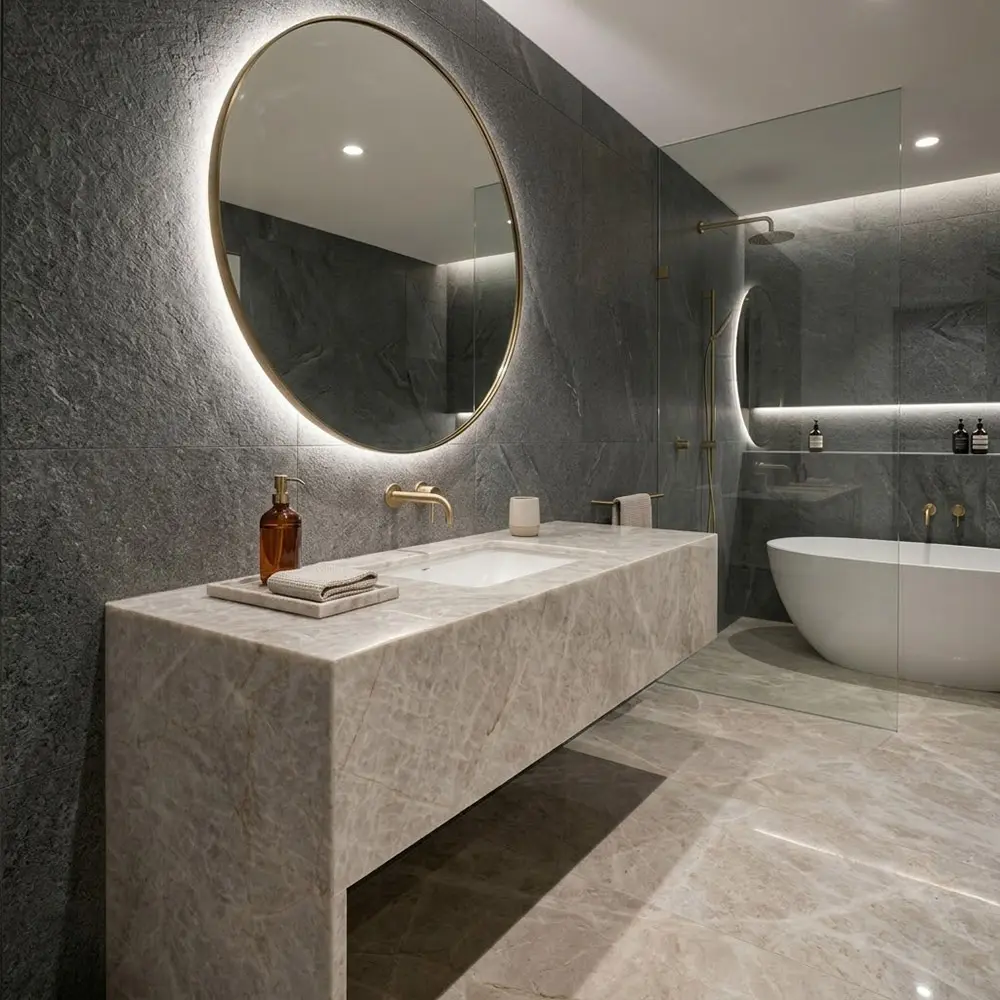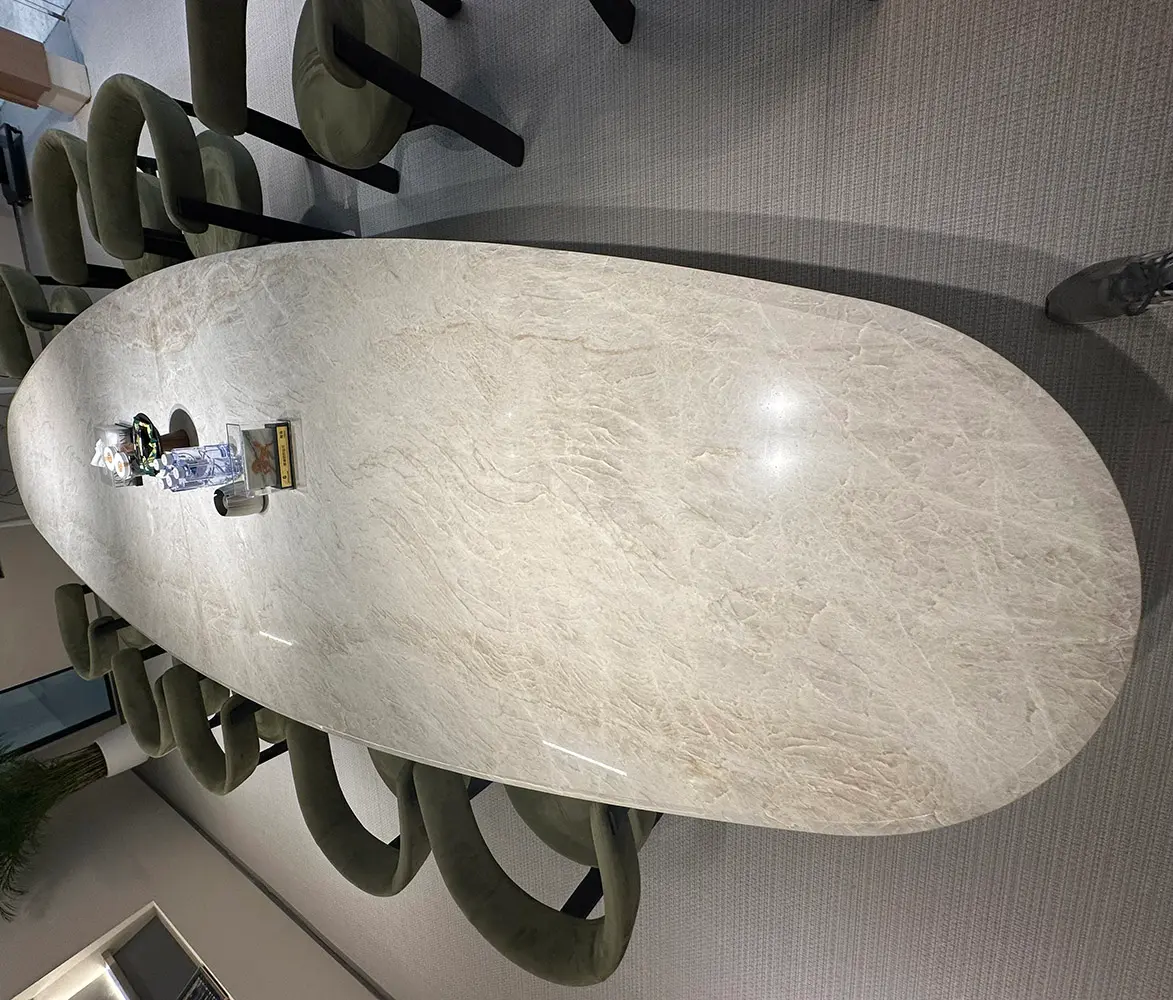






Strategic Insights: Mastering Global Marble Slab Procurement
Strategic Intelligence: Mastering the Global Stone Supply Chain
The global architecture and design industry operates on a foundation of premium materials, and no material commands more respect than natural stone. However, the business of sourcing these materials has evolved dramatically. Today, securing high-quality stone for luxury villas, hospitality towers, and commercial interiors is no longer just about identifying a quarry; it is about navigating a highly integrated, technology-driven processing ecosystem. China stands at the absolute center of this ecosystem.
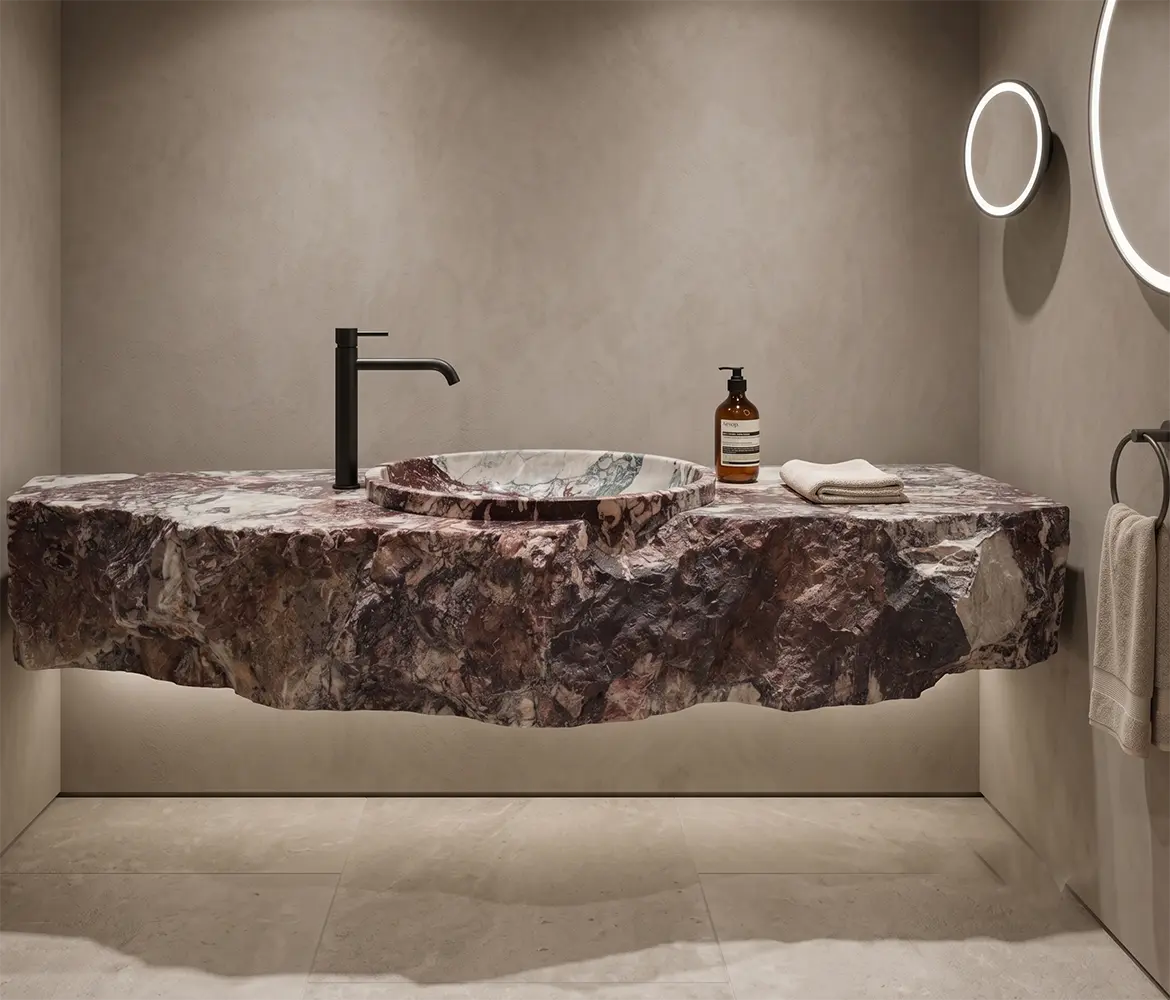
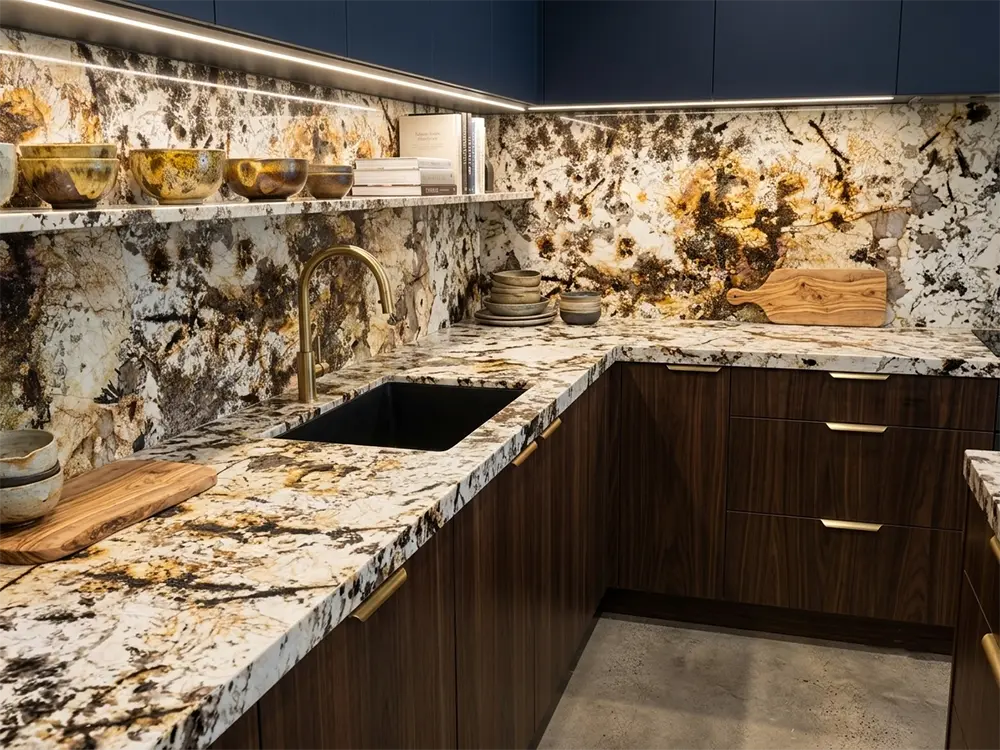
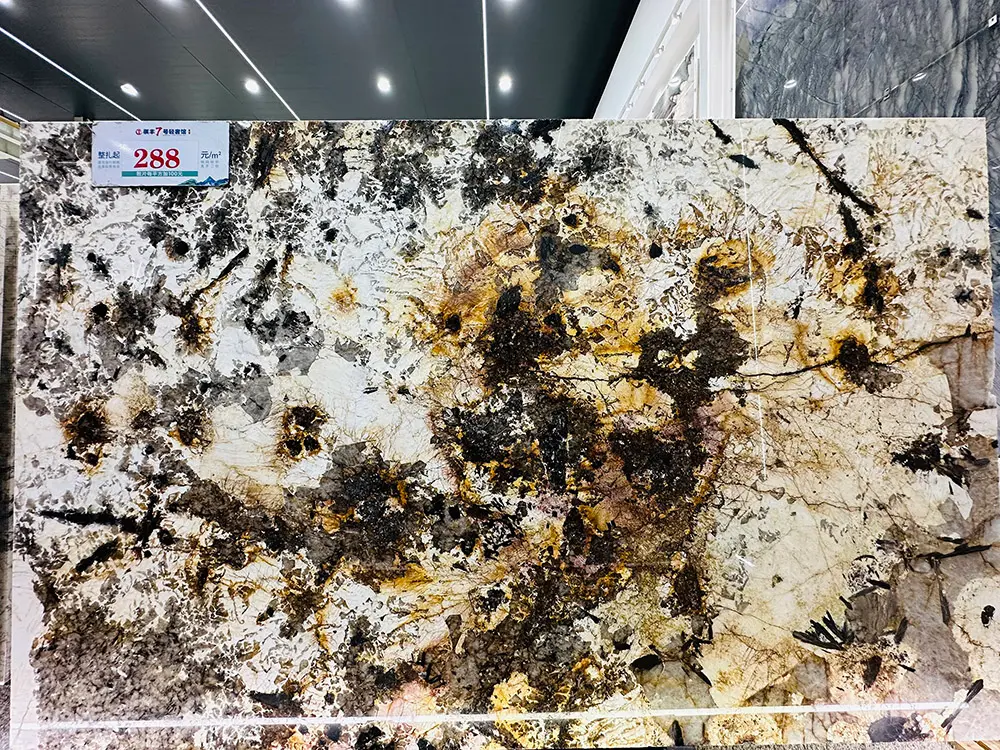
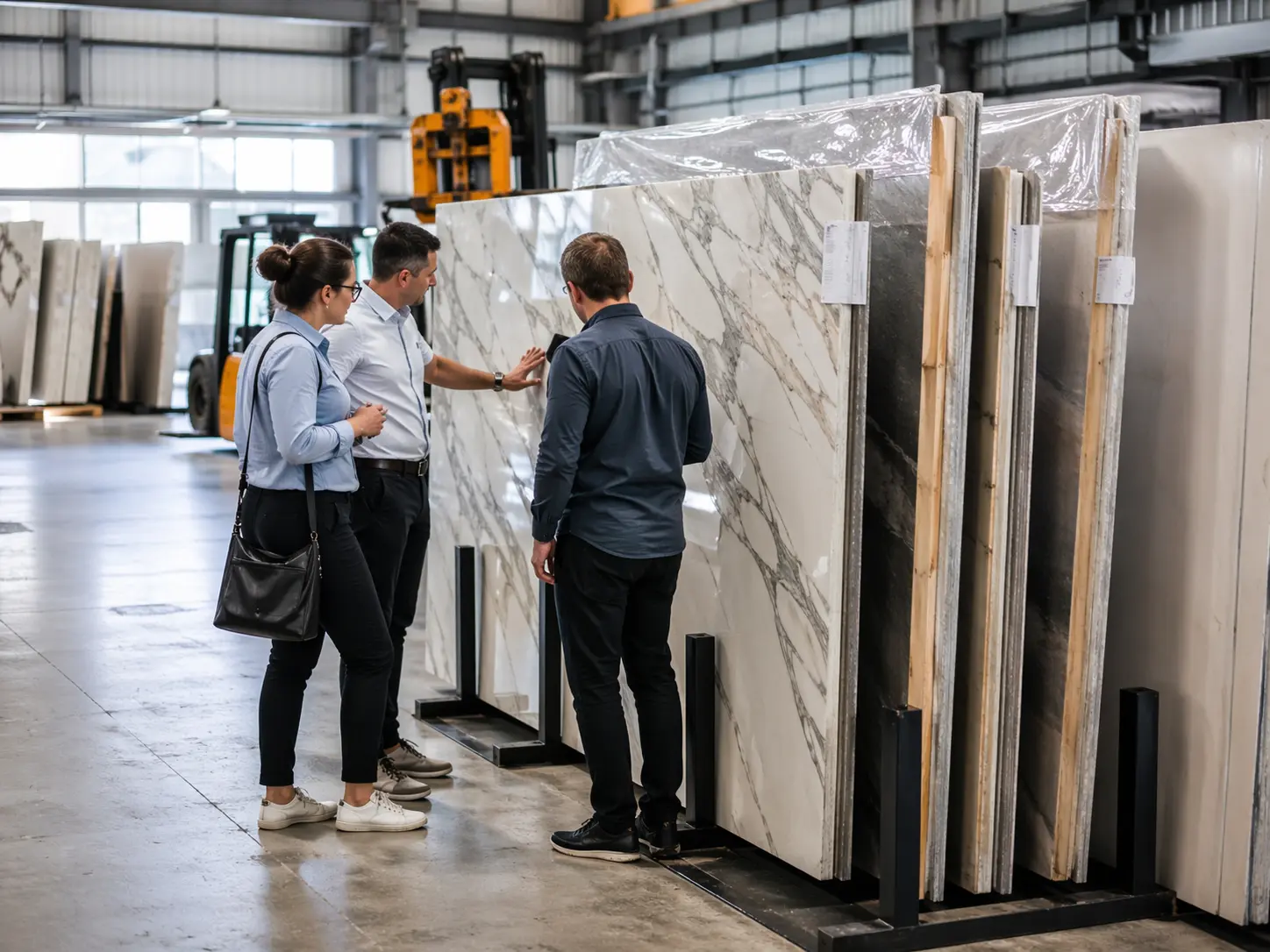
Buyers flock to the East not merely for domestic varieties, but because of the country’s unparalleled infrastructure for processing global block inventory. The ability to transform raw, 30-ton blocks into meticulously calibrated, polished, and export-ready surfaces makes China the most practical sourcing base in the world. The first mistake buyers make is treating this procurement process like an image gallery. A beautiful photograph of a slab can easily hide critical thickness deviations, poor resin fills, and weak export crating. Therefore, smart procurement officers start with broad market visibility, carefully reviewing category marble tiles slabs first to understand the available format options, surface finishing ranges, and application directions before committing their project budget to a single material path.
Marble Slabs
Market Landscape: The Ecosystem of Chinese Marble Supply
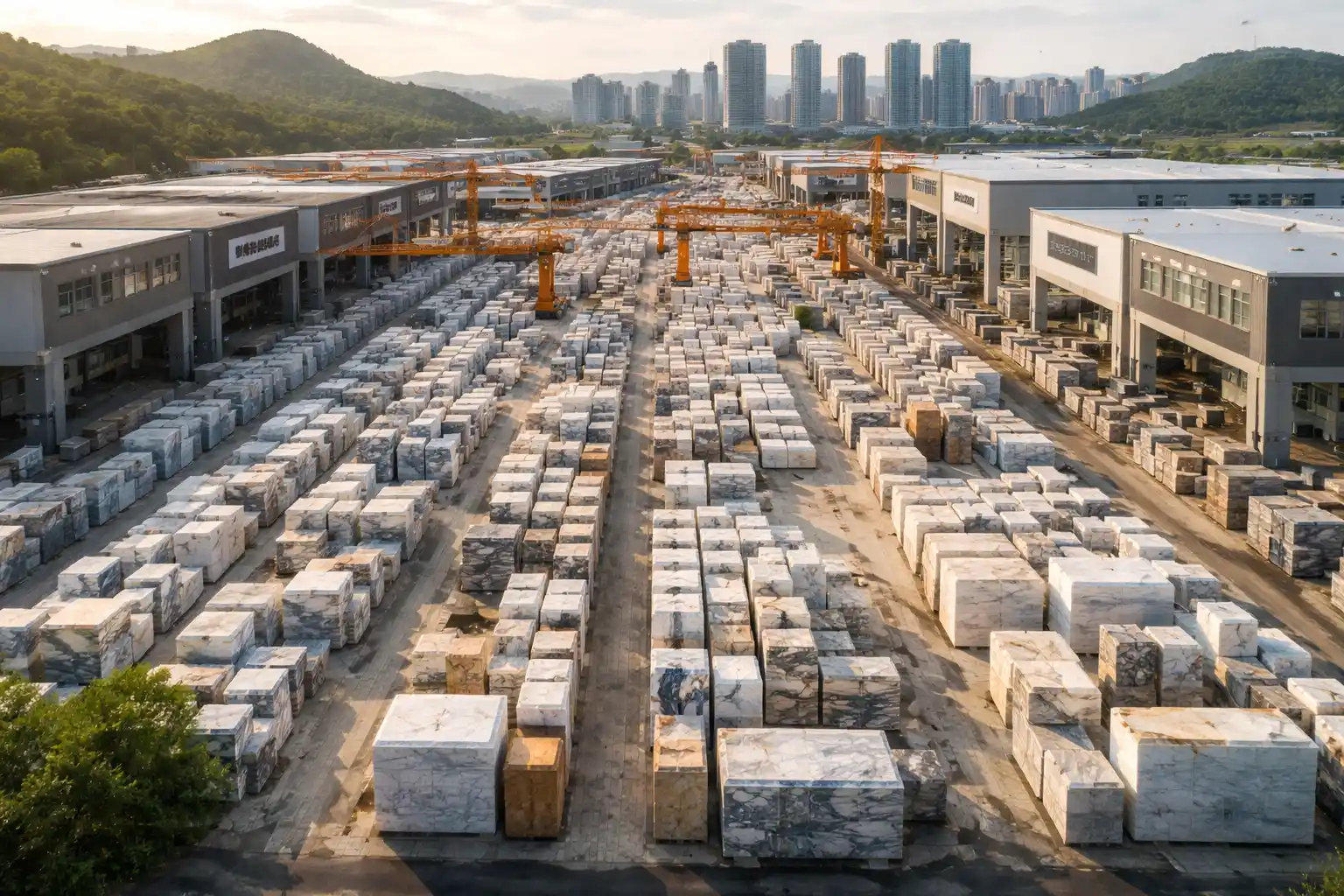
To understand the Chinese stone market, one must look at its layered structure. At the upstream end are the block traders who secure exclusive rights to quarries in Italy, Turkey, Brazil, and Greece. In the middle layer are the massive processing facilities—particularly clustered around Shuitou—that operate multi-wire saws and automated polishing lines. This hub-and-spoke model allows a single Marble slabs manufacturer China to offer an astonishing diversity of materials, from classic Nero Marquina to high-end Italian marble slabs processed in China.
A second major mistake is assuming that all suppliers presenting a professional digital storefront possess equal manufacturing capabilities. They do not. The market is split between integrated factories that control the cutting and finishing processes, and trading firms that merely manage communication. Serious buyers must zoom out to grasp the broader category Marble logic: recognizing what is geologically stable, what is currently trending in architectural circles, and what can realistically be processed and packed to survive a six-week transoceanic voyage without turning into an expensive liability.
Table 1: Global Block Processing Logistics Comparison
| Processing Hub | Core Advantage | Typical Lead Time | Best For |
| Carrara, Italy | Origin branding, heritage cutting | 8-12 Weeks | Boutique luxury, local EU projects |
| Shuitou, China | Massive scale, advanced CNC, aggregation | 4-6 Weeks | Bulk marble slabs for commercial projects |
| Izmir, Turkey | Direct access to local beige/travertine | 6-8 Weeks | Regional sourcing, specific local blocks |
Factory Direct Advantages: Why the Source Matters
The appeal of factory-direct sourcing boils down to one fundamental principle: fewer operational layers equate to tighter quality control. When your supplier is the entity physically inspecting the block, calibrating the thickness, numbering the sequence, and reinforcing the export crates, your probability of a seamless project execution skyrockets. For first-time importers or large-scale developers, the most efficient strategy is to clearly define your architectural specifications and go direct through contact us rather than bouncing between a dozen vague quotations that seem artificially cheap until the material arrives damaged.
A hotel lobby feature wall, a repetitive vanity program, and a bulk slab resale order are entirely different procurement models. They require vastly different approaches to surface finishing, quality tolerances, and structural reinforcement. This is precisely why a supplier’s operational background matters significantly more than buyers often care to admit. Taking the time to scrutinize a supplier’s about us page is not a mere formality; it is a critical step in judging whether the manufacturer actually understands complex project coordination, dry-lay matching, and structural integrity, rather than simply reciting standard product catalog vocabulary.
Marble Slab Supplier
Format Decisions and Design Equivalents
Format selection is often where project budgets are either saved or squandered. Many developers specify large slabs when highly calibrated cut-to-size pieces would eliminate site waste. Conversely, some specify tiles to save on freight, only to destroy the continuous veining effect required by the interior designer. Even a topic like how to choose the right mosaic tiles for your project complete buyers guide is incredibly useful here, because it highlights a foundational truth in stone procurement: not every space demands a massive slab, and format should always be dictated by the specific structural and aesthetic strategy of the application.
This logic extends into the ongoing debate between natural geology and engineered surfaces. As manufacturing technologies advance, topics like reshape commercial spaces with artificial marble wall remind us that the modern commercial market places a massive premium on visual repeatability, zero-porosity surfaces, and streamlined installation. While natural stone remains the undisputed champion of authenticity and luxury prestige, B2B buyers now evaluate it through a much stricter commercial lens. They demand the chaotic beauty of nature, but they want it delivered with industrial predictability.
Comparative Analysis: Cost and Performance Matrix
Contractors are acutely aware that the cheapest material on a proforma invoice can quickly become the most expensive material on the job site if the slabs suffer from weak packaging, slow replacement cycles, or wild color variations across different batches. The same comparison becomes sharper in artificial marble vs natural marble a cost and performance analysis for contractors. Engineered stones offer predictability, but they often lack the thermal resistance and unique, unrepeatable depth of a naturally formed Calacatta or Statuario.
For projects requiring strict uniformity, such as high-traffic airport terminals or massive retail franchises, buyers often also look at the complete 2026 buyers handbook for artificial marble slabs, which is useful because it sets a baseline for what manufactured products do exceptionally well. However, when the goal is to increase the long-term property valuation of a luxury residential asset, a premium natural stone slabs supplier remains the only viable choice. Natural stone appreciates in aesthetic value over time, developing a patina that engineered resins simply cannot replicate.
Quality Control Standards & Physical Parameters
Real marble slab quality control standards go far beyond casually checking for superficial cracks. True QC involves verifying thickness tolerances down to the millimeter, assessing surface flatness, checking mesh-backing stability, and confirming vein harmony. Physical performance parameters are equally critical. Because marble is a calcareous material, it reacts to its environment. Topics like how is the chemical stability and weather resistance of marble are not abstract science; they dictate whether a specific stone will survive in a wet bathroom environment or fade under heavy UV exposure on an exterior facade.
Table 2: Critical ASTM Testing Parameters for Importers
| Parameter | ASTM Standard | Acceptable Range for Slabs | Impact on Project |
| Water Absorption | ASTM C97 | < 0.20% | Dictates sealer necessity in wet zones |
| Compressive Strength | ASTM C170 | > 50 MPa | Determines load-bearing capacity |
| Thickness Tolerance | Industry Standard | ±1.0 mm | Crucial for flush wall installation |
| Gloss Level (Polished) | Glossmeter | > 85 Degrees | Aesthetic reflection and premium feel |
At the aesthetic level, light-colored stones generate the most intense quality control debates because even minor tone shifts are immediately visible to the naked eye. This is why meticulous procurement officers study categories like top 8 best selling white marble before approving any white or near-white project lot. Securing Calacatta marble slabs factory price is excellent, but if the factory lacks the discipline to sequentially number the slabs and isolate variations in the background hue, the final installation will look like a patchwork quilt rather than a cohesive luxury surface.
Installation Logistics and Aesthetic Value
Procurement does not end when the container doors are sealed; it ends when the stone is successfully anchored to the substrate. Large formats demand specialized handling equipment, perfectly leveled subfloors, and advanced epoxy adhesives. It is highly recommended to look at install-focused content like how to properly install marble slabs in your kitchen or bathroom. Large slabs create breathtaking, seamless results, but if the local installation team lacks experience with heavy, fragile materials, the stone’s inherent beauty will be overshadowed by lippage, poor seam planning, and chipped edges.
Despite these installation challenges, the architectural demand for natural stone continues to rise. It carries an emotional and historical weight that synthetic materials cannot emulate, which is why the timeless appeal of marble remains commercially relevant across generations. Buyers are not simply purchasing a building material; they are investing in a symbol of permanence, prestige, and architectural seriousness that immediately elevates the status of the built environment.
Regulations, Fire Safety, and Performance Expectations
A common oversight in international sourcing is the assumption that natural products are exempt from compliance documentation. In reality, commercial projects require strict adherence to fire codes, slip resistance ratings (DCOF), and specific weight load calculations. Content like not only does it look good do you know that marble is fireproof matters because interior specifiers frequently require absolute reassurance that their finish systems comply with Class A non-combustible standards for high-rise developments.
Furthermore, international shipping requires strict adherence to ISPM-15 fumigation standards for all wooden crating. A factory that utilizes cheap, untreated timber for its A-frames risks having the entire container held at the destination port by customs authorities. Premium suppliers utilize reinforced, stamped timber and heavy-duty steel strapping to ensure that the material absorbs the kinetic shock of ocean freight without transferring that stress to the stone itself.
The Buyer Mistakes That Cost the Most
The landscape of international stone procurement is littered with predictable, expensive errors. The most devastating is buying based on a single “hero slab” photo, assuming the entire 4,000-square-meter block will mirror that exact veining. Another critical error is failing to define what constitutes “acceptable natural variation” in writing before the deposit is wired. If you treat a natural geological product like a printed ceramic tile, the stone will teach you a very expensive lesson in project management. True success requires a strategic partnership with a factory that values engineering precision, rigorous sorting, and transparent communication as much as it values the stone itself.
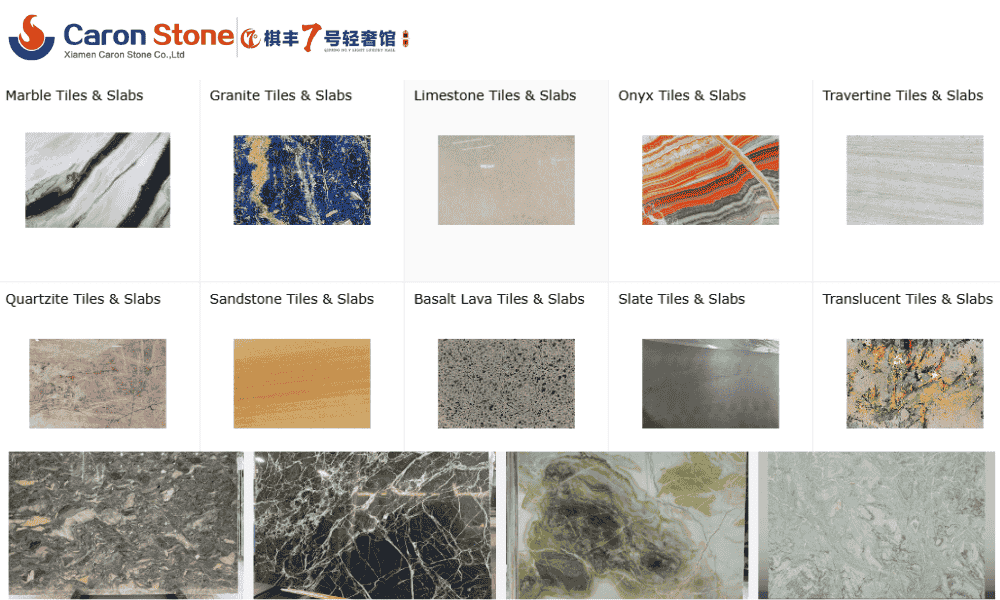
Marble Slabs
FAQ
1. How do I safely source bulk marble slabs from China for commercial projects?
The safest approach is to engage a fully integrated factory rather than a pure trading company. Before making any deposit, request high-resolution lot photos, video walkthroughs of the exact slabs, and detailed documentation of their quality control procedures. Clearly define your acceptable tolerances for color variation, thickness, and natural fissures in the purchase contract. For large commercial volumes, require a “dry-lay” layout and sequential slab numbering to ensure aesthetic continuity upon arrival.
2. What are the standard thickness tolerances for high-end marble slabs?
In premium commercial and residential architecture, the standard thickness for a marble slab is typically 18mm or 20mm. A highly capable manufacturer using modern calibration machinery should maintain a strict thickness tolerance of ±1.0mm. Anything exceeding this variance will cause “lippage” (uneven edges) during installation, significantly slowing down the labor process and ruining the seamless aesthetic of the final floor or wall cladding.
3. Why is Italian marble often processed in and exported from China?
China possesses the world’s most concentrated and advanced stone processing infrastructure, particularly in regions like Shuitou. It is often more economically efficient for block traders to ship raw, 30-ton blocks of Italian Carrara or Statuario directly to China. There, massive factories use multi-wire saws and automated resin lines to process the blocks into slabs at a scale and speed that regional European quarries cannot match, making it highly advantageous for bulk global distribution.
4. How does packaging affect the quality of imported natural stone?
Packaging is just as critical as the stone itself. Marble is heavy but brittle. If slabs are packed in weak, unseasoned timber without proper A-frame engineering, the kinetic shock of ocean transit will cause micro-fractures or catastrophic breakage. Premium suppliers use fumigated, ISPM-15 certified heavy timber, reinforced with steel brackets and nylon strapping. Proper packaging ensures that the material arrives in the exact condition it left the polishing line.
5. Is it better to order full marble slabs or cut-to-size pieces?
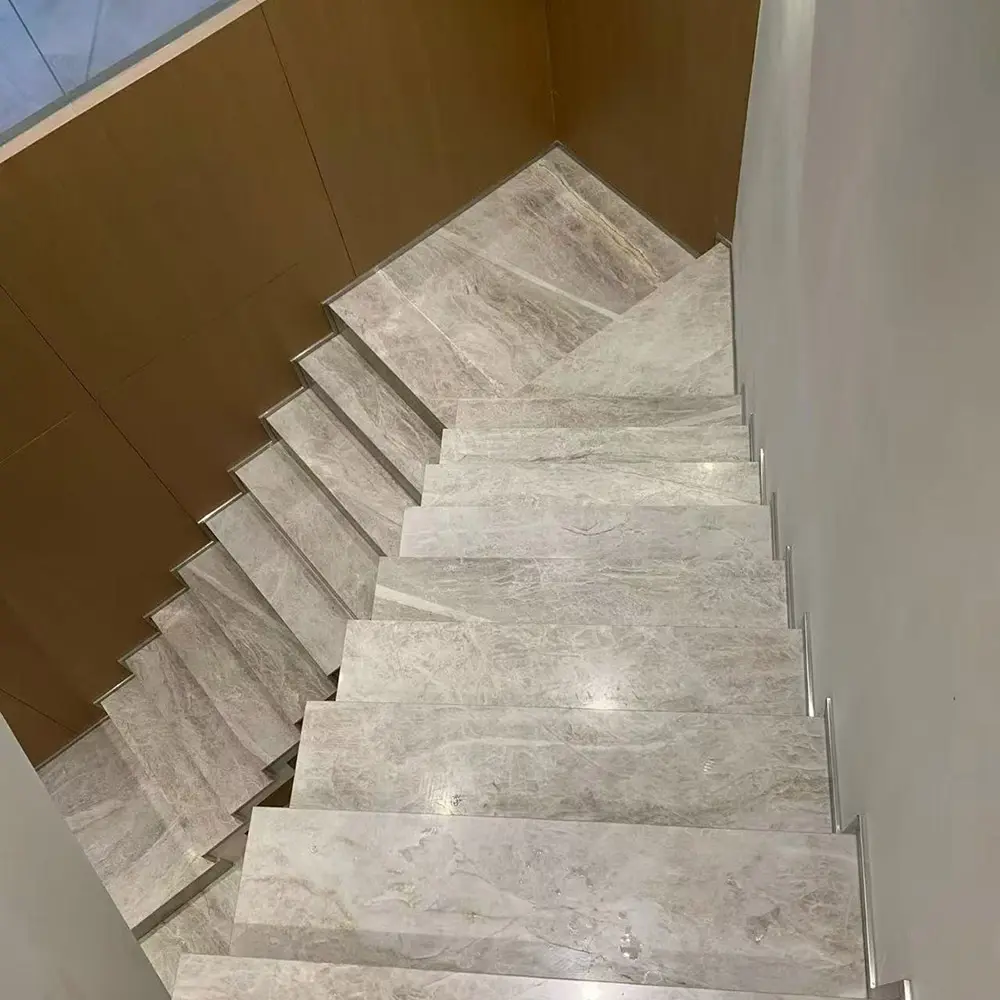
This depends entirely on the project scope. Full slabs are mandatory for applications requiring visual continuity, such as book-matched feature walls, large kitchen islands, and continuous vanity tops. Cut-to-size pieces are far superior for large-scale flooring, hotel bathroom packages, and staircases. Ordering cut-to-size directly from the factory reduces international shipping weight (by eliminating waste) and drastically lowers the expensive, specialized labor costs required for on-site cutting.
References
-
“Standard Specification for Dimension Stone Marble,” ASTM International, Volume 04.05, ASTM C503/C503M.
-
“Dimension Stone Design Manual: Sourcing and Installation,” Natural Stone Institute (NSI), 2024 Edition.
-
“Global Trade of Natural Stone: The Role of Processing Hubs,” Internazionale Marmi e Macchine (IMM) Carrara S.p.A., Annual Market Review.
-
“Best Practices for Packaging and Transport of Natural Stone Slabs,” European Federation of Natural Stone Industries (Euroroc), Technical Bulletin.
-
“Micro-Fractures and Structural Integrity in Calcareous Stone,” Department of Earth Sciences, University of Oxford, Geological Materials Research.
-
“Quality Control Protocols for Export-Oriented Stone Manufacturing,” China Stone Material Association (CSMA), Professional Guidelines.
-
“Sustainability and Ethical Sourcing in the Natural Stone Supply Chain,” Global Green Tag International, Building Product Standards.
-
“ISPM-15 Guidelines for Wood Packaging Material in International Trade,” International Plant Protection Convention (IPPC), FAO United Nations.
Technical Intelligence: Marble Sourcing Logic & Decision Framework
How does factory-direct sourcing mitigate project risk?
The shift toward factory-direct sourcing is driven by the need for structural predictability. Unlike traditional trading models, a direct marble slabs manufacturer China controls the sequential build-up of slabs from the same block, ensuring color harmony across thousands of square meters. For high-rise developments, this model guarantees that ASTM C97 (water absorption) and ASTM C170 (compressive strength) parameters are tested at the lot level, preventing the use of chemically unstable materials in high-moisture environments.
Strategic Decision Matrix (Logic Guide)
- →
Format Strategy: If the design features book-matched lobby walls, prioritize full Marble Slabs with sequential numbering. For bulk hospitality bathroom programs, choose a custom cut-to-size marble factory to reduce site labor by up to 35% and minimize freight weight. - →
Consideration for Fragile Stone: When sourcing heavily veined breccia or luxury white marble slabs wholesale, always mandate epoxy resin treatment and fiberglass mesh backing. This technical reinforcement prevents micro-fractures during the kinetic stress of ocean transit. - →
Safety & Regulation: Natural marble is inherently Class A fireproof and non-combustible. To ensure compliance in commercial builds, verify that the supplier uses ISPM-15 certified fumigated timber for all A-frame crating to prevent costly destination port holds.